Talking About Lu Xun with Young People
by Waste Name
About This Novel
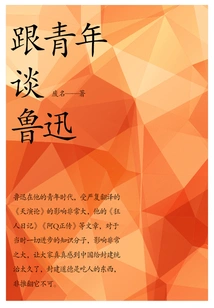
"Talking to Youth about Lu Xun" is an article in which the author talks about Lu Xun to young people, starting from Lu Xun's boyhood, Lu Xun in Japan, the Revolution of 1911 and Lu Xun, Lu Xun's first novel, analysis of "The True Story of Ah Q", how Lu Xun writes miscellaneous thoughts, Lu Xun's essays, Lu Xun and the tradition of realism, Lu Xun's contribution to literary form and literary language, Lu Xun's artistic characteristics, and how Lu Xun treats cultural heritage and national mentality. In his youth, Lu Xun was greatly influenced by Yan Fu's translation of "The Theory of Heavenly Evolution". His articles such as "Diary of a Madman" and "The True Story of Ah Q" had a great influence on all progressive intellectuals at that time. They really made everyone feel that China had been ruled by feudalism for too long and that feudal morality was a cannibal and must be overthrown. About the author: Fei Ming (1901-1967), formerly known as Feng Wenbing, was one of the most influential writers in the history of Chinese literature in the 20th century. He studied under Zhou Zuoren and was a member of the Yusi Society. He is regarded as the originator of "Beijing School Literature" in the history of literature. Fei Ming's novels are famous for their "prose culture", which combines Six Dynasties prose, Tang poetry, Song poetry, and modernist concepts. They have both plain and simple beauty as well as spicy and strange beauty. "The Story of the Bamboo Forest" is his first collection of novels. The novels include "The Biography of Mr. Mo Xuyou", "The Bridge", and "After Mr. Mo Xuyou Takes the Plane" (both "The Bridge" and "After Mr. Mo Xuyou Takes the Plane" are unfinished), as well as short stories, essays, and poems.
Official Sources
What Readers Think
Rating
Community(0)
Rating
Community(0)