Library
Browse and search books
7 novels found
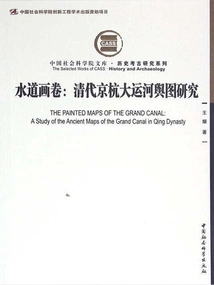
Waterway Picture Scroll: a Study of the Map of the Beijing-hangzhou Grand Canal in the Qing Dynasty
History水道画卷:清代京杭大运河舆图研究
Wang Yao
"Waterway Picture Scroll: Research on the Map of the Beijing-Hangzhou Grand Canal in the Qing Dynasty\u002F Historical Archaeological Research Series\u002F Library of the Chinese Academy of Social Sciences" written by Wang Yao is a relatively systematic and in-depth investigation, arrangement and study of the existing maps of the Beijing-Hangzhou Grand Canal in the Qing Dynasty at home and abroad. "Investigation and arrangement" are embodied in: clarifying the canal map collection organization, collection path, map preservation status, and classifying and cataloging. "Research" is concentrated on three levels: first, to study issues such as the content, age of expression, value of the picture, and version origin of a single canal map; second, to explore the characteristics and background of different types of canal maps, and to summarize the spatiotemporal differences and causes of canal map drawings; third, to explore the value of canal map image historical materials, and conduct research attempts to corroborate the history of pictures and prove history with pictures. In short, this "book" is a new exploration of the study of type maps in ancient Chinese maps, and also attempts to provide new historical materials and new ideas for the study of the history of the Beijing-Hangzhou Grand Canal.
"Waterway Picture Scroll: Research on the Map of the Beijing-Hangzhou Grand Canal in the Qing Dynasty\u002F Historical Archaeological Research Series\u002F Library of the Chinese Academy of Social Sciences" written by Wang Yao is a relatively systematic and in-depth investigation, arrangement and study of the existing maps of the Beijing-Hangzhou Grand Canal in the Qing Dynasty at home and abroad. "Investigation and arrangement" are embodied in: clarifying the canal map collection organization, collection path, map preservation status, and classifying and cataloging. "Research" is concentrated on three levels: first, to study issues such as the content, age of expression, value of the picture, and version origin of a single canal map; second, to explore the characteristics and background of different types of canal maps, and to summarize the spatiotemporal differences and causes of canal map drawings; third, to explore the value of canal map image historical materials, and conduct research attempts to corroborate the history of pictures and prove history with pictures. In short, this "book" is a new exploration of the study of type maps in ancient Chinese maps, and also attempts to provide new historical materials and new ideas for the study of the history of the Beijing-Hangzhou Grand Canal.
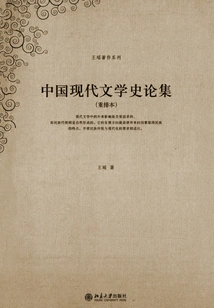
中国现代文学史论集(重排本)
Wang Yao
The author of "Collection of Modern Chinese Literary History (Rearranged Edition)" explores the development process of literary history and its laws through the rich and complex phenomena of literary history, from a holistic perspective and the intrinsic relationship between the generation and development of the discipline. Its spirit and methods have "model significance" for the study of modern literary history. Medieval literature research, Lu Xun research, and modern literature research represent the three peaks of Mr. Wang Yao's academic achievements in his life. "Collection of Modern Chinese Literature History (Rearranged Edition)" collects representative papers on the latter two aspects.
The author of "Collection of Modern Chinese Literary History (Rearranged Edition)" explores the development process of literary history and its laws through the rich and complex phenomena of literary history, from a holistic perspective and the intrinsic relationship between the generation and development of the discipline. Its spirit and methods have "model significance" for the study of modern literary history. Medieval literature research, Lu Xun research, and modern literature research represent the three peaks of Mr. Wang Yao's academic achievements in his life. "Collection of Modern Chinese Literature History (Rearranged Edition)" collects representative papers on the latter two aspects.
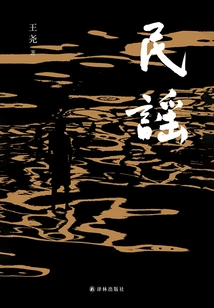
Folk Songs (works by Wang Yao)
General Fiction民谣(王尧作品)
Wang Yao
"I sat on the pier, the sun was like a thin piece of paper under my buttocks." The time was set back to May 1972. In Jiangnan Brigade, which is built on water, the long rain finally stopped. The smell of fermented wheat enveloped the village, and undercurrents surged in daily life. At the dockside, a fourteen-year-old boy is waiting for his grandfather who understands historical issues, and people from the Jiangnan brigade are waiting for the big ship of the oil drilling team. However, life eventually runs out of people's expectations and control. The young man looked left and right at the pier, wandered back and forth between the farmhouse and the town, and wandered in and out of the intertwined team history, family history, and revolutionary history. He grew up while running, and looked back while growing up. In looking back, his memory fermented and grew. The yellow leaves of the old historical trees fall into the stories and characters of "Folk Song" one by one, fluttering, spinning and flying. The author Wang Yao has been preparing for his debut novel "Folk Ballad" for more than 20 years, thus fulfilling his long-cherished wish to rebuild the connection between individuals and history. In his dual roles as a storyteller and a spectator of the story, he mixed comments and lyrical criticism. The fragments and fragments in the passage of time continued to collide, revealing new gaps, and the novel thus pieced together a realistic path that can truly enter history. There are stories here, but they are calm; they come from history and are born out of daily life; Sanqu folk songs contain endless changes in personnel and world conditions. "Folk Ballad" lays out the spiritual history of a young man's growth, the history of changes and development of a village, and the history of culture and revolution of a nation. It uses the tiny and delicate memory of an individual to resist the grand and cruel memory of the times.
"I sat on the pier, the sun was like a thin piece of paper under my buttocks." The time was set back to May 1972. In Jiangnan Brigade, which is built on water, the long rain finally stopped. The smell of fermented wheat enveloped the village, and undercurrents surged in daily life. At the dockside, a fourteen-year-old boy is waiting for his grandfather who understands historical issues, and people from the Jiangnan brigade are waiting for the big ship of the oil drilling team. However, life eventually runs out of people's expectations and control. The young man looked left and right at the pier, wandered back and forth between the farmhouse and the town, and wandered in and out of the intertwined team history, family history, and revolutionary history. He grew up while running, and looked back while growing up. In looking back, his memory fermented and grew. The yellow leaves of the old historical trees fall into the stories and characters of "Folk Song" one by one, fluttering, spinning and flying. The author Wang Yao has been preparing for his debut novel "Folk Ballad" for more than 20 years, thus fulfilling his long-cherished wish to rebuild the connection between individuals and history. In his dual roles as a storyteller and a spectator of the story, he mixed comments and lyrical criticism. The fragments and fragments in the passage of time continued to collide, revealing new gaps, and the novel thus pieced together a realistic path that can truly enter history. There are stories here, but they are calm; they come from history and are born out of daily life; Sanqu folk songs contain endless changes in personnel and world conditions. "Folk Ballad" lays out the spiritual history of a young man's growth, the history of changes and development of a village, and the history of culture and revolution of a nation. It uses the tiny and delicate memory of an individual to resist the grand and cruel memory of the times.
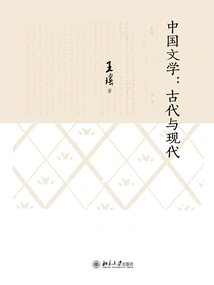
Chinese Literature: Ancient and Modern
Literature中国文学:古代与现代
Wang Yao
This book collects several classic papers by Mr. Wang Yao in the two research fields of classical literature and modern literature. The contents include the newness and changes of literature, textual criticism, the influence of foreign literature on modern literature, the attitude of Lu Xun and others towards Chinese literary heritage and the influence of Chinese classical literature on them.
This book collects several classic papers by Mr. Wang Yao in the two research fields of classical literature and modern literature. The contents include the newness and changes of literature, textual criticism, the influence of foreign literature on modern literature, the attitude of Lu Xun and others towards Chinese literary heritage and the influence of Chinese classical literature on them.
中国新文学史稿(上)
Wang Yao
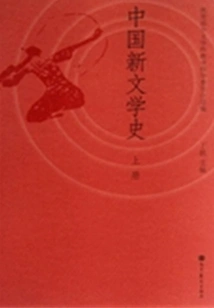
The book is divided into four periods, namely the first ten years of New Literature, the ten years of the Leftist League, the early period of the Anti-Japanese War, and after the Yan'an Forum on Literature and Art. Each volume begins with a chapter that provides a general overview of the social and historical background, literary trends, associations, debates, etc. Of this period, and then discusses it in chapters using poetry, novels, dramas, essays and other literary styles to introduce writers and works of various schools and tendencies.
The book is divided into four periods, namely the first ten years of New Literature, the ten years of the Leftist League, the early period of the Anti-Japanese War, and after the Yan'an Forum on Literature and Art. Each volume begins with a chapter that provides a general overview of the social and historical background, literary trends, associations, debates, etc. Of this period, and then discusses it in chapters using poetry, novels, dramas, essays and other literary styles to introduce writers and works of various schools and tendencies.
中国新文学史稿(下)
Wang Yao
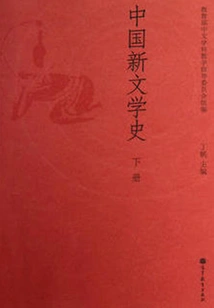
The book is divided into four periods, namely the first ten years of New Literature, the ten years of the Leftist League, the early period of the Anti-Japanese War, and after the Yan'an Forum on Literature and Art. Each volume begins with a chapter that provides a general overview of the social and historical background, literary trends, associations, debates, etc. Of this period, and then discusses it in chapters using poetry, novels, dramas, essays and other literary styles to introduce writers and works of various schools and tendencies.
The book is divided into four periods, namely the first ten years of New Literature, the ten years of the Leftist League, the early period of the Anti-Japanese War, and after the Yan'an Forum on Literature and Art. Each volume begins with a chapter that provides a general overview of the social and historical background, literary trends, associations, debates, etc. Of this period, and then discusses it in chapters using poetry, novels, dramas, essays and other literary styles to introduce writers and works of various schools and tendencies.
中国现代文学史论集
Wang Yao
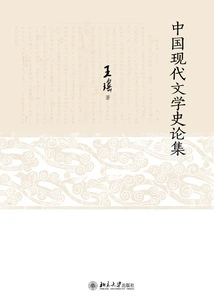
This book collects representative papers on Lu Xun research and modern literature research. Including "On the historical connection between Lu Xun's works and Chinese classical literature", "On the relationship between Lu Xun's works and foreign literature", "On Ba Jin's novels", "The development and characteristics of prose during the "May Fourth Movement"", etc.
This book collects representative papers on Lu Xun research and modern literature research. Including "On the historical connection between Lu Xun's works and Chinese classical literature", "On the relationship between Lu Xun's works and foreign literature", "On Ba Jin's novels", "The development and characteristics of prose during the "May Fourth Movement"", etc.