Library
Browse and search books
3 novels found
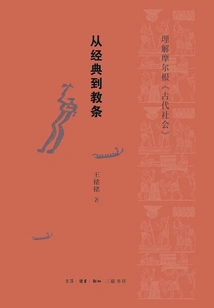
从经典到教条:理解摩尔根《古代社会》原名《裂缝间的桥》
Wang Mingming
In Chinese anthropology, the name Morgan may have been misunderstood as a Chinese name because of its lofty historical status (of course, this is purely a description). In the process of this cross-cultural misunderstanding, Morgan and many social theories without Chinese characteristics deduced from Morgan's theory had the opportunity to call themselves "indigenous social theories." Therefore, to this day, some scholars still use the understanding they gained from Morgan to classify the understanding others gained from other theories as "foreign accents", deliberately inducing people to forget that Morgan himself was an American. This paradoxical phenomenon reminds people of the need to restore Morgan's Western perspective and comment on this name alongside other Western anthropological thinkers. And only by doing this can we truly re-establish Morgan's banner among Chinese intellectuals.
In Chinese anthropology, the name Morgan may have been misunderstood as a Chinese name because of its lofty historical status (of course, this is purely a description). In the process of this cross-cultural misunderstanding, Morgan and many social theories without Chinese characteristics deduced from Morgan's theory had the opportunity to call themselves "indigenous social theories." Therefore, to this day, some scholars still use the understanding they gained from Morgan to classify the understanding others gained from other theories as "foreign accents", deliberately inducing people to forget that Morgan himself was an American. This paradoxical phenomenon reminds people of the need to restore Morgan's Western perspective and comment on this name alongside other Western anthropological thinkers. And only by doing this can we truly re-establish Morgan's banner among Chinese intellectuals.
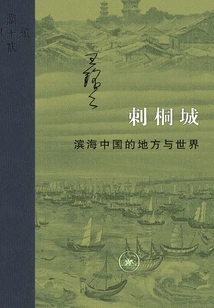
刺桐城:滨海中国的地方与世界
Wang Mingming
This book takes the coastal city of Quanzhou as the subject and examines its long regional and urban development history from the early stages of the northern Han people's southward migration to Fujian in the third century AD to 1949. It is actually a "Biography of Quanzhou" with rich content. Using the method of historical anthropology, the author combines local cultural and historical research, Schenja's economic space theory and Clark's regional network history analysis to make a clued macro-layout of the rise, maturity, prosperity and decline of Quanzhou City, and focuses on the analysis of Quanzhou's rapid development and prosperous commerce under the influence of cultural pluralism in the Song and Yuan Dynasties, as well as the transformation of power, economy and culture that has occurred under the dual pressure of nativist ideology and Western imperialist forces since the Ming and Qing Dynasties. By narrating the historical transformation of a place from the bottom up, the author on the one hand reveals the "ancient and modern changes" in Quanzhou under the intertwined relationship between the outside world and the local area, explaining that its evolution process is the historical product of the interaction between families, local societies, countries and the larger spatial scope of the world; on the other hand, with the help of the dialectics of history and anthropology, he puts forward different views on the mainstream evolutionary history, nation-state narratives and world history narratives, thereby opening up a new path for reflection on the ideological forms that dominate historical narratives. This book was first published in 1999 and was originally titled "The Lost Prosperity". In this reprint, the author added a nearly 20,000-word "Preface to the Reprint" and changed the title of the book to "Citron City".
This book takes the coastal city of Quanzhou as the subject and examines its long regional and urban development history from the early stages of the northern Han people's southward migration to Fujian in the third century AD to 1949. It is actually a "Biography of Quanzhou" with rich content. Using the method of historical anthropology, the author combines local cultural and historical research, Schenja's economic space theory and Clark's regional network history analysis to make a clued macro-layout of the rise, maturity, prosperity and decline of Quanzhou City, and focuses on the analysis of Quanzhou's rapid development and prosperous commerce under the influence of cultural pluralism in the Song and Yuan Dynasties, as well as the transformation of power, economy and culture that has occurred under the dual pressure of nativist ideology and Western imperialist forces since the Ming and Qing Dynasties. By narrating the historical transformation of a place from the bottom up, the author on the one hand reveals the "ancient and modern changes" in Quanzhou under the intertwined relationship between the outside world and the local area, explaining that its evolution process is the historical product of the interaction between families, local societies, countries and the larger spatial scope of the world; on the other hand, with the help of the dialectics of history and anthropology, he puts forward different views on the mainstream evolutionary history, nation-state narratives and world history narratives, thereby opening up a new path for reflection on the ideological forms that dominate historical narratives. This book was first published in 1999 and was originally titled "The Lost Prosperity". In this reprint, the author added a nearly 20,000-word "Preface to the Reprint" and changed the title of the book to "Citron City".
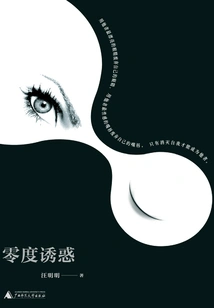
Zero Degree of Temptation
General Fiction零度诱惑
Wang Mingming
This novel, published in "Zhongshan", tells a story about the alienation of human nature caused by the "media eyeball effect". The heroine of the novel, You Jiani, was once ignorant of the world and simple and beautiful. However, the unshakable values created by modern media completely transformed her. Pursued by desire and temptation, she fell step by step, selling her body and soul in the form of equal exchange, transforming herself into a concrete symbol of sexual temptation, and finally fulfilled Jean Baudrillard's famous saying: If we live by temptation, we will die by bewitchment.
This novel, published in "Zhongshan", tells a story about the alienation of human nature caused by the "media eyeball effect". The heroine of the novel, You Jiani, was once ignorant of the world and simple and beautiful. However, the unshakable values created by modern media completely transformed her. Pursued by desire and temptation, she fell step by step, selling her body and soul in the form of equal exchange, transforming herself into a concrete symbol of sexual temptation, and finally fulfilled Jean Baudrillard's famous saying: If we live by temptation, we will die by bewitchment.