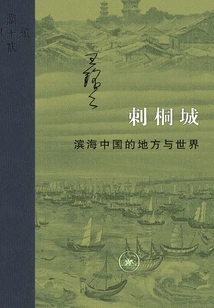
Citon City: Place and World in Coastal China
About This Novel
This book takes the coastal city of Quanzhou as the subject and examines its long regional and urban development history from the early stages of the northern Han people's southward migration to Fujian in the third century AD to 1949. It is actually a "Biography of Quanzhou" with rich content. Using the method of historical anthropology, the author combines local cultural and historical research, Schenja's economic space theory and Clark's regional network history analysis to make a clued macro-layout of the rise, maturity, prosperity and decline of Quanzhou City, and focuses on the analysis of Quanzhou's rapid development and prosperous commerce under the influence of cultural pluralism in the Song and Yuan Dynasties, as well as the transformation of power, economy and culture that has occurred under the dual pressure of nativist ideology and Western imperialist forces since the Ming and Qing Dynasties. By narrating the historical transformation of a place from the bottom up, the author on the one hand reveals the "ancient and modern changes" in Quanzhou under the intertwined relationship between the outside world and the local area, explaining that its evolution process is the historical product of the interaction between families, local societies, countries and the larger spatial scope of the world; on the other hand, with the help of the dialectics of history and anthropology, he puts forward different views on the mainstream evolutionary history, nation-state narratives and world history narratives, thereby opening up a new path for reflection on the ideological forms that dominate historical narratives. This book was first published in 1999 and was originally titled "The Lost Prosperity". In this reprint, the author added a nearly 20,000-word "Preface to the Reprint" and changed the title of the book to "Citron City".
Official Sources
What Readers Think
Rating
Community(0)
Rating
Community(0)