Library
Browse and search books
35 novels found

The Crazy Concubine: Emperor Zun, Very Interesting
Fantasy Romance惹火狂妃:帝尊,很有料
The Bright Moon
A passionate military doctor from the 22nd century can catch up with time travel even if he wins the lottery! The soul traveled through the body of a "good-for-nothing young man" from another world. She originally wanted to live in peace among thousands of flowers and experience the feeling of being a "man", but unexpectedly, she was not the only one running wildly on the road to death! Born a waste? She casually rolled up her sleeves, and the mountains and rivers were instantly covered in blood! A miracle elixir? She threw a large handful casually, instantly attracting thousands of people to compete for it! A demon rushed towards me from behind, "Madam, are you acting like a demon again?" A certain woman was furious and said, "Get out of here, I am a man! I like women! I can go wherever I can to cool off." The evildoer curled his lips and gently opened her belt. The certain woman refused to obey, "You, you, what are you doing?" "Zhenfu Tsuna!"
A passionate military doctor from the 22nd century can catch up with time travel even if he wins the lottery! The soul traveled through the body of a "good-for-nothing young man" from another world. She originally wanted to live in peace among thousands of flowers and experience the feeling of being a "man", but unexpectedly, she was not the only one running wildly on the road to death! Born a waste? She casually rolled up her sleeves, and the mountains and rivers were instantly covered in blood! A miracle elixir? She threw a large handful casually, instantly attracting thousands of people to compete for it! A demon rushed towards me from behind, "Madam, are you acting like a demon again?" A certain woman was furious and said, "Get out of here, I am a man! I like women! I can go wherever I can to cool off." The evildoer curled his lips and gently opened her belt. The certain woman refused to obey, "You, you, what are you doing?" "Zhenfu Tsuna!"

Rebirth of Superpowers: the Goddess of Academic Dominance
Fantasy Romance异能重生:学霸女神
The Bright Moon
[Sweet and Sweet Article] Yan Xiaoxiao is a high school student from an extremely poor family, and Qin Ye is a noble son from a prominent family. They are people from two different worlds, but they intersect because of a special transaction. "Six thousand yuan, I will save your life." Young Master Qin, who was in danger of death, was saved by the beautiful brick-moving girl. He thought it was a one-shot deal, but he lost the rest of his life. "Marry me and I will make you a winner in life." Young Master Qin knelt down on one knee, holding flowers and rings in his hands.
[Sweet and Sweet Article] Yan Xiaoxiao is a high school student from an extremely poor family, and Qin Ye is a noble son from a prominent family. They are people from two different worlds, but they intersect because of a special transaction. "Six thousand yuan, I will save your life." Young Master Qin, who was in danger of death, was saved by the beautiful brick-moving girl. He thought it was a one-shot deal, but he lost the rest of his life. "Marry me and I will make you a winner in life." Young Master Qin knelt down on one knee, holding flowers and rings in his hands.
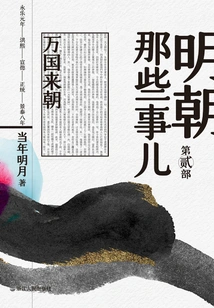
明朝那些事儿·第贰部:万国来朝(2020版)
The Bright Moon
In the second part of "Those Things in the Ming Dynasty", Zhu Di ascended the throne, and a glorious dynasty began. He sent his army to the north to conquer Mongolia five times, sent Zheng He to the west seven times, went south to conquer Ping An, and compiled the "Yongle Dadian". The Ming Empire entered an unprecedented prosperous age. Later, Zhu Di died of illness on his way back from the northern expedition to Mongolia. After experiencing the relatively clear "Reign of Renxuan", a violent storm is coming.
In the second part of "Those Things in the Ming Dynasty", Zhu Di ascended the throne, and a glorious dynasty began. He sent his army to the north to conquer Mongolia five times, sent Zheng He to the west seven times, went south to conquer Ping An, and compiled the "Yongle Dadian". The Ming Empire entered an unprecedented prosperous age. Later, Zhu Di died of illness on his way back from the northern expedition to Mongolia. After experiencing the relatively clear "Reign of Renxuan", a violent storm is coming.
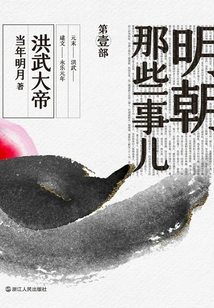
明朝那些事儿·第壹部:洪武大帝(2020版)
The Bright Moon
The first part of "Things About the Ming Dynasty" tells the story of Zhu Yuanzhang, the founding emperor, who was born in the troubled times of the late Yuan Dynasty. He started out in poverty and endured countless hardships. He escaped the pursuit of death countless times. With his astonishing military talent, he defeated many powerful figures of his generation and built a huge empire almost with his bare hands. After Zhu Yuanzhang, King Yan Zhu Di launched the "Battle of Jingnan" to seize the throne. The whereabouts of Jianwen Emperor Zhu Yunwen became an eternal mystery. However, Zhu Di ascended the throne of the emperor amidst the turbulent waves. He was the famous Ming Dynasty founder in history-Yongle Emperor.
The first part of "Things About the Ming Dynasty" tells the story of Zhu Yuanzhang, the founding emperor, who was born in the troubled times of the late Yuan Dynasty. He started out in poverty and endured countless hardships. He escaped the pursuit of death countless times. With his astonishing military talent, he defeated many powerful figures of his generation and built a huge empire almost with his bare hands. After Zhu Yuanzhang, King Yan Zhu Di launched the "Battle of Jingnan" to seize the throne. The whereabouts of Jianwen Emperor Zhu Yunwen became an eternal mystery. However, Zhu Di ascended the throne of the emperor amidst the turbulent waves. He was the famous Ming Dynasty founder in history-Yongle Emperor.
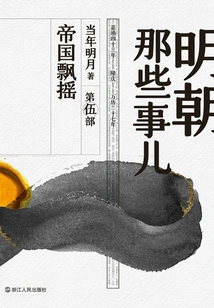
明朝那些事儿·第伍部:帝国飘摇(2020版)
The Bright Moon
In the fifth part of "Those Things in the Ming Dynasty", after the fall of Yan Song, three outstanding politicians, Xu Jie, Gao Gong, and Zhang Juzheng, took turns to appear. The iron-clad cabinet and the smooth chief minister, who is public and who is private? How was the upright official Hai Rui made? During the Wanli period, many famous generals came forward to fight against the Japanese and aid Korea, such as the "unparalleled hero" Li Rusong, the famous Korean general Yi Sunchen who was appointed in critical situations and took on the important task, and the veteran Deng Zilong who refused to retreat and died for his country, etc. Civil servants and generals took turns taking turns, from temple calculations to diplomacy, from war to peace, strategizing and thrilling. The Ming Dynasty was a bloody dynasty, a grotesque dynasty, a strong and tender dynasty, a dynasty that had experienced disasters and was magnificent. The Ming Dynasty is like the folds of Chinese history. Every time you open a chapter, there are wonderful stories, which contain the cultural codes, political logic, and human experience of the Chinese people.
In the fifth part of "Those Things in the Ming Dynasty", after the fall of Yan Song, three outstanding politicians, Xu Jie, Gao Gong, and Zhang Juzheng, took turns to appear. The iron-clad cabinet and the smooth chief minister, who is public and who is private? How was the upright official Hai Rui made? During the Wanli period, many famous generals came forward to fight against the Japanese and aid Korea, such as the "unparalleled hero" Li Rusong, the famous Korean general Yi Sunchen who was appointed in critical situations and took on the important task, and the veteran Deng Zilong who refused to retreat and died for his country, etc. Civil servants and generals took turns taking turns, from temple calculations to diplomacy, from war to peace, strategizing and thrilling. The Ming Dynasty was a bloody dynasty, a grotesque dynasty, a strong and tender dynasty, a dynasty that had experienced disasters and was magnificent. The Ming Dynasty is like the folds of Chinese history. Every time you open a chapter, there are wonderful stories, which contain the cultural codes, political logic, and human experience of the Chinese people.
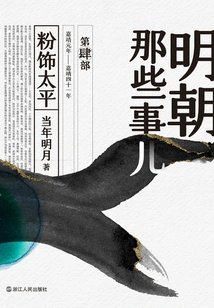
明朝那些事儿·第肆部:粉饰太平(2020版)
The Bright Moon
In the fourth part of "Those Things in the Ming Dynasty", after the death of Emperor Zhengde, the vassal prince's son Zhu Houcong was promoted to the throne as Emperor Jiajing. Emperor Jiajing took advantage of the "dispute over etiquette" to eliminate a group of old ministers from the previous dynasty and take over the power. Since then, his life has become increasingly corrupt. He only wanted to achieve enlightenment and become an immortal, and he forgot about national affairs. As a result, the treacherous Prime Minister Yan Song was able to hold power for a long time. At the same time, the Ming Dynasty was financially empty and its military equipment was depleted. Japanese pirates on the southeast coast and Mongolia in the north became the Ming Dynasty's most serious troubles. Qi Jiguang, a famous anti-Japanese general, jumped onto the stage of history. The Ming Dynasty was a bloody dynasty, a grotesque dynasty, a strong and tender dynasty, a dynasty that had experienced disasters and was magnificent. The Ming Dynasty is like the folds of Chinese history. Every time you open a chapter, there are wonderful stories, which contain the cultural codes, political logic, and human experience of the Chinese people.
In the fourth part of "Those Things in the Ming Dynasty", after the death of Emperor Zhengde, the vassal prince's son Zhu Houcong was promoted to the throne as Emperor Jiajing. Emperor Jiajing took advantage of the "dispute over etiquette" to eliminate a group of old ministers from the previous dynasty and take over the power. Since then, his life has become increasingly corrupt. He only wanted to achieve enlightenment and become an immortal, and he forgot about national affairs. As a result, the treacherous Prime Minister Yan Song was able to hold power for a long time. At the same time, the Ming Dynasty was financially empty and its military equipment was depleted. Japanese pirates on the southeast coast and Mongolia in the north became the Ming Dynasty's most serious troubles. Qi Jiguang, a famous anti-Japanese general, jumped onto the stage of history. The Ming Dynasty was a bloody dynasty, a grotesque dynasty, a strong and tender dynasty, a dynasty that had experienced disasters and was magnificent. The Ming Dynasty is like the folds of Chinese history. Every time you open a chapter, there are wonderful stories, which contain the cultural codes, political logic, and human experience of the Chinese people.
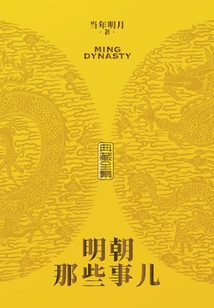
明朝那些事儿(典藏全集)
The Bright Moon
"Those Things in the Ming Dynasty" mainly tells the history of the Ming Dynasty in the three hundred years from 1344 to 1644. It refers to more than 20 kinds of historical materials and notes of the Ming Dynasty, such as "Records of the Ming Dynasty", "Ming Tongjian", "History of the Ming Dynasty", "Ming Dynasty Chronicles", etc. It was reviewed and recommended by Mao Peiqi, an expert on Ming Dynasty. Overlooking the three hundred years of Ming Dynasty history, you can see a different Ming Dynasty.
"Those Things in the Ming Dynasty" mainly tells the history of the Ming Dynasty in the three hundred years from 1344 to 1644. It refers to more than 20 kinds of historical materials and notes of the Ming Dynasty, such as "Records of the Ming Dynasty", "Ming Tongjian", "History of the Ming Dynasty", "Ming Dynasty Chronicles", etc. It was reviewed and recommended by Mao Peiqi, an expert on Ming Dynasty. Overlooking the three hundred years of Ming Dynasty history, you can see a different Ming Dynasty.
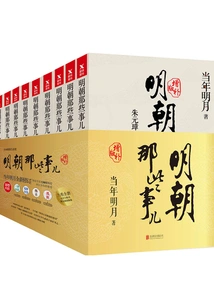
明朝那些事儿(增补版)(套装全九册)
The Bright Moon
"Those Things in the Ming Dynasty (Supplementary Edition) (set of 9 volumes in total)" includes: "Those Things in the Ming Dynasty (Part 1)", "Those Things in the Ming Dynasty (Part 2)", "Those Things in the Ming Dynasty (Part 3)", "Those Things in the Ming Dynasty (Part 4)" )", "Those Things in the Ming Dynasty (Part 5)", "Those Things in the Ming Dynasty (Part 6)", "Those Things in the Ming Dynasty (Part 7)", "Those Things in the Ming Dynasty (Part 8)", "Those Things in the Ming Dynasty (Part 9)", a total of 9 volumes. This book mainly tells about some things about the Ming Dynasty during the three hundred years from 1344 to 1644. It is based on historical materials, with the chronology and specific characters as the main line, and adds the novel's writing style to give a panoramic view of the fate of the seventeen emperors of the Ming Dynasty and other princes, dignitaries and minor figures. It especially focuses on officialdom politics, wars, and the emperor's intentions, and also adds a romance about the political and economic system, human ethics and morality at that time.
"Those Things in the Ming Dynasty (Supplementary Edition) (set of 9 volumes in total)" includes: "Those Things in the Ming Dynasty (Part 1)", "Those Things in the Ming Dynasty (Part 2)", "Those Things in the Ming Dynasty (Part 3)", "Those Things in the Ming Dynasty (Part 4)" )", "Those Things in the Ming Dynasty (Part 5)", "Those Things in the Ming Dynasty (Part 6)", "Those Things in the Ming Dynasty (Part 7)", "Those Things in the Ming Dynasty (Part 8)", "Those Things in the Ming Dynasty (Part 9)", a total of 9 volumes. This book mainly tells about some things about the Ming Dynasty during the three hundred years from 1344 to 1644. It is based on historical materials, with the chronology and specific characters as the main line, and adds the novel's writing style to give a panoramic view of the fate of the seventeen emperors of the Ming Dynasty and other princes, dignitaries and minor figures. It especially focuses on officialdom politics, wars, and the emperor's intentions, and also adds a romance about the political and economic system, human ethics and morality at that time.
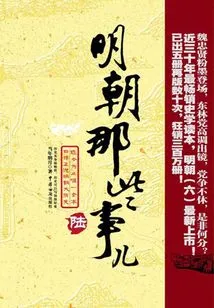
明朝那些事儿6
The Bright Moon
The sixth part of "Those Things in the Ming Dynasty" mainly tells the party struggle caused by the "Three Major Cases" in the late Ming Dynasty, the rise of Wei Zhongxian and Yuan Chonghuan's struggle. Since Zhang Juzheng's death, no one dared to take charge of Wanli. In order to fight for the country's foundation, investigate demonic books, and fight against sap, he started a tug-of-war with ministers and did not go to court for thirty years. As a result, the Donglin Party grew stronger. In order to control the government, it fought openly and covertly with the three parties of Qi, Chu, and Zhejiang. It used the struggle over the country to support the two emperors Mingguang and Xizong to ascend the throne, and successfully took power. Wei Zhongxian, who was born as a commoner, took advantage of Xizong's mediocrity and got close to the emperor's wet nurse, the Hakka family, to start a showdown with the Donglin Party. Outside, after the War of Resistance Against Japan in aid of Korea, the Ming defense line was transferred to Liaodong. After the decline of the nobility, Li Chengliang attacked Mongolia and destroyed the Jurchens, becoming a generation of tycoons, but he was troubled by tigers. Nurhachi took the opportunity to rise and unify the Later Jin Dynasty. In order to resist the Jin, defend the city, and seize the lost territory, under the leadership of the emperor's master Sun Chengzong, Yuan Chonghuan grew from a scholar to a border general, defended the isolated city, and finally defeated Nurhaci.
The sixth part of "Those Things in the Ming Dynasty" mainly tells the party struggle caused by the "Three Major Cases" in the late Ming Dynasty, the rise of Wei Zhongxian and Yuan Chonghuan's struggle. Since Zhang Juzheng's death, no one dared to take charge of Wanli. In order to fight for the country's foundation, investigate demonic books, and fight against sap, he started a tug-of-war with ministers and did not go to court for thirty years. As a result, the Donglin Party grew stronger. In order to control the government, it fought openly and covertly with the three parties of Qi, Chu, and Zhejiang. It used the struggle over the country to support the two emperors Mingguang and Xizong to ascend the throne, and successfully took power. Wei Zhongxian, who was born as a commoner, took advantage of Xizong's mediocrity and got close to the emperor's wet nurse, the Hakka family, to start a showdown with the Donglin Party. Outside, after the War of Resistance Against Japan in aid of Korea, the Ming defense line was transferred to Liaodong. After the decline of the nobility, Li Chengliang attacked Mongolia and destroyed the Jurchens, becoming a generation of tycoons, but he was troubled by tigers. Nurhachi took the opportunity to rise and unify the Later Jin Dynasty. In order to resist the Jin, defend the city, and seize the lost territory, under the leadership of the emperor's master Sun Chengzong, Yuan Chonghuan grew from a scholar to a border general, defended the isolated city, and finally defeated Nurhaci.
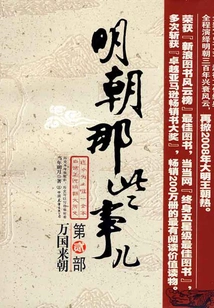
明朝那些事儿2
The Bright Moon
The content of this book begins after the "Battle of Jingnan" when Yongle seized the throne. It first narrates the deeds of the famous Yongle Emperor in Chinese history - he sent his army to the north to conquer Mongolia five times, sent Zheng He to seven voyages to the West, and went south to conquer Pingnan, etc. Later, Yongle died of illness on his way back from the northern expedition to Mongolia. After the Ming Dynasty experienced the relatively clear "Reign of Ren and Xuan", it began to enter a period of turmoil. The great eunuch Wang Zhen controlled the government and acted recklessly, resulting in the death of 200,000 elite soldiers. Fortunately, the famous loyal minister Yu Qian turned the tide in the "Tumubao Incident" and saved the Ming Empire. However, he was later killed after the "Seizing the Gate Incident" in which two emperors competed for the throne. This series of events and characters are all extremely exciting, and it can be said that there are climaxes one after another, which makes people dizzy and unable to stop.
The content of this book begins after the "Battle of Jingnan" when Yongle seized the throne. It first narrates the deeds of the famous Yongle Emperor in Chinese history - he sent his army to the north to conquer Mongolia five times, sent Zheng He to seven voyages to the West, and went south to conquer Pingnan, etc. Later, Yongle died of illness on his way back from the northern expedition to Mongolia. After the Ming Dynasty experienced the relatively clear "Reign of Ren and Xuan", it began to enter a period of turmoil. The great eunuch Wang Zhen controlled the government and acted recklessly, resulting in the death of 200,000 elite soldiers. Fortunately, the famous loyal minister Yu Qian turned the tide in the "Tumubao Incident" and saved the Ming Empire. However, he was later killed after the "Seizing the Gate Incident" in which two emperors competed for the throne. This series of events and characters are all extremely exciting, and it can be said that there are climaxes one after another, which makes people dizzy and unable to stop.
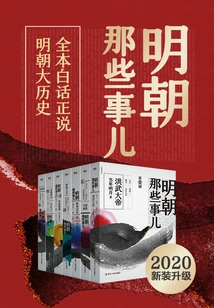
明朝那些事儿·全集(2020版)
The Bright Moon
"Those Things in the Ming Dynasty" mainly talks about the history of the Ming Dynasty in the three hundred years from 1344 to 1644. It refers to more than 20 kinds of historical materials and notes of the Ming Dynasty such as "Ming Dynasty Records", "Ming Tongjian", "Ming History", "Ming History Chronicles", etc. Reviewed and recommended by Mao Peiqi, an expert on Ming history, you can overlook the three hundred years of Ming history and see a different Ming Dynasty: the Ming Dynasty, a bloody dynasty, a bizarre dynasty, a strong and tender dynasty, a dynasty that has experienced disasters and is magnificent. The Ming Dynasty is like the folds of Chinese history. Every time you open a chapter, there are wonderful stories that contain the cultural codes, political logic, and human experience of the Chinese people.
"Those Things in the Ming Dynasty" mainly talks about the history of the Ming Dynasty in the three hundred years from 1344 to 1644. It refers to more than 20 kinds of historical materials and notes of the Ming Dynasty such as "Ming Dynasty Records", "Ming Tongjian", "Ming History", "Ming History Chronicles", etc. Reviewed and recommended by Mao Peiqi, an expert on Ming history, you can overlook the three hundred years of Ming history and see a different Ming Dynasty: the Ming Dynasty, a bloody dynasty, a bizarre dynasty, a strong and tender dynasty, a dynasty that has experienced disasters and is magnificent. The Ming Dynasty is like the folds of Chinese history. Every time you open a chapter, there are wonderful stories that contain the cultural codes, political logic, and human experience of the Chinese people.
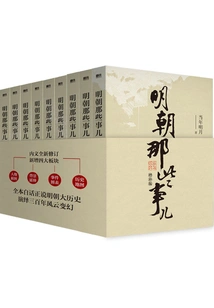
明朝那些事儿·全集(2021年 增补版)
The Bright Moon
This book mainly talks about the history of the Ming Dynasty in the three hundred years from 1344 to 1644. It refers to more than twenty kinds of historical materials and notes of the Ming Dynasty, such as "Records of the Ming Dynasty", "Tongjian of the Ming Dynasty", "History of the Ming Dynasty", "Chronicles of the Ming Dynasty", etc. It is reviewed and recommended by Mao Peiqi, an expert on the history of the Ming Dynasty. Looking at the history of the Ming Dynasty over the past three hundred years, you can see a different Ming Dynasty. Dynasty: In the 276th year of the Ming Dynasty, there have been 16 emperors, and no emperor has a similar routine; follow Zhu Yuanzhang to learn entrepreneurship, the failure of Emperor Jianwen, the power manipulation of Emperor Jiajing, the literary and artistic young Ming Wuzong, the Ming Xiaozong who insisted on monogamy, and the carpenter emperor Ming Xizong; there are so many loyal and righteous people that it is sad to see. Looking coldly at the enemy and shedding tears is a hero. Xu Da, Chang Yuchun, Lan Yu, how to arrange the founding war gods, scholar Yu Qian won the battle to defend Beijing, why Wang Yangming was worshiped by the Japanese, formation madmen Qi Jiguang, Yuan Chonghuan, are they heroes or sinners; interpretation of officialdom politics and imperial power. Regardless of the country, power, world, and people's hearts, the man behind Zhu Di, Yao Guangxiao, \u002FThe multi-faceted life of a generation of upright official Hai Rui\u002FXu Jie, the number one politician in the Ming Dynasty\u002FWho was touched by Zhang Juzheng's reforms. What kind of organization is the Donglin Party? Spring and Autumn Period, poetry and painting, novels and legends, a dynasty with prosperous culture, economy and art, how "Yongle Dadian" was compiled, the prodigal talent Tang Bohu, the emergence of the four great wonders of the Ming Dynasty ("Romance of the Three Kingdoms", "Water Margin", "Journey to the West" and "Jin Ping Mei"), the madman Li Zhi. The Ming Dynasty was a bloody dynasty, a grotesque dynasty, a strong and tender dynasty, a dynasty that had experienced disasters and was magnificent. The Ming Dynasty is like the folds of Chinese history. Every time you open a chapter, there are wonderful stories that contain the cultural codes, political logic, and human experience of the Chinese people.
This book mainly talks about the history of the Ming Dynasty in the three hundred years from 1344 to 1644. It refers to more than twenty kinds of historical materials and notes of the Ming Dynasty, such as "Records of the Ming Dynasty", "Tongjian of the Ming Dynasty", "History of the Ming Dynasty", "Chronicles of the Ming Dynasty", etc. It is reviewed and recommended by Mao Peiqi, an expert on the history of the Ming Dynasty. Looking at the history of the Ming Dynasty over the past three hundred years, you can see a different Ming Dynasty. Dynasty: In the 276th year of the Ming Dynasty, there have been 16 emperors, and no emperor has a similar routine; follow Zhu Yuanzhang to learn entrepreneurship, the failure of Emperor Jianwen, the power manipulation of Emperor Jiajing, the literary and artistic young Ming Wuzong, the Ming Xiaozong who insisted on monogamy, and the carpenter emperor Ming Xizong; there are so many loyal and righteous people that it is sad to see. Looking coldly at the enemy and shedding tears is a hero. Xu Da, Chang Yuchun, Lan Yu, how to arrange the founding war gods, scholar Yu Qian won the battle to defend Beijing, why Wang Yangming was worshiped by the Japanese, formation madmen Qi Jiguang, Yuan Chonghuan, are they heroes or sinners; interpretation of officialdom politics and imperial power. Regardless of the country, power, world, and people's hearts, the man behind Zhu Di, Yao Guangxiao, \u002FThe multi-faceted life of a generation of upright official Hai Rui\u002FXu Jie, the number one politician in the Ming Dynasty\u002FWho was touched by Zhang Juzheng's reforms. What kind of organization is the Donglin Party? Spring and Autumn Period, poetry and painting, novels and legends, a dynasty with prosperous culture, economy and art, how "Yongle Dadian" was compiled, the prodigal talent Tang Bohu, the emergence of the four great wonders of the Ming Dynasty ("Romance of the Three Kingdoms", "Water Margin", "Journey to the West" and "Jin Ping Mei"), the madman Li Zhi. The Ming Dynasty was a bloody dynasty, a grotesque dynasty, a strong and tender dynasty, a dynasty that had experienced disasters and was magnificent. The Ming Dynasty is like the folds of Chinese history. Every time you open a chapter, there are wonderful stories that contain the cultural codes, political logic, and human experience of the Chinese people.
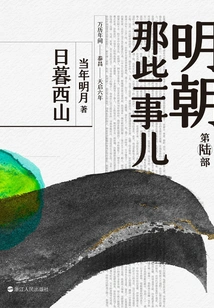
明朝那些事儿·第陆部:日暮西山(2020版)
The Bright Moon
"Those Things in the Ming Dynasty" Chapter 3: Emperor Wanli reigned for forty-eight years but did not go to court for thirty years. The Donglin Party took the opportunity to rise and supported Emperors Guangzong and Xizong to ascend the throne. Wei Zhongxian took advantage of Xizong's mediocrity and gradually became prosperous by clinging to the emperor's wet nurse, the Hakka family, and started a duel with the Donglin Party. After the War to Resist Japan and Aid Korea, the Ming Dynasty's defense line shifted to Liaodong. Li Chengliang raised tigers to cause trouble, and Nurhachi took the opportunity to rise. Yuan Chonghuan grew from a scholar to a frontier general, defended the isolated city, and finally defeated Nurhachi. The civil-official struggle that lasted for half a century witnessed the empire turning from prosperity to decline, the border peoples took advantage of the momentum to grow, the border troops retreated one after another, the endless good and bad human nature, endless wars and disputes... The Ming Dynasty was a bloody dynasty, a bizarre dynasty, a powerful and tender dynasty, a dynasty that had experienced disasters and was magnificent. The Ming Dynasty is like the folds of Chinese history. Every time you open a chapter, there are wonderful stories, which contain the cultural codes, political logic, and human experience of the Chinese people.
"Those Things in the Ming Dynasty" Chapter 3: Emperor Wanli reigned for forty-eight years but did not go to court for thirty years. The Donglin Party took the opportunity to rise and supported Emperors Guangzong and Xizong to ascend the throne. Wei Zhongxian took advantage of Xizong's mediocrity and gradually became prosperous by clinging to the emperor's wet nurse, the Hakka family, and started a duel with the Donglin Party. After the War to Resist Japan and Aid Korea, the Ming Dynasty's defense line shifted to Liaodong. Li Chengliang raised tigers to cause trouble, and Nurhachi took the opportunity to rise. Yuan Chonghuan grew from a scholar to a frontier general, defended the isolated city, and finally defeated Nurhachi. The civil-official struggle that lasted for half a century witnessed the empire turning from prosperity to decline, the border peoples took advantage of the momentum to grow, the border troops retreated one after another, the endless good and bad human nature, endless wars and disputes... The Ming Dynasty was a bloody dynasty, a bizarre dynasty, a powerful and tender dynasty, a dynasty that had experienced disasters and was magnificent. The Ming Dynasty is like the folds of Chinese history. Every time you open a chapter, there are wonderful stories, which contain the cultural codes, political logic, and human experience of the Chinese people.
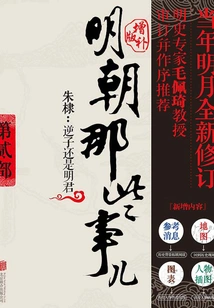
明朝那些事儿2:增补版
The Bright Moon
The second part of "Those Things in the Ming Dynasty" mainly tells the history of the twenty-six years from Emperor Jianwen to Yongle. Before Zhu Yuanzhang died of illness, he confidently passed the throne to his grandson Zhu Yunwen. Subtle instability was brewing in the seemingly orderly succession of the Ming Dynasty. The nine border-guarding vassal kings held heavy troops. The young and weak Zhu Yunwen always felt threatened and began to reduce the vassal policy. King Zhu Di of Yan responded and rebelled, thus provoking a four-year peace war. How could Zhu Yunwen, who had taken advantage of the right time, location, and people, be forced to lose his strength and change hands? Zhu Di went from resisting despite the reputation of being a rebel to marching straight into Beijing with his troops. During this period, he experienced many crises and miraculously escaped from death many times. Is there really a destiny? Fang Xiaoru, Tie Xuan, Dao Yan... Loyal ministers and good generals all showed their true colors, creating momentum and slandering Fang Qiu. The impact of this war has not dissipated. Jianwen's old ministers were driven out and killed, and the unknown whereabouts of Zhu Yunwen's life and death have become an eternal mystery. But no matter what, Zhu Di started his career as a king and single-handedly created a prosperous dynasty, a great country that everyone looked up to, the Ming Dynasty!
The second part of "Those Things in the Ming Dynasty" mainly tells the history of the twenty-six years from Emperor Jianwen to Yongle. Before Zhu Yuanzhang died of illness, he confidently passed the throne to his grandson Zhu Yunwen. Subtle instability was brewing in the seemingly orderly succession of the Ming Dynasty. The nine border-guarding vassal kings held heavy troops. The young and weak Zhu Yunwen always felt threatened and began to reduce the vassal policy. King Zhu Di of Yan responded and rebelled, thus provoking a four-year peace war. How could Zhu Yunwen, who had taken advantage of the right time, location, and people, be forced to lose his strength and change hands? Zhu Di went from resisting despite the reputation of being a rebel to marching straight into Beijing with his troops. During this period, he experienced many crises and miraculously escaped from death many times. Is there really a destiny? Fang Xiaoru, Tie Xuan, Dao Yan... Loyal ministers and good generals all showed their true colors, creating momentum and slandering Fang Qiu. The impact of this war has not dissipated. Jianwen's old ministers were driven out and killed, and the unknown whereabouts of Zhu Yunwen's life and death have become an eternal mystery. But no matter what, Zhu Di started his career as a king and single-handedly created a prosperous dynasty, a great country that everyone looked up to, the Ming Dynasty!
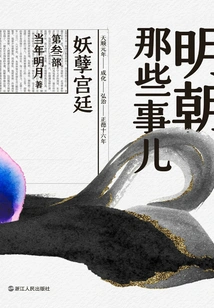
明朝那些事儿·第叁部:妖孽宫廷(2020版)
The Bright Moon
In the third part of "Those Things in the Ming Dynasty", Zhu Qizhen, the Yingzong of the Ming Dynasty, listened to the slander and killed the great hero Yu Qian, which became another major historical stain left by him after the "Tumubao Incident". After Yingzong died of illness, two emperors, Xianzong and Xiaozong, came to the throne one after another. One was too cowardly to do anything, and the other was too ambitious and weak to do anything. This heavy burden fell on a playful and boisterous emperor, Zhu Houzhao, who pampered the Eight Tigers, built a leopard house, and proclaimed himself a "mighty general." The court was filled with scenes of absurd farce, and the situation was even more turbulent.
In the third part of "Those Things in the Ming Dynasty", Zhu Qizhen, the Yingzong of the Ming Dynasty, listened to the slander and killed the great hero Yu Qian, which became another major historical stain left by him after the "Tumubao Incident". After Yingzong died of illness, two emperors, Xianzong and Xiaozong, came to the throne one after another. One was too cowardly to do anything, and the other was too ambitious and weak to do anything. This heavy burden fell on a playful and boisterous emperor, Zhu Houzhao, who pampered the Eight Tigers, built a leopard house, and proclaimed himself a "mighty general." The court was filled with scenes of absurd farce, and the situation was even more turbulent.
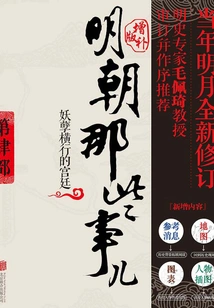
明朝那些事儿4:增补版
The Bright Moon
The fourth part of "Those Things in the Ming Dynasty" mainly tells the history of more than fifty years from Ming Xiaozong's succession to the Renyin Palace Incident. After Zhu Youtang ascended the throne after going through many hardships, he worked closely with virtuous ministers and distant villains, and worked hard to govern, and the political atmosphere in the court was completely renewed. With the assistance of Wang Shu, Ma Wensheng and others, the Ming Dynasty flourished and showed a rejuvenating atmosphere. Unfortunately, Xiaozong died young and was succeeded by his son Zhu Houzhao. This prodigal emperor, known for his playfulness, did not want to make progress and indulged in pleasure. The power of the government fell into the hands of Liu Jin and others, which turned a good empire into a mess and greatly damaged its vitality. Soon, King Ning, who had been planning for a long time, launched a rebellion and wanted to rule across the river from the imperial court. Fortunately, Wang Shouren, the most outstanding person in the Ming Dynasty, turned the tide and avoided a protracted internal strife. In response to this, Zhu Houzhao not only refused to repent, but intensified his efforts, traveling around in the name of personal expedition, and ultimately lost his life. After careful consideration by Yang Tinghe and others, Zhu Houcong, the son of the feudal lord, was promoted to the throne. Around the issue of the names of the biological parents, the famous "Great Etiquette" event broke out between the emperor and his ministers. In the end, Emperor Jiajing won and the imperial power was consolidated. At this moment, a strange change occurred in Renyin Palace, and the political situation of the entire empire began to become subtle...
The fourth part of "Those Things in the Ming Dynasty" mainly tells the history of more than fifty years from Ming Xiaozong's succession to the Renyin Palace Incident. After Zhu Youtang ascended the throne after going through many hardships, he worked closely with virtuous ministers and distant villains, and worked hard to govern, and the political atmosphere in the court was completely renewed. With the assistance of Wang Shu, Ma Wensheng and others, the Ming Dynasty flourished and showed a rejuvenating atmosphere. Unfortunately, Xiaozong died young and was succeeded by his son Zhu Houzhao. This prodigal emperor, known for his playfulness, did not want to make progress and indulged in pleasure. The power of the government fell into the hands of Liu Jin and others, which turned a good empire into a mess and greatly damaged its vitality. Soon, King Ning, who had been planning for a long time, launched a rebellion and wanted to rule across the river from the imperial court. Fortunately, Wang Shouren, the most outstanding person in the Ming Dynasty, turned the tide and avoided a protracted internal strife. In response to this, Zhu Houzhao not only refused to repent, but intensified his efforts, traveling around in the name of personal expedition, and ultimately lost his life. After careful consideration by Yang Tinghe and others, Zhu Houcong, the son of the feudal lord, was promoted to the throne. Around the issue of the names of the biological parents, the famous "Great Etiquette" event broke out between the emperor and his ministers. In the end, Emperor Jiajing won and the imperial power was consolidated. At this moment, a strange change occurred in Renyin Palace, and the political situation of the entire empire began to become subtle...
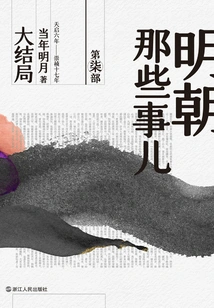
明朝那些事儿·第柒部:大结局(2020版)
The Bright Moon
In Part 7 of "Those Things in the Ming Dynasty", there are always different opinions on whether Chongzhen, the last emperor of the Ming Dynasty, was a mediocre and incompetent emperor, or a man who strived to rise. After nearly three hundred years of unification, the Ming Dynasty came to the end of its life, suffering from internal and external troubles and constant disputes. Despite Chongzhen's best efforts, it was difficult to turn things around in the face of frequent natural disasters, the eyeing cavalry outside the Pass, and the blazing fire of peasant uprisings. The storm is swaying and the building is about to collapse. Nothing can stop the great changes of history! The Ming Dynasty was a bloody dynasty, a grotesque dynasty, a strong and tender dynasty, a dynasty that had experienced disasters and was magnificent. The Ming Dynasty is like the folds of Chinese history. Every time you open a chapter, there are wonderful stories, which contain the cultural codes, political logic, and human experience of the Chinese people.
In Part 7 of "Those Things in the Ming Dynasty", there are always different opinions on whether Chongzhen, the last emperor of the Ming Dynasty, was a mediocre and incompetent emperor, or a man who strived to rise. After nearly three hundred years of unification, the Ming Dynasty came to the end of its life, suffering from internal and external troubles and constant disputes. Despite Chongzhen's best efforts, it was difficult to turn things around in the face of frequent natural disasters, the eyeing cavalry outside the Pass, and the blazing fire of peasant uprisings. The storm is swaying and the building is about to collapse. Nothing can stop the great changes of history! The Ming Dynasty was a bloody dynasty, a grotesque dynasty, a strong and tender dynasty, a dynasty that had experienced disasters and was magnificent. The Ming Dynasty is like the folds of Chinese history. Every time you open a chapter, there are wonderful stories, which contain the cultural codes, political logic, and human experience of the Chinese people.
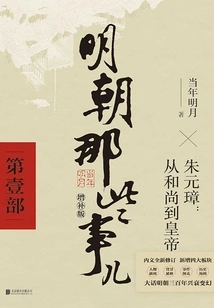
明朝那些事儿·第壹部(2021年 增补版)
The Bright Moon
Zhu Yuanzhang was born in the chaotic times of the late Yuan Dynasty, and his parents died of famine. He started from abject poverty, with no background, no backing, and no support. He went through untold hardships and escaped the pursuit of death countless times, and finally established the surname Zhu. From a ragged beggar begging on the street to the ruler of a huge empire. At the same time, there were countless powerful characters in Zhu Yuanzhang's era. Chen Youliang, Zhang Shicheng, and Wang Baobao were all outstanding figures of the generation. Zhu Yuanzhang used his astonishing military talent to defeat these enemies, almost with his bare hands, single-handedly established a huge empire with his own courage and determination, and used his infinite energy to design a set of institutional norms for the Ming Dynasty that was different from the past.
Zhu Yuanzhang was born in the chaotic times of the late Yuan Dynasty, and his parents died of famine. He started from abject poverty, with no background, no backing, and no support. He went through untold hardships and escaped the pursuit of death countless times, and finally established the surname Zhu. From a ragged beggar begging on the street to the ruler of a huge empire. At the same time, there were countless powerful characters in Zhu Yuanzhang's era. Chen Youliang, Zhang Shicheng, and Wang Baobao were all outstanding figures of the generation. Zhu Yuanzhang used his astonishing military talent to defeat these enemies, almost with his bare hands, single-handedly established a huge empire with his own courage and determination, and used his infinite energy to design a set of institutional norms for the Ming Dynasty that was different from the past.
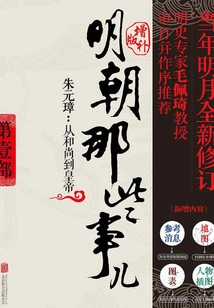
明朝那些事儿1:增补版
The Bright Moon
The first part of "Those Things in the Ming Dynasty" mainly tells the history of Zhu Yuanzhang's establishment and rule of the Ming Dynasty for seventy years. Zhu Yuanzhang was born in the chaotic times of the late Yuan Dynasty, and his parents died of famine. He started from abject poverty, with no background, no backing, and no support. He went through untold hardships and escaped death countless times, and finally established the surname Zhu. From a ragged beggar begging on the street, he became the supreme ruler of a huge empire. At the same time, there were countless powerful characters in Zhu Yuanzhang's era. Chen Youliang, Zhang Shicheng, and Wang Baobao were all outstanding figures of the generation. Zhu Yuanzhang used his astonishing military talent to defeat these enemies, almost with his bare hands, single-handedly established a huge empire with his own courage and determination, and used his infinite energy to design a set of institutional norms for the Ming Dynasty that was different from the past.
The first part of "Those Things in the Ming Dynasty" mainly tells the history of Zhu Yuanzhang's establishment and rule of the Ming Dynasty for seventy years. Zhu Yuanzhang was born in the chaotic times of the late Yuan Dynasty, and his parents died of famine. He started from abject poverty, with no background, no backing, and no support. He went through untold hardships and escaped death countless times, and finally established the surname Zhu. From a ragged beggar begging on the street, he became the supreme ruler of a huge empire. At the same time, there were countless powerful characters in Zhu Yuanzhang's era. Chen Youliang, Zhang Shicheng, and Wang Baobao were all outstanding figures of the generation. Zhu Yuanzhang used his astonishing military talent to defeat these enemies, almost with his bare hands, single-handedly established a huge empire with his own courage and determination, and used his infinite energy to design a set of institutional norms for the Ming Dynasty that was different from the past.
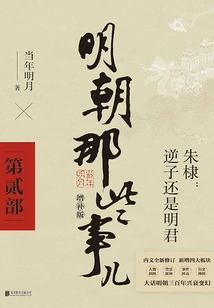
明朝那些事儿·第贰部(2021年 增补版)
The Bright Moon
Before Zhu Yuanzhang died of illness, he confidently passed the throne to his grandson Zhu Yunwen. Subtle instability was brewing in the seemingly orderly succession of the Ming Dynasty. The nine border-guarding vassal kings held heavy troops. The young and weak Zhu Yunwen always felt threatened and began to reduce the vassal policy. King Zhu Di of Yan responded and rebelled, thus provoking a four-year peace war. How could Zhu Yunwen, who had taken advantage of the right time, location, and people, be forced to lose his strength and change hands? Zhu Di went from resisting despite the reputation of being a rebel to marching straight into Beijing with his troops. During this period, he experienced many crises and miraculously escaped from death many times. Is there really a destiny? Fang Xiaoru, Tie Xuan, Dao Yan... Loyal ministers and good generals all showed their true colors, creating momentum and slandering Fang Qiu. The impact of this war has not dissipated. Jianwen's old ministers were driven out and killed, and the unknown whereabouts of Zhu Yunwen's life and death have become an eternal mystery. But no matter what, Zhu Di started his career as a king and single-handedly created a prosperous dynasty, a great country that everyone looked up to, the Ming Dynasty!
Before Zhu Yuanzhang died of illness, he confidently passed the throne to his grandson Zhu Yunwen. Subtle instability was brewing in the seemingly orderly succession of the Ming Dynasty. The nine border-guarding vassal kings held heavy troops. The young and weak Zhu Yunwen always felt threatened and began to reduce the vassal policy. King Zhu Di of Yan responded and rebelled, thus provoking a four-year peace war. How could Zhu Yunwen, who had taken advantage of the right time, location, and people, be forced to lose his strength and change hands? Zhu Di went from resisting despite the reputation of being a rebel to marching straight into Beijing with his troops. During this period, he experienced many crises and miraculously escaped from death many times. Is there really a destiny? Fang Xiaoru, Tie Xuan, Dao Yan... Loyal ministers and good generals all showed their true colors, creating momentum and slandering Fang Qiu. The impact of this war has not dissipated. Jianwen's old ministers were driven out and killed, and the unknown whereabouts of Zhu Yunwen's life and death have become an eternal mystery. But no matter what, Zhu Di started his career as a king and single-handedly created a prosperous dynasty, a great country that everyone looked up to, the Ming Dynasty!
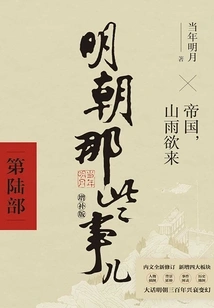
明朝那些事儿·第陆部(2021年 增补版)
The Bright Moon
This book is the sixth part of "Those Things in the Ming Dynasty". It mainly tells the history of the Sino-Japanese War in the past thirty years from the end of Jiajing to the Wanli period. Yan Song fell, and Xu Jie took over; Gao Gong stepped down, and Zhang Juzheng took over... The iron-clad cabinet, the flowing chief minister, and the conspiracy behind it, who is public and who is private? Jiajing died of illness and Longqing ascended the throne; Mu Zong withdrew and Shenzong came to power... In the hands of these three emperors, the Ming Empire, which lasted for more than 200 years, was prospering or deteriorating? How was the upright official Hai Rui made? Where did the Three Great Conquests of Wanli begin and how did they end? During the Wanli period, what was the result of resisting Japanese aggression and aiding Korea? Xu Jie, Yin Shidan, Li Chunfang, Gao Gong, Zhang Juzheng, Shen Shixing, Li Chengliang, Qi Jiguang, Wang Chonggu, Li Rusong, Wu Weizhong, etc. In the empire, a storm is about to come, and civil servants and military generals take turns going into battle, holding up the sky with one hand, trying to turn the tide before it falls. Change is the theme of the times.
This book is the sixth part of "Those Things in the Ming Dynasty". It mainly tells the history of the Sino-Japanese War in the past thirty years from the end of Jiajing to the Wanli period. Yan Song fell, and Xu Jie took over; Gao Gong stepped down, and Zhang Juzheng took over... The iron-clad cabinet, the flowing chief minister, and the conspiracy behind it, who is public and who is private? Jiajing died of illness and Longqing ascended the throne; Mu Zong withdrew and Shenzong came to power... In the hands of these three emperors, the Ming Empire, which lasted for more than 200 years, was prospering or deteriorating? How was the upright official Hai Rui made? Where did the Three Great Conquests of Wanli begin and how did they end? During the Wanli period, what was the result of resisting Japanese aggression and aiding Korea? Xu Jie, Yin Shidan, Li Chunfang, Gao Gong, Zhang Juzheng, Shen Shixing, Li Chengliang, Qi Jiguang, Wang Chonggu, Li Rusong, Wu Weizhong, etc. In the empire, a storm is about to come, and civil servants and military generals take turns going into battle, holding up the sky with one hand, trying to turn the tide before it falls. Change is the theme of the times.
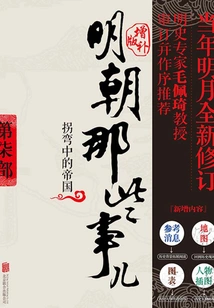
明朝那些事儿7:增补版
The Bright Moon
The seventh part of "Those Things in the Ming Dynasty" mainly tells the history of the 27 years from the Sino-Japanese War in the Wanli Period to the accession of Ming Xizong to the throne. During the Wanli period, there were internal and external troubles, Japanese and Korean invasions from outside, and rebellions from all over the country. The melee between daimyo in Japan was coming to an end, but they had great ambitions for the Ming Dynasty. Toyotomi Hideyoshi, Tokugawa Ieyasu and others all coveted the Ming Dynasty. From negotiations to war, the Ming Dynasty, which had always underestimated Japan, was caught off guard. Many famous generals came forward from the war, and the war with Japan also ended the life of Toyotomi Hideyoshi. There was no peace in the court either. The emergence of Shen Shixing opened a new political period. Twenty years after Zhang Juzheng's death, Shen Shixing took charge of Wanli alone. The enemies in front of him were Ding Jilü, Li Zhi, Jiang Dongzhi, Yang Keli... This was another bloody storm in the temple. But the turmoil during the Wanli period did not stop there. After that, there was the rebellion of the Donglin Party, the fight for concubines in the palace, the fight for the throne, and a eunuch named Wang An appeared on the historical stage of the Ming Dynasty.
The seventh part of "Those Things in the Ming Dynasty" mainly tells the history of the 27 years from the Sino-Japanese War in the Wanli Period to the accession of Ming Xizong to the throne. During the Wanli period, there were internal and external troubles, Japanese and Korean invasions from outside, and rebellions from all over the country. The melee between daimyo in Japan was coming to an end, but they had great ambitions for the Ming Dynasty. Toyotomi Hideyoshi, Tokugawa Ieyasu and others all coveted the Ming Dynasty. From negotiations to war, the Ming Dynasty, which had always underestimated Japan, was caught off guard. Many famous generals came forward from the war, and the war with Japan also ended the life of Toyotomi Hideyoshi. There was no peace in the court either. The emergence of Shen Shixing opened a new political period. Twenty years after Zhang Juzheng's death, Shen Shixing took charge of Wanli alone. The enemies in front of him were Ding Jilü, Li Zhi, Jiang Dongzhi, Yang Keli... This was another bloody storm in the temple. But the turmoil during the Wanli period did not stop there. After that, there was the rebellion of the Donglin Party, the fight for concubines in the palace, the fight for the throne, and a eunuch named Wang An appeared on the historical stage of the Ming Dynasty.
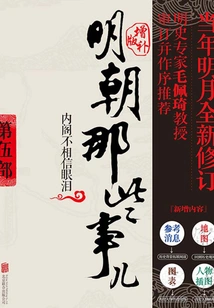
明朝那些事儿5:增补版
The Bright Moon
The fifth part of "Those Things in the Ming Dynasty" mainly tells the history of the middle and late Jiajing period. This volume unfolds a thrilling historical story around the political struggle in the cabinet between the famous traitor Yan Song of the Ming Dynasty and his opponents. This period of history spans more than 50 years from Yan Song's rise to power to his downfall. During this period, Xia Yan, who spoke out for justice, Xu Jie, who tolerated revenge, Lu Bing, who secretly betrayed the pearl, and Yan Shifan, who was treacherous and evil, appeared in turn, and Gao Gong and Zhang Juzheng also came to the fore. These political talents intertwined into a large network in the officialdom, fighting openly and secretly. The current emperor, Emperor Jiajing, was reduced from a king who manipulated his ministers into a tool for their ministers to manipulate power. Although there was no battlefield in the cabinet, there was secretly a bloody storm. The cabinet does not believe in tears, nor in absolute good and evil.
The fifth part of "Those Things in the Ming Dynasty" mainly tells the history of the middle and late Jiajing period. This volume unfolds a thrilling historical story around the political struggle in the cabinet between the famous traitor Yan Song of the Ming Dynasty and his opponents. This period of history spans more than 50 years from Yan Song's rise to power to his downfall. During this period, Xia Yan, who spoke out for justice, Xu Jie, who tolerated revenge, Lu Bing, who secretly betrayed the pearl, and Yan Shifan, who was treacherous and evil, appeared in turn, and Gao Gong and Zhang Juzheng also came to the fore. These political talents intertwined into a large network in the officialdom, fighting openly and secretly. The current emperor, Emperor Jiajing, was reduced from a king who manipulated his ministers into a tool for their ministers to manipulate power. Although there was no battlefield in the cabinet, there was secretly a bloody storm. The cabinet does not believe in tears, nor in absolute good and evil.
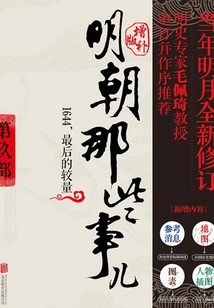
明朝那些事儿9:增补版
The Bright Moon
The ninth part of "Those Things in the Ming Dynasty" mainly tells the history from the second year of Chongzhen to the sixteenth year of the Ming Dynasty. Outside the Liaodong Pass, even though Jinzhou-Ningyuan-Shanhai Pass are impregnable, they are still attacked repeatedly! In the six provinces of Zhili, disasters were frequent. Zhang Xianzhong, Li Zicheng, and the rebel armies were like ants, endlessly exterminated! Ministers of the Ming Dynasty, don't you work hard enough? Is the Chongzhen Dynasty about to run out of steam? The general trend of the world is that if we divide for a long time, we will unite, and if we unite for a long time, we will divide. After nearly 300 years of unification, the Ming Dynasty ushered in the last moment of its life. It was faced with internal and external troubles and constant disputes. The east wall was demolished to repair the west wall. In the end, it could not be demolished or repaired. Even though Chongzhen tried his best, it was difficult to turn things around. Forbidden City, Jingshan, small trees, the Ming Dynasty, looking back for the last time!
The ninth part of "Those Things in the Ming Dynasty" mainly tells the history from the second year of Chongzhen to the sixteenth year of the Ming Dynasty. Outside the Liaodong Pass, even though Jinzhou-Ningyuan-Shanhai Pass are impregnable, they are still attacked repeatedly! In the six provinces of Zhili, disasters were frequent. Zhang Xianzhong, Li Zicheng, and the rebel armies were like ants, endlessly exterminated! Ministers of the Ming Dynasty, don't you work hard enough? Is the Chongzhen Dynasty about to run out of steam? The general trend of the world is that if we divide for a long time, we will unite, and if we unite for a long time, we will divide. After nearly 300 years of unification, the Ming Dynasty ushered in the last moment of its life. It was faced with internal and external troubles and constant disputes. The east wall was demolished to repair the west wall. In the end, it could not be demolished or repaired. Even though Chongzhen tried his best, it was difficult to turn things around. Forbidden City, Jingshan, small trees, the Ming Dynasty, looking back for the last time!
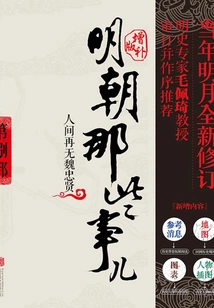
明朝那些事儿8:增补版
The Bright Moon
The eighth part of "Those Things in the Ming Dynasty" mainly tells the history of the past ten years from Emperor Xizong of Ming Dynasty to Emperor Chongzhen. After Tianqi succeeded to the throne, he ignored the government affairs and indulged in carpentry work. The entire empire was suffering from internal and external troubles and was lifeless: Internally, the Donglin Party took the opportunity to control the government, but internally the Qi, Chu, and Zhejiang factions still fought openly and secretly and enjoyed it. During this period, the eunuch Wei Zhongxian gradually became prosperous. He took advantage of Zhu Youxiao's mediocrity and gradually climbed up the political ladder by clinging to the emperor's wet nurse, the Hakka family. However, after Emperor Chongzhen succeeded to the throne, he liquidated the eunuch party. Wei Zhongxian was desperate and finally chose to kill himself. However, the entire empire was greatly damaged as a result. Externally, because Li Chengliang was troubled by raising tigers, Nurhachi took the opportunity to rise and unify the Later Jin Dynasty. In order to resist the Jin, defend the city, and seize the lost territory, under the leadership of the imperial master Sun Chengzong, Yuan Chonghuan grew from a scholar to a frontier general. However, just when he was about to display his ambition, a huge crisis had been brewing for a long time...
The eighth part of "Those Things in the Ming Dynasty" mainly tells the history of the past ten years from Emperor Xizong of Ming Dynasty to Emperor Chongzhen. After Tianqi succeeded to the throne, he ignored the government affairs and indulged in carpentry work. The entire empire was suffering from internal and external troubles and was lifeless: Internally, the Donglin Party took the opportunity to control the government, but internally the Qi, Chu, and Zhejiang factions still fought openly and secretly and enjoyed it. During this period, the eunuch Wei Zhongxian gradually became prosperous. He took advantage of Zhu Youxiao's mediocrity and gradually climbed up the political ladder by clinging to the emperor's wet nurse, the Hakka family. However, after Emperor Chongzhen succeeded to the throne, he liquidated the eunuch party. Wei Zhongxian was desperate and finally chose to kill himself. However, the entire empire was greatly damaged as a result. Externally, because Li Chengliang was troubled by raising tigers, Nurhachi took the opportunity to rise and unify the Later Jin Dynasty. In order to resist the Jin, defend the city, and seize the lost territory, under the leadership of the imperial master Sun Chengzong, Yuan Chonghuan grew from a scholar to a frontier general. However, just when he was about to display his ambition, a huge crisis had been brewing for a long time...
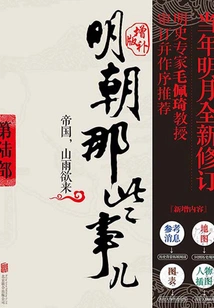
明朝那些事儿6:增补版
The Bright Moon
The sixth part of "Those Things in the Ming Dynasty" mainly tells the history of the Sino-Japanese War for nearly thirty years from the late Jiajing period to the Wanli period. Yan Song fell, and Xu Jie took over; Gao Gong stepped down, and Zhang Juzheng took over... The iron-clad cabinet, the flowing chief minister, and the conspiracy behind it, who is public and who is private? Jiajing died of illness and Longqing ascended the throne; Mu Zong withdrew and Shenzong came to power... In the hands of these three emperors, the Ming Empire, which lasted for more than 200 years, was prospering or deteriorating? How was the upright official Hai Rui made? Where did the Three Great Conquests of Wanli begin and how did they end? During the Wanli period, what was the result of resisting Japanese aggression and aiding Korea? Xu Jie, Yin Shidan, Li Chunfang, Gao Gong, Zhang Juzheng, Shen Shixing... Li Chengliang, Qi Jiguang, Wang Chonggu, Li Rusong, Wu Weizhong... In the empire, a storm is about to come, and civil servants and generals take turns going into battle, holding up the sky with one hand, trying to turn the tide. Change is the theme of the times.
The sixth part of "Those Things in the Ming Dynasty" mainly tells the history of the Sino-Japanese War for nearly thirty years from the late Jiajing period to the Wanli period. Yan Song fell, and Xu Jie took over; Gao Gong stepped down, and Zhang Juzheng took over... The iron-clad cabinet, the flowing chief minister, and the conspiracy behind it, who is public and who is private? Jiajing died of illness and Longqing ascended the throne; Mu Zong withdrew and Shenzong came to power... In the hands of these three emperors, the Ming Empire, which lasted for more than 200 years, was prospering or deteriorating? How was the upright official Hai Rui made? Where did the Three Great Conquests of Wanli begin and how did they end? During the Wanli period, what was the result of resisting Japanese aggression and aiding Korea? Xu Jie, Yin Shidan, Li Chunfang, Gao Gong, Zhang Juzheng, Shen Shixing... Li Chengliang, Qi Jiguang, Wang Chonggu, Li Rusong, Wu Weizhong... In the empire, a storm is about to come, and civil servants and generals take turns going into battle, holding up the sky with one hand, trying to turn the tide. Change is the theme of the times.
明朝那些事儿3:增补版
The Bright Moon
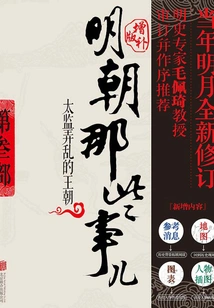
The third part of "Those Things in the Ming Dynasty" mainly tells the history of more than sixty years from the Hongxi period to the Chenghua period. After Zhu Di, the Ming Dynasty ushered in two wise emperors - Zhu Gaochi and his son Zhu Zhanji. They created a prosperous age of benevolence and xuanji that lasted for eleven years. The country's power increased and the country was peaceful. The rebellious prince Zhu Gaoxu could only end his unsuccessful rebellion as a clown. However, a violent storm is coming. An emperor who experienced the legendary life of emperor-prisoner-emperor, the appearance of a man who could be called the second strongest man in the Ming Dynasty, the chaos of the first authoritarian eunuch in the Ming Dynasty, the appalling civil engineering changes, and the antagonism between the emperor's brothers all made the events of this era more dazzling and full of ups and downs. During the Chenghua period, the emperor started a sibling relationship, and the ministers were divided into five major martial arts sects, which made the government of this dynasty extremely dark and full of flowers, chaotic and colorful...
The third part of "Those Things in the Ming Dynasty" mainly tells the history of more than sixty years from the Hongxi period to the Chenghua period. After Zhu Di, the Ming Dynasty ushered in two wise emperors - Zhu Gaochi and his son Zhu Zhanji. They created a prosperous age of benevolence and xuanji that lasted for eleven years. The country's power increased and the country was peaceful. The rebellious prince Zhu Gaoxu could only end his unsuccessful rebellion as a clown. However, a violent storm is coming. An emperor who experienced the legendary life of emperor-prisoner-emperor, the appearance of a man who could be called the second strongest man in the Ming Dynasty, the chaos of the first authoritarian eunuch in the Ming Dynasty, the appalling civil engineering changes, and the antagonism between the emperor's brothers all made the events of this era more dazzling and full of ups and downs. During the Chenghua period, the emperor started a sibling relationship, and the ministers were divided into five major martial arts sects, which made the government of this dynasty extremely dark and full of flowers, chaotic and colorful...
明朝那些事儿·第肆部(2021年 增补版)
The Bright Moon
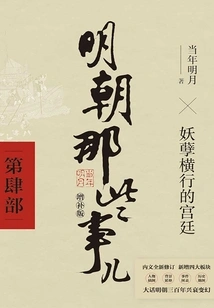
This book is the fourth part of "Those Things in the Ming Dynasty". It mainly tells the history of more than fifty years from Ming Xiaozong's succession to the Renyin Palace Incident. After Zhu Youtang ascended the throne after going through many hardships, he worked closely with virtuous ministers and distant villains, and worked hard to govern, and the political atmosphere in the court was completely renewed. With the assistance of Wang Shu, Ma Wensheng and others, the Ming Dynasty flourished and showed a rejuvenating atmosphere. Unfortunately, Xiaozong died young and was succeeded by his son Zhu Houzhao. This prodigal emperor, known for his playfulness, did not want to make progress and indulged in pleasure. The power of the government fell into the hands of Liu Jin and others, which turned a good empire into a mess and greatly damaged its vitality. Soon, King Ning, who had been planning for a long time, launched a rebellion and wanted to rule across the river from the imperial court. Fortunately, Wang Shouren, the most outstanding person in the Ming Dynasty, turned the tide and avoided a protracted internal strife. In response to this, Zhu Houzhao not only refused to repent, but intensified his efforts, traveling around in the name of personal expedition, and ultimately lost his life. After careful consideration by Yang Tinghe and others, Zhu Houcong, the son of the feudal lord, was promoted to the throne. Around the issue of the names of the biological parents, the famous "Great Etiquette" event broke out between the emperor and his ministers. In the end, Emperor Jiajing won and the imperial power was consolidated. At this time, a strange change occurred in Renyin Palace, and the political situation of the entire empire began to become subtle.
This book is the fourth part of "Those Things in the Ming Dynasty". It mainly tells the history of more than fifty years from Ming Xiaozong's succession to the Renyin Palace Incident. After Zhu Youtang ascended the throne after going through many hardships, he worked closely with virtuous ministers and distant villains, and worked hard to govern, and the political atmosphere in the court was completely renewed. With the assistance of Wang Shu, Ma Wensheng and others, the Ming Dynasty flourished and showed a rejuvenating atmosphere. Unfortunately, Xiaozong died young and was succeeded by his son Zhu Houzhao. This prodigal emperor, known for his playfulness, did not want to make progress and indulged in pleasure. The power of the government fell into the hands of Liu Jin and others, which turned a good empire into a mess and greatly damaged its vitality. Soon, King Ning, who had been planning for a long time, launched a rebellion and wanted to rule across the river from the imperial court. Fortunately, Wang Shouren, the most outstanding person in the Ming Dynasty, turned the tide and avoided a protracted internal strife. In response to this, Zhu Houzhao not only refused to repent, but intensified his efforts, traveling around in the name of personal expedition, and ultimately lost his life. After careful consideration by Yang Tinghe and others, Zhu Houcong, the son of the feudal lord, was promoted to the throne. Around the issue of the names of the biological parents, the famous "Great Etiquette" event broke out between the emperor and his ministers. In the end, Emperor Jiajing won and the imperial power was consolidated. At this time, a strange change occurred in Renyin Palace, and the political situation of the entire empire began to become subtle.
明朝那些事儿·第参部(2021年 增补版)
The Bright Moon
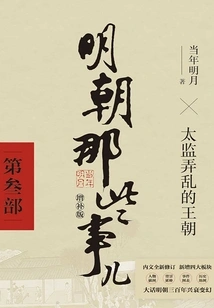
This book is the third part of "Those Things in the Ming Dynasty", which mainly tells the history of more than sixty years from the Hongxi period to the Chenghua period. After Zhu Di, the Ming Dynasty ushered in two wise emperors: Zhu Gaochi and his son Zhu Zhanji. They created a prosperous age of benevolence and xuanji that lasted for eleven years. The country's power increased and the country was peaceful. The rebellious prince Zhu Gaoxu could only end his unsuccessful rebellion in a clown manner. However, a violent storm is coming. An emperor who experienced the legendary life of emperor-prisoner-emperor, a man who could be called the second strongest man in the Ming Dynasty, and the first authoritarian prince in the Ming Dynasty.
This book is the third part of "Those Things in the Ming Dynasty", which mainly tells the history of more than sixty years from the Hongxi period to the Chenghua period. After Zhu Di, the Ming Dynasty ushered in two wise emperors: Zhu Gaochi and his son Zhu Zhanji. They created a prosperous age of benevolence and xuanji that lasted for eleven years. The country's power increased and the country was peaceful. The rebellious prince Zhu Gaoxu could only end his unsuccessful rebellion in a clown manner. However, a violent storm is coming. An emperor who experienced the legendary life of emperor-prisoner-emperor, a man who could be called the second strongest man in the Ming Dynasty, and the first authoritarian prince in the Ming Dynasty.
明朝那些事儿·第玖部(2021年 增补版)
The Bright Moon
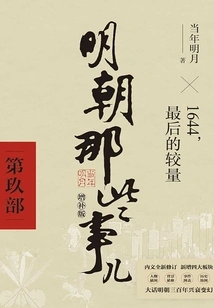
This book is the ninth part of "Those Things in the Ming Dynasty", which mainly tells the history from the second year of Chongzhen to the sixteenth year of the Ming Dynasty. Outside the Liaodong Pass, even though Jinzhou-Ningyuan-Shanhai Pass are impregnable, they are still attacked repeatedly! In the six provinces of Zhili, disasters were frequent. Zhang Xianzhong, Li Zicheng, and the rebel armies were like ants, endlessly exterminated! Ministers of the Ming Dynasty, don't you work hard enough? Is the Chongzhen Dynasty about to run out of steam? The general trend of the world is that if we divide for a long time, we will unite, and if we unite for a long time, we will divide. After nearly 300 years of unification, the Ming Dynasty ushered in the last moment of its life. It was faced with internal and external troubles and constant disputes. The east wall was demolished to repair the west wall. In the end, it could not be demolished or repaired. Even though Chongzhen tried his best, it was difficult to turn things around. Forbidden City, Jingshan, small trees, the Ming Dynasty, looking back for the last time!
This book is the ninth part of "Those Things in the Ming Dynasty", which mainly tells the history from the second year of Chongzhen to the sixteenth year of the Ming Dynasty. Outside the Liaodong Pass, even though Jinzhou-Ningyuan-Shanhai Pass are impregnable, they are still attacked repeatedly! In the six provinces of Zhili, disasters were frequent. Zhang Xianzhong, Li Zicheng, and the rebel armies were like ants, endlessly exterminated! Ministers of the Ming Dynasty, don't you work hard enough? Is the Chongzhen Dynasty about to run out of steam? The general trend of the world is that if we divide for a long time, we will unite, and if we unite for a long time, we will divide. After nearly 300 years of unification, the Ming Dynasty ushered in the last moment of its life. It was faced with internal and external troubles and constant disputes. The east wall was demolished to repair the west wall. In the end, it could not be demolished or repaired. Even though Chongzhen tried his best, it was difficult to turn things around. Forbidden City, Jingshan, small trees, the Ming Dynasty, looking back for the last time!
明朝那些事儿·第捌部(2021年 增补版)
The Bright Moon
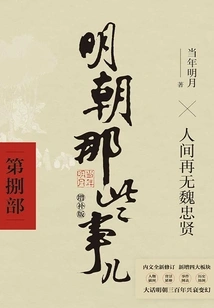
This book is the eighth part of "Those Things in the Ming Dynasty", which mainly tells the history of the past ten years from Emperor Xizong of Ming Dynasty to Emperor Chongzhen. After Tianqi succeeded to the throne, he ignored the government affairs and indulged in carpentry work. The entire empire was suffering from internal and external troubles and was lifeless: Internally, the Donglin Party took the opportunity to control the government, but internally the Qi, Chu, and Zhejiang factions still fought openly and secretly and enjoyed it. During this period, the eunuch Wei Zhongxian gradually became prosperous. He took advantage of Zhu Youxiao's mediocrity and gradually climbed up the political ladder by clinging to the emperor's wet nurse, the Hakka family. However, after Emperor Chongzhen succeeded to the throne, he liquidated the eunuch party. Wei Zhongxian was desperate and finally chose to kill himself. However, the entire empire was greatly damaged as a result. Externally, because Li Chengliang was troubled by raising tigers, Nurhachi took the opportunity to rise and unify the Later Jin Dynasty. In order to resist the Jin, defend the city, and seize the lost territory, under the leadership of the emperor's master Sun Chengzong, Yuan Chonghuan grew from a scholar to a frontier general. However, just when he was about to display his ambitions, a huge crisis had been brewing for a long time.
This book is the eighth part of "Those Things in the Ming Dynasty", which mainly tells the history of the past ten years from Emperor Xizong of Ming Dynasty to Emperor Chongzhen. After Tianqi succeeded to the throne, he ignored the government affairs and indulged in carpentry work. The entire empire was suffering from internal and external troubles and was lifeless: Internally, the Donglin Party took the opportunity to control the government, but internally the Qi, Chu, and Zhejiang factions still fought openly and secretly and enjoyed it. During this period, the eunuch Wei Zhongxian gradually became prosperous. He took advantage of Zhu Youxiao's mediocrity and gradually climbed up the political ladder by clinging to the emperor's wet nurse, the Hakka family. However, after Emperor Chongzhen succeeded to the throne, he liquidated the eunuch party. Wei Zhongxian was desperate and finally chose to kill himself. However, the entire empire was greatly damaged as a result. Externally, because Li Chengliang was troubled by raising tigers, Nurhachi took the opportunity to rise and unify the Later Jin Dynasty. In order to resist the Jin, defend the city, and seize the lost territory, under the leadership of the emperor's master Sun Chengzong, Yuan Chonghuan grew from a scholar to a frontier general. However, just when he was about to display his ambitions, a huge crisis had been brewing for a long time.
明朝那些事儿·第伍部(2021年 增补版)
The Bright Moon
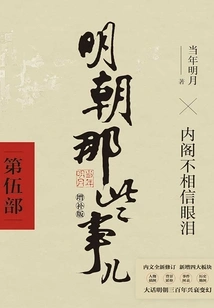
This book is the fifth part of "Those Things in the Ming Dynasty", which mainly tells the history of the middle and late Jiajing period. This volume unfolds a thrilling historical story around the political struggle in the cabinet between the famous traitor Yan Song of the Ming Dynasty and his opponents. This period of history spans more than 50 years from Yan Song's rise to power to his downfall. During this period, Xia Yan, who spoke out for justice, Xu Jie, who tolerated revenge, Lu Bing, who secretly betrayed the pearl, and Yan Shifan, who was treacherous and evil, appeared in turn, and Gao Gong and Zhang Juzheng also came to the fore. These political talents intertwined into a large network in the officialdom, fighting openly and secretly. The current emperor, Emperor Jiajing, was reduced from a king who manipulated his ministers into a tool for their ministers to manipulate power. Although there was no battlefield in the cabinet, there was secretly a bloody storm. The cabinet does not believe in tears, nor in absolute good and evil.
This book is the fifth part of "Those Things in the Ming Dynasty", which mainly tells the history of the middle and late Jiajing period. This volume unfolds a thrilling historical story around the political struggle in the cabinet between the famous traitor Yan Song of the Ming Dynasty and his opponents. This period of history spans more than 50 years from Yan Song's rise to power to his downfall. During this period, Xia Yan, who spoke out for justice, Xu Jie, who tolerated revenge, Lu Bing, who secretly betrayed the pearl, and Yan Shifan, who was treacherous and evil, appeared in turn, and Gao Gong and Zhang Juzheng also came to the fore. These political talents intertwined into a large network in the officialdom, fighting openly and secretly. The current emperor, Emperor Jiajing, was reduced from a king who manipulated his ministers into a tool for their ministers to manipulate power. Although there was no battlefield in the cabinet, there was secretly a bloody storm. The cabinet does not believe in tears, nor in absolute good and evil.
明朝那些事儿·第柒部(2021年 增补版)
The Bright Moon
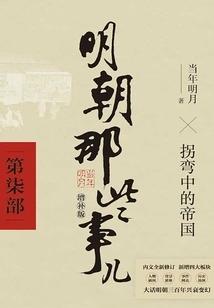
This book is the seventh part of "Those Things in the Ming Dynasty". It mainly tells the history of the 27 years from the Sino-Japanese War in the Wanli Period to the accession of Ming Xizong to the throne. During the Wanli period, there were internal and external troubles, Japanese and Korean invasions from outside, and rebellions from all over the country. The melee between daimyo in Japan was coming to an end, but they had great ambitions for the Ming Dynasty. Toyotomi Hideyoshi, Tokugawa Ieyasu and others all coveted the Ming Dynasty. From negotiations to war, the Ming Dynasty, which had always underestimated Japan, was caught off guard. Many famous generals came forward from the war, and the war with Japan also ended the life of Toyotomi Hideyoshi. There was no peace in the court either. The emergence of Shen Shixing opened a new political period. Twenty years after Zhang Juzheng's death, Shen Shixing took charge of Wanli alone. The enemies in front of him included Ding Jilü, Li Zhi, Jiang Dongzhi, Yang Keli, etc. This was another bloody storm in the temple. But the turmoil during the Wanli period did not stop there. After that, there was the rebellion of the Donglin Party, the fight for concubines in the palace, the fight for the throne, and a eunuch named Wang An appeared on the historical stage of the Ming Dynasty.
This book is the seventh part of "Those Things in the Ming Dynasty". It mainly tells the history of the 27 years from the Sino-Japanese War in the Wanli Period to the accession of Ming Xizong to the throne. During the Wanli period, there were internal and external troubles, Japanese and Korean invasions from outside, and rebellions from all over the country. The melee between daimyo in Japan was coming to an end, but they had great ambitions for the Ming Dynasty. Toyotomi Hideyoshi, Tokugawa Ieyasu and others all coveted the Ming Dynasty. From negotiations to war, the Ming Dynasty, which had always underestimated Japan, was caught off guard. Many famous generals came forward from the war, and the war with Japan also ended the life of Toyotomi Hideyoshi. There was no peace in the court either. The emergence of Shen Shixing opened a new political period. Twenty years after Zhang Juzheng's death, Shen Shixing took charge of Wanli alone. The enemies in front of him included Ding Jilü, Li Zhi, Jiang Dongzhi, Yang Keli, etc. This was another bloody storm in the temple. But the turmoil during the Wanli period did not stop there. After that, there was the rebellion of the Donglin Party, the fight for concubines in the palace, the fight for the throne, and a eunuch named Wang An appeared on the historical stage of the Ming Dynasty.
明朝那些事儿1
The Bright Moon
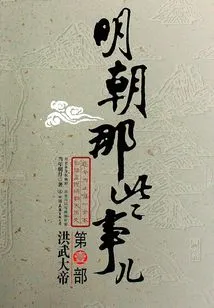
This book starts from Zhu Yuanzhang's origin and ends with the Jingnan battle when Emperor Yongle seized the throne. It describes the most arduous and arduous founding process of the Ming Dynasty. Zhu Yuanzhang VS Chen Youliang, who can win the world? The battle for peace and the decisive battle at Taihu Lake. An evil tiger was buried beside the couch to eradicate Zhang Shicheng. Xu Da, Chang Yuchun and other famous generals took advantage of the victory to conquer the Northern Yuan Dynasty. There is also the biggest mystery of the Ming Dynasty - the Battle of Jingnan in which Yongle seized the throne and Jianwen disappeared. I have orgasms one after another and I can't stop!
This book starts from Zhu Yuanzhang's origin and ends with the Jingnan battle when Emperor Yongle seized the throne. It describes the most arduous and arduous founding process of the Ming Dynasty. Zhu Yuanzhang VS Chen Youliang, who can win the world? The battle for peace and the decisive battle at Taihu Lake. An evil tiger was buried beside the couch to eradicate Zhang Shicheng. Xu Da, Chang Yuchun and other famous generals took advantage of the victory to conquer the Northern Yuan Dynasty. There is also the biggest mystery of the Ming Dynasty - the Battle of Jingnan in which Yongle seized the throne and Jianwen disappeared. I have orgasms one after another and I can't stop!
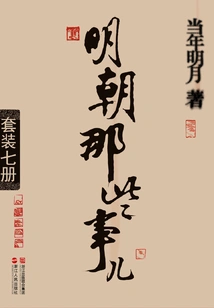
明朝那些事儿(全集)
The Bright Moon
"Those Things in the Ming Dynasty" mainly tells some stories about the Ming Dynasty during the three hundred years from 1344 to 1644. It is based on historical materials, takes the era and specific characters as the main line, and adds novel style of writing and humorous language. It provides a panoramic display of the fate of the seventeen emperors of the Ming Dynasty and other princes, dignitaries and minor figures. It especially focuses on officialdom politics, wars, and the emperor's mentality, and also adds a story about the political and economic system, human ethics and morality at that time. It tells readers the historical stories and characters of the Ming Dynasty for more than three hundred years in an online language. Among them, historical figures that were originally strange and vague in history become vivid one by one in the book. "Those Things in the Ming Dynasty" interprets another side of history for us, turning history into a living story of life.
"Those Things in the Ming Dynasty" mainly tells some stories about the Ming Dynasty during the three hundred years from 1344 to 1644. It is based on historical materials, takes the era and specific characters as the main line, and adds novel style of writing and humorous language. It provides a panoramic display of the fate of the seventeen emperors of the Ming Dynasty and other princes, dignitaries and minor figures. It especially focuses on officialdom politics, wars, and the emperor's mentality, and also adds a story about the political and economic system, human ethics and morality at that time. It tells readers the historical stories and characters of the Ming Dynasty for more than three hundred years in an online language. Among them, historical figures that were originally strange and vague in history become vivid one by one in the book. "Those Things in the Ming Dynasty" interprets another side of history for us, turning history into a living story of life.