Library
Browse and search books
2 novels found
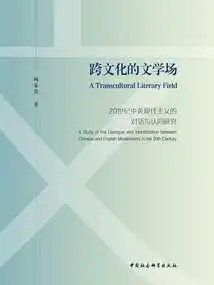
跨文化的文学场:20世纪中英现代主义的对话与认同研究
Tao Jiajun
This book focuses on the cross-cultural literary field generated by the cross-cultural interaction between Chinese and British modernist groups in the 20th century. It explores the origin of this literary field, the China complex of the Cambridge Apostolic Society-Bloomsbury Group, the trip to China of the Oxford Modernist Talent Group, the China trip of Cambridge Modern Criticism leaders I. A. Richaci and William Empson, Xu Zhimo's perception and spread of British modernism, the new realm of Chinese and English poetics opened up by Ye Gongchao, the pattern of modern Chinese criticism established by Qian Zhongshu, and the cross-cultural travel writings of Xiao Qian and Ye Junjian. Five structural models of dialogue and identification between Chinese and British modernism are summarized-investigative aesthetic type, investigative ideological type, investigative poetics type, integrated experiential aesthetic type, and integrated comprehensive type.
This book focuses on the cross-cultural literary field generated by the cross-cultural interaction between Chinese and British modernist groups in the 20th century. It explores the origin of this literary field, the China complex of the Cambridge Apostolic Society-Bloomsbury Group, the trip to China of the Oxford Modernist Talent Group, the China trip of Cambridge Modern Criticism leaders I. A. Richaci and William Empson, Xu Zhimo's perception and spread of British modernism, the new realm of Chinese and English poetics opened up by Ye Gongchao, the pattern of modern Chinese criticism established by Qian Zhongshu, and the cross-cultural travel writings of Xiao Qian and Ye Junjian. Five structural models of dialogue and identification between Chinese and British modernism are summarized-investigative aesthetic type, investigative ideological type, investigative poetics type, integrated experiential aesthetic type, and integrated comprehensive type.
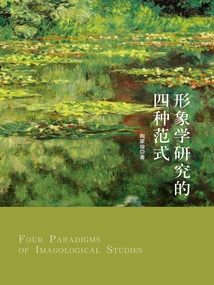
Four Paradigms of Imageology Research
Literature形象学研究的四种范式
Tao Jiajun
This book takes hermeneutics as the starting point, modern philology, Freudian psychoanalysis, and phenomenology as the fulcrum, and focuses on four types of image research paradigms: historical image, cross-cultural image, psychological image, and symbolic image. The core arguments include: the core of imageology research is the value appeal and spiritual movement involved in identity; it originated from the three major sources of romance literature, Freudian psychoanalysis, and phenomenology; it constantly breaks through and reconstructs literary boundaries and disciplinary boundaries, and transcends geographical and cultural barriers; it aims to inherit On the basis of this, we must enrich and improve the Western hermeneutic tradition; the poetic revolution of iconography is deeply embedded in the texture of literary and ideological modernity; we must adhere to the necessity of enlightenment and redemption of people in historical circumstances, adhere to the refinement of cultural value elements, the support of cultural norms, and the shaping of cultural character.
This book takes hermeneutics as the starting point, modern philology, Freudian psychoanalysis, and phenomenology as the fulcrum, and focuses on four types of image research paradigms: historical image, cross-cultural image, psychological image, and symbolic image. The core arguments include: the core of imageology research is the value appeal and spiritual movement involved in identity; it originated from the three major sources of romance literature, Freudian psychoanalysis, and phenomenology; it constantly breaks through and reconstructs literary boundaries and disciplinary boundaries, and transcends geographical and cultural barriers; it aims to inherit On the basis of this, we must enrich and improve the Western hermeneutic tradition; the poetic revolution of iconography is deeply embedded in the texture of literary and ideological modernity; we must adhere to the necessity of enlightenment and redemption of people in historical circumstances, adhere to the refinement of cultural value elements, the support of cultural norms, and the shaping of cultural character.