Library
Browse and search books
13 novels found
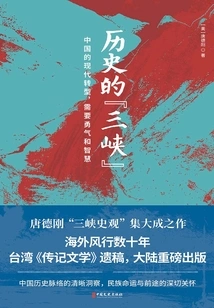
The Historical "three Gorges
History历史的“三峡”
Tang Degang
Since the Opium War in 1840, Chinese society has entered the "Three Gorges of History" with twists and turns and has begun a slow transformation. In this process, how many elites participated and merged into this turbulent historical tide. They waved flags and shouted, swarmed to be the first, and the waves rolled over the boat, which was inexplicably thrilling. They are loyal in words, respectful in deeds, and work quietly, slowly pushing our ancient civilization towards modernization. In this book, historian Tang Degang does not hide from relatives or respects. He analyzes the merits and demerits of these influential figures one by one without bias, showing his clear insight into the context of Chinese history and his deep concern for the fate and future of the Chinese nation.
Since the Opium War in 1840, Chinese society has entered the "Three Gorges of History" with twists and turns and has begun a slow transformation. In this process, how many elites participated and merged into this turbulent historical tide. They waved flags and shouted, swarmed to be the first, and the waves rolled over the boat, which was inexplicably thrilling. They are loyal in words, respectful in deeds, and work quietly, slowly pushing our ancient civilization towards modernization. In this book, historian Tang Degang does not hide from relatives or respects. He analyzes the merits and demerits of these influential figures one by one without bias, showing his clear insight into the context of Chinese history and his deep concern for the fate and future of the Chinese nation.
书缘与人缘
Tang Degang
The era of Hu Shi made a comeback; General Zhang Xueliang, with pure motives, bright heart, daring to take action, could afford to take up and let go without losing his innocence; Gu Weijun, the world's first-class diplomatic talent and a world-famous international politician, was engaged in the diplomacy of a weak country; the responsibility of "Biographical Literature" is the biggest Ah Q, the most ferocious King of Hell, "one person against a country"! This book is named "Book Connection and Popularity". It is a collection of historian Tang Degang's (Teacher Hu Shi's primary school student) reading and daily news articles over many years. There are 32 articles in total, which talk about Hu Shi, Gu Weijun, Zhang Xueliang, Liu Tingfang, Wu Kaixian, Liu Shaotang, Yang Zhenning, etc., And also discuss "Biographic Literature", "Rubai Collection", "A Brief Study of Tang Poetry" and other books, showing the style of history in ordinary details. The author puts himself in the book when writing about people and commentaries, and intersperses many anecdotes. The writing is free and uninhibited, which shows the hardships of life of Chinese American scholars from the 1950s to the 1980s, as well as their deep love for traditional culture and excellent humanistic qualities. They are all a collection of sporadic works that the author usually pays attention to as jottings. There is no obvious system and no depth. However, as the author is getting older, he has suffered decades of suffering between the country and his family, immersed in hundreds of volumes of Chinese and Western classics, and half a lifetime of teaching and reading foreign countries, and feeling the emotion of his homeland. When he wrote this article, it cannot be said that he did not write out of passion. It's just that the civilization of our motherland is profound, and the current world's knowledge is boundless. The old man is brave and ambitious, and his ambition is thousands of miles. How can you live in panic all day long, follow the wise men, and study day and night? How dare you rest on your laurels based on what a fool has learned?
The era of Hu Shi made a comeback; General Zhang Xueliang, with pure motives, bright heart, daring to take action, could afford to take up and let go without losing his innocence; Gu Weijun, the world's first-class diplomatic talent and a world-famous international politician, was engaged in the diplomacy of a weak country; the responsibility of "Biographical Literature" is the biggest Ah Q, the most ferocious King of Hell, "one person against a country"! This book is named "Book Connection and Popularity". It is a collection of historian Tang Degang's (Teacher Hu Shi's primary school student) reading and daily news articles over many years. There are 32 articles in total, which talk about Hu Shi, Gu Weijun, Zhang Xueliang, Liu Tingfang, Wu Kaixian, Liu Shaotang, Yang Zhenning, etc., And also discuss "Biographic Literature", "Rubai Collection", "A Brief Study of Tang Poetry" and other books, showing the style of history in ordinary details. The author puts himself in the book when writing about people and commentaries, and intersperses many anecdotes. The writing is free and uninhibited, which shows the hardships of life of Chinese American scholars from the 1950s to the 1980s, as well as their deep love for traditional culture and excellent humanistic qualities. They are all a collection of sporadic works that the author usually pays attention to as jottings. There is no obvious system and no depth. However, as the author is getting older, he has suffered decades of suffering between the country and his family, immersed in hundreds of volumes of Chinese and Western classics, and half a lifetime of teaching and reading foreign countries, and feeling the emotion of his homeland. When he wrote this article, it cannot be said that he did not write out of passion. It's just that the civilization of our motherland is profound, and the current world's knowledge is boundless. The old man is brave and ambitious, and his ambition is thousands of miles. How can you live in panic all day long, follow the wise men, and study day and night? How dare you rest on your laurels based on what a fool has learned?
History and Red Studies
History史学与红学
Tang Degang
On the Qin and Han roots of the backwardness of mainland China, the three major mainstreams of contemporary Chinese historiography, reading Cao Xueqin's "Culture Conflict" overseas, it is easy to kill a civilization and difficult to build another... "History and Red Studies" contains a total of 17 notes by historian Tang Degang on historical theory, research methods and red studies, discussing the relationship between history and literature, the relationship between novels and history, the locality of overseas Chinese writers, the Latinization of Chinese characters and other issues. The author believes that "no distinction between literature and history" is the difference between traditional Eastern and Western historiography. Excellent historical works are often excellent literary works. He advocates the transmission of history through literature, avoids rigid and stubborn governance of history, and emphasizes the importance of social sciences. The chapter in the book details the writing process of Li Zongren's memoirs, which shows his profound study in oral history. The author's concentrated discussion of taboo issues in "A Dream of Red Mansions" and the article "Reading the Scriptures" analyzing Cao Xueqin's "cultural conflict" are also quite original. "Historical Studies and Red Studies" talks about major historical events. Because Mr. Tang's writing style has a literary background and is written flexibly, readers cannot bear to stop. This is the credit of literary style. Mr. Xia Zhiqing, who later had a writing battle with historian Tang Degang, valued "Tang style prose" very much and called him "a unique essayist in contemporary China."
On the Qin and Han roots of the backwardness of mainland China, the three major mainstreams of contemporary Chinese historiography, reading Cao Xueqin's "Culture Conflict" overseas, it is easy to kill a civilization and difficult to build another... "History and Red Studies" contains a total of 17 notes by historian Tang Degang on historical theory, research methods and red studies, discussing the relationship between history and literature, the relationship between novels and history, the locality of overseas Chinese writers, the Latinization of Chinese characters and other issues. The author believes that "no distinction between literature and history" is the difference between traditional Eastern and Western historiography. Excellent historical works are often excellent literary works. He advocates the transmission of history through literature, avoids rigid and stubborn governance of history, and emphasizes the importance of social sciences. The chapter in the book details the writing process of Li Zongren's memoirs, which shows his profound study in oral history. The author's concentrated discussion of taboo issues in "A Dream of Red Mansions" and the article "Reading the Scriptures" analyzing Cao Xueqin's "cultural conflict" are also quite original. "Historical Studies and Red Studies" talks about major historical events. Because Mr. Tang's writing style has a literary background and is written flexibly, readers cannot bear to stop. This is the credit of literary style. Mr. Xia Zhiqing, who later had a writing battle with historian Tang Degang, valued "Tang style prose" very much and called him "a unique essayist in contemporary China."
War and Love
General Fiction战争与爱情
Tang Degang
This is Tang Degang's only full-length novel, and together with "Memoirs of Li Zongren", it is known as "the two gems in literature and history". The original title of the novel was "Three Days and Two Nights", with the first part "How Much I Know of the Past" and the second part "Last Night's Dream". The story begins after the normalization of relations between China and the United States. Over the course of three days and two nights, China's changes in half a century are described in flashback. "Although it is a novel, it is also a comprehensive report of some real stories that I have seen and heard." It only serves as a testimony to the troubled modern China and the nightmare of those little people who have gone through many vicissitudes and suffered a lot; it leaves some traces of the lost society, things that will never come back, and the tragic "War of Resistance". In this 600,000-word long work, Tang Degang was the first to mention the history of "comfort women." Later, the issue of "comfort women" became more heated, and the Japanese also noticed the material in this book. This is a portrayal of the great times, a story of the Chinese people; it is both a documentary novel and an oral history.
This is Tang Degang's only full-length novel, and together with "Memoirs of Li Zongren", it is known as "the two gems in literature and history". The original title of the novel was "Three Days and Two Nights", with the first part "How Much I Know of the Past" and the second part "Last Night's Dream". The story begins after the normalization of relations between China and the United States. Over the course of three days and two nights, China's changes in half a century are described in flashback. "Although it is a novel, it is also a comprehensive report of some real stories that I have seen and heard." It only serves as a testimony to the troubled modern China and the nightmare of those little people who have gone through many vicissitudes and suffered a lot; it leaves some traces of the lost society, things that will never come back, and the tragic "War of Resistance". In this 600,000-word long work, Tang Degang was the first to mention the history of "comfort women." Later, the issue of "comfort women" became more heated, and the Japanese also noticed the material in this book. This is a portrayal of the great times, a story of the Chinese people; it is both a documentary novel and an oral history.
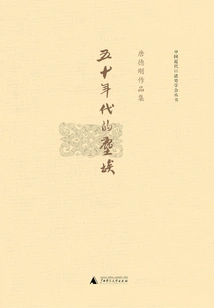
唐德刚作品集:五十年代的尘埃
Tang Degang
"Dust of the 1950s" is a selection of Tang Degang's works published in New York in the 1950s. Most of them were works that were reorganized and discovered after being forgotten for many years, so it is called this. Among them, "The Biography of Mei Lanfang" is Tang Degang's famous work and one of his masterpieces. It has been published repeatedly overseas for decades and is considered by critics to be the most outstanding of all biographies and articles about Mei Lanfang. The article is like a famous play, which has been performed many times and has been applauded many times. It is really like Mei Lanfang's performance of "The Drunken Concubine". The interesting novels such as "My Female Boss" not only give us a glimpse of the living conditions of intellectuals studying in the United States in the 1950s, but also allow readers to appreciate the life insights and attitudes of an outstanding historian. "The Fly and the Cobbler in Russia" was written by Tang Degang based on a trip of his old friend He Bingdi, and the text is also very interesting.
"Dust of the 1950s" is a selection of Tang Degang's works published in New York in the 1950s. Most of them were works that were reorganized and discovered after being forgotten for many years, so it is called this. Among them, "The Biography of Mei Lanfang" is Tang Degang's famous work and one of his masterpieces. It has been published repeatedly overseas for decades and is considered by critics to be the most outstanding of all biographies and articles about Mei Lanfang. The article is like a famous play, which has been performed many times and has been applauded many times. It is really like Mei Lanfang's performance of "The Drunken Concubine". The interesting novels such as "My Female Boss" not only give us a glimpse of the living conditions of intellectuals studying in the United States in the 1950s, but also allow readers to appreciate the life insights and attitudes of an outstanding historian. "The Fly and the Cobbler in Russia" was written by Tang Degang based on a trip of his old friend He Bingdi, and the text is also very interesting.
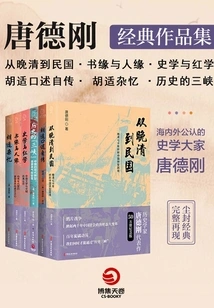
The Pioneer of Oral History: Collection of Tang Degang's Classic Works 2 (6 Volumes in Total)
History口述历史开创者:唐德刚经典作品集2(共6册)
Tang Degang
This set of books is a collection of classic works by Tang Degang, a recognized historian at home and abroad, including six works: "From the Late Qing Dynasty to the Republic of China", "Book Connection and Popularity", "History and Red Studies", "Miscellaneous Memories of Hu Shi" and "The Three Gorges of History". The content involves many historical events and figures in the modern history of China. It has rich historical materials, free and easy writing style, and rare subject matter. It is extremely precious. It is an indispensable classic for understanding the modern history of China. "From the Late Qing Dynasty to the Republic of China": The twists and turns of the Three Gorges of the Yangtze River are the pride of the Chinese people and a trendy area in China's natural history. The Opium War opened the prelude to China's once-in-two-thousand-year "social and cultural transformation" phenomenon that began in the 19th century. In the wise eyes of historian Tang Degang, the "humanistic view of history" is just like the "natural history view." A war in 1840 not only set off a major change in China's social and political form, but also made the long history of history have to go through a hundred years of treacherous turbulence before it can enter the magnificent Pacific Ocean through the Three Gorges. Tang Degang combines the historical perspective of the Three Gorges and humanistic exploration in this book, creating an objective and in-depth history of modern China. "Books and People": Oral history is a career that Tang Degang has devoted most of his life to. After helping many modern and contemporary celebrities complete their oral autobiographies or memoirs, he also became friends with them. This book is a collection of Tang Degang's articles about his interactions with many celebrities over the years, as well as his daily reading reviews, including Gu Weijun, Zhang Xueliang, Liu Tingfang, Wu Kaixian, Liu Shaotang, Yang Zhenning and others, as well as books such as "Biographic Literature" and "Rubaiyat". Whether writing about people or commenting on books, the author pays great attention to details and intersperses many anecdotes, aphorisms, irony, and metaphors. His writing style is free and uninhibited, and his writing style is smooth. It not only shows the historical style, but also reflects the author's multi-faceted talents. "History and Redology": For most of his life, Tang Degang witnessed the frequent wars in China since modern times, and was baptized by a large number of Chinese and Western classics. While teaching and reading foreign countries, he often felt nostalgic for his homeland, so he wrote these scattered journal works in this book, which includes more than ten articles and speeches on historical theory, research methods and redology research. Tang Degang believed that excellent historical works are often excellent literary works. He advocated that "the six classics are all histories", "all histories are texts", "literature and history are not divided" and "history is transmitted through literature", which is quite insightful in order to avoid rigid and stubborn management of history. "Miscellaneous Memories of Hu Shi": This book is a memoir written by Tang Degang on many issues in Hu Shi's life, using his own memories and the records of Hu Shi's diary as materials. In addition, he also put forward his own opinions on Hu Shi's achievements in history, politics, philosophy, literature and other fields. The language of the book is majestic and the writing is full of wit and wit. It restores the true image of Hu Shi, a generation of scholars with flesh and blood, wisdom, genius and shortcomings. It is a faithful portrayal of Hu Shi's later years. "Hu Shi's Oral Autobiography": This book is compiled based on sixteen English oral recordings made by Hu Shi at the invitation of the Department of Chinese Oral History at Columbia University in the United States. Tang Degang was responsible for the interview and compiled the recording into text, covering Hu Shi's life experience and his summary and evaluation of his life's academic thoughts. Tang Degang's annotations and comments further elaborated his own views on relevant characters and events, allowing readers to understand Hu Shi and his era more clearly. Therefore, this book received high praise from overseas historians in the 1970s - "Look at De Gang first, then Hu Shi." "Historical Three Gorges": Since the Opium War in 1840, Chinese society has entered the tortuous and turbulent "Historical Three Gorges" and began a slow transformation. In this process, how many elites participated and merged into this turbulent historical tide. They waved flags and shouted, swarmed to be the first, and the waves rolled over the boat, which was inexplicably thrilling. They are loyal in words, respectful in deeds, and work quietly, slowly pushing our ancient civilization towards modernization. In this book, historian Tang Degang does not hide from relatives or respects. He analyzes the merits and demerits of these influential figures one by one without bias, showing his clear insight into the context of Chinese history and his deep concern for the fate and future of the Chinese nation.
This set of books is a collection of classic works by Tang Degang, a recognized historian at home and abroad, including six works: "From the Late Qing Dynasty to the Republic of China", "Book Connection and Popularity", "History and Red Studies", "Miscellaneous Memories of Hu Shi" and "The Three Gorges of History". The content involves many historical events and figures in the modern history of China. It has rich historical materials, free and easy writing style, and rare subject matter. It is extremely precious. It is an indispensable classic for understanding the modern history of China. "From the Late Qing Dynasty to the Republic of China": The twists and turns of the Three Gorges of the Yangtze River are the pride of the Chinese people and a trendy area in China's natural history. The Opium War opened the prelude to China's once-in-two-thousand-year "social and cultural transformation" phenomenon that began in the 19th century. In the wise eyes of historian Tang Degang, the "humanistic view of history" is just like the "natural history view." A war in 1840 not only set off a major change in China's social and political form, but also made the long history of history have to go through a hundred years of treacherous turbulence before it can enter the magnificent Pacific Ocean through the Three Gorges. Tang Degang combines the historical perspective of the Three Gorges and humanistic exploration in this book, creating an objective and in-depth history of modern China. "Books and People": Oral history is a career that Tang Degang has devoted most of his life to. After helping many modern and contemporary celebrities complete their oral autobiographies or memoirs, he also became friends with them. This book is a collection of Tang Degang's articles about his interactions with many celebrities over the years, as well as his daily reading reviews, including Gu Weijun, Zhang Xueliang, Liu Tingfang, Wu Kaixian, Liu Shaotang, Yang Zhenning and others, as well as books such as "Biographic Literature" and "Rubaiyat". Whether writing about people or commenting on books, the author pays great attention to details and intersperses many anecdotes, aphorisms, irony, and metaphors. His writing style is free and uninhibited, and his writing style is smooth. It not only shows the historical style, but also reflects the author's multi-faceted talents. "History and Redology": For most of his life, Tang Degang witnessed the frequent wars in China since modern times, and was baptized by a large number of Chinese and Western classics. While teaching and reading foreign countries, he often felt nostalgic for his homeland, so he wrote these scattered journal works in this book, which includes more than ten articles and speeches on historical theory, research methods and redology research. Tang Degang believed that excellent historical works are often excellent literary works. He advocated that "the six classics are all histories", "all histories are texts", "literature and history are not divided" and "history is transmitted through literature", which is quite insightful in order to avoid rigid and stubborn management of history. "Miscellaneous Memories of Hu Shi": This book is a memoir written by Tang Degang on many issues in Hu Shi's life, using his own memories and the records of Hu Shi's diary as materials. In addition, he also put forward his own opinions on Hu Shi's achievements in history, politics, philosophy, literature and other fields. The language of the book is majestic and the writing is full of wit and wit. It restores the true image of Hu Shi, a generation of scholars with flesh and blood, wisdom, genius and shortcomings. It is a faithful portrayal of Hu Shi's later years. "Hu Shi's Oral Autobiography": This book is compiled based on sixteen English oral recordings made by Hu Shi at the invitation of the Department of Chinese Oral History at Columbia University in the United States. Tang Degang was responsible for the interview and compiled the recording into text, covering Hu Shi's life experience and his summary and evaluation of his life's academic thoughts. Tang Degang's annotations and comments further elaborated his own views on relevant characters and events, allowing readers to understand Hu Shi and his era more clearly. Therefore, this book received high praise from overseas historians in the 1970s - "Look at De Gang first, then Hu Shi." "Historical Three Gorges": Since the Opium War in 1840, Chinese society has entered the tortuous and turbulent "Historical Three Gorges" and began a slow transformation. In this process, how many elites participated and merged into this turbulent historical tide. They waved flags and shouted, swarmed to be the first, and the waves rolled over the boat, which was inexplicably thrilling. They are loyal in words, respectful in deeds, and work quietly, slowly pushing our ancient civilization towards modernization. In this book, historian Tang Degang does not hide from relatives or respects. He analyzes the merits and demerits of these influential figures one by one without bias, showing his clear insight into the context of Chinese history and his deep concern for the fate and future of the Chinese nation.
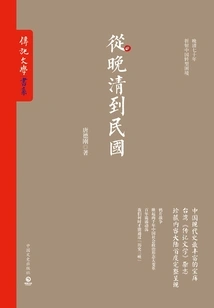
从晚清到民国
Tang Degang
The twists and turns of the Three Gorges of the Yangtze River are the pride of the Chinese people and a trendy area in China's natural history. The Opium War opened the prelude to China's "great social and cultural transformation" that occurred once in 2,000 years. In the wise eyes of historian Tang Degang, the "humanistic view of history" is like the "natural history view." A battle in 1840 not only set off a major change in China's social and political form, but also made the long river of historical trends, especially the treacherous turmoil that lasted for a hundred years, enter the magnificent Pacific Ocean. Tang Degang combines the historical view of the Three Gorges and humanistic exploration in this book, creating an objective and in-depth history book of modern China.
The twists and turns of the Three Gorges of the Yangtze River are the pride of the Chinese people and a trendy area in China's natural history. The Opium War opened the prelude to China's "great social and cultural transformation" that occurred once in 2,000 years. In the wise eyes of historian Tang Degang, the "humanistic view of history" is like the "natural history view." A battle in 1840 not only set off a major change in China's social and political form, but also made the long river of historical trends, especially the treacherous turmoil that lasted for a hundred years, enter the magnificent Pacific Ocean. Tang Degang combines the historical view of the Three Gorges and humanistic exploration in this book, creating an objective and in-depth history book of modern China.
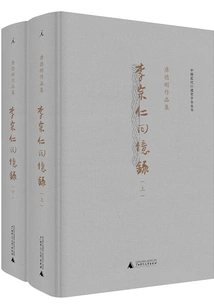
李宗仁回忆录(上下册)
Tang Degang
Li Zongren (1891-1969) was one of the few political leaders and figures in modern Chinese history. He was the military leader of the Guangxi Clan and an important member of the central leadership of the Kuomintang. In April 1948, he served as the first vice president of the National Government. In January 1949, he served as acting president after Chiang Kai-shek resigned from power. In December of the same year, he went to the United States. In 1965, he returned to his roots and issued a statement in Beijing, determined to contribute to the reunification of the motherland. Li Zongren served in the military throughout his life and went through countless wars such as protecting the country, protecting the law, the Northern Expedition, Jiang Gui, the Anti-Japanese War, and the civil war between the Kuomintang and the Communist Party, which directly affected the trend of modern Chinese politics and history. While living in the United States, Li Zongren was invited by Columbia University and under the auspices of the "East Asian Institute·Chinese Oral History Department". In 1958, he began to personally narrate his more than thirty years of military career and the major military events he participated in. The historian Tang Degang compiled and wrote it, and it became "Memoirs of Li Zongren". This book is also an original history book that requires the most study, the most labor, and the most difficulties among Tang Degang's personal published works. It took more than twenty years from the initial consultation to the publication. "Memoirs of Li Zongren" is a complete record of Li Zongren's extraordinary life career, and it is also the most faithful portrayal of Li's mental journey at each stage of his life. It completely preserves Li Zongren's true face in Chinese history and indirectly reveals many little-known political insider stories or military secrets. It has extremely important reference value for understanding and studying modern Chinese history.
Li Zongren (1891-1969) was one of the few political leaders and figures in modern Chinese history. He was the military leader of the Guangxi Clan and an important member of the central leadership of the Kuomintang. In April 1948, he served as the first vice president of the National Government. In January 1949, he served as acting president after Chiang Kai-shek resigned from power. In December of the same year, he went to the United States. In 1965, he returned to his roots and issued a statement in Beijing, determined to contribute to the reunification of the motherland. Li Zongren served in the military throughout his life and went through countless wars such as protecting the country, protecting the law, the Northern Expedition, Jiang Gui, the Anti-Japanese War, and the civil war between the Kuomintang and the Communist Party, which directly affected the trend of modern Chinese politics and history. While living in the United States, Li Zongren was invited by Columbia University and under the auspices of the "East Asian Institute·Chinese Oral History Department". In 1958, he began to personally narrate his more than thirty years of military career and the major military events he participated in. The historian Tang Degang compiled and wrote it, and it became "Memoirs of Li Zongren". This book is also an original history book that requires the most study, the most labor, and the most difficulties among Tang Degang's personal published works. It took more than twenty years from the initial consultation to the publication. "Memoirs of Li Zongren" is a complete record of Li Zongren's extraordinary life career, and it is also the most faithful portrayal of Li's mental journey at each stage of his life. It completely preserves Li Zongren's true face in Chinese history and indirectly reveals many little-known political insider stories or military secrets. It has extremely important reference value for understanding and studying modern Chinese history.
胡适杂忆
Tang Degang
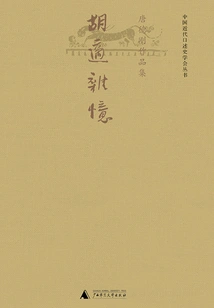
"Miscellaneous Memories of Hu Shi" was originally a short preface that the author planned to write by himself when he was writing "Hu Shi's Oral Autobiography". Unexpectedly, he had to write hundreds of thousands of words. As a result, the "head" was too big, so he had to print it into a special book and publish it independently. It can be said to be a shortened version of Hu Shi's oral history. Based on his own memories and diary records, Mr. Tang Degang talked about almost all the countless problems and entanglements that Hu Shi was involved in throughout his life, and talked about everything with pleasure. But it is not just about memories. He talked freely about history, politics, philosophy, literature and all other knowledge that Hu Shi paid attention to. It can be seen that the author is talented and knowledgeable. In addition, he has a deep foundation in ancient prose and a humorous nature, so he writes with great momentum and full of wit. Tang Degang wrote Hu Shi vividly, but it was not a heroic superman decorated in a formula. The Hu Shi he wrote was just a real person with flesh and blood, wisdom, genius, but also mistakes and shortcomings. After reading Hu Shi's works written by Tang Degang, you can shake hands with him, exchange greetings, laugh and talk with him, without knowing that the night is coming to an end and people are getting old.
"Miscellaneous Memories of Hu Shi" was originally a short preface that the author planned to write by himself when he was writing "Hu Shi's Oral Autobiography". Unexpectedly, he had to write hundreds of thousands of words. As a result, the "head" was too big, so he had to print it into a special book and publish it independently. It can be said to be a shortened version of Hu Shi's oral history. Based on his own memories and diary records, Mr. Tang Degang talked about almost all the countless problems and entanglements that Hu Shi was involved in throughout his life, and talked about everything with pleasure. But it is not just about memories. He talked freely about history, politics, philosophy, literature and all other knowledge that Hu Shi paid attention to. It can be seen that the author is talented and knowledgeable. In addition, he has a deep foundation in ancient prose and a humorous nature, so he writes with great momentum and full of wit. Tang Degang wrote Hu Shi vividly, but it was not a heroic superman decorated in a formula. The Hu Shi he wrote was just a real person with flesh and blood, wisdom, genius, but also mistakes and shortcomings. After reading Hu Shi's works written by Tang Degang, you can shake hands with him, exchange greetings, laugh and talk with him, without knowing that the night is coming to an end and people are getting old.
Hu Shi's Oral Autobiography
History胡适口述自传
Tang Degang
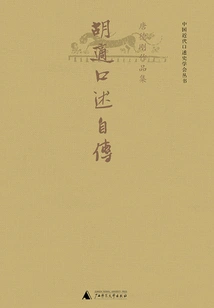
"Hu Shi's Oral Autobiography" is between an autobiography and a biography. It is the best introductory book to understand Hu Shi's life and studies. In the 1950s, Hu accepted the invitation of Columbia University's "Chinese Oral History Department" and was interviewed by Tang Degang. He orally recounted his life in English and completed sixteen formal recordings in 1958. This book was translated by Tang Degang based on the recording, cross-referenced and comprehensively, and was hand-edited by Hu Shi in 1959. This is also a proud "oral history project" that Tang Degang completed in person with Hu Shi at Columbia University and with a tape recorder. Here, Hu Shi reviews the course of his academic research throughout his life, from devoting himself to the literary revolution, to examining the history of Chinese philosophy, to rediscovering the history of Zen Buddhism, to critically studying vernacular novels, and recalling the main ideas in literature, history, philosophy, etc. This is a small book that covers all aspects of Hu Shi's knowledge, thoughts, life, family background, etc. Tang Degang's annotations and comments after translating Hu Shi's English oral narration into Chinese are even more must-read good articles. On the one hand, some memory errors and unspeakable secrets in Hu Shi's oral narration are restored through Tang's annotations; on the other hand, Tang's annotations expand and deepen the content and viewpoints of the oral narration. In response to the questions raised in the text, he also elaborates on his own comments on Hu Shi himself and related figures and events, allowing readers to understand Hu Shi and his era more clearly.
"Hu Shi's Oral Autobiography" is between an autobiography and a biography. It is the best introductory book to understand Hu Shi's life and studies. In the 1950s, Hu accepted the invitation of Columbia University's "Chinese Oral History Department" and was interviewed by Tang Degang. He orally recounted his life in English and completed sixteen formal recordings in 1958. This book was translated by Tang Degang based on the recording, cross-referenced and comprehensively, and was hand-edited by Hu Shi in 1959. This is also a proud "oral history project" that Tang Degang completed in person with Hu Shi at Columbia University and with a tape recorder. Here, Hu Shi reviews the course of his academic research throughout his life, from devoting himself to the literary revolution, to examining the history of Chinese philosophy, to rediscovering the history of Zen Buddhism, to critically studying vernacular novels, and recalling the main ideas in literature, history, philosophy, etc. This is a small book that covers all aspects of Hu Shi's knowledge, thoughts, life, family background, etc. Tang Degang's annotations and comments after translating Hu Shi's English oral narration into Chinese are even more must-read good articles. On the one hand, some memory errors and unspeakable secrets in Hu Shi's oral narration are restored through Tang's annotations; on the other hand, Tang's annotations expand and deepen the content and viewpoints of the oral narration. In response to the questions raised in the text, he also elaborates on his own comments on Hu Shi himself and related figures and events, allowing readers to understand Hu Shi and his era more clearly.
Miscellaneous Memories of Hu Shi
Literature胡适杂忆
Tang Degang
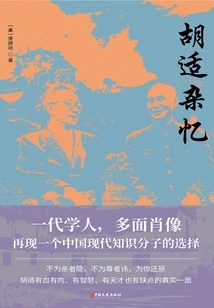
This book is Tang Degang's reminiscence of many issues in Hu Shi's life based on his own memories and Hu Shi's diary records. It restores the true image of Hu Shi, a generation of scholars with flesh and blood, wisdom, genius and shortcomings. It is a faithful portrayal of Hu Shi's later years.
This book is Tang Degang's reminiscence of many issues in Hu Shi's life based on his own memories and Hu Shi's diary records. It restores the true image of Hu Shi, a generation of scholars with flesh and blood, wisdom, genius and shortcomings. It is a faithful portrayal of Hu Shi's later years.
The Yuan Family is in Power
History袁氏当国
Tang Degang
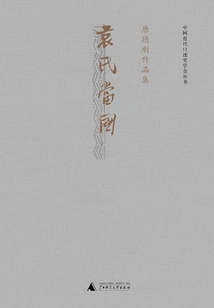
Since the founding of the Republic by Sun Wen, and the rise of the movement to protect the country by arresting Cai E, during the years when Yuan Shikai was in power, the country was in decline and the people were miserable. Before and after the founding of the Republic of China, Empress Dowager Longyu, who listened behind the curtain but had no control over politics, Regent Zaifeng, who brought a pair of widows and orphans into the throne, Yuan Shikai, a tragic figure in the bubble dynasty when the monarchy turned around, Sun Yat-sen, the supreme figure in the country's founding blueprint, Song Jiaoren, an organizer with ambitions and theoretical foundations, Huang Xing, a polished commander with no generals, and the emperor who came from the United States. Goodnow, the constitutional consultant who controlled Dongfeng, Yang Du, who started the republic and ended the monarchy but mistakenly believed in the Yuan family, the "Six Gentlemen" who subsidized themselves or were praised by others as the monarchists, Yuan Keding, the straw baggage in the eyes of the Chinese people, Liang Qichao, who brought down a Hongxian dynasty with one article, Cai E in the bubble war... The inauguration of President Sun Wen was the beginning of this new era. The old monarchy is gradually sinking in the ocean of history; the new democracy is slowly rising on the horizon. Although growth is slow, it will eventually reach its peak. How Yuan Shikai cultivated an enemy between the late Qing government and the National Revolutionary Military Government to covet the presidential throne; what background is hinted at by the historical mystery of Song Jiaoren's assassination; what impact did Sun Yat-sen's personality have on his transformation of the Kuomintang in pursuit of revolution; how complex and changeable was Yuan's domestic and foreign affairs during his time in power; what was the relationship between the "Six Gentlemen" of the Security Council and Yuan's government; and what was Professor Goodnow's political philosophy that should not be forgotten. With his consistent scholarly integrity, Mr. Tang does not rely on wind and grass, does not follow what others say, insists on basing his opinions on history, and insists that his words must be well-founded.
Since the founding of the Republic by Sun Wen, and the rise of the movement to protect the country by arresting Cai E, during the years when Yuan Shikai was in power, the country was in decline and the people were miserable. Before and after the founding of the Republic of China, Empress Dowager Longyu, who listened behind the curtain but had no control over politics, Regent Zaifeng, who brought a pair of widows and orphans into the throne, Yuan Shikai, a tragic figure in the bubble dynasty when the monarchy turned around, Sun Yat-sen, the supreme figure in the country's founding blueprint, Song Jiaoren, an organizer with ambitions and theoretical foundations, Huang Xing, a polished commander with no generals, and the emperor who came from the United States. Goodnow, the constitutional consultant who controlled Dongfeng, Yang Du, who started the republic and ended the monarchy but mistakenly believed in the Yuan family, the "Six Gentlemen" who subsidized themselves or were praised by others as the monarchists, Yuan Keding, the straw baggage in the eyes of the Chinese people, Liang Qichao, who brought down a Hongxian dynasty with one article, Cai E in the bubble war... The inauguration of President Sun Wen was the beginning of this new era. The old monarchy is gradually sinking in the ocean of history; the new democracy is slowly rising on the horizon. Although growth is slow, it will eventually reach its peak. How Yuan Shikai cultivated an enemy between the late Qing government and the National Revolutionary Military Government to covet the presidential throne; what background is hinted at by the historical mystery of Song Jiaoren's assassination; what impact did Sun Yat-sen's personality have on his transformation of the Kuomintang in pursuit of revolution; how complex and changeable was Yuan's domestic and foreign affairs during his time in power; what was the relationship between the "Six Gentlemen" of the Security Council and Yuan's government; and what was Professor Goodnow's political philosophy that should not be forgotten. With his consistent scholarly integrity, Mr. Tang does not rely on wind and grass, does not follow what others say, insists on basing his opinions on history, and insists that his words must be well-founded.
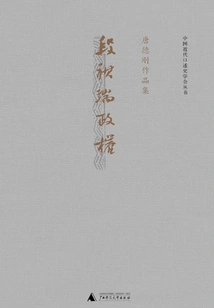
段祺瑞政权:民国史军阀篇
Tang Degang
The most chaotic period in China's modern history was probably the so-called warlord period in the early years of the Republic of China, and the warlord period actually only officially began after the death of Yuan Shikai. Because before the imperial system, the Beijing government under the Yuan family was still a government that could command the whole country. Local military leaders cannot ignore the laws and regulations of the country and act arbitrarily. Although it is inevitable for ambitious politicians to form parties for personal gain, in a unified country, they still have some concerns about manipulating the political power vertically and horizontally. But it was not until Yuan's death that Wang Gang truly untied the alliance. The whole country was filled with soldiers and politicians were everywhere, and China's modern history officially entered a so-called "warlord period."
The most chaotic period in China's modern history was probably the so-called warlord period in the early years of the Republic of China, and the warlord period actually only officially began after the death of Yuan Shikai. Because before the imperial system, the Beijing government under the Yuan family was still a government that could command the whole country. Local military leaders cannot ignore the laws and regulations of the country and act arbitrarily. Although it is inevitable for ambitious politicians to form parties for personal gain, in a unified country, they still have some concerns about manipulating the political power vertically and horizontally. But it was not until Yuan's death that Wang Gang truly untied the alliance. The whole country was filled with soldiers and politicians were everywhere, and China's modern history officially entered a so-called "warlord period."