Library
Browse and search books
14 novels found

Mr. Lu, Your Wife is Cheating Again
Modern Romance陆少你老婆又开挂了
Su Wei
After driving her out and killing her mother, the Su family wanted to marry her off to a disabled young master and sell their daughter for glory. Faced with the persecution of the two wealthy families, Su Annuan spread her hands and said, "Hey, there will be no good results for those who bully women..." The first time she met Young Master Lu, she giggled, "Husband, why is your hat green!" A certain man smiled similarly, "Woman, are you trying to compete with me?" Nine months later, the heir to the Lu family was born, and he looked exactly like a certain man! Su Annuan cried, aren't you disabled? It turns out it's all about acting! NO! I don't want it, I want to go home! Assistant: Madam, your father is crazy and keeps kowtowing to the portrait of your late mother! Your stepmother was caught and committed suicide in prison! Your step-sister was tragically disfigured and is now missing. Your step-brother is living on the street as a beggar... Su Annuan: You misunderstood. I am going back to the home where my name is written in the house book. No one with the surname of Lu is allowed to enter! A certain man: Why are you, a woman, so unreasonable... (Kneels down) What should I do if I just like her so much! Everyone: Where is Mr. Lu's integrity?
After driving her out and killing her mother, the Su family wanted to marry her off to a disabled young master and sell their daughter for glory. Faced with the persecution of the two wealthy families, Su Annuan spread her hands and said, "Hey, there will be no good results for those who bully women..." The first time she met Young Master Lu, she giggled, "Husband, why is your hat green!" A certain man smiled similarly, "Woman, are you trying to compete with me?" Nine months later, the heir to the Lu family was born, and he looked exactly like a certain man! Su Annuan cried, aren't you disabled? It turns out it's all about acting! NO! I don't want it, I want to go home! Assistant: Madam, your father is crazy and keeps kowtowing to the portrait of your late mother! Your stepmother was caught and committed suicide in prison! Your step-sister was tragically disfigured and is now missing. Your step-brother is living on the street as a beggar... Su Annuan: You misunderstood. I am going back to the home where my name is written in the house book. No one with the surname of Lu is allowed to enter! A certain man: Why are you, a woman, so unreasonable... (Kneels down) What should I do if I just like her so much! Everyone: Where is Mr. Lu's integrity?

Happy Enemy: Princess, Don't Run Away!
Young Adult欢喜冤家:公主,别逃!
Su Wei
As the saying goes: In troubled times, heroes emerge, and a certain woman burst into tears and said: In peacetime, embarrassing women emerge! What! She escaped from the palace like a cat, but ran into the cage like a mouse!
As the saying goes: In troubled times, heroes emerge, and a certain woman burst into tears and said: In peacetime, embarrassing women emerge! What! She escaped from the palace like a cat, but ran into the cage like a mouse!

I Heard That Love Loves Diving
Young Adult听说爱情爱潜水
Su Wei
She is a wealthy woman, but her mother fell from the clouds and was imprisoned for breaking the law. Yes, she was a deserter, to the letter. Faced with such a handsome man, she agreed to "run away from home" and live in her home because of a powerful smile, and began to live together in secret. However, he cruelly broke off her wings one by one in his own way, using the excuse of love. When she knew the truth, she realized that since the moment she was born, every step has been a trap. On her twentieth birthday, she wore a princess dress and decided not to be a puppet anymore, only to find that the conspiracy was so big that it had no boundaries. Their words were surprisingly consistent - "I do this because I love you." To escape or to face?
She is a wealthy woman, but her mother fell from the clouds and was imprisoned for breaking the law. Yes, she was a deserter, to the letter. Faced with such a handsome man, she agreed to "run away from home" and live in her home because of a powerful smile, and began to live together in secret. However, he cruelly broke off her wings one by one in his own way, using the excuse of love. When she knew the truth, she realized that since the moment she was born, every step has been a trap. On her twentieth birthday, she wore a princess dress and decided not to be a puppet anymore, only to find that the conspiracy was so big that it had no boundaries. Their words were surprisingly consistent - "I do this because I love you." To escape or to face?
Last Resistance
History最后的抵抗
Su Wei
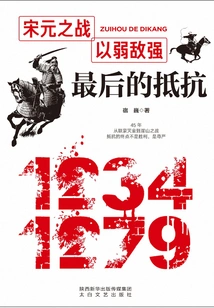
"The Last Resistance" was written from the Southern Song Dynasty when Lian Meng destroyed Jin Dynasty to the Battle of Yashan and Wen Tianxiang's death. It writes about the 45-year offensive and defensive war between the Southern Song Dynasty and Mongolia. At the beginning of the 13th century, Mongolia rose rapidly, and various countries in Eurasia were gradually incorporated into the territory of the Mongol Empire. After Mongolia destroyed the Jin Dynasty, the Southern Song Dynasty managed to resist the Mongolian army alone for half a century. This book restores the life-and-death struggle between the two regimes. This war that has been fought on and off for more than 40 years has left us with too many stories and thoughts.
"The Last Resistance" was written from the Southern Song Dynasty when Lian Meng destroyed Jin Dynasty to the Battle of Yashan and Wen Tianxiang's death. It writes about the 45-year offensive and defensive war between the Southern Song Dynasty and Mongolia. At the beginning of the 13th century, Mongolia rose rapidly, and various countries in Eurasia were gradually incorporated into the territory of the Mongol Empire. After Mongolia destroyed the Jin Dynasty, the Southern Song Dynasty managed to resist the Mongolian army alone for half a century. This book restores the life-and-death struggle between the two regimes. This war that has been fought on and off for more than 40 years has left us with too many stories and thoughts.

Aguang and Aguang
Literature阿光和阿光们
Su Wei
"... The century-old brand "Maozhitang", founded in 1865, adheres to the ancient saying that "medicine is the tea for all diseases, and tea is the medicine for all diseases" (see "Supplementary Materials of Materia Medica"). It is famous for creating "Maozhitang" sweet tea and noon tea. Its medicinal effects of "relieving summer heat, eliminating stagnation and removing dampness" have benefited the people of Guangdong living in a hot and humid climate. Years of continuous development and innovation, "Maozhitang" has developed into a state-owned enterprise integrating the production, sales and scientific research of medicinal tea and drinking tea..." What I describe here is a quote from the explanatory text on the tea packaging; it is not for commercial advertising, but to tell a story about my contemporaries that has been buried in my heart for many years.
"... The century-old brand "Maozhitang", founded in 1865, adheres to the ancient saying that "medicine is the tea for all diseases, and tea is the medicine for all diseases" (see "Supplementary Materials of Materia Medica"). It is famous for creating "Maozhitang" sweet tea and noon tea. Its medicinal effects of "relieving summer heat, eliminating stagnation and removing dampness" have benefited the people of Guangdong living in a hot and humid climate. Years of continuous development and innovation, "Maozhitang" has developed into a state-owned enterprise integrating the production, sales and scientific research of medicinal tea and drinking tea..." What I describe here is a quote from the explanatory text on the tea packaging; it is not for commercial advertising, but to tell a story about my contemporaries that has been buried in my heart for many years.
当大明遇上大清2
Su Wei
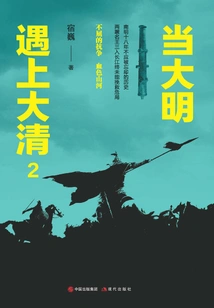
This book recreates the war between the Ming and Qing Dynasties from 1644 to 1662, tells the little-known historical details, and reveals the truth of the war that has been deliberately hidden. In 1644, with the sacrifice of the governor Sun Chuanting, the Ming army could no longer stop the peasant army from attacking Beijing, and Emperor Chongzhen committed suicide and died for his country. But this does not mean the end of the Ming Dynasty. The real battle has just begun. The opening drama is the Battle of Shanhaiguan. The Qing troops entered the Pass and defeated the peasant army and took control of Beijing. The peasant armies, mainly the Dashun Army and the Daxi Army, were defeated one after another under the pursuit of the Qing army. The war still raged between the Ming and Qing armies. The Ming Dynasty after the migration to the south was historically called the Southern Ming Dynasty. The Hongguang regime in Nanjing, established by the warlords of the four towns in Jiangbei, quickly collapsed under the attack of the Qing army. The subsequent Longwu court in Fujian was established by warlords. With Zheng Zhilong's surrender to the Qing Dynasty, the Longwu regime was also destroyed by the war. Soon, the Yongli court was established in Zhaoqing, Guangdong. Li Dingguo successively won great victories in Guilin and Hengyang. At the same time, the army led by Zheng Chenggong rose rapidly along the coasts of Fujian and Zhejiang. In the Southern Ming Dynasty, two major anti-Qing forces were formed in the southwest and southeast, with Li Dingguo and Zheng Chenggong as the main forces. However, Nanming's biggest failure lies in its inability to unite as one and face the outside world in unison. Li Dingguo became a famous king in two factions, Zhang Mingzhen entered the Yangtze River three times, and Zheng Chenggong resisted the Qing Dynasty in the southeast for more than ten years. In order to save the danger, they tried their best, but due to various reasons, they were unable to form a joint force and always fought independently. In 1662, Nanming ended with a sigh, but left a lot to think about for future generations. Between the decline and the rise, what are the unknown secrets? History is not that simple.
This book recreates the war between the Ming and Qing Dynasties from 1644 to 1662, tells the little-known historical details, and reveals the truth of the war that has been deliberately hidden. In 1644, with the sacrifice of the governor Sun Chuanting, the Ming army could no longer stop the peasant army from attacking Beijing, and Emperor Chongzhen committed suicide and died for his country. But this does not mean the end of the Ming Dynasty. The real battle has just begun. The opening drama is the Battle of Shanhaiguan. The Qing troops entered the Pass and defeated the peasant army and took control of Beijing. The peasant armies, mainly the Dashun Army and the Daxi Army, were defeated one after another under the pursuit of the Qing army. The war still raged between the Ming and Qing armies. The Ming Dynasty after the migration to the south was historically called the Southern Ming Dynasty. The Hongguang regime in Nanjing, established by the warlords of the four towns in Jiangbei, quickly collapsed under the attack of the Qing army. The subsequent Longwu court in Fujian was established by warlords. With Zheng Zhilong's surrender to the Qing Dynasty, the Longwu regime was also destroyed by the war. Soon, the Yongli court was established in Zhaoqing, Guangdong. Li Dingguo successively won great victories in Guilin and Hengyang. At the same time, the army led by Zheng Chenggong rose rapidly along the coasts of Fujian and Zhejiang. In the Southern Ming Dynasty, two major anti-Qing forces were formed in the southwest and southeast, with Li Dingguo and Zheng Chenggong as the main forces. However, Nanming's biggest failure lies in its inability to unite as one and face the outside world in unison. Li Dingguo became a famous king in two factions, Zhang Mingzhen entered the Yangtze River three times, and Zheng Chenggong resisted the Qing Dynasty in the southeast for more than ten years. In order to save the danger, they tried their best, but due to various reasons, they were unable to form a joint force and always fought independently. In 1662, Nanming ended with a sigh, but left a lot to think about for future generations. Between the decline and the rise, what are the unknown secrets? History is not that simple.
当大明遇上大清
Su Wei
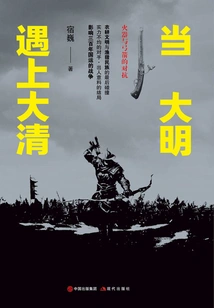
This book comprehensively reproduces the war between the Ming Dynasty and the Qing Dynasty (Later Jin Dynasty) from 1618 to 1644, taking you back to the time of the Ming and Qing Dynasties, telling the little-known historical details, and revealing the truth of the war that has been deliberately hidden. The war started with a sneak attack on Fushun. Nurhachi was as cunning as a fox and as ferocious as a wolf. He likes to fight undeclared, cooperate inside and outside, and can often concentrate his forces to defeat the smaller ones with more troops. The Ming Dynasty did not pay attention to the rapid rise of Hou Jin at first, and they obviously underestimated their opponents. From Fushun to Sarhu, from Shenyang, Liaoyang and then to Guangning, Nurhachi won again and again. The lessons from the Battle of Saarhu also allowed the Ming Dynasty to re-understand the enemy, switching from strategic offense to strategic defense, from the Ningyuan victory to the Ningjin battle, and successfully suppressed the Houjin Iron Cavalry with strong city artillery. The Guan-Ning-Jin defense line, with Jinzhou, Ningyuan and Shanhaiguan as its supporting points, became an insurmountable fortress for Nurhaci and Huang Taiji and his son. After more than ten years of confrontation between the Ming and Qing armies, the moment of decisive battle finally arrived. The Ming Dynasty sent its strongest lineup, with Hong Chengchou as the commander. The Ming army's main force in Liaodong, Guan Ning cavalry, and all the elites from the nine-border towns went into battle. The Qing army also mobilized all its troops, and Huang Taiji, who was seriously ill, even went to the front line to command in person. This is a decisive battle that no one can afford to lose. Both sides tried their best. Although the Ming army was seriously injured, it still had the strength to counterattack. However, the peasant army from within the Ming Dynasty destroyed the empire. The war between Ming and Qing Dynasties ended in an unexpected way. Although the war between the Ming Dynasty and the Qing Dynasty did not officially end until 1662, the outcome of this war still profoundly changed the direction of Chinese history. When the Ming Dynasty met the Qing Dynasty, it was a confrontation between firearms and bows and arrows, and a collision between farming civilization and fishing and hunting peoples. Between the decline and the rise, what are the unknown secrets? History is not that simple.
This book comprehensively reproduces the war between the Ming Dynasty and the Qing Dynasty (Later Jin Dynasty) from 1618 to 1644, taking you back to the time of the Ming and Qing Dynasties, telling the little-known historical details, and revealing the truth of the war that has been deliberately hidden. The war started with a sneak attack on Fushun. Nurhachi was as cunning as a fox and as ferocious as a wolf. He likes to fight undeclared, cooperate inside and outside, and can often concentrate his forces to defeat the smaller ones with more troops. The Ming Dynasty did not pay attention to the rapid rise of Hou Jin at first, and they obviously underestimated their opponents. From Fushun to Sarhu, from Shenyang, Liaoyang and then to Guangning, Nurhachi won again and again. The lessons from the Battle of Saarhu also allowed the Ming Dynasty to re-understand the enemy, switching from strategic offense to strategic defense, from the Ningyuan victory to the Ningjin battle, and successfully suppressed the Houjin Iron Cavalry with strong city artillery. The Guan-Ning-Jin defense line, with Jinzhou, Ningyuan and Shanhaiguan as its supporting points, became an insurmountable fortress for Nurhaci and Huang Taiji and his son. After more than ten years of confrontation between the Ming and Qing armies, the moment of decisive battle finally arrived. The Ming Dynasty sent its strongest lineup, with Hong Chengchou as the commander. The Ming army's main force in Liaodong, Guan Ning cavalry, and all the elites from the nine-border towns went into battle. The Qing army also mobilized all its troops, and Huang Taiji, who was seriously ill, even went to the front line to command in person. This is a decisive battle that no one can afford to lose. Both sides tried their best. Although the Ming army was seriously injured, it still had the strength to counterattack. However, the peasant army from within the Ming Dynasty destroyed the empire. The war between Ming and Qing Dynasties ended in an unexpected way. Although the war between the Ming Dynasty and the Qing Dynasty did not officially end until 1662, the outcome of this war still profoundly changed the direction of Chinese history. When the Ming Dynasty met the Qing Dynasty, it was a confrontation between firearms and bows and arrows, and a collision between farming civilization and fishing and hunting peoples. Between the decline and the rise, what are the unknown secrets? History is not that simple.
天涯晚笛:听张充和讲故事
Su Wei
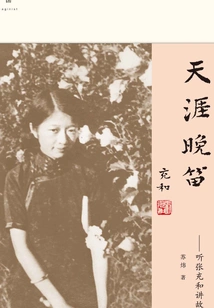
True record of "the last talented woman in the Republic of China" turning 100! The author of this book, Su Wei, is Zhang Chonghe's Yale junior and close neighbor. Over the years, he has visited Zhang Chonghe for advice and learned calligraphy and poetry. "The End of the World" is a life story that Zhang Chonghe has narrated intermittently to Su Wei since this century. It discloses more than a hundred precious images, including the "Bagua Mo" and "Hanquan Qin" given to her by Yang Zhensheng and Zha Fuxi as wedding gifts. It also has a special appendix of the Zhang family tree of the "Hefei Four Sisters", which clarifies that she and Zhang Ailing are not related to the same family. The main chapters have been personally reviewed and revised by Zhang Chonghe.
True record of "the last talented woman in the Republic of China" turning 100! The author of this book, Su Wei, is Zhang Chonghe's Yale junior and close neighbor. Over the years, he has visited Zhang Chonghe for advice and learned calligraphy and poetry. "The End of the World" is a life story that Zhang Chonghe has narrated intermittently to Su Wei since this century. It discloses more than a hundred precious images, including the "Bagua Mo" and "Hanquan Qin" given to her by Yang Zhensheng and Zha Fuxi as wedding gifts. It also has a special appendix of the Zhang family tree of the "Hefei Four Sisters", which clarifies that she and Zhang Ailing are not related to the same family. The main chapters have been personally reviewed and revised by Zhang Chonghe.
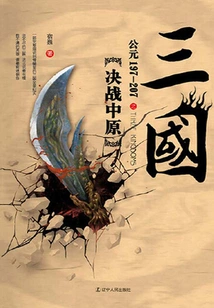
三国之决战中原:公元197—207
Su Wei
It tells the history of Cao Cao and Yuan Shao from allies to enemies, from fighting side by side to the decisive battle in the Central Plains in the ten years from 197 AD to 207 AD. Cao Cao went from weak to strong, and Yuan Shao went from strong to weak. After Cao Cao and Yuan Shao annexed their opponents in turn, they confronted each other with the Yellow River as the boundary. However, there can only be one master in the Central Plains, and the decisive battle between Cao Cao and Yuan Shao was inevitable. Cao Cao won the Battle of Guandu. After that, Cao Cao spent seven years unifying the north and establishing his status as the overlord of the Central Plains.
It tells the history of Cao Cao and Yuan Shao from allies to enemies, from fighting side by side to the decisive battle in the Central Plains in the ten years from 197 AD to 207 AD. Cao Cao went from weak to strong, and Yuan Shao went from strong to weak. After Cao Cao and Yuan Shao annexed their opponents in turn, they confronted each other with the Yellow River as the boundary. However, there can only be one master in the Central Plains, and the decisive battle between Cao Cao and Yuan Shao was inevitable. Cao Cao won the Battle of Guandu. After that, Cao Cao spent seven years unifying the north and establishing his status as the overlord of the Central Plains.
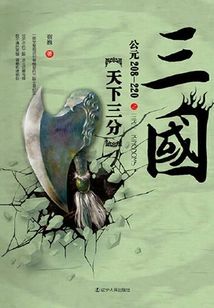
三国之天下三分:公元208—220
Su Wei
Tells the history from 208 to 220 AD. After Cao Cao unified the north, he sent his army south. Liu Bei, who was forced to join forces with Sun Quan, formed a Sun-Liu coalition to fight against Cao Cao. The two sides fought a battle in Chibi, and the coalition forces of Sun and Liu defeated Cao Cao with fire attacks. After that, Cao Cao, Liu Bei, and Sun Quan, in order to compete for Jingzhou, conspired, plotted, and calculated, and finally divided Jingzhou into three parts. Cao Cao returned to the north and established his country as king. His two sons, Cao Pi and Cao Zhi, fought openly and secretly for the throne. In the end, the literary young man Cao Zhi was no match for the sinister Cao Pi, and Cao Pi came to power. Liu Bei rose rapidly after the Battle of Chibi, first taking Yizhou and then Hanzhong. Sun Quan was jealous, and in order to seize Jingzhou, he did not hesitate to fall out with Liu Bei, attack Guan Yu, and occupy Jiangling. Then, Cao Pi usurped the Han Dynasty, Liu Bei founded the country, and Sun Quan became king. Cao, Liu and Sun divided the world into three parts and stood together.
Tells the history from 208 to 220 AD. After Cao Cao unified the north, he sent his army south. Liu Bei, who was forced to join forces with Sun Quan, formed a Sun-Liu coalition to fight against Cao Cao. The two sides fought a battle in Chibi, and the coalition forces of Sun and Liu defeated Cao Cao with fire attacks. After that, Cao Cao, Liu Bei, and Sun Quan, in order to compete for Jingzhou, conspired, plotted, and calculated, and finally divided Jingzhou into three parts. Cao Cao returned to the north and established his country as king. His two sons, Cao Pi and Cao Zhi, fought openly and secretly for the throne. In the end, the literary young man Cao Zhi was no match for the sinister Cao Pi, and Cao Pi came to power. Liu Bei rose rapidly after the Battle of Chibi, first taking Yizhou and then Hanzhong. Sun Quan was jealous, and in order to seize Jingzhou, he did not hesitate to fall out with Liu Bei, attack Guan Yu, and occupy Jiangling. Then, Cao Pi usurped the Han Dynasty, Liu Bei founded the country, and Sun Quan became king. Cao, Liu and Sun divided the world into three parts and stood together.
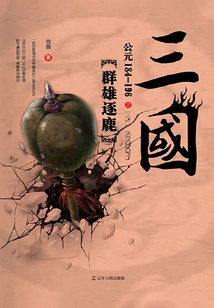
三国之群雄逐鹿:公元184—196
Su Wei
It tells the history from 184 AD, that is, the rise of the Yellow Turban Army at the end of the Eastern Han Dynasty in China until 196 AD when Cao Cao welcomed Emperor Xian of the Han Dynasty to take control of Xu County. The Yellow Turban Rebellion ushered in the chaos of the late Eastern Han Dynasty. After that, the Eastern Han Dynasty experienced palace coups, Dong Zhuo's dictatorship, and the Kwantung Allied Forces' attack on Dong Zhuo. Chaos arose, you just finished singing and I came on stage, various princes competed in the Central Plains, and the Eastern Han Dynasty existed in name only. During this period, Yuan Shao, Cao Cao, Yuan Shu, Gongsun Zan, Lu Bu, Sun Ce, and Liu Biao took advantage of the situation and took advantage of the situation, each dominating one side. Cao Cao was the most discerning among the heroes. He welcomed the Emperor of Han with respect, held the Emperor in his arms to control the feudal lords, and later came to the top.
It tells the history from 184 AD, that is, the rise of the Yellow Turban Army at the end of the Eastern Han Dynasty in China until 196 AD when Cao Cao welcomed Emperor Xian of the Han Dynasty to take control of Xu County. The Yellow Turban Rebellion ushered in the chaos of the late Eastern Han Dynasty. After that, the Eastern Han Dynasty experienced palace coups, Dong Zhuo's dictatorship, and the Kwantung Allied Forces' attack on Dong Zhuo. Chaos arose, you just finished singing and I came on stage, various princes competed in the Central Plains, and the Eastern Han Dynasty existed in name only. During this period, Yuan Shao, Cao Cao, Yuan Shu, Gongsun Zan, Lu Bu, Sun Ce, and Liu Biao took advantage of the situation and took advantage of the situation, each dominating one side. Cao Cao was the most discerning among the heroes. He welcomed the Emperor of Han with respect, held the Emperor in his arms to control the feudal lords, and later came to the top.
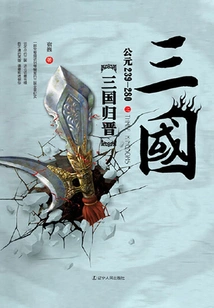
三国之三国归晋:公元239—280
Su Wei
Tells the history from 238 AD to 280 AD. Cao Shuang and Sima Yi fought secretly for ten years, and all the great families returned to Sima. In the end, Sima Yi used a coup to seize power, and the three horses deposed "Cao", which finally became a reality. Sima father and son hold great power, and Sima Zhao's intentions are known to everyone on the road. Jiang Wei made nine expeditions to the Central Plains, but Liu Adou, who was happy and reluctant to think about Shu, was ineffective. The Shu Han Dynasty was the first to fall. Then the Sima family usurped Cao Wei, leaving Sun Wu to support him. Sima Yi's grandson Sima Yan proclaimed himself emperor and established the Western Jin Dynasty. The Jin army defeated Wu in six routes, ending a century of disputes and unifying China.
Tells the history from 238 AD to 280 AD. Cao Shuang and Sima Yi fought secretly for ten years, and all the great families returned to Sima. In the end, Sima Yi used a coup to seize power, and the three horses deposed "Cao", which finally became a reality. Sima father and son hold great power, and Sima Zhao's intentions are known to everyone on the road. Jiang Wei made nine expeditions to the Central Plains, but Liu Adou, who was happy and reluctant to think about Shu, was ineffective. The Shu Han Dynasty was the first to fall. Then the Sima family usurped Cao Wei, leaving Sun Wu to support him. Sima Yi's grandson Sima Yan proclaimed himself emperor and established the Western Jin Dynasty. The Jin army defeated Wu in six routes, ending a century of disputes and unifying China.
三国之三国鼎立:公元221—238
Su Wei
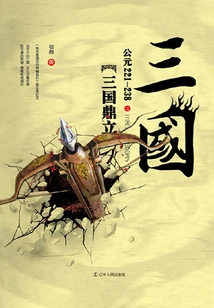
Tells the history of China from 221 to 238 AD. In order to retake Jingzhou and avenge Guan Yu, Liu Bei led an overwhelming army to the east, but was defeated by Lu Xun of Dongwu at Xiaoting. Later, Liu Bei entrusted his son and the country to Zhuge Liang in Baidi City. Zhuge Liang took orders at the critical moment to stabilize the overall situation. Then he conquered the south to quell the rebellion and went north to the Central Plains. Zhuge Liang joined forces with Soochow in order to make an all-out Northern Expedition. Sun Quan proclaimed himself emperor, and the Three Kingdoms were formally formed. In order to revive the Han Dynasty, Zhuge Liang first fought against Cao Zhen and then against Sima Yi. He worked hard and finally died of illness in the Wuzhangyuan military camp.
Tells the history of China from 221 to 238 AD. In order to retake Jingzhou and avenge Guan Yu, Liu Bei led an overwhelming army to the east, but was defeated by Lu Xun of Dongwu at Xiaoting. Later, Liu Bei entrusted his son and the country to Zhuge Liang in Baidi City. Zhuge Liang took orders at the critical moment to stabilize the overall situation. Then he conquered the south to quell the rebellion and went north to the Central Plains. Zhuge Liang joined forces with Soochow in order to make an all-out Northern Expedition. Sun Quan proclaimed himself emperor, and the Three Kingdoms were formally formed. In order to revive the Han Dynasty, Zhuge Liang first fought against Cao Zhen and then against Sima Yi. He worked hard and finally died of illness in the Wuzhangyuan military camp.
群雄争霸:打开三国乱世的大门
Su Wei
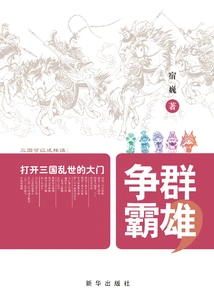
This book tells people's favorite history of the Three Kingdoms in a popular and relaxed language. This book is basically based on official history, turning obscure classical Chinese texts into modern texts that are easy to read. In the process of writing history, the author of this book combines the complex political relationships of the Three Kingdoms with historical rigor and at the same time the writing style is in line with modern people's reading habits.
This book tells people's favorite history of the Three Kingdoms in a popular and relaxed language. This book is basically based on official history, turning obscure classical Chinese texts into modern texts that are easy to read. In the process of writing history, the author of this book combines the complex political relationships of the Three Kingdoms with historical rigor and at the same time the writing style is in line with modern people's reading habits.