Library
Browse and search books
6 novels found
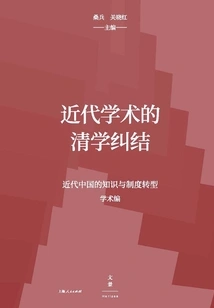
近代学术的清学纠结
Sang Bing Editor-in-chief Guan Xiaohong
Taking Western learning, Eastern learning, and Chinese learning as the fulcrum, we break the limitations of separate scholarship, do not regard change as evolution, and do not regard the present as modernity. From a multidisciplinary perspective, we use non-disciplinary conceptual methods to comprehensively explore the entire process and various aspects of the transformation of concepts, ideas, disciplines, and systems in China since modern times, connect ancient and modern times with China and the outside world, and analyze the significance of Western learning and Eastern learning in understanding Chinese history and culture. Society, reconstruct China's own discourse system and organizational context, deeply understand the process, status and limitations of the formation of the Chinese nation's new intelligence generation and operation mechanism, understand the uniqueness of East Asian civilizations in the process of world integration and the value of providing diverse choices for human development, strive for and maintain the initiative and leading position of Chinese historical and cultural interpretations that are increasingly important to the development of world civilization. The tangle of Qing studies in modern scholarship reflects the dilemma that the entire modern China encountered in the conflict and integration of Chinese and foreign cultures. Through the current routine, one can vaguely see the transformation from the previous labor pains. In this process, it seems to be eclectic, but in fact the input of foreign theories inevitably leads to superficial deformation, and the original status of the nation is often lost.
Taking Western learning, Eastern learning, and Chinese learning as the fulcrum, we break the limitations of separate scholarship, do not regard change as evolution, and do not regard the present as modernity. From a multidisciplinary perspective, we use non-disciplinary conceptual methods to comprehensively explore the entire process and various aspects of the transformation of concepts, ideas, disciplines, and systems in China since modern times, connect ancient and modern times with China and the outside world, and analyze the significance of Western learning and Eastern learning in understanding Chinese history and culture. Society, reconstruct China's own discourse system and organizational context, deeply understand the process, status and limitations of the formation of the Chinese nation's new intelligence generation and operation mechanism, understand the uniqueness of East Asian civilizations in the process of world integration and the value of providing diverse choices for human development, strive for and maintain the initiative and leading position of Chinese historical and cultural interpretations that are increasingly important to the development of world civilization. The tangle of Qing studies in modern scholarship reflects the dilemma that the entire modern China encountered in the conflict and integration of Chinese and foreign cultures. Through the current routine, one can vaguely see the transformation from the previous labor pains. In this process, it seems to be eclectic, but in fact the input of foreign theories inevitably leads to superficial deformation, and the original status of the nation is often lost.
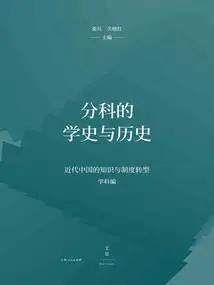
分科的学史与历史
Sang Bing Editor-in-chief Guan Xiaohong
Everything before today is history, so history is not divided into subjects. Moreover, Chinese scholarship emphasizes thoroughness and has never focused on subject division. However, today's history is nothing more than the history of disciplines and the history of disciplines. The former is the history of the development of disciplines traced using the current form of each discipline, and the latter is general or classified history that is studied using the methods and perspectives of different disciplines. What they have in common is the reassembly of history using conceptual systems imported from abroad. Only by properly grasping the connections and distinctions between the general retrospective history of subject studies, the history of subject evolution in modern times, and the future-oriented history of subject studies can we grasp the key points and communicate without being attached to others.
Everything before today is history, so history is not divided into subjects. Moreover, Chinese scholarship emphasizes thoroughness and has never focused on subject division. However, today's history is nothing more than the history of disciplines and the history of disciplines. The former is the history of the development of disciplines traced using the current form of each discipline, and the latter is general or classified history that is studied using the methods and perspectives of different disciplines. What they have in common is the reassembly of history using conceptual systems imported from abroad. Only by properly grasping the connections and distinctions between the general retrospective history of subject studies, the history of subject evolution in modern times, and the future-oriented history of subject studies can we grasp the key points and communicate without being attached to others.
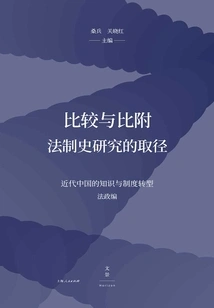
比较与比附:法制史研究的取径
Sang Bing Editor-in-chief Guan Xiaohong
Driven by the influence of foreign academics and internal development, the study of legal history has become increasingly active in recent years. Whether it is the compilation and publication of documents or the publication of research works, it has become quite prominent in the fields of various professional histories or academic histories. On the basis of reflecting on the frequent confusion and comparison in various special historiographies, this book starts from the case files, trials, and institutional restructuring of modern China, peels off the cocoons, and gradually gets closer to the truth. On the one hand, we compare the opinions of all parties and constantly get closer to the truth of the matter. On the other hand, the attitudes of the parties are different, and then we examine the different relationships between the parties and the matter. We transform the so-called legal history into the study of general history, using judicial issues as clues and context, rather than legal history as the scope, trying to find common sense in the dynamic changes of society.
Driven by the influence of foreign academics and internal development, the study of legal history has become increasingly active in recent years. Whether it is the compilation and publication of documents or the publication of research works, it has become quite prominent in the fields of various professional histories or academic histories. On the basis of reflecting on the frequent confusion and comparison in various special historiographies, this book starts from the case files, trials, and institutional restructuring of modern China, peels off the cocoons, and gradually gets closer to the truth. On the one hand, we compare the opinions of all parties and constantly get closer to the truth of the matter. On the other hand, the attitudes of the parties are different, and then we examine the different relationships between the parties and the matter. We transform the so-called legal history into the study of general history, using judicial issues as clues and context, rather than legal history as the scope, trying to find common sense in the dynamic changes of society.
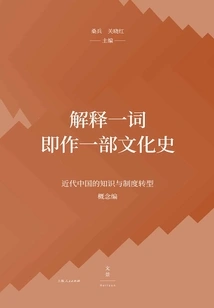
解释一词即作一部文化史
Sang Bing Editor-in-chief Guan Xiaohong
Although modern Chinese people have accepted a large number of new terms from Meiji New Chinese, when they encounter Western concepts or refer to things, they still can't help but go back to ancient classics and interpret the meaning of the text. Moreover, when interpreting new nouns, we often not only compare the original Western words and treat the new nouns as a whole, but also understand the meanings of the words from the Chinese character combinations. As a result, the same new Chinese noun takes on different forms in Eastern and Chinese contexts, resulting in many ambiguities that cannot overlap with each other. Only by not using nouns to outline history, but by studying history to grasp concepts, can we hope to reach the state where one word of explanation is a cultural history.
Although modern Chinese people have accepted a large number of new terms from Meiji New Chinese, when they encounter Western concepts or refer to things, they still can't help but go back to ancient classics and interpret the meaning of the text. Moreover, when interpreting new nouns, we often not only compare the original Western words and treat the new nouns as a whole, but also understand the meanings of the words from the Chinese character combinations. As a result, the same new Chinese noun takes on different forms in Eastern and Chinese contexts, resulting in many ambiguities that cannot overlap with each other. Only by not using nouns to outline history, but by studying history to grasp concepts, can we hope to reach the state where one word of explanation is a cultural history.
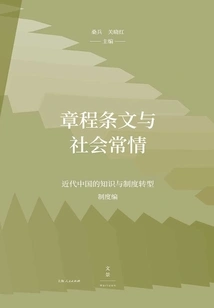
章程条文与社会常情
Sang Bing Editor-in-chief Guan Xiaohong
The Qing Dynasty encountered great changes that had never been seen in history. The Qing Dynasty system, which was the culmination of previous dynasty systems, could not cope with it calmly. In order to survive, it had to adapt. Therefore, after the Sui and Tang Dynasties, China once again experienced overall system changes, dominated by changes in the political system, including the official system, the bureaucracy, and the judicial system. The comprehensive transformation of the system in various aspects such as law, finance, finance, military, society, and education, and various conceptual changes involving Western learning, Eastern learning, and middle school, were ultimately implemented in the addition of institutions and institutional establishment, and were reflected through the implementation of various systems. Its process was further fully developed during the Republic of China, and its influence continues to this day. This book takes institutional change, the hub of knowledge and institutional transformation in modern China, as the entry point to understand China's past, and use it to understand the present and grasp the future.
The Qing Dynasty encountered great changes that had never been seen in history. The Qing Dynasty system, which was the culmination of previous dynasty systems, could not cope with it calmly. In order to survive, it had to adapt. Therefore, after the Sui and Tang Dynasties, China once again experienced overall system changes, dominated by changes in the political system, including the official system, the bureaucracy, and the judicial system. The comprehensive transformation of the system in various aspects such as law, finance, finance, military, society, and education, and various conceptual changes involving Western learning, Eastern learning, and middle school, were ultimately implemented in the addition of institutions and institutional establishment, and were reflected through the implementation of various systems. Its process was further fully developed during the Republic of China, and its influence continues to this day. This book takes institutional change, the hub of knowledge and institutional transformation in modern China, as the entry point to understand China's past, and use it to understand the present and grasp the future.
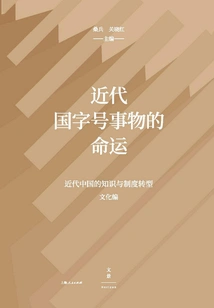
近代国字号事物的命运
Sang Bing Editor-in-chief Guan Xiaohong
Taking Western learning, Eastern learning, and Chinese learning as the fulcrum, we break the limitations of separate scholarship, do not regard change as evolution, and do not regard the present as modernity. From a multidisciplinary perspective, we use non-disciplinary conceptual methods to comprehensively explore the entire process and various aspects of the transformation of concepts, ideas, disciplines, and systems in China since modern times, connect ancient and modern times with China and the outside world, and analyze the significance of Western learning and Eastern learning in understanding Chinese history and culture. Society, reconstruct China's own discourse system and organizational context, deeply understand the process, status and limitations of the formation of the Chinese nation's new intelligence generation and operation mechanism, understand the uniqueness of East Asian civilizations in the process of world integration and the value of providing diverse choices for human development, strive for and maintain the initiative and leading position of Chinese historical and cultural interpretations that are increasingly important to the development of world civilization. In the context of the entanglement between Chinese and Western cultures, after experiencing the transition from the debate between Yi and Xia to the application of Chinese culture and Western culture, and stimulated by the influence of Meiji Japan, the Chinese began to rethink the value and direction of inherent culture under the impact of the West, including Chinese studies, Chinese painting, Chinese language, Chinese medicine, Chinese martial arts (techniques), Chinese music, Chinese music, and Chinese culture. The emergence of a series of national concepts such as clothing, national dramas, and national rituals (rituals), as well as the controversy surrounding these concepts and their corresponding things, highlighted the struggle and embarrassment of the uniqueness of East Asian civilizations in the process of world integration during that period, and also foreshadowed the value and significance of cultural diversity.
Taking Western learning, Eastern learning, and Chinese learning as the fulcrum, we break the limitations of separate scholarship, do not regard change as evolution, and do not regard the present as modernity. From a multidisciplinary perspective, we use non-disciplinary conceptual methods to comprehensively explore the entire process and various aspects of the transformation of concepts, ideas, disciplines, and systems in China since modern times, connect ancient and modern times with China and the outside world, and analyze the significance of Western learning and Eastern learning in understanding Chinese history and culture. Society, reconstruct China's own discourse system and organizational context, deeply understand the process, status and limitations of the formation of the Chinese nation's new intelligence generation and operation mechanism, understand the uniqueness of East Asian civilizations in the process of world integration and the value of providing diverse choices for human development, strive for and maintain the initiative and leading position of Chinese historical and cultural interpretations that are increasingly important to the development of world civilization. In the context of the entanglement between Chinese and Western cultures, after experiencing the transition from the debate between Yi and Xia to the application of Chinese culture and Western culture, and stimulated by the influence of Meiji Japan, the Chinese began to rethink the value and direction of inherent culture under the impact of the West, including Chinese studies, Chinese painting, Chinese language, Chinese medicine, Chinese martial arts (techniques), Chinese music, Chinese music, and Chinese culture. The emergence of a series of national concepts such as clothing, national dramas, and national rituals (rituals), as well as the controversy surrounding these concepts and their corresponding things, highlighted the struggle and embarrassment of the uniqueness of East Asian civilizations in the process of world integration during that period, and also foreshadowed the value and significance of cultural diversity.