Library
Browse and search books
16 novels found
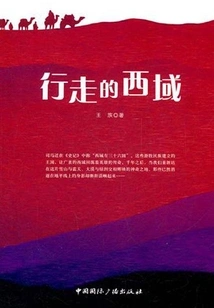
行走的西域
Royal Family
The main contents include: Xiongnu: The Rush of Snow on the Great Wall, Maodun: The Provocation of the Wolf Warriors, Zhizhi: Howl of the Lone Wolf, Attila: The Last Shanyu, Cypriots: Return from a Foreign Land, Hunting Pride: Son of God, Turks: The Wolf Warriors His works include Back View, Ashina Helu: The Dormant Wolf, Yelu Dashi: One Man's Empire, Genghis Khan: The Whip of God, Obasi: The Road to the Holy Migration, Afanti: The Wise Man in the Sky, Frontier Poetry: Snowflakes Floating Over the Blade, etc.
The main contents include: Xiongnu: The Rush of Snow on the Great Wall, Maodun: The Provocation of the Wolf Warriors, Zhizhi: Howl of the Lone Wolf, Attila: The Last Shanyu, Cypriots: Return from a Foreign Land, Hunting Pride: Son of God, Turks: The Wolf Warriors His works include Back View, Ashina Helu: The Dormant Wolf, Yelu Dashi: One Man's Empire, Genghis Khan: The Whip of God, Obasi: The Road to the Holy Migration, Afanti: The Wise Man in the Sky, Frontier Poetry: Snowflakes Floating Over the Blade, etc.
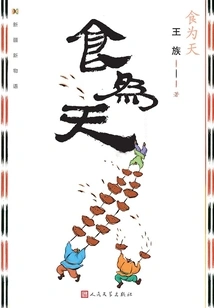
Food is the Most Important Thing
Literature食为天
Royal Family
In the process of living in pursuit of water and grass and migrating with the seasons, the nomadic people created many delicacies that continue to this day. The author has lived in Xinjiang for 20 years. In the spirit of humanistic observation, he wrote prose about Xinjiang cuisine from its materials, origins, production methods, etc., And created this collection of essays. The work not only contains regional cultural characteristics, ethnic minority production and labor scenes, but also incorporates historical and mythological stories, folk slang, proverbs or character legends, etc. From the perspective of food, the civilizational achievements of the interpenetration of Han and Hu along the Silk Road are presented to readers one by one. His creations are close to life and his perspective is groundbreaking.
In the process of living in pursuit of water and grass and migrating with the seasons, the nomadic people created many delicacies that continue to this day. The author has lived in Xinjiang for 20 years. In the spirit of humanistic observation, he wrote prose about Xinjiang cuisine from its materials, origins, production methods, etc., And created this collection of essays. The work not only contains regional cultural characteristics, ethnic minority production and labor scenes, but also incorporates historical and mythological stories, folk slang, proverbs or character legends, etc. From the perspective of food, the civilizational achievements of the interpenetration of Han and Hu along the Silk Road are presented to readers one by one. His creations are close to life and his perspective is groundbreaking.
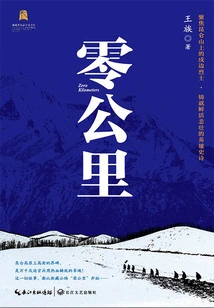
Zero Kilometers
General Fiction零公里
Royal Family
The full-length novel "Zero Kilometer" is based on the author's own experience, and takes the Ali Military Division Automobile Camp stationed at Zero Kilometer in Yecheng as the object of description. It tells the story of Tian Yihe, an automobile soldier, and others who went on a mission to the Kunlun Mountains and continued to patrol arduously despite being hit by wind and snow, altitude sickness, and physical illness. When they were hungry, they persisted with their bodies; in dangerous places, they persisted with their will; when faced with arduous tasks, they persisted with their faith. Even if they die, they must reach the highest border and let the boundary monument stand firmly on the border to pass on the spirit of border soldiers.
The full-length novel "Zero Kilometer" is based on the author's own experience, and takes the Ali Military Division Automobile Camp stationed at Zero Kilometer in Yecheng as the object of description. It tells the story of Tian Yihe, an automobile soldier, and others who went on a mission to the Kunlun Mountains and continued to patrol arduously despite being hit by wind and snow, altitude sickness, and physical illness. When they were hungry, they persisted with their bodies; in dangerous places, they persisted with their will; when faced with arduous tasks, they persisted with their faith. Even if they die, they must reach the highest border and let the boundary monument stand firmly on the border to pass on the spirit of border soldiers.

Wolves Infested
General Fiction狼出没
Royal Family
Set off early in the morning and return in the evening. Brave hunter, you have walked through two thousand mountains and five hundred rivers, and seen three hundred wolves and fifty foxes. If you want to tell people stories, tell them about wolves, because wolf stories are the best. The dire wolf didn't eat me. I'm alive. He climbed up from the snow, rubbed his eyes with his hands, and slowly opened them. It was still dark, but he was still alive and he was no longer afraid. Just now, a wolf yelled and jumped out from behind the tree. He screamed and collapsed to the ground like a ball of mud. The wolf jumped out so fast that the ice on the branches was thrown out like a shining knife. He saw the wolf pounce on him, he instinctively closed his eyes, and the world turned into darkness. It was already dark, but after he closed his eyes, everything became dark.
Set off early in the morning and return in the evening. Brave hunter, you have walked through two thousand mountains and five hundred rivers, and seen three hundred wolves and fifty foxes. If you want to tell people stories, tell them about wolves, because wolf stories are the best. The dire wolf didn't eat me. I'm alive. He climbed up from the snow, rubbed his eyes with his hands, and slowly opened them. It was still dark, but he was still alive and he was no longer afraid. Just now, a wolf yelled and jumped out from behind the tree. He screamed and collapsed to the ground like a ball of mud. The wolf jumped out so fast that the ice on the branches was thrown out like a shining knife. He saw the wolf pounce on him, he instinctively closed his eyes, and the world turned into darkness. It was already dark, but after he closed his eyes, everything became dark.

Walking Wolf Corpse (part 2)
General Fiction行走的狼尸(外一篇)
Royal Family
Set off early in the morning and return in the evening. Brave hunter, you have walked through two thousand mountains and five hundred rivers, and seen three hundred wolves and fifty foxes. If you want to tell people a story, then tell the story about the wolf, because the story about the wolf is the best. It was this wolf that started this bloody fight. It had been hungry for a long time. After spotting the yak, it followed closely. In summer, yaks will go from the snow line to the river beach to graze. Sometimes they even lower their heads for a long time without raising them, as if there is endless food on the ground. The yak is fat, and its four hooves make a "thump, thump, thump" sound when it walks, and its sharp and thick horns look shocking.
Set off early in the morning and return in the evening. Brave hunter, you have walked through two thousand mountains and five hundred rivers, and seen three hundred wolves and fifty foxes. If you want to tell people a story, then tell the story about the wolf, because the story about the wolf is the best. It was this wolf that started this bloody fight. It had been hungry for a long time. After spotting the yak, it followed closely. In summer, yaks will go from the snow line to the river beach to graze. Sometimes they even lower their heads for a long time without raising them, as if there is endless food on the ground. The yak is fat, and its four hooves make a "thump, thump, thump" sound when it walks, and its sharp and thick horns look shocking.

The Four to Five Hundred Days of the Zombie Outbreak
Science Fiction丧尸爆发的四五百天
Royal Family
Yu Qiao and his classmate Bai Yi, who were in college for three years, were both zoology talents. Yu Qiao and Bai Yi, who had a disfigured face, were conducting experiments on human cells that would not die in the laboratory. When they reached the second stage, Bai Yi knocked Yu Qiao unconscious and released the experimental subject, the Tibetan Mastiff, out of the laboratory, causing a zombie outbreak...
Yu Qiao and his classmate Bai Yi, who were in college for three years, were both zoology talents. Yu Qiao and Bai Yi, who had a disfigured face, were conducting experiments on human cells that would not die in the laboratory. When they reached the second stage, Bai Yi knocked Yu Qiao unconscious and released the experimental subject, the Tibetan Mastiff, out of the laboratory, causing a zombie outbreak...
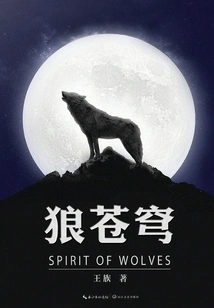
Wolf Sky
General Fiction狼苍穹
Royal Family
At the beginning of spring, the legendary white-maned wolf suddenly appeared on the pasture in Altay, Xinjiang. It and two wolves stared at the sheep on the pasture. The herdsmen lured them into a trap. In order to survive, the white-maned wolf killed two wolves and ate them. More than a month later, the white-maned wolf struggled to climb out of the trap, but was unable to take a step. It looked up at the sky (sky) and howled, and instantly gained strength and flew away like a flying arrow. The herdsmen remembered a saying from long ago that wolves would howl to the sky to gain strength. This is the origin of the wolf being the son of the sky. People were shocked. The legendary white-maned wolf and the wolf howling at the sky had all become facts one by one. They were all worried that this year would be the year of the wolf disaster. At the beginning of the "Cultural Revolution" this year, Lesihe County listed the white-maned wolf as a target to be defeated...
At the beginning of spring, the legendary white-maned wolf suddenly appeared on the pasture in Altay, Xinjiang. It and two wolves stared at the sheep on the pasture. The herdsmen lured them into a trap. In order to survive, the white-maned wolf killed two wolves and ate them. More than a month later, the white-maned wolf struggled to climb out of the trap, but was unable to take a step. It looked up at the sky (sky) and howled, and instantly gained strength and flew away like a flying arrow. The herdsmen remembered a saying from long ago that wolves would howl to the sky to gain strength. This is the origin of the wolf being the son of the sky. People were shocked. The legendary white-maned wolf and the wolf howling at the sky had all become facts one by one. They were all worried that this year would be the year of the wolf disaster. At the beginning of the "Cultural Revolution" this year, Lesihe County listed the white-maned wolf as a target to be defeated...

Zero Kilometers (revised Edition)
General Fiction零公里(修订版)
Royal Family
The full-length novel "Zero Kilometer" is based on the author's own experience, and takes the Ali Military Division Automobile Camp stationed at Zero Kilometer in Yecheng as the object of description. It tells the story of Tian Yihe, an automobile soldier, and others who went on a mission to the Kunlun Mountains and continued to patrol arduously despite being hit by wind and snow, altitude sickness, and physical illness. When they were hungry, they persisted with their bodies; in dangerous places, they persisted with their will; when faced with arduous tasks, they persisted with their faith. Even if they die, they must reach the highest border and let the boundary monument stand firmly on the border to pass on the spirit of border soldiers.
The full-length novel "Zero Kilometer" is based on the author's own experience, and takes the Ali Military Division Automobile Camp stationed at Zero Kilometer in Yecheng as the object of description. It tells the story of Tian Yihe, an automobile soldier, and others who went on a mission to the Kunlun Mountains and continued to patrol arduously despite being hit by wind and snow, altitude sickness, and physical illness. When they were hungry, they persisted with their bodies; in dangerous places, they persisted with their will; when faced with arduous tasks, they persisted with their faith. Even if they die, they must reach the highest border and let the boundary monument stand firmly on the border to pass on the spirit of border soldiers.
Dry Food for the Huns
General Fiction匈奴的干粮
Royal Family
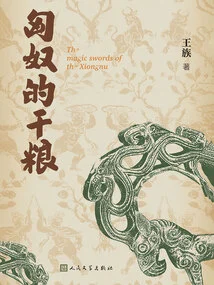
The story line of the novel is based on historical events. It begins with the story of Touman, a young Hun who wanders around Donghu in search of the golden man who is essential to becoming the Chanyu of the Huns. He eventually returns to the Huns after going through ups and downs and becomes the Chanyu of the Huns. It tells the story of Touman, a young man from the Huns, who married two women from the Huyan and Xubu clans to form the prototype of the Hunnic Empire. The extension of the novel basically follows history, but it is fictitious in aspects such as the fate of the characters, ethnic era and historical significance. The purpose is to highlight the impact of the story and give a clear face to the Xiongnu who have disappeared in time. It allows readers to feel the Xiongnu's survival, breathing and imagination and contact with the world in the red wilderness, and to perceive their spirit and soul, the historical legend and nomadic glory created in the Western Regions.
The story line of the novel is based on historical events. It begins with the story of Touman, a young Hun who wanders around Donghu in search of the golden man who is essential to becoming the Chanyu of the Huns. He eventually returns to the Huns after going through ups and downs and becomes the Chanyu of the Huns. It tells the story of Touman, a young man from the Huns, who married two women from the Huyan and Xubu clans to form the prototype of the Hunnic Empire. The extension of the novel basically follows history, but it is fictitious in aspects such as the fate of the characters, ethnic era and historical significance. The purpose is to highlight the impact of the story and give a clear face to the Xiongnu who have disappeared in time. It allows readers to feel the Xiongnu's survival, breathing and imagination and contact with the world in the red wilderness, and to perceive their spirit and soul, the historical legend and nomadic glory created in the Western Regions.
God's Private Place
Literature神的自留地
Royal Family
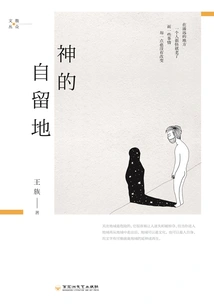
This book is a collection of essays. The book takes the natural scenery of Xinjiang as the entry point. It presents water, trees, grass, mountains, snow, wind, rain, songs, fish, wine, sunshine, animals, stones, utensils, deserts, legends, stories, pastures, numbers, rock paintings, hunters, roads, etc. As in-depth presentation objects. It records the unique events that occurred one by one, and reveals the national culture, regional characteristics and other contents of this land. Because Xinjiang is dotted with oases, grasslands, deserts and Gobis, the people living here have outstanding uniqueness. It has always been known as "God's Back Garden, God's Private Land" and other reputations. The author chose "God's Private Land" as the title of the book. The purpose is to display the distinctive regional characteristics and let readers understand the colorful customs and customs of the border areas.
This book is a collection of essays. The book takes the natural scenery of Xinjiang as the entry point. It presents water, trees, grass, mountains, snow, wind, rain, songs, fish, wine, sunshine, animals, stones, utensils, deserts, legends, stories, pastures, numbers, rock paintings, hunters, roads, etc. As in-depth presentation objects. It records the unique events that occurred one by one, and reveals the national culture, regional characteristics and other contents of this land. Because Xinjiang is dotted with oases, grasslands, deserts and Gobis, the people living here have outstanding uniqueness. It has always been known as "God's Back Garden, God's Private Land" and other reputations. The author chose "God's Private Land" as the title of the book. The purpose is to display the distinctive regional characteristics and let readers understand the colorful customs and customs of the border areas.
Wolf Sorrow
Literature狼殇
Royal Family
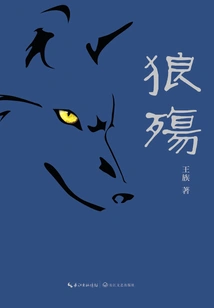
This is a collection of stories that depicts the survival of wolves and presents the relationship between wolves and humans. Through a series of shocking stories, it analyzes the living conditions of wolves and tells the relationship between humans, wolves and nature. It reveals the author's thinking about the survival situation of wolves and triggers readers' reflection on the transition from wolves to humans. This is currently the most systematic and comprehensive book on the life of the prairie wolf, and it is also a "One Thousand and One Nights" that combines the beauty and cruelty of wolves.
This is a collection of stories that depicts the survival of wolves and presents the relationship between wolves and humans. Through a series of shocking stories, it analyzes the living conditions of wolves and tells the relationship between humans, wolves and nature. It reveals the author's thinking about the survival situation of wolves and triggers readers' reflection on the transition from wolves to humans. This is currently the most systematic and comprehensive book on the life of the prairie wolf, and it is also a "One Thousand and One Nights" that combines the beauty and cruelty of wolves.

一本书(谷臻小简·AI导读版)
Royal Family
This book aims to sort out the stories that happened during the birth of Chinese classics, telling the author's spiritual ambition for a book, the changes in destiny caused by a book, and the common rise of people and books in the scope of literary significance, or the common tragic experiences of both people in the era they lived in.
This book aims to sort out the stories that happened during the birth of Chinese classics, telling the author's spiritual ambition for a book, the changes in destiny caused by a book, and the common rise of people and books in the scope of literary significance, or the common tragic experiences of both people in the era they lived in.

The Sky in the Chest
Literature胸腔里的苍穹
Royal Family
About the author: The royal family is from Tianshui, Gansu Province. He joined the army in Ali, Tibet at the end of 1991 and now lives in Urumqi. A member of the Chinese Writers Association, he graduated from the 7th Advanced Research Class of Lu Xun Institute of Literature and is a contracted writer with the Xinjiang Writers Association. His writing is mainly poetry and prose, paying more attention to regional culture. He has published twenty works including the poetry collection "Where", the prose collections "The Beast Tribe", "Things in Northern Tibet", "The Unfaithful Beauty", "The Nomad's Return", and the long prose "Cliff Paradise", "The Book of Tuva", and "Wolf World". He has won the 9th "People's Liberation Army Literary Award" of the General Political Department, the "Great Red Eagle Literary Award" of "Chinese Writers", the first Xinjiang Youth Creation Award, etc. The long tune is as long as the horse can run on the grassland. Grasslands, horses and long tunes are the three treasures of the Mongols.
About the author: The royal family is from Tianshui, Gansu Province. He joined the army in Ali, Tibet at the end of 1991 and now lives in Urumqi. A member of the Chinese Writers Association, he graduated from the 7th Advanced Research Class of Lu Xun Institute of Literature and is a contracted writer with the Xinjiang Writers Association. His writing is mainly poetry and prose, paying more attention to regional culture. He has published twenty works including the poetry collection "Where", the prose collections "The Beast Tribe", "Things in Northern Tibet", "The Unfaithful Beauty", "The Nomad's Return", and the long prose "Cliff Paradise", "The Book of Tuva", and "Wolf World". He has won the 9th "People's Liberation Army Literary Award" of the General Political Department, the "Great Red Eagle Literary Award" of "Chinese Writers", the first Xinjiang Youth Creation Award, etc. The long tune is as long as the horse can run on the grassland. Grasslands, horses and long tunes are the three treasures of the Mongols.
神的自留地(谷臻小简·AI导读版)
Royal Family
This is a book that uses Xinjiang's natural scenery as an entry point to reveal the national culture, regional characteristics and people's survival in this land, allowing readers to understand the survival rules of border areas.
This is a book that uses Xinjiang's natural scenery as an entry point to reveal the national culture, regional characteristics and people's survival in this land, allowing readers to understand the survival rules of border areas.

Talking Nonsense
General Fiction妄言妄听
Royal Family
Ji Yun's Ghosts Before writing this manuscript, I turned out the "Ghost Picture" painted by Luo Pin, one of the Eight Eccentrics of Yangzhou, and was amazed by the vivid ghosts he painted. At that time, the last of the Yangzhou Eight Monsters, Luo Pin, was no longer strange. The previous seven monsters were already master painters, and their paintings had exhausted their respective fields. What should Luo Pin paint? Like an apocalypse, the idea of painting ghosts that came to him unintentionally made him ecstatic. This subject was almost untouched, so he decided to regard ghosts as a source that could be vigorously exploited. If you fall in love with ghosts, ghosts are beautiful. He successively painted the flattering ghost, the greedy ghost, the chattering ghost, the accompanying ghost, the sommelier ghost, the traveling ghost, and the fleeing ghost, all of which were vivid and extremely cute. Since then, he has become an out-and-out ghost painter. After reading Luo Pin's "Ghost Pictures", I then read Ji Yun (also known as Ji Xiaolan)'s "Notes of Yuewei Thatched Cottage", and especially liked the article about Urumqi ghosts.
Ji Yun's Ghosts Before writing this manuscript, I turned out the "Ghost Picture" painted by Luo Pin, one of the Eight Eccentrics of Yangzhou, and was amazed by the vivid ghosts he painted. At that time, the last of the Yangzhou Eight Monsters, Luo Pin, was no longer strange. The previous seven monsters were already master painters, and their paintings had exhausted their respective fields. What should Luo Pin paint? Like an apocalypse, the idea of painting ghosts that came to him unintentionally made him ecstatic. This subject was almost untouched, so he decided to regard ghosts as a source that could be vigorously exploited. If you fall in love with ghosts, ghosts are beautiful. He successively painted the flattering ghost, the greedy ghost, the chattering ghost, the accompanying ghost, the sommelier ghost, the traveling ghost, and the fleeing ghost, all of which were vivid and extremely cute. Since then, he has become an out-and-out ghost painter. After reading Luo Pin's "Ghost Pictures", I then read Ji Yun (also known as Ji Xiaolan)'s "Notes of Yuewei Thatched Cottage", and especially liked the article about Urumqi ghosts.
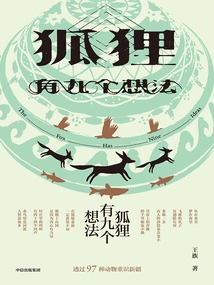
The Fox Has Nine Ideas
Literature狐狸有九个想法
Royal Family
The collection of essays "The Fox Has Nine Thoughts" focuses on 97 species of birds, beasts, fish and birds in Xinjiang. These animals live in the snowy mountains, deserts, grasslands, wetlands, forests, mountains, lakes and rivers in the border areas. Due to the unique location, there are many little-known stories and legends. The animals blend with nature and coexist with herdsmen, deriving their own survival philosophies and giving people shocking life revelations. The animals covered in this book are mostly endemic to the frontier, including wolves, eagles, camels, horses, yellow sheep, five-headed black sheep, big-headed fish, vultures, rabbits, fragrant deer, prairie tortoises, Tarim rabbits, white-headed hard-tailed ducks, Ili pikas, alpacas, Goose-throated antelope, saiga antelope, blue sheep, long-eared jerboa, meridian gerbil, muskrat, sable, mink, rabbit cat, lynx, golden eagle, Tarim rock lizard, Turpan sand tiger, tiger weasel, black stork, white-tailed chick, great bustard, houbara bustard and so on. While recording their habits, they create a series of unique animal images and animal temperaments, presenting the animals' life experiences in daily life and changes, adhering to or evolving, leaving behind the legends of the frontier written by them and the earth. The animals and the herdsmen who still follow the nomadic life form a living relationship of mutual influence and interdependence of life and death. This book contains many proverbs of the herdsmen and hunters, from which we can see the continuation of the nomadic civilization over time.
The collection of essays "The Fox Has Nine Thoughts" focuses on 97 species of birds, beasts, fish and birds in Xinjiang. These animals live in the snowy mountains, deserts, grasslands, wetlands, forests, mountains, lakes and rivers in the border areas. Due to the unique location, there are many little-known stories and legends. The animals blend with nature and coexist with herdsmen, deriving their own survival philosophies and giving people shocking life revelations. The animals covered in this book are mostly endemic to the frontier, including wolves, eagles, camels, horses, yellow sheep, five-headed black sheep, big-headed fish, vultures, rabbits, fragrant deer, prairie tortoises, Tarim rabbits, white-headed hard-tailed ducks, Ili pikas, alpacas, Goose-throated antelope, saiga antelope, blue sheep, long-eared jerboa, meridian gerbil, muskrat, sable, mink, rabbit cat, lynx, golden eagle, Tarim rock lizard, Turpan sand tiger, tiger weasel, black stork, white-tailed chick, great bustard, houbara bustard and so on. While recording their habits, they create a series of unique animal images and animal temperaments, presenting the animals' life experiences in daily life and changes, adhering to or evolving, leaving behind the legends of the frontier written by them and the earth. The animals and the herdsmen who still follow the nomadic life form a living relationship of mutual influence and interdependence of life and death. This book contains many proverbs of the herdsmen and hunters, from which we can see the continuation of the nomadic civilization over time.