Library
Browse and search books
5 novels found
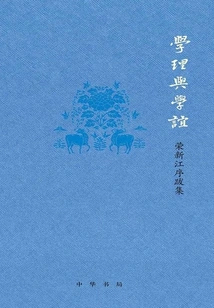
Academic Theory and Academic Friendship: Collection of Preface and Postscripts by Rong Xinjiang
History学理与学谊:荣新江序跋集
Rong Xinjiang
"Academic Theory and Academic Friendship - Rong Xinjiang's Collection of Prefaces and Postscripts" is divided into upper and lower parts. The upper part is the preface and postscript written for other people's works, and the lower part is the preface and postscript of his own work. The content involves Dunhuang Tubo studies, Sui and Tang history, history of Sino-foreign relations, history of the Western Regions and other fields. The preface and postscript mostly summarize the development process of the subject, analyze the development direction, express the friendship with the author, and evaluate the contribution of the work, embodying the author's in-depth exploration and thinking in related research fields.
"Academic Theory and Academic Friendship - Rong Xinjiang's Collection of Prefaces and Postscripts" is divided into upper and lower parts. The upper part is the preface and postscript written for other people's works, and the lower part is the preface and postscript of his own work. The content involves Dunhuang Tubo studies, Sui and Tang history, history of Sino-foreign relations, history of the Western Regions and other fields. The preface and postscript mostly summarize the development process of the subject, analyze the development direction, express the friendship with the author, and evaluate the contribution of the work, embodying the author's in-depth exploration and thinking in related research fields.
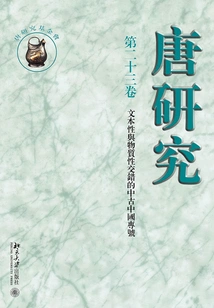
Tang Studies Volume 23
History唐研究第二十三卷
Rong Xinjiang
In view of the widespread academic attention in recent years to newly discovered medieval documents and archaeological materials, the Center for Ancient Chinese History at Peking University will hold the "Textuality and Materiality in Medieval China: International Symposiumat Peking" in 2017. University), this volume "Tang Studies" is a special collection of conference papers, hoping to focus on the relationship between textuality and materiality in medieval Chinese historical materials, so as to re-evaluate the historical value of textual and material materials from the 5th to the 10th century. This assessment can be carried out from various angles (art, economy, history, literature, and religion), especially involving the following aspects: 1. Textuality and materiality in the Middle Ages, 2. The intersection of textuality and materiality, 3. The multiple purposes of textual and material production, 4. The consumption practice of text and material. Each paper will discuss the above topics.
In view of the widespread academic attention in recent years to newly discovered medieval documents and archaeological materials, the Center for Ancient Chinese History at Peking University will hold the "Textuality and Materiality in Medieval China: International Symposiumat Peking" in 2017. University), this volume "Tang Studies" is a special collection of conference papers, hoping to focus on the relationship between textuality and materiality in medieval Chinese historical materials, so as to re-evaluate the historical value of textual and material materials from the 5th to the 10th century. This assessment can be carried out from various angles (art, economy, history, literature, and religion), especially involving the following aspects: 1. Textuality and materiality in the Middle Ages, 2. The intersection of textuality and materiality, 3. The multiple purposes of textual and material production, 4. The consumption practice of text and material. Each paper will discuss the above topics.
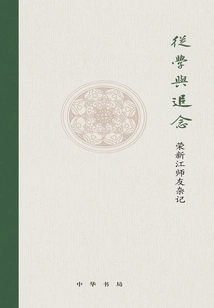
从学与追念:荣新江师友杂记
Rong Xinjiang
Rong Xinjiang is from Luannan, Hebei Province. He was admitted to the Department of History at Peking University in 1978 and stayed at the school to teach in 1985. He is currently a professor at the Department of History at Peking University and the Research Center for Ancient Chinese History, director of the Academic Committee of the Department of History at Peking University, and vice president of the China Dunhuang Turpan Society. He has visited or lectured in Japan. Institute of Buddhist Culture at Ryukoku University, Institute of Humanities at Kyoto University, Institute of East Asian Studies at Freie Universität Berlin in Germany, Institute of East Asian Studies at Yale University in the United States, Institut d'Etudes Supérieures Supérieures in Experimental Studies in France, Institute of Chinese Culture at the Chinese University of Hong Kong, Institute of History and Linguistics at Taiwan's Academia Sinica, etc. His research interests include the history of Sino-foreign relations, the Silk Road, the history of the Sui and Tang Dynasties, the history of the Western Regions and Central Asia, Dunhuang and Turfan studies, etc. He is the author of "A Censorship of the History of Khotan" (co-author), "Research on the History of the Guiyi Army", "Information on Overseas Dunhuang and Turfan Documents", "Eighteen Lectures on Dunhuang Studies", "Chinese "Ancient China and Foreign Civilizations", "New Essays on Dunhuang Studies", "Ten Essays on the Study of Medieval Chinese History", "Chang'an in the Sui and Tang Dynasties: Gender, Memory and Others", "Distinguishing Falsehood and Preserving Truth - A Collection of Dunhuang Studies", "Academic Theory and Academic Friendship - A Collection of Prefaces and Postscripts by Rong Xinjiang", "Essays of Sanshengzhai", etc.
Rong Xinjiang is from Luannan, Hebei Province. He was admitted to the Department of History at Peking University in 1978 and stayed at the school to teach in 1985. He is currently a professor at the Department of History at Peking University and the Research Center for Ancient Chinese History, director of the Academic Committee of the Department of History at Peking University, and vice president of the China Dunhuang Turpan Society. He has visited or lectured in Japan. Institute of Buddhist Culture at Ryukoku University, Institute of Humanities at Kyoto University, Institute of East Asian Studies at Freie Universität Berlin in Germany, Institute of East Asian Studies at Yale University in the United States, Institut d'Etudes Supérieures Supérieures in Experimental Studies in France, Institute of Chinese Culture at the Chinese University of Hong Kong, Institute of History and Linguistics at Taiwan's Academia Sinica, etc. His research interests include the history of Sino-foreign relations, the Silk Road, the history of the Sui and Tang Dynasties, the history of the Western Regions and Central Asia, Dunhuang and Turfan studies, etc. He is the author of "A Censorship of the History of Khotan" (co-author), "Research on the History of the Guiyi Army", "Information on Overseas Dunhuang and Turfan Documents", "Eighteen Lectures on Dunhuang Studies", "Chinese "Ancient China and Foreign Civilizations", "New Essays on Dunhuang Studies", "Ten Essays on the Study of Medieval Chinese History", "Chang'an in the Sui and Tang Dynasties: Gender, Memory and Others", "Distinguishing Falsehood and Preserving Truth - A Collection of Dunhuang Studies", "Academic Theory and Academic Friendship - A Collection of Prefaces and Postscripts by Rong Xinjiang", "Essays of Sanshengzhai", etc.
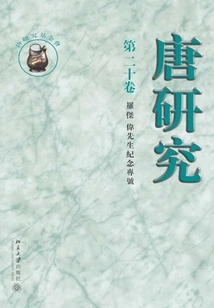
Tang Studies·volume 20
History唐研究·第二十卷
Rong Xinjiang
This book is a large-scale academic special issue of the Tang Research Foundation, which publishes research papers and book reviews on the literature, history, archeology, and art of the Tang Dynasty. The papers in this book are generally written by experts in certain fields specially invited by the editor-in-chief, and the papers with the most academic standards are selected through anonymous review. Since its inception, this journal has been highly praised by experts and scholars at home and abroad, believing that it represents the highest level of historical research on the Tang Dynasty in China in the world today, and its papers are constantly cited by scholars at home and abroad.
This book is a large-scale academic special issue of the Tang Research Foundation, which publishes research papers and book reviews on the literature, history, archeology, and art of the Tang Dynasty. The papers in this book are generally written by experts in certain fields specially invited by the editor-in-chief, and the papers with the most academic standards are selected through anonymous review. Since its inception, this journal has been highly praised by experts and scholars at home and abroad, believing that it represents the highest level of historical research on the Tang Dynasty in China in the world today, and its papers are constantly cited by scholars at home and abroad.
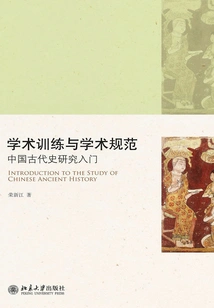
Academic Training and Academic Standards: an Introduction to the Study of Ancient Chinese History
History学术训练与学术规范:中国古代史研究入门
Rong Xinjiang
"Academic Training and Academic Standards: An Introduction to the Research of Ancient Chinese History" For students who are eager to enter the field of ancient Chinese history research, "Academic Training and Academic Standards: An Introduction to the Research of Ancient Chinese History" almost points out the way to get started step by step. Ancient books, stone carvings, bamboo slips, documents, images, as well as modern treatises and publications all have their own methods of review. Grasping editions and collations and tracking new archaeological discoveries are conducive to the accumulation and updating of knowledge. Further academic paper writing also has its own rules, and there is no room for falsehood or trickery. Academic literacy is developed through such persistent training.
"Academic Training and Academic Standards: An Introduction to the Research of Ancient Chinese History" For students who are eager to enter the field of ancient Chinese history research, "Academic Training and Academic Standards: An Introduction to the Research of Ancient Chinese History" almost points out the way to get started step by step. Ancient books, stone carvings, bamboo slips, documents, images, as well as modern treatises and publications all have their own methods of review. Grasping editions and collations and tracking new archaeological discoveries are conducive to the accumulation and updating of knowledge. Further academic paper writing also has its own rules, and there is no room for falsehood or trickery. Academic literacy is developed through such persistent training.