Library
Browse and search books
10 novels found
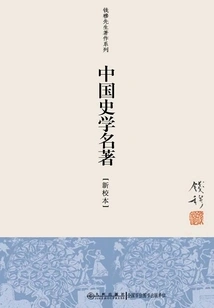
Chinese Historical Masterpieces
Literature中国史学名著
Qian Mu
The book introduces "Book of History", "Spring and Autumn", "Three Biography of Spring and Autumn", "Zuo Zhuan", "Historical Records", "Hanshu", "Book of the Later Han", "Three Kingdoms", "Biography of Eminent Monks", "Shui Jing Zhu" and other important historical must-reads. It analyzes and explains the differences between the versions of each book, source textual research, and reading methods. It is an important introductory book on history.
The book introduces "Book of History", "Spring and Autumn", "Three Biography of Spring and Autumn", "Zuo Zhuan", "Historical Records", "Hanshu", "Book of the Later Han", "Three Kingdoms", "Biography of Eminent Monks", "Shui Jing Zhu" and other important historical must-reads. It analyzes and explains the differences between the versions of each book, source textual research, and reading methods. It is an important introductory book on history.
Interstellar Prisoner
Fantasy星际囚徒
Qian Mu
In the end of the Dharma era, the human race is in decline. The male protagonist is unknowingly pregnant with the blood of five generations of civilizations. Unfortunately, he is imprisoned. Fortunately, with the secret guidance of the masters of the galaxy civilization, his bizarre life experience uncovers many mysteries on the earth: the destruction of Atlantis, the hidden secrets of the Qingming River Scene, the destruction of the ancient country of Loulan, etc. Where did humans come from? What is the meaning of survival? What is a more advanced cosmic civilization like? See how the male protagonist reverses time and space and leads the human race to dominate the universe. Finally get a glimpse of the ultimate secret of the universe.
In the end of the Dharma era, the human race is in decline. The male protagonist is unknowingly pregnant with the blood of five generations of civilizations. Unfortunately, he is imprisoned. Fortunately, with the secret guidance of the masters of the galaxy civilization, his bizarre life experience uncovers many mysteries on the earth: the destruction of Atlantis, the hidden secrets of the Qingming River Scene, the destruction of the ancient country of Loulan, etc. Where did humans come from? What is the meaning of survival? What is a more advanced cosmic civilization like? See how the male protagonist reverses time and space and leads the human race to dominate the universe. Finally get a glimpse of the ultimate secret of the universe.
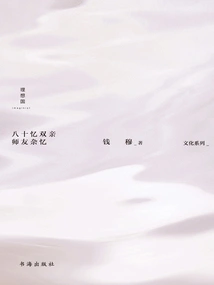
八十忆双亲 师友杂忆
Qian Mu
In 1974, Mr. Qian Mu, who was eighty years old, wrote the book "Reminiscences of Parents at Eighty Years" in memory of his parents. Eight years later, he wrote "Miscellaneous Memories of Teachers and Friends". This book is a combination of the two books and contains twelve appendices. In "Eighty Years of Reminiscences of Parents", Mr. Qian recalled the lives of his grandfather, father, mother and elder brother. Their words and deeds have become part of Qian Mu's personality. When writing "Miscellaneous Memories of Teachers and Friends", my husband could no longer see words. He was filled with emotion as he recalled the teachers he met when he was a student, his experience of teaching in primary schools, middle schools, and universities, as well as his journey of studying knowledge. From Guoyu Primary School to Peking University, Southwest Associated University, and New Asia College, the world has undergone sudden changes in the past few decades. From this book, we can get a glimpse of the changes in the country, society, atmosphere, characters, ideas, and academics in the twentieth century, as well as the profiles of Hu Shi, Gu Jiegang, Lu Simian, Chen Yinke, Liang Shuming, Feng Youlan, Lin Yutang, Fu Sinian and others. The reminiscences of Mr. Shu can preserve the demeanor of his previous life. Those who read these miscellaneous recollections will not fail to add objective evidence if they look at them with the eyes of studying the history of modern Chinese society.
In 1974, Mr. Qian Mu, who was eighty years old, wrote the book "Reminiscences of Parents at Eighty Years" in memory of his parents. Eight years later, he wrote "Miscellaneous Memories of Teachers and Friends". This book is a combination of the two books and contains twelve appendices. In "Eighty Years of Reminiscences of Parents", Mr. Qian recalled the lives of his grandfather, father, mother and elder brother. Their words and deeds have become part of Qian Mu's personality. When writing "Miscellaneous Memories of Teachers and Friends", my husband could no longer see words. He was filled with emotion as he recalled the teachers he met when he was a student, his experience of teaching in primary schools, middle schools, and universities, as well as his journey of studying knowledge. From Guoyu Primary School to Peking University, Southwest Associated University, and New Asia College, the world has undergone sudden changes in the past few decades. From this book, we can get a glimpse of the changes in the country, society, atmosphere, characters, ideas, and academics in the twentieth century, as well as the profiles of Hu Shi, Gu Jiegang, Lu Simian, Chen Yinke, Liang Shuming, Feng Youlan, Lin Yutang, Fu Sinian and others. The reminiscences of Mr. Shu can preserve the demeanor of his previous life. Those who read these miscellaneous recollections will not fail to add objective evidence if they look at them with the eyes of studying the history of modern Chinese society.
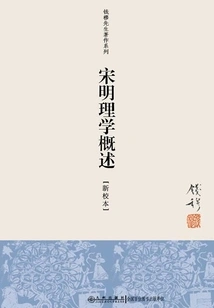
宋明理学概述
Qian Mu
In the history of Chinese thought, after the Han Dynasty, Confucianism gradually declined, Zhuang and Lao Dynasties flourished, and Buddhism came from the east, gradually flourishing, and reached its peak in the Sui and Tang Dynasties. However, the prosperity of Buddhism turned to decline, followed by the rise of Song Dynasty, which created a new situation for the revival of New Confucianism. The Confucian scholars in the early Song Dynasty were able to catch up with the pre-Qin Dynasty in their discussions, insights, and spirit. Below Zhou Lianxi, it became more refined and became the founding of Neo-Confucianism in the Song and Ming dynasties, followed by the academic heyday of Er Cheng, Zhang Zai, Zhu Xi and even Wang Yangming. This book was written in 1953. From the rise of Song Dynasty to the late Ming Dynasty, this book is divided into fifty-six chapters. It traces the development and evolution of Neo-Confucianism over the past six hundred years and gives a concise and concise narrative.
In the history of Chinese thought, after the Han Dynasty, Confucianism gradually declined, Zhuang and Lao Dynasties flourished, and Buddhism came from the east, gradually flourishing, and reached its peak in the Sui and Tang Dynasties. However, the prosperity of Buddhism turned to decline, followed by the rise of Song Dynasty, which created a new situation for the revival of New Confucianism. The Confucian scholars in the early Song Dynasty were able to catch up with the pre-Qin Dynasty in their discussions, insights, and spirit. Below Zhou Lianxi, it became more refined and became the founding of Neo-Confucianism in the Song and Ming dynasties, followed by the academic heyday of Er Cheng, Zhang Zai, Zhu Xi and even Wang Yangming. This book was written in 1953. From the rise of Song Dynasty to the late Ming Dynasty, this book is divided into fifty-six chapters. It traces the development and evolution of Neo-Confucianism over the past six hundred years and gives a concise and concise narrative.
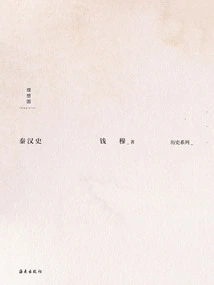
秦汉史
Qian Mu
This book is a lecture note written by the author in 1931. It starts from the unification of the Qin people and ends with Wang Mang's new policy. It is an unfinished chronological history. As a master of history, Mr. Qian Mu has always adhered to his historical gist of a high-level and comprehensive approach. He understood the academic, political and social economics of the Qin and Han dynasties in a comprehensive way, understood the changes, and knew right and wrong. He pointed out the essence of this great change and glorious period in Chinese history. As the author said: "Scholars follow what I have said and read the two histories of Maban, and they can get a glimpse of the historical records of the Qin and Han dynasties. Even if they have mastered the original history of Maban and read my book, it will be enough for discussion and study." As Mr. Qian's masterpiece in his prime, there are many new insights, fluent discussions, and particularly innovative genres.
This book is a lecture note written by the author in 1931. It starts from the unification of the Qin people and ends with Wang Mang's new policy. It is an unfinished chronological history. As a master of history, Mr. Qian Mu has always adhered to his historical gist of a high-level and comprehensive approach. He understood the academic, political and social economics of the Qin and Han dynasties in a comprehensive way, understood the changes, and knew right and wrong. He pointed out the essence of this great change and glorious period in Chinese history. As the author said: "Scholars follow what I have said and read the two histories of Maban, and they can get a glimpse of the historical records of the Qin and Han dynasties. Even if they have mastered the original history of Maban and read my book, it will be enough for discussion and study." As Mr. Qian's masterpiece in his prime, there are many new insights, fluent discussions, and particularly innovative genres.
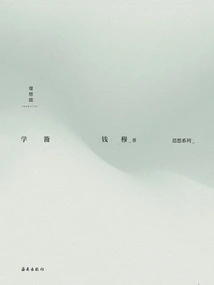
Xueyou
Literature学籥
Qian Mu
Xueyou, as the name suggests, is the key to learning, that is, the learning method. Mr. Qian has been immersed in academia throughout his life. Now he can tell future scholars about his determination to become a scholar and enlighten readers on how to enter the university. This book contains twelve of Mr. Qian's essays on academic methods, each of which focuses on one end of knowledge, all with detailed discussions, and mainly includes four aspects: first, understanding Confucius as the key to learning, and then obtaining the way to be a human being; second, analyzing Zhu Xi's reading methods one by one based on Zhu Xi's works; third, analyzing and commenting on the modern great Confucians Chen Li and Zeng Guofan The reading and scholarship methods of Zhang Zhidong, Kang Youwei, Liang Qichao and others have added to their reference and guiding significance; fourth, Mr. Qian Mu combined his own reading and scholarship to talk about the "in and out" of learning, "inference and understanding", etc., And briefly talked about the shortcomings of the academic style at that time. Readers can learn "how to run in and how to get out" of learning.
Xueyou, as the name suggests, is the key to learning, that is, the learning method. Mr. Qian has been immersed in academia throughout his life. Now he can tell future scholars about his determination to become a scholar and enlighten readers on how to enter the university. This book contains twelve of Mr. Qian's essays on academic methods, each of which focuses on one end of knowledge, all with detailed discussions, and mainly includes four aspects: first, understanding Confucius as the key to learning, and then obtaining the way to be a human being; second, analyzing Zhu Xi's reading methods one by one based on Zhu Xi's works; third, analyzing and commenting on the modern great Confucians Chen Li and Zeng Guofan The reading and scholarship methods of Zhang Zhidong, Kang Youwei, Liang Qichao and others have added to their reference and guiding significance; fourth, Mr. Qian Mu combined his own reading and scholarship to talk about the "in and out" of learning, "inference and understanding", etc., And briefly talked about the shortcomings of the academic style at that time. Readers can learn "how to run in and how to get out" of learning.
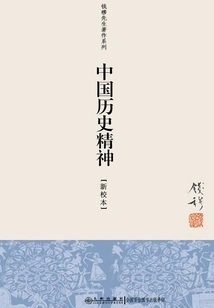
Chinese Historical Spirit
History中国历史精神
Qian Mu
This book is based on the historical spirit and methods described by Mr. Qian Mu, seven topics on politics, national defense, education, geography and characters, and moral spirit in Chinese history, and was revised by Mr. Qian himself. Mr. Qian Mu uses his profound historical knowledge and keen analytical ability to enable readers to gain a glimpse of the mysteries of Chinese history and culture.
This book is based on the historical spirit and methods described by Mr. Qian Mu, seven topics on politics, national defense, education, geography and characters, and moral spirit in Chinese history, and was revised by Mr. Qian himself. Mr. Qian Mu uses his profound historical knowledge and keen analytical ability to enable readers to gain a glimpse of the mysteries of Chinese history and culture.
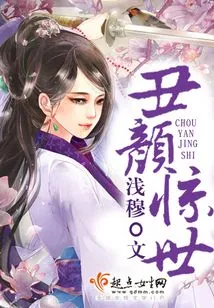
Shockingly Ugly
Ancient Romance丑颜惊世
Qian Mu
She, the most brave mercenary queen in modern times, traveled through time and became the daughter of the Prime Minister. She was a shameless and worthless idiot who was ridiculed by everyone in the streets. Once she became the emperor's favorite concubine, she made everyone laugh. She wore an ugly face and didn't care about other people's opinions. Good for nothing? Not only does she have superb medical skills, she can cure hidden diseases on her face, but she also has superb disguise skills. On the surface, she is the emperor's concubine, but secretly, she is a Rakshasa who kills people decisively. On the surface, he is Feng Yehan, the emperor of the Feng Kingdom. He is as handsome as jade and as handsome as a jade. Secretly, he is the evil star in the eyes of the people of the Feng Kingdom.
She, the most brave mercenary queen in modern times, traveled through time and became the daughter of the Prime Minister. She was a shameless and worthless idiot who was ridiculed by everyone in the streets. Once she became the emperor's favorite concubine, she made everyone laugh. She wore an ugly face and didn't care about other people's opinions. Good for nothing? Not only does she have superb medical skills, she can cure hidden diseases on her face, but she also has superb disguise skills. On the surface, she is the emperor's concubine, but secretly, she is a Rakshasa who kills people decisively. On the surface, he is Feng Yehan, the emperor of the Feng Kingdom. He is as handsome as jade and as handsome as a jade. Secretly, he is the evil star in the eyes of the people of the Feng Kingdom.
我在大明当天官
Qian Mu
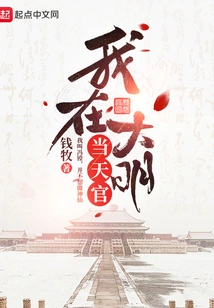
My name is Feng Boring, and I don't want to be a god. Because of an accidental fortune-telling experience, I ran into Mao Xiang's pocket and became the chief think tank of the first Jinyiwei commander of the Ming Dynasty. I didn't feel honored because Mao Xiang was really naughty. It wasn't until the emperor discovered it, dug it into my side, and stuffed it into Qin Tian Prison that I didn't know what it meant to regret. The ancients said: People should believe in the way of heaven, and if they follow it, they will prosper. The emperor also said: He is the emperor who is destined to be destined by heaven, and his monarchy is granted by heaven. But I feel that 'Heaven' really has no status! Qin Tian Jian upholds the will of God. I am Qin Tian Jian Cheng, an out-and-out heavenly official, but my life is not as happy as in Jinyiwei. The department I work in is the only place in the entire Ming Dynasty where resignations, transfers, cross-department promotions, future generations are not allowed to change careers, or retirement and return to hometown are not allowed. Even if one's parents die, they are not eligible to attend funerals and observe filial piety. "Your Majesty, the sky is high and the sky is high. I want to see it." "Speak humanly!" "The world is so big, I want to see it." "I heard that there are stars in the sky and kingdoms on the earth. With that said, please watch the sky at night, dear, and take a good look wherever you want to see." "... Your Majesty, I have something to say, I don't know whether to say it or not." "Stop talking, don't you want to hear it, and the secret must not be leaked?" "... MMP!"
My name is Feng Boring, and I don't want to be a god. Because of an accidental fortune-telling experience, I ran into Mao Xiang's pocket and became the chief think tank of the first Jinyiwei commander of the Ming Dynasty. I didn't feel honored because Mao Xiang was really naughty. It wasn't until the emperor discovered it, dug it into my side, and stuffed it into Qin Tian Prison that I didn't know what it meant to regret. The ancients said: People should believe in the way of heaven, and if they follow it, they will prosper. The emperor also said: He is the emperor who is destined to be destined by heaven, and his monarchy is granted by heaven. But I feel that 'Heaven' really has no status! Qin Tian Jian upholds the will of God. I am Qin Tian Jian Cheng, an out-and-out heavenly official, but my life is not as happy as in Jinyiwei. The department I work in is the only place in the entire Ming Dynasty where resignations, transfers, cross-department promotions, future generations are not allowed to change careers, or retirement and return to hometown are not allowed. Even if one's parents die, they are not eligible to attend funerals and observe filial piety. "Your Majesty, the sky is high and the sky is high. I want to see it." "Speak humanly!" "The world is so big, I want to see it." "I heard that there are stars in the sky and kingdoms on the earth. With that said, please watch the sky at night, dear, and take a good look wherever you want to see." "... Your Majesty, I have something to say, I don't know whether to say it or not." "Stop talking, don't you want to hear it, and the secret must not be leaked?" "... MMP!"
国史大纲(全2册)
Qian Mu
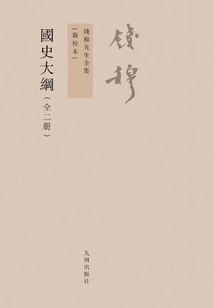
"Outline of National History" is a general history of China. It strives to be concise, giving its outline and omitting trivial details. In less than 1,000 pages, the details of the characters and the preparation of the career also show the author's great power to control the complicated history. The whole book outline is clear and simple, and the complexity is appropriate. "National History Outline" discusses the evolution and development of traditional Chinese academic thoughts, political systems, and social trends, as well as domestic and foreign situations, in order to integrate the history of our country, clarify the reasons for the rise and fall of its governance, elucidate its system of continuous succession, and indicate the source of the life and spirit of our nation. Mr. Qian Mu wrote this book during the Anti-Japanese War. When the country was in peril, scholars used their pen as an army. With "the country with the most complete history" as the deep foundation of the writing, it was written in nearly 800,000 words, which is soul-stirring. It aims to inspire the national spirit of the people, respond to the reality, and serve as a mirror for the founding of the country during the Anti-Japanese War.
"Outline of National History" is a general history of China. It strives to be concise, giving its outline and omitting trivial details. In less than 1,000 pages, the details of the characters and the preparation of the career also show the author's great power to control the complicated history. The whole book outline is clear and simple, and the complexity is appropriate. "National History Outline" discusses the evolution and development of traditional Chinese academic thoughts, political systems, and social trends, as well as domestic and foreign situations, in order to integrate the history of our country, clarify the reasons for the rise and fall of its governance, elucidate its system of continuous succession, and indicate the source of the life and spirit of our nation. Mr. Qian Mu wrote this book during the Anti-Japanese War. When the country was in peril, scholars used their pen as an army. With "the country with the most complete history" as the deep foundation of the writing, it was written in nearly 800,000 words, which is soul-stirring. It aims to inspire the national spirit of the people, respond to the reality, and serve as a mirror for the founding of the country during the Anti-Japanese War.