Library
Browse and search books
8 novels found
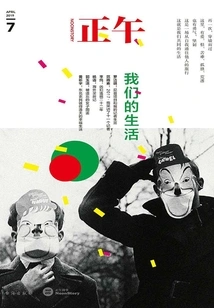
Noon 7: Our Lives
Literature正午7:我们的生活
Noon Story
The seventh issue of "Noon" explores the unknown side of "celebrities", looks for neglected corners in the countryside, and captures the stubborn bass of the times. This time, we dive into social reality and our own hearts, and use stories to re-understand "our lives" - seemingly calm on the surface, but violently turbulent on the inside. Starting from "self", recalling "The Nieman Project and my journalistic career"; in "Spring and Autumn", listening to "The Beggar's Playlist" and watching "The Happy Life of Northeast Farmer Petrov", capturing the dramatic moments in ordinary people's daily lives and feeling the power of the passage of time; in "Spring and Autumn", "Legend" shows the twenty-two years of hunting down the murderer surrounding "Zhejiang Province's No. 1 Unsolved Case", showing that under the sunshine, there are still dark and unclear places; in the end, it returns from "self" to "us" and records the era we live in with a "forgotten woman's illustration". This is us, "incomplete characters" one by one. Personal tragedies and small efforts in a big era are gathered here, which is our common life.
The seventh issue of "Noon" explores the unknown side of "celebrities", looks for neglected corners in the countryside, and captures the stubborn bass of the times. This time, we dive into social reality and our own hearts, and use stories to re-understand "our lives" - seemingly calm on the surface, but violently turbulent on the inside. Starting from "self", recalling "The Nieman Project and my journalistic career"; in "Spring and Autumn", listening to "The Beggar's Playlist" and watching "The Happy Life of Northeast Farmer Petrov", capturing the dramatic moments in ordinary people's daily lives and feeling the power of the passage of time; in "Spring and Autumn", "Legend" shows the twenty-two years of hunting down the murderer surrounding "Zhejiang Province's No. 1 Unsolved Case", showing that under the sunshine, there are still dark and unclear places; in the end, it returns from "self" to "us" and records the era we live in with a "forgotten woman's illustration". This is us, "incomplete characters" one by one. Personal tragedies and small efforts in a big era are gathered here, which is our common life.
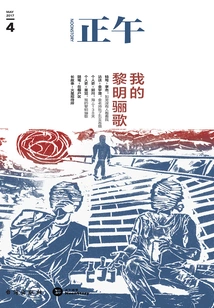
Noon 4: My Song of Dawn
Literature正午4:我的黎明骊歌
Noon Story
This book is the fourth in the "High Noon" series, selected from the non-fiction platform "Noon" under Jiemian News. In the "Features" column, this issue recommends the biography of Li Zhi written by Ye San. "The Blind Female Drug Lord" tells a real case that happened in Nanjing. In addition, there is a very fresh and beautiful bird story, Swifts in Beijing. In the "Essays" column, I recommend "In the Shantytown" by Dan Bao. Do we have the qualifications to make decisions about the fate of the space we live in? Noon's old friend Yuan Ling brought an article called "Murder in the Countryside" and followed his lens-like language to explore a seemingly ordinary murder case. In addition, noon reporter Luo Jieqi wrote about her escape from the smog. This noon "interview" is very exciting. We asked Xiao Zhuanling and Jin Yucheng to talk about literature, Shanghai, and the relationship between men and women in Shanghai around the book "Flowers". "Personal history" is actually an oral history, digging out those buried but memorable memories. We asked Huang Jue to recall his youth, which is also the memory of many of us. In addition, we also commemorate his sailing story with an oral history of Guo Chuan. In the "Visual" column, Noon's photo editor Zhu Mo takes us to explore Beijing's "ghost market." People who visit the ghost market feel a slight sense of excitement, as some kind of fantasy will be fulfilled there. Finally, it is a very long "long story". The two long stories in this issue were contributed by two reporters at noon, namely "Mars Guest House" by Li Chun and "Old Wu Wants to Build an Oil Mill" by Zhang Yingying. The former writes about a group of poets, and the latter writes about an ordinary person on the Yangtze River who wants to do e-commerce.
This book is the fourth in the "High Noon" series, selected from the non-fiction platform "Noon" under Jiemian News. In the "Features" column, this issue recommends the biography of Li Zhi written by Ye San. "The Blind Female Drug Lord" tells a real case that happened in Nanjing. In addition, there is a very fresh and beautiful bird story, Swifts in Beijing. In the "Essays" column, I recommend "In the Shantytown" by Dan Bao. Do we have the qualifications to make decisions about the fate of the space we live in? Noon's old friend Yuan Ling brought an article called "Murder in the Countryside" and followed his lens-like language to explore a seemingly ordinary murder case. In addition, noon reporter Luo Jieqi wrote about her escape from the smog. This noon "interview" is very exciting. We asked Xiao Zhuanling and Jin Yucheng to talk about literature, Shanghai, and the relationship between men and women in Shanghai around the book "Flowers". "Personal history" is actually an oral history, digging out those buried but memorable memories. We asked Huang Jue to recall his youth, which is also the memory of many of us. In addition, we also commemorate his sailing story with an oral history of Guo Chuan. In the "Visual" column, Noon's photo editor Zhu Mo takes us to explore Beijing's "ghost market." People who visit the ghost market feel a slight sense of excitement, as some kind of fantasy will be fulfilled there. Finally, it is a very long "long story". The two long stories in this issue were contributed by two reporters at noon, namely "Mars Guest House" by Li Chun and "Old Wu Wants to Build an Oil Mill" by Zhang Yingying. The former writes about a group of poets, and the latter writes about an ordinary person on the Yangtze River who wants to do e-commerce.
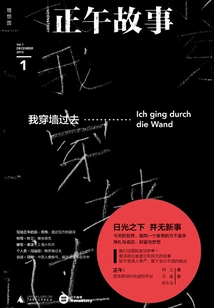
正午故事001:我穿墙过去
Noon Story
"Noon Story 001" is the first book in the Noon series. The opening column is "Words to Noon". In each issue, we will invite a famous person to talk about his field. "Features" is the main story of Noon. We try our best to find those who have been ignored and things that have been left behind. In the "Essay" column, we hope to add more literature and write in a freer narrative way. "Personal history" is actually oral history, which is to dig out those buried but memorable memories. In addition to narratives, we occasionally launch "interview" series, which focus on thoughts and concepts. "Visual" is a special column of Noon. We try to establish a tension between images and text, and between images and art. The end of the book is the "long story" preferred by the Noon team. Its "longness" does not lie in the number of words, but in the distance of time and space.
"Noon Story 001" is the first book in the Noon series. The opening column is "Words to Noon". In each issue, we will invite a famous person to talk about his field. "Features" is the main story of Noon. We try our best to find those who have been ignored and things that have been left behind. In the "Essay" column, we hope to add more literature and write in a freer narrative way. "Personal history" is actually oral history, which is to dig out those buried but memorable memories. In addition to narratives, we occasionally launch "interview" series, which focus on thoughts and concepts. "Visual" is a special column of Noon. We try to establish a tension between images and text, and between images and art. The end of the book is the "long story" preferred by the Noon team. Its "longness" does not lie in the number of words, but in the distance of time and space.
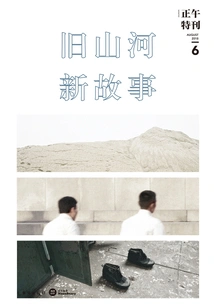
正午6:旧山河,新故事
Noon Story
This book is the sixth in the "High Noon" series. Different from the previous five books, this is a special collection of travel literature, a brand new revision. "Essays" selected the travel notes of four writers Ye San, Liu Zichao, Yang Xiao and Guo Yujie. In "Under the Scorching Sun and Heavy Rain", Ye San wrote about his experience of going to Ejina and Zhoushan to watch music festivals, as well as Maigaiti, the hometown of Xinjiang musician Tursun. The journey along the way is about music and people. "The Man Trapped in the Aral Sea", the Aral Sea, one of the three largest inland seas in the world, is shrinking. In this place where few people visit, Liu Zichao witnessed the vicissitudes of the sea and the lonely and hard life of the trapped people. ...
This book is the sixth in the "High Noon" series. Different from the previous five books, this is a special collection of travel literature, a brand new revision. "Essays" selected the travel notes of four writers Ye San, Liu Zichao, Yang Xiao and Guo Yujie. In "Under the Scorching Sun and Heavy Rain", Ye San wrote about his experience of going to Ejina and Zhoushan to watch music festivals, as well as Maigaiti, the hometown of Xinjiang musician Tursun. The journey along the way is about music and people. "The Man Trapped in the Aral Sea", the Aral Sea, one of the three largest inland seas in the world, is shrinking. In this place where few people visit, Liu Zichao witnessed the vicissitudes of the sea and the lonely and hard life of the trapped people. ...
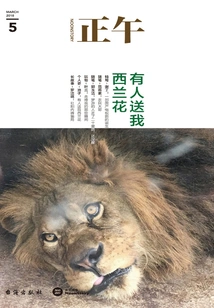
Noon 5: Someone Gave Me Broccoli
Literature正午5:有人送我西兰花
Noon Story
This book is the fifth in the "Noon" series, and is selected from the non-fiction platform "Noon" under Jiemian News. In the "Features" column, this issue recommends "Silly Girl" written by Luo Jieqi, which describes the ecology of an urban village in Guangzhou based on a rape case. "176 Defendants" writes about the absurdity in daily life. An ordinary community, an ordinary building, an ordinary person was hit to death by a brick. The police investigation yielded no results. Based on Article 87 of the Tort Liability Law, the residents of the building became defendants. In the "Essays" column, I recommend Zhang Yingying's "Plants Covering Shanghai", which describes a city from a unique perspective. This issue includes Fan Yusu's "Farmer Brother" and several essays with different styles. In this noon interview, Mei Feng talks about the adaptation of novels to movies, how to create the so-called "republican feeling", the glory and decline of "academicism", and his personal reading history.
This book is the fifth in the "Noon" series, and is selected from the non-fiction platform "Noon" under Jiemian News. In the "Features" column, this issue recommends "Silly Girl" written by Luo Jieqi, which describes the ecology of an urban village in Guangzhou based on a rape case. "176 Defendants" writes about the absurdity in daily life. An ordinary community, an ordinary building, an ordinary person was hit to death by a brick. The police investigation yielded no results. Based on Article 87 of the Tort Liability Law, the residents of the building became defendants. In the "Essays" column, I recommend Zhang Yingying's "Plants Covering Shanghai", which describes a city from a unique perspective. This issue includes Fan Yusu's "Farmer Brother" and several essays with different styles. In this noon interview, Mei Feng talks about the adaptation of novels to movies, how to create the so-called "republican feeling", the glory and decline of "academicism", and his personal reading history.
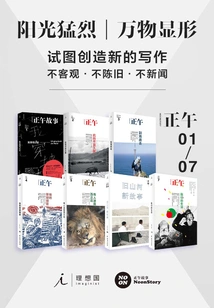
Noon (01-07)
Literature正午(01-07)
Noon Story
NoonStory is dedicated to the discovery and realization of stories. Gathering the best writers to provide fresh, true, and contemporary stories. The predecessor of Noonday is "Interface·Length", which was founded in September 2014. It is under the umbrella of Interface News and is an original non-fiction platform on the Internet. Noon is committed to digging out those forgotten stories and trying to find those words with a sense of the times. We hope to present reports, essays, interviews, personal histories, visuals and other exciting content to readers in the best way.
NoonStory is dedicated to the discovery and realization of stories. Gathering the best writers to provide fresh, true, and contemporary stories. The predecessor of Noonday is "Interface·Length", which was founded in September 2014. It is under the umbrella of Interface News and is an original non-fiction platform on the Internet. Noon is committed to digging out those forgotten stories and trying to find those words with a sense of the times. We hope to present reports, essays, interviews, personal histories, visuals and other exciting content to readers in the best way.
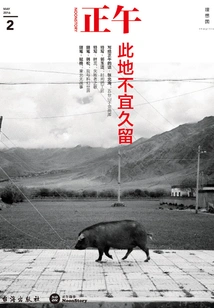
正午2:此地不宜久留
Noon Story
Zhang Beihai is in Shanxi, Han Song is in the world of science fiction, and Fugue is in Cambodia. At noon, look for those lost stories. Following "High Noon 1: I Walked Through the Wall", this book is the second in the "High Noon" series, and it still maintains the quality of the first issue in terms of content. In the opening column "Words to Noon", this issue invites Zhang Beihai to write about his experience of returning to his hometown in Shanxi, which is plain and moving. The "Features" column is the main story at noon. We try our best to find those who have been ignored and things that have been left behind. The most outstanding ones in this issue are "The Craftsman of Time" and "The Song of the Loser". In the "Essay" column, we hope to add more literature and write in a freer narrative way. In this issue, Han Song was invited to write "Me and the Science Fiction World" for "Noon", describing the past and present life of a magazine, reflecting the science fiction nature of China's reality. "Personal history" is actually an oral history, digging out those buried but memorable memories. In addition to narratives, we occasionally launch "interview" series, which focus on thoughts and concepts. "Visual" is a special column of Noon. We try to establish a tension between images and text, and between images and art. A new column called "Playthings" was also opened at noon in the second issue. The most interesting thing in this issue comes from "Silent Bamboo Lady". Summer is coming, maybe you also need a bamboo lady. The end of the book is the "long story" that the Noon team prefers. Its "longness" does not lie in the number of words, but in the distance of time and space. I recommend "Snowy Nyalam".
Zhang Beihai is in Shanxi, Han Song is in the world of science fiction, and Fugue is in Cambodia. At noon, look for those lost stories. Following "High Noon 1: I Walked Through the Wall", this book is the second in the "High Noon" series, and it still maintains the quality of the first issue in terms of content. In the opening column "Words to Noon", this issue invites Zhang Beihai to write about his experience of returning to his hometown in Shanxi, which is plain and moving. The "Features" column is the main story at noon. We try our best to find those who have been ignored and things that have been left behind. The most outstanding ones in this issue are "The Craftsman of Time" and "The Song of the Loser". In the "Essay" column, we hope to add more literature and write in a freer narrative way. In this issue, Han Song was invited to write "Me and the Science Fiction World" for "Noon", describing the past and present life of a magazine, reflecting the science fiction nature of China's reality. "Personal history" is actually an oral history, digging out those buried but memorable memories. In addition to narratives, we occasionally launch "interview" series, which focus on thoughts and concepts. "Visual" is a special column of Noon. We try to establish a tension between images and text, and between images and art. A new column called "Playthings" was also opened at noon in the second issue. The most interesting thing in this issue comes from "Silent Bamboo Lady". Summer is coming, maybe you also need a bamboo lady. The end of the book is the "long story" that the Noon team prefers. Its "longness" does not lie in the number of words, but in the distance of time and space. I recommend "Snowy Nyalam".
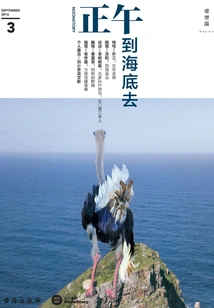
Noon 3: Go to the Bottom of the Sea
Literature正午3:到海底去
Noon Story
Lao Lang's years, Xu Haofeng's young years, as well as live broadcast girls and computer-core teenagers, the stories are played out everywhere, and everyone appears on stage. This book is the third in the "Noon" series, selected from the non-fiction platform "Noon Stories" under Jiemian News. The "Features" column is the main story at noon. We try our best to find those who have been ignored and things that have been left behind. This issue's "Lian Lian Lao Lang" and "Siping Artist" both belong to this type of story. In the "Essay" column, we hope to add more literature and write in a freer narrative way. This issue invited Qin Liwen to write "Wild Boar in Berlin" for "Noon". Writer Zhang Yiting describes his friend Xu Haofeng for us. "Personal history" is actually an oral history, digging out those buried but memorable memories. A new column called "Personal Opinions" was also opened at noon in the third issue. We interviewed people who have achieved success in their professional fields and tried to explore the people and events that influenced them. In this issue we interviewed painter Liu Xiaodong and musician Zhou Yunpeng.
Lao Lang's years, Xu Haofeng's young years, as well as live broadcast girls and computer-core teenagers, the stories are played out everywhere, and everyone appears on stage. This book is the third in the "Noon" series, selected from the non-fiction platform "Noon Stories" under Jiemian News. The "Features" column is the main story at noon. We try our best to find those who have been ignored and things that have been left behind. This issue's "Lian Lian Lao Lang" and "Siping Artist" both belong to this type of story. In the "Essay" column, we hope to add more literature and write in a freer narrative way. This issue invited Qin Liwen to write "Wild Boar in Berlin" for "Noon". Writer Zhang Yiting describes his friend Xu Haofeng for us. "Personal history" is actually an oral history, digging out those buried but memorable memories. A new column called "Personal Opinions" was also opened at noon in the third issue. We interviewed people who have achieved success in their professional fields and tried to explore the people and events that influenced them. In this issue we interviewed painter Liu Xiaodong and musician Zhou Yunpeng.