Library
Browse and search books
9 novels found
Qing Dynasty Novels: Legends of Ghosts and Gods
General Fiction清代小说:鬼神传
No Author Mentioned
"The Legend of Ghosts and Gods" tells the story of karma and retribution, consisting of four volumes and eighteen chapters. The last three chapters are from Volume 10 of "Ancient and Modern Novels", "Teng Dayin's Ghost Seizes Household Property". This book has no preface and postscript. It is a collection of short stories, "Yin Yang Manifestation: The Water Ghost Ascends to the City God (Complete Biography)". The author does not name the author. The whole book describes righteous gods and ghosts helping good and punishing evil. The plot of the story is not very tortuous, but it upholds righteousness and makes sense. It is a comforting read.
"The Legend of Ghosts and Gods" tells the story of karma and retribution, consisting of four volumes and eighteen chapters. The last three chapters are from Volume 10 of "Ancient and Modern Novels", "Teng Dayin's Ghost Seizes Household Property". This book has no preface and postscript. It is a collection of short stories, "Yin Yang Manifestation: The Water Ghost Ascends to the City God (Complete Biography)". The author does not name the author. The whole book describes righteous gods and ghosts helping good and punishing evil. The plot of the story is not very tortuous, but it upholds righteousness and makes sense. It is a comforting read.
Romance of Wu Sangui
General Fiction吴三桂演义
No Author Mentioned
"The Romance of Wu Sangui" is also known as "The Romance of the Ming and Qing Dynasties", and no author is mentioned. It mainly describes the historical facts of Wu Sangui from the main town of Ningyuan to surrendering to the Manchus and forcing Emperor Yongli to death, and then resisted the Qing Dynasty and falsely claimed to be emperor, and finally ended in defeat. Interspersed with it are the separation and separation between Wu Sangui and his concubine Chen Yuanyuan. The author is not limited to the theory of "the successful king and the defeated bandit" about Wu Sangui, and portrays this complex historical figure more realistically and vividly. Chen Yuanyuan in the novel is also a woman with personality, integrity, wisdom and decisiveness. The writing of the work is concise and bright, which is quite similar to the style of historical novels.
"The Romance of Wu Sangui" is also known as "The Romance of the Ming and Qing Dynasties", and no author is mentioned. It mainly describes the historical facts of Wu Sangui from the main town of Ningyuan to surrendering to the Manchus and forcing Emperor Yongli to death, and then resisted the Qing Dynasty and falsely claimed to be emperor, and finally ended in defeat. Interspersed with it are the separation and separation between Wu Sangui and his concubine Chen Yuanyuan. The author is not limited to the theory of "the successful king and the defeated bandit" about Wu Sangui, and portrays this complex historical figure more realistically and vividly. Chen Yuanyuan in the novel is also a woman with personality, integrity, wisdom and decisiveness. The writing of the work is concise and bright, which is quite similar to the style of historical novels.
Xianxian Comments
General Fiction杌闲评
No Author Mentioned
"Zhuxian Commentary", also known as "Mingzhuyuan", has five volumes and fifty chapters, with a general introduction at the beginning. No author's name is attached. In "Ou Xiang Bie Chao", Miao Quansun relied on Li Sicheng's false accusation and speculated that it was written by Li Qing, a descendant of Li Sicheng. Li Qing (1602-1683), whose courtesy name was Yingbi and later nicknamed Tianyi Jushi, was a native of Xinghua (now part of Jiangsu), Zhili, southern Ming Dynasty. In the fourth year of Chongzhen (1631), he became a Jinshi. He went through the official, criminal, civil and engineering subjects and was awarded the title of Shizhong. After the death of the Ming Dynasty, he did not serve as an official. He wrote "San Yuan Memorial", "San Yuan Notes", "Nan Du Lu", "Combined Notes on the History of the North and South", etc.
"Zhuxian Commentary", also known as "Mingzhuyuan", has five volumes and fifty chapters, with a general introduction at the beginning. No author's name is attached. In "Ou Xiang Bie Chao", Miao Quansun relied on Li Sicheng's false accusation and speculated that it was written by Li Qing, a descendant of Li Sicheng. Li Qing (1602-1683), whose courtesy name was Yingbi and later nicknamed Tianyi Jushi, was a native of Xinghua (now part of Jiangsu), Zhili, southern Ming Dynasty. In the fourth year of Chongzhen (1631), he became a Jinshi. He went through the official, criminal, civil and engineering subjects and was awarded the title of Shizhong. After the death of the Ming Dynasty, he did not serve as an official. He wrote "San Yuan Memorial", "San Yuan Notes", "Nan Du Lu", "Combined Notes on the History of the North and South", etc.
经典民间故事:牛郎织女传
No Author Mentioned
"The Legend of the Cowherd and the Weaver Girl", the full name of which is "The Newly Engraved Full Image of the Legend of the Cowherd and the Weaver Girl", is inscribed by the scholar Lin Taiyi and compiled by Zhu Mingshi, with 57 chapters in four volumes. Each piece has a four-character title, which is "The Newly Engraved Whole Image of the Cowherd and the Weaver Girl". There is an engraving of Yu Chengzhang from the Immortal Source in Wanli. The text lists the names of each section in the four volumes in detail. A famous Chinese folk tale is one of the four major folk love legends in China (the other three are "The Legend of the White Snake", "Meng Jiangnu Crying at the Great Wall" and "Liang Shanbo and Zhu Yingtai"). It is derived from the star names of Altair and Vega. The festival related to this legend is the Chinese Valentine's Day. The book revolves around four parts: the Jade Emperor's marriage, the dismissal and demotion, the Ox Girl's atonement, and the reunion in the accurate version. It tells the story that the Emperor of Heaven appreciated the diligence of the Weaver Girl and Altair in "weaving tapestry" and "herding cattle", and specially granted the marriage to the two. This story has been passed down through the ages and has enduring charm.
"The Legend of the Cowherd and the Weaver Girl", the full name of which is "The Newly Engraved Full Image of the Legend of the Cowherd and the Weaver Girl", is inscribed by the scholar Lin Taiyi and compiled by Zhu Mingshi, with 57 chapters in four volumes. Each piece has a four-character title, which is "The Newly Engraved Whole Image of the Cowherd and the Weaver Girl". There is an engraving of Yu Chengzhang from the Immortal Source in Wanli. The text lists the names of each section in the four volumes in detail. A famous Chinese folk tale is one of the four major folk love legends in China (the other three are "The Legend of the White Snake", "Meng Jiangnu Crying at the Great Wall" and "Liang Shanbo and Zhu Yingtai"). It is derived from the star names of Altair and Vega. The festival related to this legend is the Chinese Valentine's Day. The book revolves around four parts: the Jade Emperor's marriage, the dismissal and demotion, the Ox Girl's atonement, and the reunion in the accurate version. It tells the story that the Emperor of Heaven appreciated the diligence of the Weaver Girl and Altair in "weaving tapestry" and "herding cattle", and specially granted the marriage to the two. This story has been passed down through the ages and has enduring charm.
The Romance of Wu Zetian
General Fiction武则天演义
No Author Mentioned
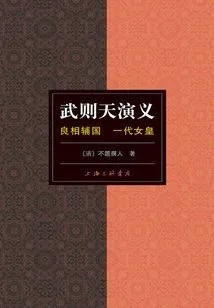
"The Romance of Wu Zetian" (formerly known as Wu Zetian's Four Wonderful Cases) mainly reflects the political and social status quo at that time through the deeds of Di Renjie, a famous minister during the period when Wu Zetian was in charge of the country. It also indirectly describes Wu Zetian's dual characteristics of being both wise and debauched. Di Renjie and Wu Zetian, one is a famous official of a generation, and the other is a queen of a generation. "The Romance of Wu Zetian" uses Di Renjie to skillfully solve the four major mysterious cases during the Empress Wu period, and reproduces the bizarre, shocking and shocking social reality at that time. The author does not mention the author. On the surface, he is telling the story of Di Renjie, but in fact, he is arranging the imperial court at that time, borrowing the ancient people's models, or citing past events to encourage and punish. This is the reason why the author did not leave his real name, and he did not hesitate to write. No one will compare the Di Renjie in history with the Di Renjie in the novel. They only know that Di Renjie is really a great person; while Wu Zetian is reduced to a secondary role in the novel, serving as a foil to Di Gong. Is this the author's attitude towards Emperor Zetian?
"The Romance of Wu Zetian" (formerly known as Wu Zetian's Four Wonderful Cases) mainly reflects the political and social status quo at that time through the deeds of Di Renjie, a famous minister during the period when Wu Zetian was in charge of the country. It also indirectly describes Wu Zetian's dual characteristics of being both wise and debauched. Di Renjie and Wu Zetian, one is a famous official of a generation, and the other is a queen of a generation. "The Romance of Wu Zetian" uses Di Renjie to skillfully solve the four major mysterious cases during the Empress Wu period, and reproduces the bizarre, shocking and shocking social reality at that time. The author does not mention the author. On the surface, he is telling the story of Di Renjie, but in fact, he is arranging the imperial court at that time, borrowing the ancient people's models, or citing past events to encourage and punish. This is the reason why the author did not leave his real name, and he did not hesitate to write. No one will compare the Di Renjie in history with the Di Renjie in the novel. They only know that Di Renjie is really a great person; while Wu Zetian is reduced to a secondary role in the novel, serving as a foil to Di Gong. Is this the author's attitude towards Emperor Zetian?
Travel Notes
General Fiction海游记
No Author Mentioned
"Journey to the Sea" is a long satirical novel in the vernacular of the Qing Dynasty. It tells the story of Tuo Chengzi's travels to foreign countries overseas, and describes the many bad deeds of a monk and two swindlers. The work was written in the Qianlong period of the Qing Dynasty. This book is worth reading for readers interested in such topics. "Sea Travels" is a novel describing overseas countries. The novel is based on the story of Tuo Chengzi's travels to foreign countries overseas, and describes many evil deeds such as a monk and two liars, male thieves and female prostitutes, framed crimes, murders and wives, repaying favors with enemies, etc. It satirizes the evil officialdom and the decadence of the world in the dark society, and focuses on criticizing the social reality at that time. The work also writes about Xu Yu on the island, Mr. Xu, who is philanthropic, noble in birth, and virtuous in character, to compare with it and deepen the degree of exposure and irony. The author uses the stories of overseas island countries in "Journey to the Sea" to express his disappointment with the reality of China and his own social ideals. It is a social reform novel with a maritime cultural background.
"Journey to the Sea" is a long satirical novel in the vernacular of the Qing Dynasty. It tells the story of Tuo Chengzi's travels to foreign countries overseas, and describes the many bad deeds of a monk and two swindlers. The work was written in the Qianlong period of the Qing Dynasty. This book is worth reading for readers interested in such topics. "Sea Travels" is a novel describing overseas countries. The novel is based on the story of Tuo Chengzi's travels to foreign countries overseas, and describes many evil deeds such as a monk and two liars, male thieves and female prostitutes, framed crimes, murders and wives, repaying favors with enemies, etc. It satirizes the evil officialdom and the decadence of the world in the dark society, and focuses on criticizing the social reality at that time. The work also writes about Xu Yu on the island, Mr. Xu, who is philanthropic, noble in birth, and virtuous in character, to compare with it and deepen the degree of exposure and irony. The author uses the stories of overseas island countries in "Journey to the Sea" to express his disappointment with the reality of China and his own social ideals. It is a social reform novel with a maritime cultural background.
Dragon and Phoenix Rebirth
Ancient Romance龙凤再生缘
No Author Mentioned
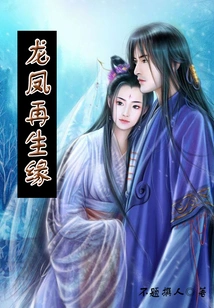
It tells the story of Meng Lijun, who disguised herself as a man and reunited with her husband Huangfu Shaohua, the top scholar in high school. The plot has twists and turns and is gripping.
It tells the story of Meng Lijun, who disguised herself as a man and reunited with her husband Huangfu Shaohua, the top scholar in high school. The plot has twists and turns and is gripping.
Yin Ping Mei (part 1)
General Fiction银瓶梅(上)
No Author Mentioned
"The Plum in the Silver Ping" was originally called "The Romance of the Lotus Ping", which tells the story of the knights who eliminated traitors, suppressed rebellions and took revenge during the reign of Emperor Xuanzong of the Tang Dynasty. This book is worth reading for readers interested in such topics. Suzhou Liu Fang's wife, Yan, was beautiful and virtuous. Pei Biao, the son of the Minister of War, took advantage of her and designed to frame Liu Fang for colluding with bandits, causing Liu Fang to die under torture. Yan escaped from home and was forced to take refuge in Erlong Mountain. Liu Fang abandoned her body in the wilderness, but was revived by her friend Chen Sheng with a lotus seed bottle. Pei Biao colluded with the traitors and plotted evil. Liu Fang's grievance finally reached Xuanzong. Liu Fang, Chen Sheng and others were ordered to suppress the traitorous party, and the Pei family, father and son, and party members were all killed. The novel describes the collusion between treacherous ministers and bandits, and the alliance between knights and loyal ministers, linking personal grievances and the safety of the country. The story is widely circulated among the people. The plot of the work is rich and the scene descriptions are extremely vivid. It has far-reaching influence and is well received. It is a classic work worth reading. The stories in the book are vivid and the language is concise and popular. The structural arrangement, character creation, and expression of thoughts and plots are all unique and unique. They are highly readable and suitable for recreational reading. The structure of the book is rigorous and dense; the events and characters written are as if they were there and the images are vivid. The writing is simple and interesting, with endless aftertaste, making it hard to put down after reading it.
"The Plum in the Silver Ping" was originally called "The Romance of the Lotus Ping", which tells the story of the knights who eliminated traitors, suppressed rebellions and took revenge during the reign of Emperor Xuanzong of the Tang Dynasty. This book is worth reading for readers interested in such topics. Suzhou Liu Fang's wife, Yan, was beautiful and virtuous. Pei Biao, the son of the Minister of War, took advantage of her and designed to frame Liu Fang for colluding with bandits, causing Liu Fang to die under torture. Yan escaped from home and was forced to take refuge in Erlong Mountain. Liu Fang abandoned her body in the wilderness, but was revived by her friend Chen Sheng with a lotus seed bottle. Pei Biao colluded with the traitors and plotted evil. Liu Fang's grievance finally reached Xuanzong. Liu Fang, Chen Sheng and others were ordered to suppress the traitorous party, and the Pei family, father and son, and party members were all killed. The novel describes the collusion between treacherous ministers and bandits, and the alliance between knights and loyal ministers, linking personal grievances and the safety of the country. The story is widely circulated among the people. The plot of the work is rich and the scene descriptions are extremely vivid. It has far-reaching influence and is well received. It is a classic work worth reading. The stories in the book are vivid and the language is concise and popular. The structural arrangement, character creation, and expression of thoughts and plots are all unique and unique. They are highly readable and suitable for recreational reading. The structure of the book is rigorous and dense; the events and characters written are as if they were there and the images are vivid. The writing is simple and interesting, with endless aftertaste, making it hard to put down after reading it.
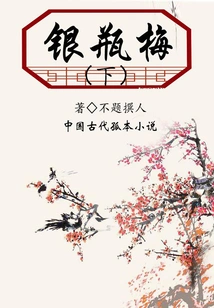
Yin Ping Mei (part 2)
General Fiction银瓶梅(下)
No Author Mentioned
"The Plum in the Silver Ping" was originally called "The Romance of the Lotus Ping", which tells the story of the knights who eliminated traitors, suppressed rebellions and took revenge during the reign of Emperor Xuanzong of the Tang Dynasty. This book is worth reading for readers interested in such topics. Suzhou Liu Fang's wife, Yan, was beautiful and virtuous. Pei Biao, the son of the Minister of War, took advantage of her and designed to frame Liu Fang for colluding with bandits, causing Liu Fang to die under torture. Yan escaped from home and was forced to take refuge in Erlong Mountain. Liu Fang abandoned her body in the wilderness, but was revived by her friend Chen Sheng with a lotus seed bottle. Pei Biao colluded with the traitors and plotted evil. Liu Fang's grievance finally reached Xuanzong. Liu Fang, Chen Sheng and others were ordered to suppress the traitorous party, and the Pei family, father and son, and party members were all killed. The novel describes the collusion between treacherous ministers and bandits, and the alliance between knights and loyal ministers, linking personal grievances and the safety of the country. The story is widely circulated among the people. The plot of the work is rich and the scene descriptions are extremely vivid. It has far-reaching influence and is well received. It is a classic work worth reading. The stories in the book are vivid and the language is concise and popular. The structural arrangement, character creation, and expression of thoughts and plots are all unique and unique. They are highly readable and suitable for recreational reading. The structure of the book is rigorous and dense; the events and characters written are as if they were there and the images are vivid. The writing is simple and interesting, with endless aftertaste, making it hard to put down after reading it.
"The Plum in the Silver Ping" was originally called "The Romance of the Lotus Ping", which tells the story of the knights who eliminated traitors, suppressed rebellions and took revenge during the reign of Emperor Xuanzong of the Tang Dynasty. This book is worth reading for readers interested in such topics. Suzhou Liu Fang's wife, Yan, was beautiful and virtuous. Pei Biao, the son of the Minister of War, took advantage of her and designed to frame Liu Fang for colluding with bandits, causing Liu Fang to die under torture. Yan escaped from home and was forced to take refuge in Erlong Mountain. Liu Fang abandoned her body in the wilderness, but was revived by her friend Chen Sheng with a lotus seed bottle. Pei Biao colluded with the traitors and plotted evil. Liu Fang's grievance finally reached Xuanzong. Liu Fang, Chen Sheng and others were ordered to suppress the traitorous party, and the Pei family, father and son, and party members were all killed. The novel describes the collusion between treacherous ministers and bandits, and the alliance between knights and loyal ministers, linking personal grievances and the safety of the country. The story is widely circulated among the people. The plot of the work is rich and the scene descriptions are extremely vivid. It has far-reaching influence and is well received. It is a classic work worth reading. The stories in the book are vivid and the language is concise and popular. The structural arrangement, character creation, and expression of thoughts and plots are all unique and unique. They are highly readable and suitable for recreational reading. The structure of the book is rigorous and dense; the events and characters written are as if they were there and the images are vivid. The writing is simple and interesting, with endless aftertaste, making it hard to put down after reading it.