Library
Browse and search books
19 novels found
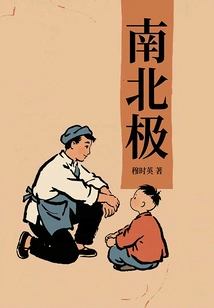
North and South Pole
Literature南北极
Mu Shiying
"North and South Pole" is an early work created by Mu Shiying. It was a work before he fully formed the "New Sensationism" style. It focuses on the survival plight and class conflicts of the bottom workers and has a distinct color of social criticism. The story revolves around a group of lower-class workers. In the novel, the resistance of the people at the bottom carries primitive, wild and rough strength, but often ends in failure. Class conflicts have become incompatible; individual anger, powerlessness, and even human nature are distorted and burst out. All these are vividly portrayed and have a strong sense of substitution.
"North and South Pole" is an early work created by Mu Shiying. It was a work before he fully formed the "New Sensationism" style. It focuses on the survival plight and class conflicts of the bottom workers and has a distinct color of social criticism. The story revolves around a group of lower-class workers. In the novel, the resistance of the people at the bottom carries primitive, wild and rough strength, but often ends in failure. Class conflicts have become incompatible; individual anger, powerlessness, and even human nature are distorted and burst out. All these are vividly portrayed and have a strong sense of substitution.
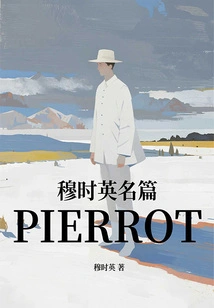
Mu Shiying's Famous Article: Pierrot
Literature穆时英名篇:PIERROT
Mu Shiying
"PIERROT" is a common clown in European dramas, especially in French pantomimes. The whitened cheeks, the loose white clothes, the expression that seems to be smiling but not smiling, and wanting to cry but not crying, are like the companions of the deprived people, the lonely fellow sufferers. Mu Shiying has written about "PIERROT" type characters in many works. Although such works have different styles and themes, people who have fallen off and have no "home" to return to, who fell off modern trains but failed to catch up, and who end up wandering around, can all be seen as the "fallen PIERROT" that Mu Shiying loved and wrote about repeatedly. By repeatedly writing and depicting travelers who have lost their homes and roots, the writer responds to the real life situations of modern people - all living people will eventually understand that the journey to escape from the world can never be completed, and chasing the passing modern years is only in vain. In the end, we can only paint the pale face of a clown, seeming to be happy but angry, looking at the other shore from a distance, and casting a gaze that says "there is neither sorrow nor joy". It is in this sense that "PIERROT" makes Mu Shiying one of the best modern writers in modern China.
"PIERROT" is a common clown in European dramas, especially in French pantomimes. The whitened cheeks, the loose white clothes, the expression that seems to be smiling but not smiling, and wanting to cry but not crying, are like the companions of the deprived people, the lonely fellow sufferers. Mu Shiying has written about "PIERROT" type characters in many works. Although such works have different styles and themes, people who have fallen off and have no "home" to return to, who fell off modern trains but failed to catch up, and who end up wandering around, can all be seen as the "fallen PIERROT" that Mu Shiying loved and wrote about repeatedly. By repeatedly writing and depicting travelers who have lost their homes and roots, the writer responds to the real life situations of modern people - all living people will eventually understand that the journey to escape from the world can never be completed, and chasing the passing modern years is only in vain. In the end, we can only paint the pale face of a clown, seeming to be happy but angry, looking at the other shore from a distance, and casting a gaze that says "there is neither sorrow nor joy". It is in this sense that "PIERROT" makes Mu Shiying one of the best modern writers in modern China.
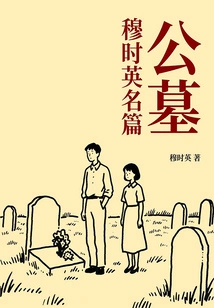
Mu Shiying's Famous Story: Cemetery
Literature穆时英名篇:公墓
Mu Shiying
This book contains three chapters: "Cemetery", "Hundred Days" and "Old House". Among them, "Cemetery" is the most famous and was once listed in the top 50 of the top 100 books of the century. The article writes that "I" go to the cemetery every day to accompany my deceased mother, and get to know Miss Ling, who also comes to sacrifice her mother. The two chat about my mother's past and walk in the countryside. "I" have secret feelings but am always timid and never express them. Ling suffered from lung disease and later died of illness. She was buried next to her mother's tomb. "I" received her belongings and went to the new tomb to pay homage. The novel depicts the regrets of youth's secret love with delicate brushstrokes. The emotions are sincere and moving, and it accurately captures the cowardice and loss in human nature. It is an excellent work that shows the weight of time and emotion. In "Hundred Days", Mrs. Lu raises money to build a dojo for her husband's 100-day celebration, but after all her savings are still not enough, she borrows money and is treated coldly. She thinks of her husband well, but her heart is filled with sadness and embarrassment. In "Old House", "I" receive a letter from my father and recall the joys of childhood in the old house. However, my family fell behind and moved away. When I revisit the old house, I find that things have changed. All three articles are about human despair.
This book contains three chapters: "Cemetery", "Hundred Days" and "Old House". Among them, "Cemetery" is the most famous and was once listed in the top 50 of the top 100 books of the century. The article writes that "I" go to the cemetery every day to accompany my deceased mother, and get to know Miss Ling, who also comes to sacrifice her mother. The two chat about my mother's past and walk in the countryside. "I" have secret feelings but am always timid and never express them. Ling suffered from lung disease and later died of illness. She was buried next to her mother's tomb. "I" received her belongings and went to the new tomb to pay homage. The novel depicts the regrets of youth's secret love with delicate brushstrokes. The emotions are sincere and moving, and it accurately captures the cowardice and loss in human nature. It is an excellent work that shows the weight of time and emotion. In "Hundred Days", Mrs. Lu raises money to build a dojo for her husband's 100-day celebration, but after all her savings are still not enough, she borrows money and is treated coldly. She thinks of her husband well, but her heart is filled with sadness and embarrassment. In "Old House", "I" receive a letter from my father and recall the joys of childhood in the old house. However, my family fell behind and moved away. When I revisit the old house, I find that things have changed. All three articles are about human despair.
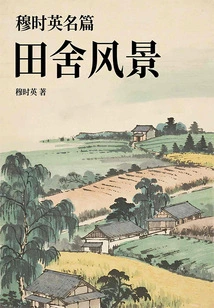
穆时英名篇:田舍风景
Mu Shiying
"Farm House Scenery" is a short article with a slightly leisurely farm atmosphere: the boat sails into the cross village full of camellias, and you can get a glimpse of the local customs and customs; Father Yun misses the rich days of the past and laments that now he lives in embarrassment eating sweet potatoes and farm produce. The young girl Xiao Ling is innocent and happy, but Yun Er is deeply confused. Because he realizes that farming cannot solve the problem of food and clothing, he thinks of going to Shanghai to make a living. While the villagers were playing and joking around, Mr. Ding was about to lead a security team to the countryside to collect rent and grab grain. When the news came, it was like a dark cloud. The novel combines the beauty of mountains and rivers with the difficulties of people's livelihood with delicate writing. It not only describes the quiet beauty and smoky atmosphere of the countryside, but also tells the struggle of the bottom farmers under the pressure of the times and the helplessness of the destiny of the countryside in a specific era.
"Farm House Scenery" is a short article with a slightly leisurely farm atmosphere: the boat sails into the cross village full of camellias, and you can get a glimpse of the local customs and customs; Father Yun misses the rich days of the past and laments that now he lives in embarrassment eating sweet potatoes and farm produce. The young girl Xiao Ling is innocent and happy, but Yun Er is deeply confused. Because he realizes that farming cannot solve the problem of food and clothing, he thinks of going to Shanghai to make a living. While the villagers were playing and joking around, Mr. Ding was about to lead a security team to the countryside to collect rent and grab grain. When the news came, it was like a dark cloud. The novel combines the beauty of mountains and rivers with the difficulties of people's livelihood with delicate writing. It not only describes the quiet beauty and smoky atmosphere of the countryside, but also tells the struggle of the bottom farmers under the pressure of the times and the helplessness of the destiny of the countryside in a specific era.
穆时英名篇:墨绿衫的小姐
Mu Shiying
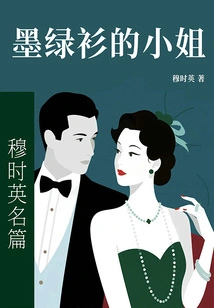
"The Lady in the Dark Green Shirt" uses a modern stream-of-consciousness technique to describe an illusory and sensual love affair between "me" and a mysterious lady wearing a dark green shirt, which took place on a glitzy urban night full of jazz and prosperity. The story combines sounds, colors, and smells to materialize perceptual experiences, and explores the empty spiritual world and desire for romance among young people in modern cities. "The Red Huntress" tells the story of a young woman with rouge-colored roses on her temples who seeks excitement and self-exile in the feasting and feasting. "Smoke" has a similar core, using "smoke" as a metaphor to explore the anxiety and confusion of modern people.
"The Lady in the Dark Green Shirt" uses a modern stream-of-consciousness technique to describe an illusory and sensual love affair between "me" and a mysterious lady wearing a dark green shirt, which took place on a glitzy urban night full of jazz and prosperity. The story combines sounds, colors, and smells to materialize perceptual experiences, and explores the empty spiritual world and desire for romance among young people in modern cities. "The Red Huntress" tells the story of a young woman with rouge-colored roses on her temples who seeks excitement and self-exile in the feasting and feasting. "Smoke" has a similar core, using "smoke" as a metaphor to explore the anxiety and confusion of modern people.
Mu Shiying's Famous Story: Second Love
Literature穆时英名篇:第二恋
Mu Shiying
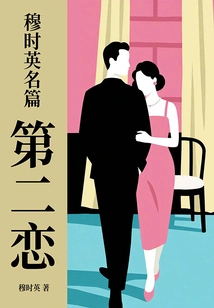
"Second Love" tells the story of the protagonist "I" returning to Hong Kong after seven years. The core of the novel lies in describing "loss" - lost youth, lost time and unrecoverable love. Seven years later, Zhang Shixuan returned to Hong Kong and found that the city was still blooming with flowers and the scenery was still the same as before. However, he is no longer the young man with orange cheeks and cheerful mood. What is gone is finally gone. Alienation and sentimentality, etherealness and familiar strangers, confusion and loneliness of emotion and identity permeate the lines of the novel.
"Second Love" tells the story of the protagonist "I" returning to Hong Kong after seven years. The core of the novel lies in describing "loss" - lost youth, lost time and unrecoverable love. Seven years later, Zhang Shixuan returned to Hong Kong and found that the city was still blooming with flowers and the scenery was still the same as before. However, he is no longer the young man with orange cheeks and cheerful mood. What is gone is finally gone. Alienation and sentimentality, etherealness and familiar strangers, confusion and loneliness of emotion and identity permeate the lines of the novel.
穆时英名篇:偷面包的面包师
Mu Shiying
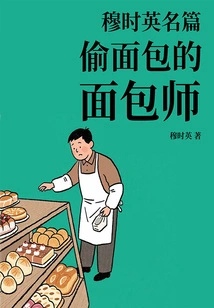
"The Baker Who Stole Bread" tells the story of a baker who works in a bakery and tries to steal a cake from the store several times in order to celebrate the birthday of an old man and satisfy his family's wish to eat "pastry". He struggled internally and finally stole it, but unfortunately he was discovered by the supervisor and lost his job. The article describes the baker's family's helplessness towards the current difficult situation, their desire for a dazzling array of Western pastries, and the baker's complex psychology as a son, husband and father. "Night" uses a first-person perspective to describe the experience of a drifting sailor in Shanghai at night. "CRAVEN "A"" is also narrated in the first person, describing "I"'s romantic and dark encounters in the jazz dance hall. Through careful observation and psychological analysis of the heroine, the author shows women's multiple and complex personalities. It is considered to be one of the representative works of Mu Shiying's "New Sensation School" style.
"The Baker Who Stole Bread" tells the story of a baker who works in a bakery and tries to steal a cake from the store several times in order to celebrate the birthday of an old man and satisfy his family's wish to eat "pastry". He struggled internally and finally stole it, but unfortunately he was discovered by the supervisor and lost his job. The article describes the baker's family's helplessness towards the current difficult situation, their desire for a dazzling array of Western pastries, and the baker's complex psychology as a son, husband and father. "Night" uses a first-person perspective to describe the experience of a drifting sailor in Shanghai at night. "CRAVEN "A"" is also narrated in the first person, describing "I"'s romantic and dark encounters in the jazz dance hall. Through careful observation and psychological analysis of the heroine, the author shows women's multiple and complex personalities. It is considered to be one of the representative works of Mu Shiying's "New Sensation School" style.
Mu Shiying's Famous Articles: May
Literature穆时英名篇:五月
Mu Shiying
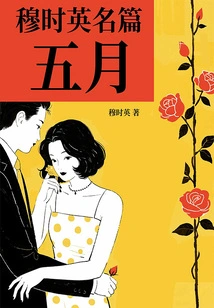
Mu Shiying's "May" focuses on Cai Peipei, an 18-year-old mixed-race girl. She has longing for youth. In the romance of May, she has emotional entanglements with three single young men, Song Yiping, Jiang Jun, and Liu Cangbo. The three of them each had their own thoughts, and Peipei swayed in ignorance and temptation, but in the end their emotions failed. As the month of May passed, they were left with the melancholy of a girl's thoughts and the petty desolation of youth. "May" is not only an emotional sketch about youth, but also uses the flow of seasons as a metaphor to describe the rush of youth and the lightness of emotions in the urban context. In the aftertaste of the romantic atmosphere, readers can touch the individual's emptiness and emptiness under the torrent of the times. The emotional throbbing of a girl and the pursuit of youth trigger a profound inquiry into urban humanity and the essence of youth.
Mu Shiying's "May" focuses on Cai Peipei, an 18-year-old mixed-race girl. She has longing for youth. In the romance of May, she has emotional entanglements with three single young men, Song Yiping, Jiang Jun, and Liu Cangbo. The three of them each had their own thoughts, and Peipei swayed in ignorance and temptation, but in the end their emotions failed. As the month of May passed, they were left with the melancholy of a girl's thoughts and the petty desolation of youth. "May" is not only an emotional sketch about youth, but also uses the flow of seasons as a metaphor to describe the rush of youth and the lightness of emotions in the urban context. In the aftertaste of the romantic atmosphere, readers can touch the individual's emptiness and emptiness under the torrent of the times. The emotional throbbing of a girl and the pursuit of youth trigger a profound inquiry into urban humanity and the essence of youth.
Mu Shiying's Famous Article: a Story from a Pile of Scraps in the Newsroom of the Local News Column
Literature穆时英名篇:本埠新闻栏编辑室里一札废稿上的故事
Mu Shiying
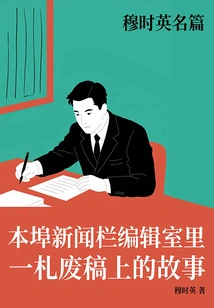
"The Story of a Fold of Wasted Manuscripts in the Newsroom of the Local News Column" unfolds from the unique perspective of a newspaper proofreader. He works in the editing room every night. His greatest pleasure is to look through the scraps in the wastebasket and get a glimpse of the joys and sorrows of ordinary people in Shanghai. He records these ordinary stories that do not qualify as "news" or "fiction." For example, the story of Lin Bamei is a record about a dancing girl that "I" discovered in a scrap manuscript. The article is written in a reporter's style, revealing a scandal that occurred in the "Palace Dance Hall". The other two stories, "Finger", reveal the tragic fate of lower-class workers. In "Street Scene", the author depicts the living beings of different classes in the bustling city, including the leisurely lives of nuns and wealthy men and women, as well as the bitterness of beggars, girls, coolies and other people struggling to survive. The contrast is sharp and full of sadness.
"The Story of a Fold of Wasted Manuscripts in the Newsroom of the Local News Column" unfolds from the unique perspective of a newspaper proofreader. He works in the editing room every night. His greatest pleasure is to look through the scraps in the wastebasket and get a glimpse of the joys and sorrows of ordinary people in Shanghai. He records these ordinary stories that do not qualify as "news" or "fiction." For example, the story of Lin Bamei is a record about a dancing girl that "I" discovered in a scrap manuscript. The article is written in a reporter's style, revealing a scandal that occurred in the "Palace Dance Hall". The other two stories, "Finger", reveal the tragic fate of lower-class workers. In "Street Scene", the author depicts the living beings of different classes in the bustling city, including the leisurely lives of nuns and wealthy men and women, as well as the bitterness of beggars, girls, coolies and other people struggling to survive. The contrast is sharp and full of sadness.
穆时英名篇:夜总会里的五个人
Mu Shiying
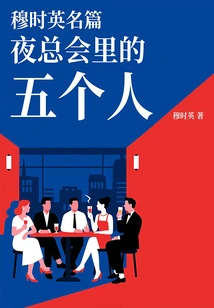
The novel "Five People in a Nightclub" was published in 1932 and tells the story of five urbanites who experienced great changes in their lives on the same day. The novel uses stream-of-consciousness techniques and film montage techniques to show the glitz and decadence of Shanghai in the 1930s, and profoundly reveals the confusion and despair of the characters at that time under the dual material and spiritual dilemmas. This work by Mu Shiying is known as one of the representative works of the "New Sensation School" in the history of modern Chinese literature, reflecting the spiritual crisis and human dilemma of that era.
The novel "Five People in a Nightclub" was published in 1932 and tells the story of five urbanites who experienced great changes in their lives on the same day. The novel uses stream-of-consciousness techniques and film montage techniques to show the glitz and decadence of Shanghai in the 1930s, and profoundly reveals the confusion and despair of the characters at that time under the dual material and spiritual dilemmas. This work by Mu Shiying is known as one of the representative works of the "New Sensation School" in the history of modern Chinese literature, reflecting the spiritual crisis and human dilemma of that era.
穆时英作品(中国现代文学经典文库)
Mu Shiying
Mu Shiying (March 14, 1912 - June 28, 1940), a native of Cixi, Zhejiang, was a modern Chinese novelist and a representative of the New Sensation School. His pen names were Fa Yang and Anonymous. He began writing novels in 1929, and published the novels "Our World" and "The Black Whirlwind" the following year (1930); in 1932, he published the collection of novels "North and South Pole", which reflected the polar opposition between the upper class and the lower class; in 1933, he published the collection of novels "Cemetery", which instead described the bizarre urban life, and later published "Platinum Female Body Statue", "Saint Virgin's Emotions", etc.; Participated in the Kuomintang Book and Magazine Review Committee around 1933; went to Hong Kong after the outbreak of the Anti-Japanese War, returned to Shanghai in 1939, hosted the "China Daily" supplements "Literary Weekly" and "Hua Feng", and edited the "National News", and was later assassinated by the Kuomintang agents.
Mu Shiying (March 14, 1912 - June 28, 1940), a native of Cixi, Zhejiang, was a modern Chinese novelist and a representative of the New Sensation School. His pen names were Fa Yang and Anonymous. He began writing novels in 1929, and published the novels "Our World" and "The Black Whirlwind" the following year (1930); in 1932, he published the collection of novels "North and South Pole", which reflected the polar opposition between the upper class and the lower class; in 1933, he published the collection of novels "Cemetery", which instead described the bizarre urban life, and later published "Platinum Female Body Statue", "Saint Virgin's Emotions", etc.; Participated in the Kuomintang Book and Magazine Review Committee around 1933; went to Hong Kong after the outbreak of the Anti-Japanese War, returned to Shanghai in 1939, hosted the "China Daily" supplements "Literary Weekly" and "Hua Feng", and edited the "National News", and was later assassinated by the Kuomintang agents.
Father (famous Literary Classic)
Short Fiction父亲(名家文学经典)
Mu Shiying
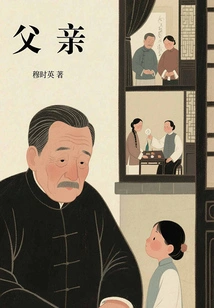
"Father" is a short story written by the author in 1933. It uses the first-person perspective to describe the scenes before and after the death of the father in a feudal family. He was once a high-status father in the upper class, but he was experiencing decline and fall from authority to marginality on his sickbed. He used to be a popular family, but now no one comes to visit him. The children are thinking about their father's body and are filled with self-blame, but the sense of alienation is evident between the lines. In human dusk, the doorbell no longer rings, and the old man loses his composure in his last moments. It is an elegy, a sharp knife, which cuts through the ethics of family relationships and the harshness of the world for you to see. "Father" is one of the author's many short stories, which is sad and thought-provoking.
"Father" is a short story written by the author in 1933. It uses the first-person perspective to describe the scenes before and after the death of the father in a feudal family. He was once a high-status father in the upper class, but he was experiencing decline and fall from authority to marginality on his sickbed. He used to be a popular family, but now no one comes to visit him. The children are thinking about their father's body and are filled with self-blame, but the sense of alienation is evident between the lines. In human dusk, the doorbell no longer rings, and the old man loses his composure in his last moments. It is an elegy, a sharp knife, which cuts through the ethics of family relationships and the harshness of the world for you to see. "Father" is one of the author's many short stories, which is sad and thought-provoking.
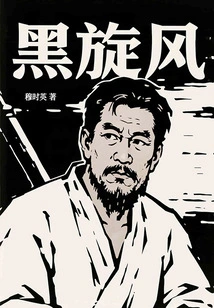
Black Whirlwind
General Fiction黑旋风
Mu Shiying
Mu Shiying's "Black Whirlwind" is one of his early representative works of popular literature. It was first included in the novel collection "North and South Pole". It takes the violent resistance and emotional dilemma of the bottom workers as the core, and presents a distinct color of social criticism. The novel tells the story of the worker "Black Tornado" and his sworn brother Wang from a first-person perspective. Brother Wang admires Wu Song in "Water Margin", compares himself to Liangshan heroes, and falls in love with Xiao Yu'er, the daughter of the dairy shed owner. However, Xiao Yuer was pursued by college students in the town and gradually alienated Brother Wang. Black Tornado witnessed his brother being cuckolded, and out of anger, he beat Xiao Yuer and the college student in public, and was eventually arrested by the patrol police and jailed for three months. This plot of the novel continues the narrative pattern of "failed resistance to oppression" in the author's earlier works - under the double blow of material deprivation and emotional betrayal, men at the bottom choose to vent their emotions through violence. However, violence did not change their fate, and their final imprisonment only strengthened the unshakable nature of class oppression; such tragedies will only be repeated in the future. This episode also includes "Reiko" and "The Man Used as a Pastime", overlaying the theme of emotional alienation. The survival plight of lower-class workers highlighted throughout the article is still a warning to read today.
Mu Shiying's "Black Whirlwind" is one of his early representative works of popular literature. It was first included in the novel collection "North and South Pole". It takes the violent resistance and emotional dilemma of the bottom workers as the core, and presents a distinct color of social criticism. The novel tells the story of the worker "Black Tornado" and his sworn brother Wang from a first-person perspective. Brother Wang admires Wu Song in "Water Margin", compares himself to Liangshan heroes, and falls in love with Xiao Yu'er, the daughter of the dairy shed owner. However, Xiao Yuer was pursued by college students in the town and gradually alienated Brother Wang. Black Tornado witnessed his brother being cuckolded, and out of anger, he beat Xiao Yuer and the college student in public, and was eventually arrested by the patrol police and jailed for three months. This plot of the novel continues the narrative pattern of "failed resistance to oppression" in the author's earlier works - under the double blow of material deprivation and emotional betrayal, men at the bottom choose to vent their emotions through violence. However, violence did not change their fate, and their final imprisonment only strengthened the unshakable nature of class oppression; such tragedies will only be repeated in the future. This episode also includes "Reiko" and "The Man Used as a Pastime", overlaying the theme of emotional alienation. The survival plight of lower-class workers highlighted throughout the article is still a warning to read today.
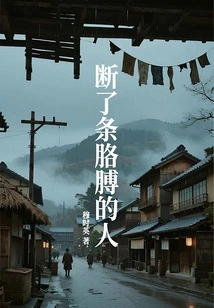
A Man with a Broken Arm
General Fiction断了条胳膊的人
Mu Shiying
"The Man with a Broken Arm" was created in the early 1930s and is one of the representative works of Mu Shiying's early Proletarian literary style. The work focuses on the survival plight of workers at the bottom of society. Through the protagonist's experiences, it reveals the physical and mental destruction of individuals by capitalist industrialization at that time, as well as the oppression of vulnerable groups by the social structure. The protagonist in the article is a factory worker who has been engaged in high-intensity labor in a workshop with roaring machines for a long time. He has always had a fear of machines. After his body was mutilated, and the death of his youngest son, the double blow gave him the idea of assassinating the factory director, but he finally gave up just before the action, and chose to face life again with "the first smile after the disaster" - individuals cannot change the social structure, but they can choose how to face suffering. This collection also includes "A Certain Lady" and "Night", both of which are excellent works.
"The Man with a Broken Arm" was created in the early 1930s and is one of the representative works of Mu Shiying's early Proletarian literary style. The work focuses on the survival plight of workers at the bottom of society. Through the protagonist's experiences, it reveals the physical and mental destruction of individuals by capitalist industrialization at that time, as well as the oppression of vulnerable groups by the social structure. The protagonist in the article is a factory worker who has been engaged in high-intensity labor in a workshop with roaring machines for a long time. He has always had a fear of machines. After his body was mutilated, and the death of his youngest son, the double blow gave him the idea of assassinating the factory director, but he finally gave up just before the action, and chose to face life again with "the first smile after the disaster" - individuals cannot change the social structure, but they can choose how to face suffering. This collection also includes "A Certain Lady" and "Night", both of which are excellent works.
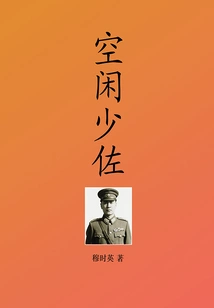
Idle Major
Literature空闲少佐
Mu Shiying
Mu Shiying's "The Idle Major" uses delicate psychological description and cross-cultural perspective to dissect moral dilemmas and reflect on the distortion and destruction of human nature by war and the instability of individual destiny - war is always cruel and brings only suffering. I hope that everything in the past can continue to alert the world and that tragedies will never happen again.
Mu Shiying's "The Idle Major" uses delicate psychological description and cross-cultural perspective to dissect moral dilemmas and reflect on the distortion and destruction of human nature by war and the instability of individual destiny - war is always cruel and brings only suffering. I hope that everything in the past can continue to alert the world and that tragedies will never happen again.
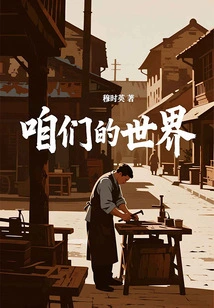
Our World
Short Fiction咱们的世界
Mu Shiying
"Our World" takes the fate of Mr. Li Erye, the son of a carpenter, as its context and outlines the bloody and tearful struggle of the young people at the bottom. He dropped out of school due to poverty, his parents died of illness, and he witnessed the oppression of the rich and social injustice. Finally, under the leadership of Lao Jiang, he joined the pirates and fought against exploitation with violence. Through its logic of "sharing the blessings and suffering the misfortunes", the novel tears apart the class rifts under the bustling city, and writes the indignant awakening of the marginalized in the desperate situation of survival in a cold and stern style. The lines are filled with accusations against the old order and the secret desire for an equal world. In addition to "Our World", this collection also includes two articles: "People Living on the Sea" and "Oilcloth". The former describes the wanderings of fishermen and sailors and their work in the wind and waves, describing the hardships and loneliness of life at sea. "Oilcloth" uses dock workers and oilcloth as the incision. The oilcloth is wrapped with sweat and livelihood, revealing the tenacity and humbleness of the people at the bottom under the weight of survival. All three articles are excellent works. They touch the body temperature of those on the margins with cold brushstrokes, and a feeling of incurable social ills comes over you.
"Our World" takes the fate of Mr. Li Erye, the son of a carpenter, as its context and outlines the bloody and tearful struggle of the young people at the bottom. He dropped out of school due to poverty, his parents died of illness, and he witnessed the oppression of the rich and social injustice. Finally, under the leadership of Lao Jiang, he joined the pirates and fought against exploitation with violence. Through its logic of "sharing the blessings and suffering the misfortunes", the novel tears apart the class rifts under the bustling city, and writes the indignant awakening of the marginalized in the desperate situation of survival in a cold and stern style. The lines are filled with accusations against the old order and the secret desire for an equal world. In addition to "Our World", this collection also includes two articles: "People Living on the Sea" and "Oilcloth". The former describes the wanderings of fishermen and sailors and their work in the wind and waves, describing the hardships and loneliness of life at sea. "Oilcloth" uses dock workers and oilcloth as the incision. The oilcloth is wrapped with sweat and livelihood, revealing the tenacity and humbleness of the people at the bottom under the weight of survival. All three articles are excellent works. They touch the body temperature of those on the margins with cold brushstrokes, and a feeling of incurable social ills comes over you.
Lotus Falls
Short Fiction莲花落
Mu Shiying
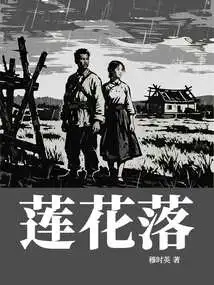
"Lotus Falls" is set in the war era and tells the story of a low-class man and woman who lost their families due to the war and wandered to survive. The protagonist "I" and the woman met on the way to escape, and together they made a living by singing "Lotus Falls" and begging. From the initial dependence on each other in the pavilion to the wandering of the world for more than 20 years, the two formed a life community of "we are two people" while being hungry and cold. The novel runs through the melody of "Lotus Falling", which not only presents their difficult daily life of singing and selling on the street, but also metaphors their fate to be wandering like duckweeds. As the woman died of illness on a cold night, "I" continued to wander alone, repeating the murmur of "we are two people", savoring the warmth of the past and the absurdity of existence in loneliness. Mu Shiying used the fragmented narrative and delicate psychological description unique to the New Sensation School to embed the fate of individuals in the war into the intertwined scenes of urban and rural areas. This not only portrayed the powerlessness of the people at the bottom in the torrent of the times, but also gave the suffering a poetic lament through the folk art form of "Flowers Falling". This collection also includes "Black Peony", "Smoke" and "Portrait of a Platinum Female Body".
"Lotus Falls" is set in the war era and tells the story of a low-class man and woman who lost their families due to the war and wandered to survive. The protagonist "I" and the woman met on the way to escape, and together they made a living by singing "Lotus Falls" and begging. From the initial dependence on each other in the pavilion to the wandering of the world for more than 20 years, the two formed a life community of "we are two people" while being hungry and cold. The novel runs through the melody of "Lotus Falling", which not only presents their difficult daily life of singing and selling on the street, but also metaphors their fate to be wandering like duckweeds. As the woman died of illness on a cold night, "I" continued to wander alone, repeating the murmur of "we are two people", savoring the warmth of the past and the absurdity of existence in loneliness. Mu Shiying used the fragmented narrative and delicate psychological description unique to the New Sensation School to embed the fate of individuals in the war into the intertwined scenes of urban and rural areas. This not only portrayed the powerlessness of the people at the bottom in the torrent of the times, but also gave the suffering a poetic lament through the folk art form of "Flowers Falling". This collection also includes "Black Peony", "Smoke" and "Portrait of a Platinum Female Body".
贫士日记(名家文学经典)
Mu Shiying
"Diary of a Poor Man" is a sad realist novel. In the form of the protagonist's diary record, it shows the sinking and helplessness of a lower-class intellectual in a turbulent society. As a teacher, Han Xiaocun struggled to survive amidst poverty and illness. His wife Wei had long-term tuberculosis and had no money for treatment. She borrowed money everywhere and asked for immortality, and finally died of the illness. The novel shows the moral dilemma of a lower-class literati in a moneyed society through the continuous misfortunes such as rent, summons, and mother's death.
"Diary of a Poor Man" is a sad realist novel. In the form of the protagonist's diary record, it shows the sinking and helplessness of a lower-class intellectual in a turbulent society. As a teacher, Han Xiaocun struggled to survive amidst poverty and illness. His wife Wei had long-term tuberculosis and had no money for treatment. She borrowed money everywhere and asked for immortality, and finally died of the illness. The novel shows the moral dilemma of a lower-class literati in a moneyed society through the continuous misfortunes such as rent, summons, and mother's death.
Saint Virgin's Feelings
General Fiction圣处女的感情
Mu Shiying
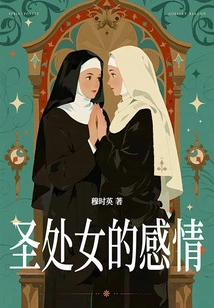
The short story "The Affection of the Holy Virgin" tells the story of two devout nuns who fell in love with a handsome young man in their dreams at the same time, resulting in worldly feelings. They felt uneasy and guilty about this and repented devoutly. The novel delicately depicts the conflict between religious beliefs and human desires, and shows people's inner struggles and moral dilemmas. Although it is short, it has been recorded and included for its unique analysis of the complex psychology of modern urbanites. It is one of the author's masterpieces describing complex psychology. "Foxtrot in Shanghai" was published in 1932 and is also one of the author's representative works of New Sensation novels. It uses unique narrative techniques and sensory descriptions to show the prosperity, hustle and bustle and deformity of the Shanghai city in the 1930s, as well as the spiritual emptiness and confusion of the people living there. This collection also includes "Camel Nietzscheans and Women", which is about a discussion about spirit and material, ideals and desires, confusion and loss. Mu Shiying's writing style is not hesitant to criticize, has keen insights, and has a strong personal style. I enjoyed reading it today.
The short story "The Affection of the Holy Virgin" tells the story of two devout nuns who fell in love with a handsome young man in their dreams at the same time, resulting in worldly feelings. They felt uneasy and guilty about this and repented devoutly. The novel delicately depicts the conflict between religious beliefs and human desires, and shows people's inner struggles and moral dilemmas. Although it is short, it has been recorded and included for its unique analysis of the complex psychology of modern urbanites. It is one of the author's masterpieces describing complex psychology. "Foxtrot in Shanghai" was published in 1932 and is also one of the author's representative works of New Sensation novels. It uses unique narrative techniques and sensory descriptions to show the prosperity, hustle and bustle and deformity of the Shanghai city in the 1930s, as well as the spiritual emptiness and confusion of the people living there. This collection also includes "Camel Nietzscheans and Women", which is about a discussion about spirit and material, ideals and desires, confusion and loss. Mu Shiying's writing style is not hesitant to criticize, has keen insights, and has a strong personal style. I enjoyed reading it today.