Library
Browse and search books
1 novel found
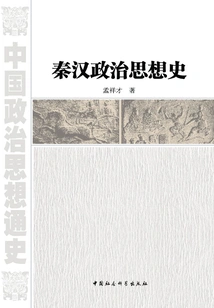
秦汉政治思想史
Meng Xiangcai
This book is the Qin and Han volumes of the general history of Chinese political thought. The whole book is divided into 6 chapters. It mainly includes the political thoughts of the Qin Dynasty and the Western Han Dynasty, the political thoughts of the Eastern Han Dynasty, etc. The Qin and Han Dynasties were the initial stage of China's feudal society. During this period, China created the leading political and economic systems in the world at that time, such as the land system that combined state land ownership and landlords' private ownership of land, the tenant system, the main way for landlords to exploit farmers, and the system of men farming and women weaving on a household basis. Most of the agricultural management methods, "focusing on the roots and suppressing the end", the government-run industrial and commercial policies of Yantie, and the city as a political, economic and cultural center were inherited and continued by the later feudal dynasties, which had an extremely important impact on China's feudal society for more than two thousand years. It was also during this period that the core contents of ancient Chinese social and political thought for the next two thousand years were established, namely, monarchy and centralization. Political thinkers since then have conducted long-term and profound thinking around a series of related issues such as "monarch and ministers", "people-oriented", "inner saints and outer kings", virtue as the master, punishment as assistant, and the defense of barbarians and Xia.
This book is the Qin and Han volumes of the general history of Chinese political thought. The whole book is divided into 6 chapters. It mainly includes the political thoughts of the Qin Dynasty and the Western Han Dynasty, the political thoughts of the Eastern Han Dynasty, etc. The Qin and Han Dynasties were the initial stage of China's feudal society. During this period, China created the leading political and economic systems in the world at that time, such as the land system that combined state land ownership and landlords' private ownership of land, the tenant system, the main way for landlords to exploit farmers, and the system of men farming and women weaving on a household basis. Most of the agricultural management methods, "focusing on the roots and suppressing the end", the government-run industrial and commercial policies of Yantie, and the city as a political, economic and cultural center were inherited and continued by the later feudal dynasties, which had an extremely important impact on China's feudal society for more than two thousand years. It was also during this period that the core contents of ancient Chinese social and political thought for the next two thousand years were established, namely, monarchy and centralization. Political thinkers since then have conducted long-term and profound thinking around a series of related issues such as "monarch and ministers", "people-oriented", "inner saints and outer kings", virtue as the master, punishment as assistant, and the defense of barbarians and Xia.