Library
Browse and search books
11 novels found
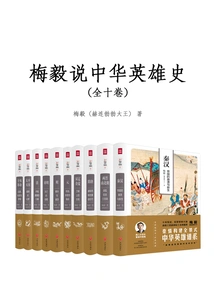
梅毅说中华英雄史(全十卷)
Mei Yi (king Helian Bobo)
"Mei Yi's History of Chinese Heroes" is a popular history book that Mei Yi completed in ten years. The whole series of books starts from the Qin and Han Dynasties and ends with the Revolution of 1911. It is a panoramic and wide-angle work that shows the history of Chinese heroes. Mei Yi has been writing history for ten years, holding high the banner of heroism, "inheriting the legacy of historical literature and the spirit of judging historical facts created by Taishi Public Security Bureau, imitating the structural layout and deductive style of historical novelists, and focusing on prose and novelists' skills of capturing details and describing feelings, trying to blend them together." He uses historical logic and historical facts. The vertical and horizontal axes construct a legendary personal experience, based on historical reality, adding reasonable imagination, combining literature and history, describing the wonderful moments of the gorgeous and bloody era, recording the heroes with rich colors, reflecting the ordinary and ordinary touching feelings of those heroes, and digging out the complex and great human nature buried deep in history!
"Mei Yi's History of Chinese Heroes" is a popular history book that Mei Yi completed in ten years. The whole series of books starts from the Qin and Han Dynasties and ends with the Revolution of 1911. It is a panoramic and wide-angle work that shows the history of Chinese heroes. Mei Yi has been writing history for ten years, holding high the banner of heroism, "inheriting the legacy of historical literature and the spirit of judging historical facts created by Taishi Public Security Bureau, imitating the structural layout and deductive style of historical novelists, and focusing on prose and novelists' skills of capturing details and describing feelings, trying to blend them together." He uses historical logic and historical facts. The vertical and horizontal axes construct a legendary personal experience, based on historical reality, adding reasonable imagination, combining literature and history, describing the wonderful moments of the gorgeous and bloody era, recording the heroes with rich colors, reflecting the ordinary and ordinary touching feelings of those heroes, and digging out the complex and great human nature buried deep in history!
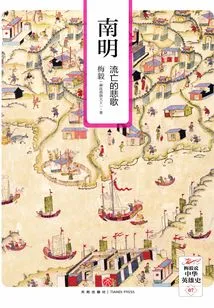
Nanming: Elegy of Exile
History南明:流亡的悲歌
Mei Yi (king Helian Bobo)
After Emperor Chongzhen succeeded to the throne, he led his Ming Dynasty to destruction step by step. Nanming, that era of collapse, that chaotic society where morbid personalities abounded, no struggle could stop its decline. More than two hundred years after the founding of the Ming Dynasty, Zhu Youlang, the royal descendant of the great hero Zhu Yuanzhang, lived in Myanmar like a bereaved dog and spent the most difficult years of his life. Under the double attack of the shallow worry of "destroying the world" and the deep fear of "losing one's family", the pathological "sober people" became the "example" and excuse for the scholars of the late Ming Dynasty. The inner spiritual character of the literati and doctors, known as "tenacity", eventually succumbed to the sharp edge of the knife. But the loyalty of China remains unbroken. A group of loyal ministers and filial sons who died in the war against the Qing Dynasty: Shi Kefa, Gao Jie, Xia Wanchun, Chen Zilong, Zhang Mingzhen, Qu Shishu, Zhang Tongchang, Zhang Huangyan, were either high officials in the border areas or civilian scribes. In times of crisis, they were all fearless in the face of danger, and stood up to face the crisis. With their tragic and heroic actions of "keeping the mantis behind with its arms strong enough to serve as the wheel" and their bloody heads, they painted a strong mark on the half-destroyed history of the Southern Ming Dynasty! A dynasty collapsed, and generations of descendants were thrown into the abyss of history, but the living and boiling souls rose from the dead body of the empire, leading us to the other end of a brighter nirvana!
After Emperor Chongzhen succeeded to the throne, he led his Ming Dynasty to destruction step by step. Nanming, that era of collapse, that chaotic society where morbid personalities abounded, no struggle could stop its decline. More than two hundred years after the founding of the Ming Dynasty, Zhu Youlang, the royal descendant of the great hero Zhu Yuanzhang, lived in Myanmar like a bereaved dog and spent the most difficult years of his life. Under the double attack of the shallow worry of "destroying the world" and the deep fear of "losing one's family", the pathological "sober people" became the "example" and excuse for the scholars of the late Ming Dynasty. The inner spiritual character of the literati and doctors, known as "tenacity", eventually succumbed to the sharp edge of the knife. But the loyalty of China remains unbroken. A group of loyal ministers and filial sons who died in the war against the Qing Dynasty: Shi Kefa, Gao Jie, Xia Wanchun, Chen Zilong, Zhang Mingzhen, Qu Shishu, Zhang Tongchang, Zhang Huangyan, were either high officials in the border areas or civilian scribes. In times of crisis, they were all fearless in the face of danger, and stood up to face the crisis. With their tragic and heroic actions of "keeping the mantis behind with its arms strong enough to serve as the wheel" and their bloody heads, they painted a strong mark on the half-destroyed history of the Southern Ming Dynasty! A dynasty collapsed, and generations of descendants were thrown into the abyss of history, but the living and boiling souls rose from the dead body of the empire, leading us to the other end of a brighter nirvana!
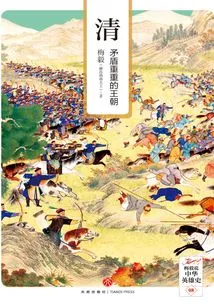
清:矛盾重重的王朝
Mei Yi (king Helian Bobo)
In the history of the Qing Dynasty, darkness and light, autocracy and pioneering, intolerance and majesty, all depended on each other. It is the most confusing and chaotic history of time and space. Throughout the nearly three hundred years of the Qing Dynasty, the upper-class rulers of the Qing Dynasty drove into the pass, opened up borders in all directions, reformed and reformed, and made careful plans; they massacred the people, implemented harsh governance, and the officials were corrupt and stuck in their ways. In particular, Nurhachi, Huang Taiji, Shunzhi, Kangxi, Yongzheng and Qianlong established a grand territorial pattern of "multi-ethnic community", a unique "Chinese" design, a heroic and bold "unification" achievement, and extremely clear political governance... They successfully established a unique new political order within a territory of tens of millions of square kilometers. What they brought to the world was not only blood and sighs, but also epic glory and new thinking!
In the history of the Qing Dynasty, darkness and light, autocracy and pioneering, intolerance and majesty, all depended on each other. It is the most confusing and chaotic history of time and space. Throughout the nearly three hundred years of the Qing Dynasty, the upper-class rulers of the Qing Dynasty drove into the pass, opened up borders in all directions, reformed and reformed, and made careful plans; they massacred the people, implemented harsh governance, and the officials were corrupt and stuck in their ways. In particular, Nurhachi, Huang Taiji, Shunzhi, Kangxi, Yongzheng and Qianlong established a grand territorial pattern of "multi-ethnic community", a unique "Chinese" design, a heroic and bold "unification" achievement, and extremely clear political governance... They successfully established a unique new political order within a territory of tens of millions of square kilometers. What they brought to the world was not only blood and sighs, but also epic glory and new thinking!
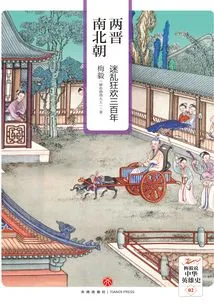
两晋南北朝:迷乱狂欢三百年
Mei Yi (king Helian Bobo)
The two Jin Dynasties (Sixteen Kingdoms) and the Southern and Northern Dynasties were the most turbulent and darkest periods in Chinese history. They were also the peak of aesthetics with the most emancipated thoughts and the most flamboyant personalities. At the same time, it was also a great heroic era in ancient China. During these three hundred years of chaotic carnival, the Sima family destroyed Shu and Wu and unified the world. The "Eight Kings Rebellion" was bloody and the founding of Liu Yu's country was filled with arrogance... Full of killings with swords and fire, groans of tears and blood, rampant conspiracy and loss of loyalty. In this turbulent era, the Seven Sages of the Bamboo Grove, Liu Ling drunkenly, Ruan Ji Aoge, Ji Kang playing the qin, Wang Yan, chatting, and famous celebrities. A son of Xianbei, a son of the Han family, an outstanding figure among the Qiang, a hero of the Di tribe, a lord of the Jie tribe, a hero of the Xiongnu, a man with a bent bow and a horse, valiant and handsome, with profound words and profound meaning, soaring across the sky, truly wonderful! Heroes, heroes, rogues, traitors, cowards, and virtuous women from all walks of life took turns on stage, and together they staged a humane, non-dramatic, but precisely the most dramatic "drama." Colorful and dazzling, those legendary moments of heroes can't help but make people marvel and sigh.
The two Jin Dynasties (Sixteen Kingdoms) and the Southern and Northern Dynasties were the most turbulent and darkest periods in Chinese history. They were also the peak of aesthetics with the most emancipated thoughts and the most flamboyant personalities. At the same time, it was also a great heroic era in ancient China. During these three hundred years of chaotic carnival, the Sima family destroyed Shu and Wu and unified the world. The "Eight Kings Rebellion" was bloody and the founding of Liu Yu's country was filled with arrogance... Full of killings with swords and fire, groans of tears and blood, rampant conspiracy and loss of loyalty. In this turbulent era, the Seven Sages of the Bamboo Grove, Liu Ling drunkenly, Ruan Ji Aoge, Ji Kang playing the qin, Wang Yan, chatting, and famous celebrities. A son of Xianbei, a son of the Han family, an outstanding figure among the Qiang, a hero of the Di tribe, a lord of the Jie tribe, a hero of the Xiongnu, a man with a bent bow and a horse, valiant and handsome, with profound words and profound meaning, soaring across the sky, truly wonderful! Heroes, heroes, rogues, traitors, cowards, and virtuous women from all walks of life took turns on stage, and together they staged a humane, non-dramatic, but precisely the most dramatic "drama." Colorful and dazzling, those legendary moments of heroes can't help but make people marvel and sigh.
太平天国:理想的幻梦
Mei Yi (king Helian Bobo)
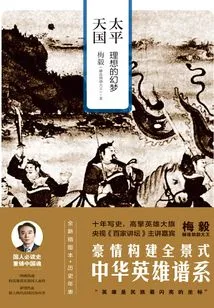
The Taiping Rebellion, which occurred more than 150 years ago, has been constantly rewritten and reshaped by people. The smearing for different purposes makes this foggy history even more confusing and difficult to distinguish. After the Opium War, the Qing Dynasty was in internal and external troubles, and was almost in danger. As a result, the heroes of a lifetime emerged. Hong Xiuquan was so excited that he excavated the first tomb soil of the Qing Dynasty. During the "Western Expedition" campaign, the talented general Shi Dakai performed an excellent performance of "personal heroism" and then "ran away in anger". Hong Rengan, the "King of Qian" from Hong Kong, presented "New Chapter of Zizheng", but it turned out to be a piece of paper. Yang Xiuqing was killed, Li Xiucheng was captured, and blood surged in Tianjing City... The Hunan army, represented by Zeng Guofan and Zuo Zongtang, raised their own wages and trained their own troops, and finally eliminated the Taiping Heavenly Kingdom and made "unparalleled achievements." During the more than ten years of the Taiping Rebellion, various forces such as the Qing court, foreigners, and peasant rebels competed in complicated situations, which ultimately turned this vigorous "ideal" movement into a fantasy. Hong Xiuquan, Yang Xiuqing and the ghosts behind them chanting the "Kingdom of Heaven" mantra have lingered in the hearts of Chinese people for more than a century. We don't need to arbitrarily affirm or simply deny the underground conclusion now. We just need a calm examination from deep within our hearts, to find the origin of construction from the destruction of the past, and to rediscover the spiritual experience of the bygone era.
The Taiping Rebellion, which occurred more than 150 years ago, has been constantly rewritten and reshaped by people. The smearing for different purposes makes this foggy history even more confusing and difficult to distinguish. After the Opium War, the Qing Dynasty was in internal and external troubles, and was almost in danger. As a result, the heroes of a lifetime emerged. Hong Xiuquan was so excited that he excavated the first tomb soil of the Qing Dynasty. During the "Western Expedition" campaign, the talented general Shi Dakai performed an excellent performance of "personal heroism" and then "ran away in anger". Hong Rengan, the "King of Qian" from Hong Kong, presented "New Chapter of Zizheng", but it turned out to be a piece of paper. Yang Xiuqing was killed, Li Xiucheng was captured, and blood surged in Tianjing City... The Hunan army, represented by Zeng Guofan and Zuo Zongtang, raised their own wages and trained their own troops, and finally eliminated the Taiping Heavenly Kingdom and made "unparalleled achievements." During the more than ten years of the Taiping Rebellion, various forces such as the Qing court, foreigners, and peasant rebels competed in complicated situations, which ultimately turned this vigorous "ideal" movement into a fantasy. Hong Xiuquan, Yang Xiuqing and the ghosts behind them chanting the "Kingdom of Heaven" mantra have lingered in the hearts of Chinese people for more than a century. We don't need to arbitrarily affirm or simply deny the underground conclusion now. We just need a calm examination from deep within our hearts, to find the origin of construction from the destruction of the past, and to rediscover the spiritual experience of the bygone era.
秦汉:帝国的崩溃与新生
Mei Yi (king Helian Bobo)
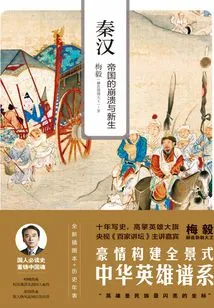
In 221 BC, King Yingzheng of Qin unified the six countries. Since then, with the same writing and the same track, China has achieved the comprehensive unification of politics, economy and culture for the first time. The Qin Empire's unification of the world was short-lived but glorious. The first emperor's sand dune collapsed, Zhao Gao made plans, Li Si was selfish, and the second Hu Hai ascended the throne. Not long after, the bones in Yingzheng's mausoleum were not yet cold, the garrison soldiers screamed, and the grain was raised, the Xianyang fire was shining, and the pitiful scorched earth! The Qin Dynasty, a great empire that once swept across the sea, fell overnight! Xiang Yu, the overlord of Western Chu, was fierce and unmatched, and was eventually surrounded in Gaixia, besieged on all sides. Liu Bang held a three-foot sword and became an emperor from a common man, creating the world. The hundreds of years of war between the Han Dynasty and the Xiongnu have gone from strength to strength. The strong voice of the era that "those who offend the powerful Han Dynasty will be punished no matter how far away" still resonates... The Qin Dynasty and the Han Dynasty were strengthened and prospered for more than four hundred years. Despite hardships and hatred, these great emperors, kings, princes and generals opened up history through arduous efforts. The ancestors of Qin and Han Dynasty continued to eliminate the old and melt away the barbarism and violence. In the end, in the vast land of China, which is thousands of miles away, iron and fire fell silent again and again.
In 221 BC, King Yingzheng of Qin unified the six countries. Since then, with the same writing and the same track, China has achieved the comprehensive unification of politics, economy and culture for the first time. The Qin Empire's unification of the world was short-lived but glorious. The first emperor's sand dune collapsed, Zhao Gao made plans, Li Si was selfish, and the second Hu Hai ascended the throne. Not long after, the bones in Yingzheng's mausoleum were not yet cold, the garrison soldiers screamed, and the grain was raised, the Xianyang fire was shining, and the pitiful scorched earth! The Qin Dynasty, a great empire that once swept across the sea, fell overnight! Xiang Yu, the overlord of Western Chu, was fierce and unmatched, and was eventually surrounded in Gaixia, besieged on all sides. Liu Bang held a three-foot sword and became an emperor from a common man, creating the world. The hundreds of years of war between the Han Dynasty and the Xiongnu have gone from strength to strength. The strong voice of the era that "those who offend the powerful Han Dynasty will be punished no matter how far away" still resonates... The Qin Dynasty and the Han Dynasty were strengthened and prospered for more than four hundred years. Despite hardships and hatred, these great emperors, kings, princes and generals opened up history through arduous efforts. The ancestors of Qin and Han Dynasty continued to eliminate the old and melt away the barbarism and violence. In the end, in the vast land of China, which is thousands of miles away, iron and fire fell silent again and again.
宋辽金夏:刀锋上的文明
Mei Yi (king Helian Bobo)
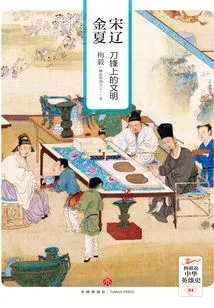
The Song, Liao, Jin and Xia periods were the most intense periods of ethnic integration in ancient Chinese history. The civilization of the Central Plains and the surrounding nomadic civilizations absorbed each other in collisions. They experienced the pain caused by contradictions, conflicts, and the tempering of blood and fire, and finally developed tenaciously. Over the past three hundred years, the Chinese people have left precious material and spiritual heritage to future generations with their passionate creativity and indomitable willpower. In this great era of splendid civilization, disputes arose one after another, wars continued, and countless heroes emerged, making great achievements in the long history. Following the chaos of the Five Dynasties, Zhao Kuangyin launched an expedition to the south and north to establish the illustrious Song Dynasty; Empress Dowager Xiao was a womanizer, stabilized the country's affairs, and promoted the growth of Khitan; Yuan Hao was ambitious and opened up new territories, eventually becoming the hegemon of the Western Xia Dynasty; Wan Yan showed his talent and military strategy, restructured the country and moved the capital, promoting the Sinicization of the Jin Kingdom. There are also loyal civil servants and loyal and brave generals - Kou Zhun, Fan Zhongyan, Ouyang Xiu, Sima Guang, Xin Qiji, Wen Tianxiang, who do not let life and death, wealth and poverty change their aspirations; Yang Ye, Di Qing, Han Shizhong, Yue Fei, Li Tingzhi, Zhang Shijie, who do not let success or failure affect their hearts - together they compose a tragic, magnificent, evocative heroic epic.
The Song, Liao, Jin and Xia periods were the most intense periods of ethnic integration in ancient Chinese history. The civilization of the Central Plains and the surrounding nomadic civilizations absorbed each other in collisions. They experienced the pain caused by contradictions, conflicts, and the tempering of blood and fire, and finally developed tenaciously. Over the past three hundred years, the Chinese people have left precious material and spiritual heritage to future generations with their passionate creativity and indomitable willpower. In this great era of splendid civilization, disputes arose one after another, wars continued, and countless heroes emerged, making great achievements in the long history. Following the chaos of the Five Dynasties, Zhao Kuangyin launched an expedition to the south and north to establish the illustrious Song Dynasty; Empress Dowager Xiao was a womanizer, stabilized the country's affairs, and promoted the growth of Khitan; Yuan Hao was ambitious and opened up new territories, eventually becoming the hegemon of the Western Xia Dynasty; Wan Yan showed his talent and military strategy, restructured the country and moved the capital, promoting the Sinicization of the Jin Kingdom. There are also loyal civil servants and loyal and brave generals - Kou Zhun, Fan Zhongyan, Ouyang Xiu, Sima Guang, Xin Qiji, Wen Tianxiang, who do not let life and death, wealth and poverty change their aspirations; Yang Ye, Di Qing, Han Shizhong, Yue Fei, Li Tingzhi, Zhang Shijie, who do not let success or failure affect their hearts - together they compose a tragic, magnificent, evocative heroic epic.
明:繁华与崩溃
Mei Yi (king Helian Bobo)
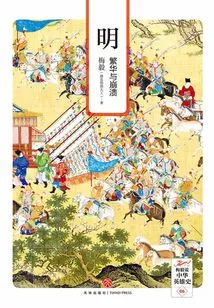
The Ming Dynasty was a prosperous and prosperous era, but also a dynasty full of cruelty and excitement. The society of the Ming Dynasty, from top to bottom, from beginning to end, was characterized by love and hate, arrogance and arrogance, wild and self-adapted, and greed for pleasure; the battle of Jingnan, civil engineering changes, seizing the door, Cao Shi's change, King Ning's chaos, internal and external difficulties, and precarious conditions; Jin Yiwei, the two factories of the East and West, the powerful officials are in power, and the government and the public are dim; the assassination case, the red pill case, and the palace transfer case are full of mysteries, and the parties are united and opposed... The grand scene of Qilou and the prosperity of the empire have all become a dream in an instant, which can't help but sigh. In such a great pseudo-period, there are both Wen Tian, the "backbone" of the Ming Dynasty, and Wu Xi, who are fond of being the "concubines" of the new dynasty; there are also women and children such as Qin Liangyu and Xia Wanchun who resist thieves and bandits and forget about themselves and their homes. , Qi Jiguang, Yu Dayou and other brave generals fought hard to annihilate the Japanese and sacrificed their lives to go to the country... The game between the king and his ministers, the confrontation between loyalty and traitor, and the competition between various forces were all vividly performed in this dynasty.
The Ming Dynasty was a prosperous and prosperous era, but also a dynasty full of cruelty and excitement. The society of the Ming Dynasty, from top to bottom, from beginning to end, was characterized by love and hate, arrogance and arrogance, wild and self-adapted, and greed for pleasure; the battle of Jingnan, civil engineering changes, seizing the door, Cao Shi's change, King Ning's chaos, internal and external difficulties, and precarious conditions; Jin Yiwei, the two factories of the East and West, the powerful officials are in power, and the government and the public are dim; the assassination case, the red pill case, and the palace transfer case are full of mysteries, and the parties are united and opposed... The grand scene of Qilou and the prosperity of the empire have all become a dream in an instant, which can't help but sigh. In such a great pseudo-period, there are both Wen Tian, the "backbone" of the Ming Dynasty, and Wu Xi, who are fond of being the "concubines" of the new dynasty; there are also women and children such as Qin Liangyu and Xia Wanchun who resist thieves and bandits and forget about themselves and their homes. , Qi Jiguang, Yu Dayou and other brave generals fought hard to annihilate the Japanese and sacrificed their lives to go to the country... The game between the king and his ministers, the confrontation between loyalty and traitor, and the competition between various forces were all vividly performed in this dynasty.
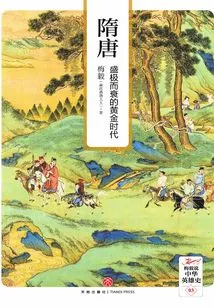
隋唐:盛极而衰的黄金时代
Mei Yi (king Helian Bobo)
During the Sui and Tang Dynasties, the land of China once again ushered in great unification. This time, it is not so much about conquering all nations with force as it is about civilized and asserting authority over all ethnic groups. The Tang Empire opened up an unprecedented prosperous civilization with magnificence and self-confidence: the prosperity of poetry, the popularity of singing and dancing, the prosperity of calligraphy and painting, and the diversity of civilizations... However, after its prosperity, it declined. The Tang Empire was pushed into the abyss of destruction by the Anshi Rebellion, separatist feudal lordships, and eunuch disasters. A Five Dynasties era full of rebellion, killing, famine, plague, deception, and betrayal came. In these more than three centuries, supreme glory and bloodshed intertwined, and the personal destiny of "heroes" blended with the "contingency" of the historical process, creating this prosperous and complex era. Emperor Wen of the Sui Dynasty unified the north and the south with his literary, political and martial arts; Emperor Taizong of the Tang Dynasty worked hard to govern and ruled over all nations; Emperor Xuanzong of the Tang Dynasty created a prosperous age with his heroic military skills and wise decisions; Zhou Shizong's heroic strategy of divine and military strategy laid the foundation of the Song Dynasty. Between the two poles of unity and division, the founding fathers such as Changsun Wuji and Fang Xuanling, the ZTE generals such as Li Guangbi and Guo Ziyi, and the heroes of troubled times such as An Lushan, Shi Siming, Huang Chao, and Zhu Wen, driven by their ambitions and maneuvers, have performed flesh-and-blood and fascinating stories, telling a heroic history that has been dreamed of for thousands of years and has melodious charm.
During the Sui and Tang Dynasties, the land of China once again ushered in great unification. This time, it is not so much about conquering all nations with force as it is about civilized and asserting authority over all ethnic groups. The Tang Empire opened up an unprecedented prosperous civilization with magnificence and self-confidence: the prosperity of poetry, the popularity of singing and dancing, the prosperity of calligraphy and painting, and the diversity of civilizations... However, after its prosperity, it declined. The Tang Empire was pushed into the abyss of destruction by the Anshi Rebellion, separatist feudal lordships, and eunuch disasters. A Five Dynasties era full of rebellion, killing, famine, plague, deception, and betrayal came. In these more than three centuries, supreme glory and bloodshed intertwined, and the personal destiny of "heroes" blended with the "contingency" of the historical process, creating this prosperous and complex era. Emperor Wen of the Sui Dynasty unified the north and the south with his literary, political and martial arts; Emperor Taizong of the Tang Dynasty worked hard to govern and ruled over all nations; Emperor Xuanzong of the Tang Dynasty created a prosperous age with his heroic military skills and wise decisions; Zhou Shizong's heroic strategy of divine and military strategy laid the foundation of the Song Dynasty. Between the two poles of unity and division, the founding fathers such as Changsun Wuji and Fang Xuanling, the ZTE generals such as Li Guangbi and Guo Ziyi, and the heroes of troubled times such as An Lushan, Shi Siming, Huang Chao, and Zhu Wen, driven by their ambitions and maneuvers, have performed flesh-and-blood and fascinating stories, telling a heroic history that has been dreamed of for thousands of years and has melodious charm.
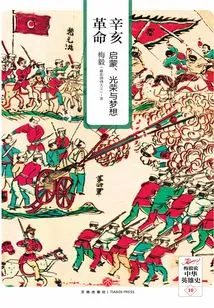
辛亥革命:启蒙、光荣与梦想
Mei Yi (king Helian Bobo)
In 1911, the year when the Qing Dynasty was about to fall, the fig leaf of the gorgeous empire was full of chronic diseases and bacteria that could kill it. Beneath the seemingly calm surface, a powerful and irreversible trend surges: revolution! Kang Youwei, Liang Qichao and other reformers shouted "Total changes will make you strong, small changes will still lead to destruction!" And strongly called for reform. The powerless Emperor Guangxu and the bookish Wei Xinchen fought with their bare hands against the old and cunning Cixi and her wings. The gunfire of the Revolution of 1911 was heard, and the Dragon Flag of the Qing Dynasty, which had been held for more than 260 years, fell in response... Countless persevering revolutionary soldiers and intellectuals threw their heads, shed their blood, sacrificed their lives to serve the country. Tang Caichang, the leader of the "Self-Reliance Army", fell first; Shi Jianru, Wu Yue, and Xu Xilin shed blood; Zhao Erfeng, a national hero who had been a soldier all his life, turned into the "Zhao Butcher" in Chengdu; Yuan Shikai cultivated the enemy's self-respect and "usurped" the fruits of victory... The Revolution of 1911 is a great epic of personal heroism and a majestic symphony of nationalism! In the iron-blooded years, the revolution died prematurely. Nearly a hundred years have passed like a cloud, and the bitterness that the revolutionary radicals longed for has lingered in our hearts for a long time after the gunfire of the Revolution of 1911.
In 1911, the year when the Qing Dynasty was about to fall, the fig leaf of the gorgeous empire was full of chronic diseases and bacteria that could kill it. Beneath the seemingly calm surface, a powerful and irreversible trend surges: revolution! Kang Youwei, Liang Qichao and other reformers shouted "Total changes will make you strong, small changes will still lead to destruction!" And strongly called for reform. The powerless Emperor Guangxu and the bookish Wei Xinchen fought with their bare hands against the old and cunning Cixi and her wings. The gunfire of the Revolution of 1911 was heard, and the Dragon Flag of the Qing Dynasty, which had been held for more than 260 years, fell in response... Countless persevering revolutionary soldiers and intellectuals threw their heads, shed their blood, sacrificed their lives to serve the country. Tang Caichang, the leader of the "Self-Reliance Army", fell first; Shi Jianru, Wu Yue, and Xu Xilin shed blood; Zhao Erfeng, a national hero who had been a soldier all his life, turned into the "Zhao Butcher" in Chengdu; Yuan Shikai cultivated the enemy's self-respect and "usurped" the fruits of victory... The Revolution of 1911 is a great epic of personal heroism and a majestic symphony of nationalism! In the iron-blooded years, the revolution died prematurely. Nearly a hundred years have passed like a cloud, and the bitterness that the revolutionary radicals longed for has lingered in our hearts for a long time after the gunfire of the Revolution of 1911.
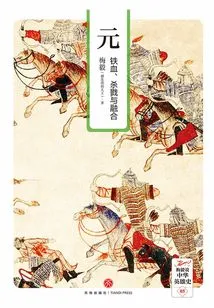
元:铁血、杀戮与融合
Mei Yi (king Helian Bobo)
The illustrious Yuan Dynasty started from Shuomo, merged with the Western Regions, pacified Xixia, destroyed the Jurchens, ministered to Gaoli, settled in Nanzhao, and went to the south of the Yangtze River. The world was unified, and the map was so vast that it had never been seen in ancient times. The Yuan Empire was like a melting pot, integrating the Tuyuhun, Dangxiang, Khitan and other ethnic groups and tribes, gradually forming today's "Chinese nation". Along with the endless battles and killings, the Yuan Empire's cavalry spread the seeds of advanced civilization such as gunpowder, printing, and the compass to all parts of the world. Although this blazing era is short, it bursts out with irrepressible creativity, expansion, competitiveness and enterprising power. In the rapids of this era, overlords, powerful ministers, veteran generals, and famous figures may have a killing blow in hand, or their plans may come true, or they may fight with each other, or they may keep their own affairs. Their pride and confusion, intoxication and broken dreams have woven a historical picture soaked in blood and tears. Looking back in shock, I can see the embarrassment of Yuan Shizu in the southwest, the desolation of Boyan losing power and being demoted, the struggle of Zhao Mengfu like a bird trapped in a cage, the waste of endless internal fighting among the northern warlords, the sadness of the destruction of the capital and the country's demise... The scenes are as fresh as yesterday, and they are still dazzling and sighing sadly.
The illustrious Yuan Dynasty started from Shuomo, merged with the Western Regions, pacified Xixia, destroyed the Jurchens, ministered to Gaoli, settled in Nanzhao, and went to the south of the Yangtze River. The world was unified, and the map was so vast that it had never been seen in ancient times. The Yuan Empire was like a melting pot, integrating the Tuyuhun, Dangxiang, Khitan and other ethnic groups and tribes, gradually forming today's "Chinese nation". Along with the endless battles and killings, the Yuan Empire's cavalry spread the seeds of advanced civilization such as gunpowder, printing, and the compass to all parts of the world. Although this blazing era is short, it bursts out with irrepressible creativity, expansion, competitiveness and enterprising power. In the rapids of this era, overlords, powerful ministers, veteran generals, and famous figures may have a killing blow in hand, or their plans may come true, or they may fight with each other, or they may keep their own affairs. Their pride and confusion, intoxication and broken dreams have woven a historical picture soaked in blood and tears. Looking back in shock, I can see the embarrassment of Yuan Shizu in the southwest, the desolation of Boyan losing power and being demoted, the struggle of Zhao Mengfu like a bird trapped in a cage, the waste of endless internal fighting among the northern warlords, the sadness of the destruction of the capital and the country's demise... The scenes are as fresh as yesterday, and they are still dazzling and sighing sadly.