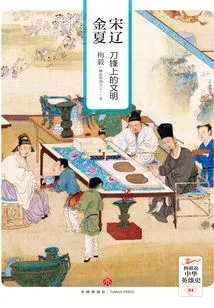
Song, Liao and Jinxia: Civilization on the Blade
About This Novel
The Song, Liao, Jin and Xia periods were the most intense periods of ethnic integration in ancient Chinese history. The civilization of the Central Plains and the surrounding nomadic civilizations absorbed each other in collisions. They experienced the pain caused by contradictions, conflicts, and the tempering of blood and fire, and finally developed tenaciously. Over the past three hundred years, the Chinese people have left precious material and spiritual heritage to future generations with their passionate creativity and indomitable willpower. In this great era of splendid civilization, disputes arose one after another, wars continued, and countless heroes emerged, making great achievements in the long history. Following the chaos of the Five Dynasties, Zhao Kuangyin launched an expedition to the south and north to establish the illustrious Song Dynasty; Empress Dowager Xiao was a womanizer, stabilized the country's affairs, and promoted the growth of Khitan; Yuan Hao was ambitious and opened up new territories, eventually becoming the hegemon of the Western Xia Dynasty; Wan Yan showed his talent and military strategy, restructured the country and moved the capital, promoting the Sinicization of the Jin Kingdom. There are also loyal civil servants and loyal and brave generals - Kou Zhun, Fan Zhongyan, Ouyang Xiu, Sima Guang, Xin Qiji, Wen Tianxiang, who do not let life and death, wealth and poverty change their aspirations; Yang Ye, Di Qing, Han Shizhong, Yue Fei, Li Tingzhi, Zhang Shijie, who do not let success or failure affect their hearts - together they compose a tragic, magnificent, evocative heroic epic.
Official Sources
What Readers Think
Rating
Community(0)
Official(1)Scraped 2mo ago
Quoting from many sources, the information is comprehensive, and the presentation method is not boring.
Quoting from many sources, the information is informative, and the presentation method is not boring. It is an excellent book that can not only increase historical knowledge, but also be fun to read. Being able to do so with ease shows that the author has reached a certain level of proficiency in historical knowledge. Highly recommended! Finally, let me say that the person who judged Hong Chengchou to surrender to the Qing Dynasty based on the ashes of his bomb was not a Manchu, but the traitor Fan Wencheng
Rating
Community(0)
Official(1)Scraped 2mo ago
Quoting from many sources, the information is comprehensive, and the presentation method is not boring.
Quoting from many sources, the information is informative, and the presentation method is not boring. It is an excellent book that can not only increase historical knowledge, but also be fun to read. Being able to do so with ease shows that the author has reached a certain level of proficiency in historical knowledge. Highly recommended! Finally, let me say that the person who judged Hong Chengchou to surrender to the Qing Dynasty based on the ashes of his bomb was not a Manchu, but the traitor Fan Wencheng