Library
Browse and search books
3 novels found
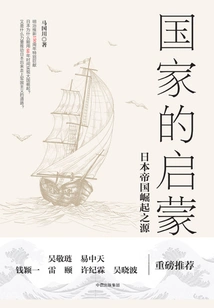
国家的启蒙:日本帝国崛起之源
Ma Guochuan
From the time the "black ships" of the United States were closed in 1853 to the death of Emperor Meiji in 1912, Japan took 60 years to rise from a backward country to one of the world's powerful countries, creating a unique model for the rise of great powers in modern world history, and becoming the envy and imitation of many catch-up countries. By describing the important historical figures and major historical events of this period, this book vividly records Japan's difficult journey of catching up and building a modern country over the past 60 years. It also analyzes the internal reasons why Japan later embarked on the path of militarism. For countries pursuing the "rise of a great power", the path Japan has taken still has strong practical significance.
From the time the "black ships" of the United States were closed in 1853 to the death of Emperor Meiji in 1912, Japan took 60 years to rise from a backward country to one of the world's powerful countries, creating a unique model for the rise of great powers in modern world history, and becoming the envy and imitation of many catch-up countries. By describing the important historical figures and major historical events of this period, this book vividly records Japan's difficult journey of catching up and building a modern country over the past 60 years. It also analyzes the internal reasons why Japan later embarked on the path of militarism. For countries pursuing the "rise of a great power", the path Japan has taken still has strong practical significance.
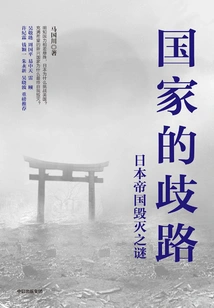
国家的歧路:日本帝国毁灭之谜
Ma Guochuan
In 1912, with the death of Emperor Meiji and the ascension of Emperor Taisho to the throne, Japan began to see a relaxed social environment, the democratic movement surged, and universal suffrage and a party-cabinet system were implemented. On the other hand, there was an undercurrent between the military and right-wing forces, which eventually led to the "February 26 Incident" in 1936. From then on, Japan quickly slid towards fascism, first invading China, and then declaring war on Britain and the United States. As a result, not only did it cause disaster to the world, but Japan itself was almost destroyed by the war. By describing important historical figures and major historical events from 1912 to 1945, this book vividly outlines the journey of an emerging country that was once full of hope towards war, and also analyzes the internal reasons why Japan embarked on self-destruction. This book is the sequel to "The Enlightenment of the Nation: The Source of the Rise of the Japanese Empire". These two books completely present the historical process of the founding, pursuit, rise, divergence and destruction of the Japanese Empire in modern times. They are also a complete modernization story of a late-developing country. Japan's move toward war had a huge impact on China. Understanding this period of history has practical significance for understanding Japan and the development of late-developing countries, and it still has a strong warning significance for China today.
In 1912, with the death of Emperor Meiji and the ascension of Emperor Taisho to the throne, Japan began to see a relaxed social environment, the democratic movement surged, and universal suffrage and a party-cabinet system were implemented. On the other hand, there was an undercurrent between the military and right-wing forces, which eventually led to the "February 26 Incident" in 1936. From then on, Japan quickly slid towards fascism, first invading China, and then declaring war on Britain and the United States. As a result, not only did it cause disaster to the world, but Japan itself was almost destroyed by the war. By describing important historical figures and major historical events from 1912 to 1945, this book vividly outlines the journey of an emerging country that was once full of hope towards war, and also analyzes the internal reasons why Japan embarked on self-destruction. This book is the sequel to "The Enlightenment of the Nation: The Source of the Rise of the Japanese Empire". These two books completely present the historical process of the founding, pursuit, rise, divergence and destruction of the Japanese Empire in modern times. They are also a complete modernization story of a late-developing country. Japan's move toward war had a huge impact on China. Understanding this period of history has practical significance for understanding Japan and the development of late-developing countries, and it still has a strong warning significance for China today.
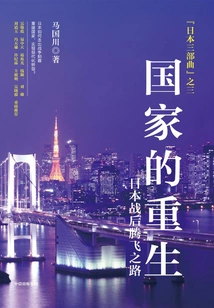
Rebirth of Nation
History国家的重生
Ma Guochuan
After Japan announced its unconditional surrender in 1945, almost the whole country was in ruins, people's livelihood was in decline, and production capacity returned to the level of 1931. On this basis, after more than 20 years of struggle, Japan has become the world's second largest economic power, creating the "Japanese Miracle" that is envied and imitated by many catching-up countries. At the same time as the economy took off, Japan's politics, business, education, culture and other aspects have also undergone earth-shaking changes, becoming a new country that is completely different from the old Japanese Empire. This book describes important historical figures and major historical events in Japan from 1945 to 1973, and vividly records the difficult process of Japan's national rebirth in 28 years. This book is the last part of the "Japanese Trilogy". Together with "The Enlightenment of a Nation" and "The Crossroads of a Country", it forms a long volume of modern Japanese history, reflecting Japan's 120-year history from 1853 to 1973. It describes the complete process of Japan's modernization in a vivid, objective and rational way: founding - catching up - rise - crossroads - destruction - rebirth, which helps readers gain a deeper understanding of Japan's history.
After Japan announced its unconditional surrender in 1945, almost the whole country was in ruins, people's livelihood was in decline, and production capacity returned to the level of 1931. On this basis, after more than 20 years of struggle, Japan has become the world's second largest economic power, creating the "Japanese Miracle" that is envied and imitated by many catching-up countries. At the same time as the economy took off, Japan's politics, business, education, culture and other aspects have also undergone earth-shaking changes, becoming a new country that is completely different from the old Japanese Empire. This book describes important historical figures and major historical events in Japan from 1945 to 1973, and vividly records the difficult process of Japan's national rebirth in 28 years. This book is the last part of the "Japanese Trilogy". Together with "The Enlightenment of a Nation" and "The Crossroads of a Country", it forms a long volume of modern Japanese history, reflecting Japan's 120-year history from 1853 to 1973. It describes the complete process of Japan's modernization in a vivid, objective and rational way: founding - catching up - rise - crossroads - destruction - rebirth, which helps readers gain a deeper understanding of Japan's history.