Library
Browse and search books
15 novels found

Silver Rope Snow
General Fiction银绳般的雪
Lu Yiping
This book is a collection of short stories. It is a collection of fourteen fictional stories set by the writer Lu Yiping with the Pamir Plateau as the background. It is full of pastoral atmosphere. The vast grasslands, snow-capped mountains, rivers and lakes of Xinjiang, the pure and beautiful Tajik girls, poignant love stories, the herdsmen's incomparable attachment to the grassland, etc., Make people's hearts beat when reading them. The author depicts a Xinjiang full of pastoral atmosphere, where there are beautiful scenery, kind and simple people, and harsh natural environment. Most of the stories described are stories from the 1990s, when people and nature seemed to be unpolluted, presenting an ideal land. The military and civilian family is a special book that tells special stories in a special environment.
This book is a collection of short stories. It is a collection of fourteen fictional stories set by the writer Lu Yiping with the Pamir Plateau as the background. It is full of pastoral atmosphere. The vast grasslands, snow-capped mountains, rivers and lakes of Xinjiang, the pure and beautiful Tajik girls, poignant love stories, the herdsmen's incomparable attachment to the grassland, etc., Make people's hearts beat when reading them. The author depicts a Xinjiang full of pastoral atmosphere, where there are beautiful scenery, kind and simple people, and harsh natural environment. Most of the stories described are stories from the 1990s, when people and nature seemed to be unpolluted, presenting an ideal land. The military and civilian family is a special book that tells special stories in a special environment.
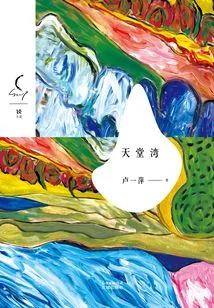
Paradise Bay (second Volume of Rui·novel Series)
General Fiction天堂湾(锐·小说系列第二辑)
Lu Yiping
This book consists of three novellas: "Paradise Bay", "A Pair of Pigs on the Roof of the World" and "Leba Village Murder Case". The writer's rich life experience brings a unique creative style to the novel. He is good at creating a grand and tragic atmosphere, bringing out the multi-dimensional and high-spirited spirit of tiny life. The protagonist's character in the novel is three-dimensional and full, and it details the rich inner world of modern soldiers and expands the writing themes of military novels. It reflects the height of military literary creation in the new era and is quite distinctive in modern novel creation.
This book consists of three novellas: "Paradise Bay", "A Pair of Pigs on the Roof of the World" and "Leba Village Murder Case". The writer's rich life experience brings a unique creative style to the novel. He is good at creating a grand and tragic atmosphere, bringing out the multi-dimensional and high-spirited spirit of tiny life. The protagonist's character in the novel is three-dimensional and full, and it details the rich inner world of modern soldiers and expands the writing themes of military novels. It reflects the height of military literary creation in the new era and is quite distinctive in modern novel creation.

Collection of Short and Medium Stories by Lu Yiping: the Snowfield at the Highest Point
General Fiction卢一萍中短篇集:最高处的雪原
Lu Yiping
This set of books is the work of Lu Yiping, a master of documentary literature. It contains 18 volumes in total. With the snowy wilderness as the background, it not only depicts the magnificent and vast frontier atmosphere, but also vividly describes the military life that is not afraid of hardships. The game between human beings and nature is a fusion of smallness and greatness. The natural disasters and marches set off each other, depicting the fearless spirit of ironclad and selfless dedication! They are "Habak Daban", "Thunderfield", "Bana Mako", "Recruit Class", "The Snowfield at the Highest Point", "Humor Notes", "At the Southern Foot of the Himalayas", "Iron Wings Flying", "For Love, Daba is Not Far Away" and " "Wufulang Patrol", "Tiger Captain Fu Lizhi", "A Pair of Pigs on the Roof of the World", "Blue Soldiers", "The Horse Racing Seven Years Ago", "Ru Cantabile Army", "White Mountains", "Glorious Sacrifice" and "Love Song of the Wilderness".
This set of books is the work of Lu Yiping, a master of documentary literature. It contains 18 volumes in total. With the snowy wilderness as the background, it not only depicts the magnificent and vast frontier atmosphere, but also vividly describes the military life that is not afraid of hardships. The game between human beings and nature is a fusion of smallness and greatness. The natural disasters and marches set off each other, depicting the fearless spirit of ironclad and selfless dedication! They are "Habak Daban", "Thunderfield", "Bana Mako", "Recruit Class", "The Snowfield at the Highest Point", "Humor Notes", "At the Southern Foot of the Himalayas", "Iron Wings Flying", "For Love, Daba is Not Far Away" and " "Wufulang Patrol", "Tiger Captain Fu Lizhi", "A Pair of Pigs on the Roof of the World", "Blue Soldiers", "The Horse Racing Seven Years Ago", "Ru Cantabile Army", "White Mountains", "Glorious Sacrifice" and "Love Song of the Wilderness".

White Mountain
General Fiction白山
Lu Yiping
"White Mountain" is a legendary fable about "lies" and a unique novel that Lu Yiping accumulated over more than 20 years of military life and spent 7 years carefully crafting. Set on the roof of the world, this novel combines iron-blooded stories with majestic geographical scenery. It tells the story of the persistent and slightly silly Ling Wudou who grew from an ordinary soldier to an advanced model. It shows the military life on the plateau and juxtaposes tiny humans with powerful nature to set off each other. It accurately expresses the hardships of soldiers in fulfilling their missions, thus demonstrating the dedication of soldiers. The novel consists of three parts, a middle part and a lower part, fourteen chapters, and 166 sections. The upper part is dust, a total of four chapters; the middle part is wind, a total of five chapters; the lower part is light, a total of five chapters.
"White Mountain" is a legendary fable about "lies" and a unique novel that Lu Yiping accumulated over more than 20 years of military life and spent 7 years carefully crafting. Set on the roof of the world, this novel combines iron-blooded stories with majestic geographical scenery. It tells the story of the persistent and slightly silly Ling Wudou who grew from an ordinary soldier to an advanced model. It shows the military life on the plateau and juxtaposes tiny humans with powerful nature to set off each other. It accurately expresses the hardships of soldiers in fulfilling their missions, thus demonstrating the dedication of soldiers. The novel consists of three parts, a middle part and a lower part, fourteen chapters, and 166 sections. The upper part is dust, a total of four chapters; the middle part is wind, a total of five chapters; the lower part is light, a total of five chapters.
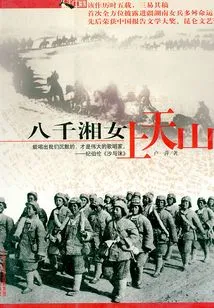
八千湘女上天山
Lu Yiping
In the early 1950s, Xinjiang was peacefully liberated. New China's policymakers ordered 200,000 officers and soldiers stationed in Xinjiang to reclaim wasteland and farmland, and took root in Xinjiang, determined to change the situation in which land reclamation lasted only one generation since ancient times, so as to achieve the strategic goal of long-term peace and stability. Under the call of the Party Central Committee to build Xinjiang, a vigorous wave of joining the army swept across Hunan, Hunan and four rivers. For a time, passionate Hunan girls flocked to the ancient capital Changsha to sign up to join the army.
In the early 1950s, Xinjiang was peacefully liberated. New China's policymakers ordered 200,000 officers and soldiers stationed in Xinjiang to reclaim wasteland and farmland, and took root in Xinjiang, determined to change the situation in which land reclamation lasted only one generation since ancient times, so as to achieve the strategic goal of long-term peace and stability. Under the call of the Party Central Committee to build Xinjiang, a vigorous wave of joining the army swept across Hunan, Hunan and four rivers. For a time, passionate Hunan girls flocked to the ancient capital Changsha to sign up to join the army.
Tianqi: Documentary of the Peaceful Liberation of Tibet (gu Zhen's Brief·ai Guided Edition)
Literature天堑:和平解放西藏纪实(谷臻小简·AI导读版)
Lu Yiping
In the early 1950s, in order to complete the great cause of reunifying the motherland, the People's Liberation Army, led by the 18th Army, marched into Tibet from Sichuan, Qinghai, Xinjiang, and Yunnan. Crossing thousands of mountains and giant ravines on the roof of the world, we overcame unimaginable difficulties such as plateau hypoxia, glacial torrents, severe wind and snow cold, cliffs and deep valleys, disease and hunger, carried out the Battle of Qamdo, walked more than 6,000 miles, conquered the roof of the world, completed the historical task of peacefully liberating Tibet, and carried out counter-insurgency and democratic reforms, bringing Tibetan society into a new historical stage.
In the early 1950s, in order to complete the great cause of reunifying the motherland, the People's Liberation Army, led by the 18th Army, marched into Tibet from Sichuan, Qinghai, Xinjiang, and Yunnan. Crossing thousands of mountains and giant ravines on the roof of the world, we overcame unimaginable difficulties such as plateau hypoxia, glacial torrents, severe wind and snow cold, cliffs and deep valleys, disease and hunger, carried out the Battle of Qamdo, walked more than 6,000 miles, conquered the roof of the world, completed the historical task of peacefully liberating Tibet, and carried out counter-insurgency and democratic reforms, bringing Tibetan society into a new historical stage.
Eight Thousand Hunan Girls Climb to the Tianshan Mountains (gu Zhen's Brief Ai Introduction Edition)
Literature八千湘女上天山(谷臻小简·AI导读版)
Lu Yiping
A collective memoir of Hunan women who entered Xinjiang. A strange book that reveals the distribution of marriages in the army in the early 1950s! A book that focuses on human nature and human rights! At the end of 1949, after Xinjiang was peacefully liberated, the policy makers of the Republic ordered the 200,000 officers and soldiers stationed in Xinjiang to forge swords into plowshares, reclaim wasteland and farmland, and take root in Xinjiang, so as to change the situation in which the cultivation of land had been carried out for one generation since the Han Dynasty, and to achieve the strategic goal of long-term peace and stability. But "you can't settle down without a wife, and you can't put down roots without a son." If the marriage problems of officers and soldiers are not resolved, it will affect the smooth realization of this strategic goal. Therefore, policymakers decided to recruit female soldiers to solve this problem. They first recruited 8,000 Hunan women. Most of these female soldiers are educated young people, including top university students, daughters of Kuomintang generals, and daughters of wealthy businessmen. With youthful dreams in mind, everyone marched for several months to reach the distant frontier. From then on, they began to interpret stories of joys and sorrows one after another in this vast Gobi desert, as well as their ideals and pursuits, glory and dreams. They gave birth to future generations and also gave birth to the spirit of love, tolerance, righteousness and perseverance. They are known as the "first generation mothers in the wasteland of Xinjiang".
A collective memoir of Hunan women who entered Xinjiang. A strange book that reveals the distribution of marriages in the army in the early 1950s! A book that focuses on human nature and human rights! At the end of 1949, after Xinjiang was peacefully liberated, the policy makers of the Republic ordered the 200,000 officers and soldiers stationed in Xinjiang to forge swords into plowshares, reclaim wasteland and farmland, and take root in Xinjiang, so as to change the situation in which the cultivation of land had been carried out for one generation since the Han Dynasty, and to achieve the strategic goal of long-term peace and stability. But "you can't settle down without a wife, and you can't put down roots without a son." If the marriage problems of officers and soldiers are not resolved, it will affect the smooth realization of this strategic goal. Therefore, policymakers decided to recruit female soldiers to solve this problem. They first recruited 8,000 Hunan women. Most of these female soldiers are educated young people, including top university students, daughters of Kuomintang generals, and daughters of wealthy businessmen. With youthful dreams in mind, everyone marched for several months to reach the distant frontier. From then on, they began to interpret stories of joys and sorrows one after another in this vast Gobi desert, as well as their ideals and pursuits, glory and dreams. They gave birth to future generations and also gave birth to the spirit of love, tolerance, righteousness and perseverance. They are known as the "first generation mothers in the wasteland of Xinjiang".

Wasteland Love Song
General Fiction荒原情歌
Lu Yiping
Although Ling Wudou is the monitor of the breeding class, he is the only one in the whole class. The day after he was promoted from a soldier to a squad leader, he took a Type 56 submachine gun, 20 rounds of ammunition, a single soldier tent, a sleeping bag, a small aluminum pot and a bunch of cans, compressed dry food and rice flour. He rode the bay horse and drove 25 military horses of various colors to an unnamed valley more than 40 kilometers away from the company to find places with water and grass. He wanted to fatten these army horses before heavy snow covered the entire plateau so that they could survive the long winter. Ling Wudou left the company and felt that he suddenly became vulnerable. Altitude sickness hit him quickly and he almost lost his support. He felt like he had a fever, like he had a cold.
Although Ling Wudou is the monitor of the breeding class, he is the only one in the whole class. The day after he was promoted from a soldier to a squad leader, he took a Type 56 submachine gun, 20 rounds of ammunition, a single soldier tent, a sleeping bag, a small aluminum pot and a bunch of cans, compressed dry food and rice flour. He rode the bay horse and drove 25 military horses of various colors to an unnamed valley more than 40 kilometers away from the company to find places with water and grass. He wanted to fatten these army horses before heavy snow covered the entire plateau so that they could survive the long winter. Ling Wudou left the company and felt that he suddenly became vulnerable. Altitude sickness hit him quickly and he almost lost his support. He felt like he had a fever, like he had a cold.
Wandering Book of Life and Death
Literature流浪生死书
Lu Yiping
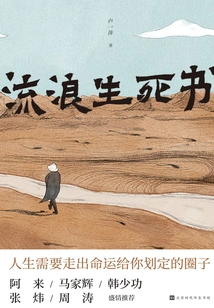
Life is really hard, either due to physical illness or mental pain. People cannot escape, they can only transcend. Some people choose literature, some choose art, and some choose to travel far away... Traveling far away is a way of life chosen by the author Lu Yiping. He took the initiative to wander far away. For more than ten years, he traveled in the Tarim Basin, the Pamir Plateau, the Karakoram Mountains and the Ali region of Tibet. He experienced extreme cold, extreme dangers, and hardships of life and death that were beyond human control. He saw the vastness of the earth, the majesty of the mountains, the beauty of the rivers, the tranquility and poverty of the villages, and transcended his inner erotic sorrow, passion, and trembling. Then, he gained unprecedented peace of mind. Travel through the boundless world and look for a vast life. Only by walking through the boundless world can we have a vast life.
Life is really hard, either due to physical illness or mental pain. People cannot escape, they can only transcend. Some people choose literature, some choose art, and some choose to travel far away... Traveling far away is a way of life chosen by the author Lu Yiping. He took the initiative to wander far away. For more than ten years, he traveled in the Tarim Basin, the Pamir Plateau, the Karakoram Mountains and the Ali region of Tibet. He experienced extreme cold, extreme dangers, and hardships of life and death that were beyond human control. He saw the vastness of the earth, the majesty of the mountains, the beauty of the rivers, the tranquility and poverty of the villages, and transcended his inner erotic sorrow, passion, and trembling. Then, he gained unprecedented peace of mind. Travel through the boundless world and look for a vast life. Only by walking through the boundless world can we have a vast life.
八千湘女上天山
Lu Yiping
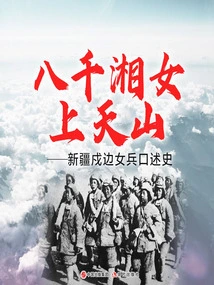
At the end of 1949, after the peaceful liberation of Xinjiang, the policymakers of the Republic ordered the 200,000 officers and soldiers stationed in Xinjiang to forge swords into plowshares, reclaim wasteland and farmland, and take root in Xinjiang, so as to change the situation in which the cultivation of land has been limited to one generation since the Han Dynasty. To achieve the strategic goal of long-term peace and stability. But "you can't settle down without a wife, and you can't put down roots without children." If the marriage problems of officers and soldiers are not resolved, it will affect the smooth realization of this strategic goal. Therefore, policymakers decided to recruit female soldiers to solve this problem. They first recruited 8,000 Hunan women. Most of these female soldiers are educated young people, including top university students, daughters of Kuomintang generals, and daughters of wealthy businessmen. With youthful dreams in mind, everyone marched for several months to reach the distant frontier. From then on, they began to interpret stories of joys and sorrows one after another in this vast Gobi desert, as well as their ideals and pursuits, glory and dreams. They gave birth to future generations and also gave birth to the spirit of love, tolerance, righteousness and perseverance. They are known as the "first generation mothers in the wasteland of Xinjiang". This reportage is written in the form of "oral narrative". The fate of the Hunan women reported in it is actually the epitome of the fate of eight thousand Hunan women. It is a collective memoir of the female soldiers who entered Xinjiang, a document narrated by them, and a historical testimony. It is the first comprehensive revelation of historical facts that have been dusted away, and an effort to restore the obliterated public memory. To write this book, the author spent five years, revised the manuscript three times, and visited hundreds of Hunan women in Hunan, Beijing, Sichuan and the Xinjiang Production and Construction Corps. After some chapters were published and serialized in newspapers and periodicals, they received a strong response and won the China Reportage Award and the Kunlun Literary Award.
At the end of 1949, after the peaceful liberation of Xinjiang, the policymakers of the Republic ordered the 200,000 officers and soldiers stationed in Xinjiang to forge swords into plowshares, reclaim wasteland and farmland, and take root in Xinjiang, so as to change the situation in which the cultivation of land has been limited to one generation since the Han Dynasty. To achieve the strategic goal of long-term peace and stability. But "you can't settle down without a wife, and you can't put down roots without children." If the marriage problems of officers and soldiers are not resolved, it will affect the smooth realization of this strategic goal. Therefore, policymakers decided to recruit female soldiers to solve this problem. They first recruited 8,000 Hunan women. Most of these female soldiers are educated young people, including top university students, daughters of Kuomintang generals, and daughters of wealthy businessmen. With youthful dreams in mind, everyone marched for several months to reach the distant frontier. From then on, they began to interpret stories of joys and sorrows one after another in this vast Gobi desert, as well as their ideals and pursuits, glory and dreams. They gave birth to future generations and also gave birth to the spirit of love, tolerance, righteousness and perseverance. They are known as the "first generation mothers in the wasteland of Xinjiang". This reportage is written in the form of "oral narrative". The fate of the Hunan women reported in it is actually the epitome of the fate of eight thousand Hunan women. It is a collective memoir of the female soldiers who entered Xinjiang, a document narrated by them, and a historical testimony. It is the first comprehensive revelation of historical facts that have been dusted away, and an effort to restore the obliterated public memory. To write this book, the author spent five years, revised the manuscript three times, and visited hundreds of Hunan women in Hunan, Beijing, Sichuan and the Xinjiang Production and Construction Corps. After some chapters were published and serialized in newspapers and periodicals, they received a strong response and won the China Reportage Award and the Kunlun Literary Award.
天堑:西藏和平解放纪实
Lu Yiping
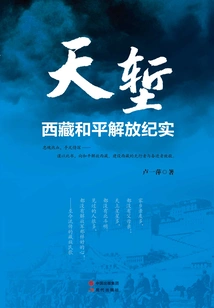
This book is a documentary literary work that reflects the peaceful liberation of Tibet. In the early 1950s, in order to complete the great cause of the reunification of the motherland and defend the southwest border, the People's Liberation Army, led by the 18th Army, marched into Tibet from Sichuan, Qinghai, Xinjiang, and Yunnan through multiple routes, crossed thousands of mountains and tens of thousands of giant ravines on the roof of the world, and overcame plateau hypoxia, glaciers, Overcoming difficulties unimaginable in the world, including rapids, severe winds, snow and cold, deep cliffs and valleys, as well as disease and hunger, they walked more than 6,000 miles, conquered the roof of the world, completed the important task of peacefully liberating Tibet, and carried out counterinsurgency and democratic reforms, bringing Tibetan society into a new historical stage.
This book is a documentary literary work that reflects the peaceful liberation of Tibet. In the early 1950s, in order to complete the great cause of the reunification of the motherland and defend the southwest border, the People's Liberation Army, led by the 18th Army, marched into Tibet from Sichuan, Qinghai, Xinjiang, and Yunnan through multiple routes, crossed thousands of mountains and tens of thousands of giant ravines on the roof of the world, and overcame plateau hypoxia, glaciers, Overcoming difficulties unimaginable in the world, including rapids, severe winds, snow and cold, deep cliffs and valleys, as well as disease and hunger, they walked more than 6,000 miles, conquered the roof of the world, completed the important task of peacefully liberating Tibet, and carried out counterinsurgency and democratic reforms, bringing Tibetan society into a new historical stage.

The Book of the Roof of the World
Literature世界屋脊之书
Lu Yiping
Prose has a particularly close relationship with personal life. It is the most authentic record of personal life, emotions, thoughts and whereabouts, and it is the most documentary style. "The Book on the Roof of the World" is a fragment of the author's life and travels on the Roof of the World, and is the bit of beauty left in the author's memory while walking in the high-altitude mountains. In our daily lives, we generally rarely think of these mountains. As the French writer Clezio said, the distant beauty cannot be touched, like the stars in the night sky or like the morning light, which reaches the end of the road, crosses the threshold of the finite world, and enters the insurmountable area.
Prose has a particularly close relationship with personal life. It is the most authentic record of personal life, emotions, thoughts and whereabouts, and it is the most documentary style. "The Book on the Roof of the World" is a fragment of the author's life and travels on the Roof of the World, and is the bit of beauty left in the author's memory while walking in the high-altitude mountains. In our daily lives, we generally rarely think of these mountains. As the French writer Clezio said, the distant beauty cannot be touched, like the stars in the night sky or like the morning light, which reaches the end of the road, crosses the threshold of the finite world, and enters the insurmountable area.

Two Fools
General Fiction二傻
Lu Yiping
When the good news about Er Sha's meritorious service was solemnly delivered to his home by two stern cadres from the County Armed Forces Department and the County Civil Affairs Bureau, his father Zhang Sanfeng read the good news over and over again and asked several times in disbelief, is this really the good news about my son Er Sha? The cadre of the Armed Forces Ministry said: "We didn't believe it at first, because... Ah, this... Er Shao, no, we all know Comrade Zhang Mao's situation, so we verified it in detail, and finally sent an official letter to the army. The official letter from the army said that it was your son Er Sha... Oh... Comrade Zhang Mao, saying that he almost gave up his young life to protect the property of the army. Our county attaches great importance to it and asked us to personally deliver the good news of meritorious service, the government's condolences and the five hundred yuan reward to your home!"
When the good news about Er Sha's meritorious service was solemnly delivered to his home by two stern cadres from the County Armed Forces Department and the County Civil Affairs Bureau, his father Zhang Sanfeng read the good news over and over again and asked several times in disbelief, is this really the good news about my son Er Sha? The cadre of the Armed Forces Ministry said: "We didn't believe it at first, because... Ah, this... Er Shao, no, we all know Comrade Zhang Mao's situation, so we verified it in detail, and finally sent an official letter to the army. The official letter from the army said that it was your son Er Sha... Oh... Comrade Zhang Mao, saying that he almost gave up his young life to protect the property of the army. Our county attaches great importance to it and asked us to personally deliver the good news of meritorious service, the government's condolences and the five hundred yuan reward to your home!"

Peony Lantern
General Fiction牡丹灯记
Lu Yiping
Legends about ghosts have been circulating in the village, and the poor farmer Liu Changjiu was beaten to death by his own family as a ghost. How did a good living person turn into a ghost? There is something strange about it, and there are different opinions. The fact that Liu Changshan was beaten to death by his own family as a wild ghost has always been a strange news in Jishui Township. After so many years, it is still circulating. When I returned to Leba Village last year, people talked about it with great enthusiasm.
Legends about ghosts have been circulating in the village, and the poor farmer Liu Changjiu was beaten to death by his own family as a ghost. How did a good living person turn into a ghost? There is something strange about it, and there are different opinions. The fact that Liu Changshan was beaten to death by his own family as a wild ghost has always been a strange news in Jishui Township. After so many years, it is still circulating. When I returned to Leba Village last year, people talked about it with great enthusiasm.

One Person's Checkpoint
General Fiction一个人的哨卡
Lu Yiping
On the evening of August 31, Ling Wudou, the correspondent of the Tiantang Bay Border Defense Company, finally made up his mind to tell the company commander that he no longer wanted to be the correspondent and wanted to do something else. The small camp is very quiet. The military dog barked twice in boredom from time to time, in a loose voice. The neighing of a war horse in heat is heartbreaking. Military doctor Cheng Dequan's erhu made people cry. He learned to play the erhu when he was a child, and someone brought one up when he opened the mountain. The first time he played "Er Quan Ying Yue", the soldiers' eyes became wet, and the instructor criticized him for "the sound of Fei Fei, which disturbed the morale of the soldiers." He only played some revolutionary music, the kind that sounds like a train moving forward bravely. But no matter what the song is, as long as it is played with the erhu, it will always have a crying sound. If the song played last time sounded like a woman whimpering and crying sadly, the other music sounded like a man crying passionately.
On the evening of August 31, Ling Wudou, the correspondent of the Tiantang Bay Border Defense Company, finally made up his mind to tell the company commander that he no longer wanted to be the correspondent and wanted to do something else. The small camp is very quiet. The military dog barked twice in boredom from time to time, in a loose voice. The neighing of a war horse in heat is heartbreaking. Military doctor Cheng Dequan's erhu made people cry. He learned to play the erhu when he was a child, and someone brought one up when he opened the mountain. The first time he played "Er Quan Ying Yue", the soldiers' eyes became wet, and the instructor criticized him for "the sound of Fei Fei, which disturbed the morale of the soldiers." He only played some revolutionary music, the kind that sounds like a train moving forward bravely. But no matter what the song is, as long as it is played with the erhu, it will always have a crying sound. If the song played last time sounded like a woman whimpering and crying sadly, the other music sounded like a man crying passionately.