Library
Browse and search books
4 novels found
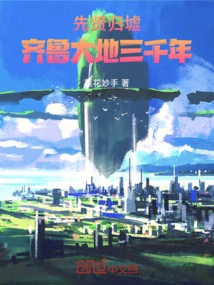
先贤归墟:齐鲁大地三千年
Lotus Hand
From the time Shaohao of Dongyi opened the border to the present day, the land of Qilu has always been the spiritual highland of Chinese civilization. The souls of sages such as Confucius, Mencius, Sun Wu, and Mr. Liaozhai dwell in the heavenly palace, overlooking the vicissitudes of their homeland. They can no longer suppress their nostalgia and return through the gate of time and space. They witnessed the mingling of tribes in ancient times, the contention of hundreds of schools of thought during the Spring and Autumn Period and the Warring States, witnessed the majesty of the Qin and Han Dynasties, and the elegance of the Tang and Song Dynasties. During the wars and prosperous times, they used their thoughts as their lamps, their skills as their foundation, and their loyalty as their bones to protect the cultural heritage of Qilu. Fantasy brushstrokes interweave historical smoke and folklore legends embellish the long scroll of civilization, which not only reproduces the magnificence of three thousand years of changes in mountains and rivers, but also digs deeper into the "timeless" Qilu spiritual core. This is an affectionate dialogue between the sages and their homeland, a cultural epic that carries the root and soul of China, allowing the millennium-old character to be reborn in the new era.
From the time Shaohao of Dongyi opened the border to the present day, the land of Qilu has always been the spiritual highland of Chinese civilization. The souls of sages such as Confucius, Mencius, Sun Wu, and Mr. Liaozhai dwell in the heavenly palace, overlooking the vicissitudes of their homeland. They can no longer suppress their nostalgia and return through the gate of time and space. They witnessed the mingling of tribes in ancient times, the contention of hundreds of schools of thought during the Spring and Autumn Period and the Warring States, witnessed the majesty of the Qin and Han Dynasties, and the elegance of the Tang and Song Dynasties. During the wars and prosperous times, they used their thoughts as their lamps, their skills as their foundation, and their loyalty as their bones to protect the cultural heritage of Qilu. Fantasy brushstrokes interweave historical smoke and folklore legends embellish the long scroll of civilization, which not only reproduces the magnificence of three thousand years of changes in mountains and rivers, but also digs deeper into the "timeless" Qilu spiritual core. This is an affectionate dialogue between the sages and their homeland, a cultural epic that carries the root and soul of China, allowing the millennium-old character to be reborn in the new era.
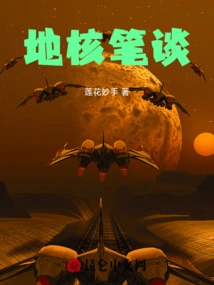
Earth Core Written Talk
Science Fiction地核笔谈
Lotus Hand
The deceleration of the local nuclear rotation has opened a crack in the global geological crisis. Human beings have used large and heavy equipment such as the "Kunlun" nuclear communication station and the "Prometheus" detector as blades to explore the heart of the earth for a way to survive. Quantum entanglement builds a communication bridge between the earth's core and the surface, controllable nuclear fusion provides an energy blade that penetrates the earth's core, and the gears of hard-core technology rotate at high speed in desperate places such as the Kunlun Mountains and the Mariana Trench. In the high-temperature and high-pressure core communication test, Lin Yan and the interdisciplinary team not only had to decipher the strange movements of magma fluids, but also had to deal with the undercurrent of transnational scientific research competition, and they also had to face the abyss of technological ethics and human choices - when quantum communication can monitor the "pulse" of the earth's core, when geological modification technology can reshape plate movement, human society's resource allocation rules, national boundary definitions, and emotional connection methods are being completely rewritten. From the main control room in the hinterland of Kunlun to the global joint scientific research headquarters, from the warm persistence in the late-night laboratory to the sharing of life and death in the face of disasters, technology is the armor to resist crises and the mirror that reflects people's hearts. In this two-way rush between technology and civilization, some people are burning with enthusiasm for the truth, some are crossing mountains and seas for protection, and some are struggling between power and conscience. When the echo of the core resonates with the tremors of the human heart, mankind will eventually write the answer to civilization that belongs to the deep core era at the crossroads of destruction and rebirth.
The deceleration of the local nuclear rotation has opened a crack in the global geological crisis. Human beings have used large and heavy equipment such as the "Kunlun" nuclear communication station and the "Prometheus" detector as blades to explore the heart of the earth for a way to survive. Quantum entanglement builds a communication bridge between the earth's core and the surface, controllable nuclear fusion provides an energy blade that penetrates the earth's core, and the gears of hard-core technology rotate at high speed in desperate places such as the Kunlun Mountains and the Mariana Trench. In the high-temperature and high-pressure core communication test, Lin Yan and the interdisciplinary team not only had to decipher the strange movements of magma fluids, but also had to deal with the undercurrent of transnational scientific research competition, and they also had to face the abyss of technological ethics and human choices - when quantum communication can monitor the "pulse" of the earth's core, when geological modification technology can reshape plate movement, human society's resource allocation rules, national boundary definitions, and emotional connection methods are being completely rewritten. From the main control room in the hinterland of Kunlun to the global joint scientific research headquarters, from the warm persistence in the late-night laboratory to the sharing of life and death in the face of disasters, technology is the armor to resist crises and the mirror that reflects people's hearts. In this two-way rush between technology and civilization, some people are burning with enthusiasm for the truth, some are crossing mountains and seas for protection, and some are struggling between power and conscience. When the echo of the core resonates with the tremors of the human heart, mankind will eventually write the answer to civilization that belongs to the deep core era at the crossroads of destruction and rebirth.
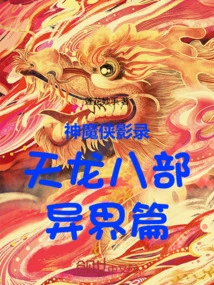
神魔侠影录天龙八部异界篇
Lotus Hand
"The Legend of Gods and Demons" tells the story of Nezha and Ao Bing, who triggered the ancient artifact "Chaos Clock" due to the decisive battle in the East China Sea. They were involved in the rift in time and space and broke into the world of "The Eight Parts of the Dragon" written by Jin Yong in the Northern Song Dynasty. The two met Sun Wukong's master and apprentice who accidentally entered this world, and found that this was actually the "Saha Experimental Ground" where Buddhism and Taoism were tested. Undercurrents surged in the world of the Northern Song Dynasty: Duan Yu deciphered the tortoise-shell prophecy to reveal the nature of the world, Murong Fu joined forces with King Jinlun to establish the "Heaven-Defying Alliance", and the "Tianji Pavilion" established by modern time travelers tried to rewrite history with technology. Nezha resurrected A'Zhu with the lotus root technique and created a "man-made creature"; Ao Bing combined the Eighteen Dragon Subduing Palms with the dragon clan's secret technique to create a unique skill that burns the sky; Sun Wukong awakened the "Fighting Buddha's Heart" in the Zhenlong chess game. Everyone competed for the Kunlun Mirror, the Nine-ring Tin Staff and other artifacts to resist the backlash of the corrective power of Heaven, and finally uncovered the plane collapse conspiracy laid out by the founder of the Xiaoyao Sect. The story unfolds in a multi-line narrative and involves grand events such as the rewriting of Yanmen Pass, the freezing of the East China Sea by the Four Seas Returning Formation, and the siege of the Thirty-Third Heaven. Finally, the protagonists break up to fill the gap in heaven, and end with the cash hoop and black iron at the bottom of the West Lake, leaving behind suspenseful foreshadowing for modern archaeologists to decipher time and space.
"The Legend of Gods and Demons" tells the story of Nezha and Ao Bing, who triggered the ancient artifact "Chaos Clock" due to the decisive battle in the East China Sea. They were involved in the rift in time and space and broke into the world of "The Eight Parts of the Dragon" written by Jin Yong in the Northern Song Dynasty. The two met Sun Wukong's master and apprentice who accidentally entered this world, and found that this was actually the "Saha Experimental Ground" where Buddhism and Taoism were tested. Undercurrents surged in the world of the Northern Song Dynasty: Duan Yu deciphered the tortoise-shell prophecy to reveal the nature of the world, Murong Fu joined forces with King Jinlun to establish the "Heaven-Defying Alliance", and the "Tianji Pavilion" established by modern time travelers tried to rewrite history with technology. Nezha resurrected A'Zhu with the lotus root technique and created a "man-made creature"; Ao Bing combined the Eighteen Dragon Subduing Palms with the dragon clan's secret technique to create a unique skill that burns the sky; Sun Wukong awakened the "Fighting Buddha's Heart" in the Zhenlong chess game. Everyone competed for the Kunlun Mirror, the Nine-ring Tin Staff and other artifacts to resist the backlash of the corrective power of Heaven, and finally uncovered the plane collapse conspiracy laid out by the founder of the Xiaoyao Sect. The story unfolds in a multi-line narrative and involves grand events such as the rewriting of Yanmen Pass, the freezing of the East China Sea by the Four Seas Returning Formation, and the siege of the Thirty-Third Heaven. Finally, the protagonists break up to fill the gap in heaven, and end with the cash hoop and black iron at the bottom of the West Lake, leaving behind suspenseful foreshadowing for modern archaeologists to decipher time and space.
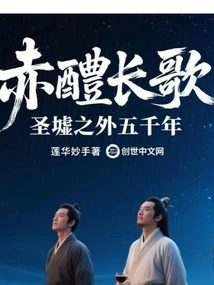
赤醴长歌:圣墟之外五千年
Lotus Hand
On the banks of the Chishui River, in Langjiu Manor, the Yuye wine in the Holy Market world has lost its soul. Du Kang, Li Bai, Liu Ling, Su Shi, Li Qingzhao, Tao Yuanming - six sages in wine who once ascended to immortality, woke up in the rift of time and space. They drank the tasteless fairy wine and lamented: "The wine soul is dead, how can we talk about immortality?" Du Kang swore in the name of the God of Dionysus that he would return to the world and travel back five thousand years to reunite the fragments of the wine soul scattered in the long river of history. From ancient times to the Qin and Han Dynasties, Du Kang transformed into a shaman and brewed the first pot of turbid wine with Yi Di in the mountains of Bashu. However, he witnessed Qu Yuan using the soul of wine to slay the Dongting water demon in the Chu region. During the war of the Tang Dynasty, Li Bai drunkenly danced the green lotus sword and sealed the Tibetan demon monk with the rhyme of "Jiu Jin Jiu". Liu Ling broke the ban on alcohol in Yelang Kingdom. God's damnation; during the troubled years of the Song and Yuan Dynasties, Su Shi brewed "Zhen Yi Liquor" in Huangzhou to relieve the plague in the south of the Yangtze River; Li Qingzhao disguised himself as a man to escort the ancient Sichuan Salt Road, and used the spirit of wine to quell the chieftain rebellion; with the ingenuity of the Ming and Qing dynasties, immortals helped Maotai Town innovate the "sand-returning technology", and used the heroic efforts of the Red Army to cross Chishui four times to pass on the fire of wine... From the shaman altar in Chishui River to the stone carvings of the "Jiu Sutra" in Wumeng Mountain; resisting the erosion of opium and awakening the drunken soul of the late Qing Dynasty in the torrent of history. In the end, they poured the spirits of wine from past dynasties into the Chishui River and restarted the cycle of reincarnation with Tao Yuanming's peach blossom wine. Li Bai swung his sword and carved "The Wine Will Enter" to anchor the wine veins of heaven and earth. This is an epic that uses wine as an eye to survey Chinese civilization: the confrontation between poetry and swords, the philosophy of drunkenness and sobriety, and the dance between mortals and immortals. When the jade liquid wine turns into a long cultural river that runs through the three realms, you will know that the real immortality is just the five thousand years of tears in the eyes of mortals when they raise their glasses.
On the banks of the Chishui River, in Langjiu Manor, the Yuye wine in the Holy Market world has lost its soul. Du Kang, Li Bai, Liu Ling, Su Shi, Li Qingzhao, Tao Yuanming - six sages in wine who once ascended to immortality, woke up in the rift of time and space. They drank the tasteless fairy wine and lamented: "The wine soul is dead, how can we talk about immortality?" Du Kang swore in the name of the God of Dionysus that he would return to the world and travel back five thousand years to reunite the fragments of the wine soul scattered in the long river of history. From ancient times to the Qin and Han Dynasties, Du Kang transformed into a shaman and brewed the first pot of turbid wine with Yi Di in the mountains of Bashu. However, he witnessed Qu Yuan using the soul of wine to slay the Dongting water demon in the Chu region. During the war of the Tang Dynasty, Li Bai drunkenly danced the green lotus sword and sealed the Tibetan demon monk with the rhyme of "Jiu Jin Jiu". Liu Ling broke the ban on alcohol in Yelang Kingdom. God's damnation; during the troubled years of the Song and Yuan Dynasties, Su Shi brewed "Zhen Yi Liquor" in Huangzhou to relieve the plague in the south of the Yangtze River; Li Qingzhao disguised himself as a man to escort the ancient Sichuan Salt Road, and used the spirit of wine to quell the chieftain rebellion; with the ingenuity of the Ming and Qing dynasties, immortals helped Maotai Town innovate the "sand-returning technology", and used the heroic efforts of the Red Army to cross Chishui four times to pass on the fire of wine... From the shaman altar in Chishui River to the stone carvings of the "Jiu Sutra" in Wumeng Mountain; resisting the erosion of opium and awakening the drunken soul of the late Qing Dynasty in the torrent of history. In the end, they poured the spirits of wine from past dynasties into the Chishui River and restarted the cycle of reincarnation with Tao Yuanming's peach blossom wine. Li Bai swung his sword and carved "The Wine Will Enter" to anchor the wine veins of heaven and earth. This is an epic that uses wine as an eye to survey Chinese civilization: the confrontation between poetry and swords, the philosophy of drunkenness and sobriety, and the dance between mortals and immortals. When the jade liquid wine turns into a long cultural river that runs through the three realms, you will know that the real immortality is just the five thousand years of tears in the eyes of mortals when they raise their glasses.