Library
Browse and search books
10 novels found
Three Autumns in One Day
General Fiction一日三秋
Liu Zhenyun
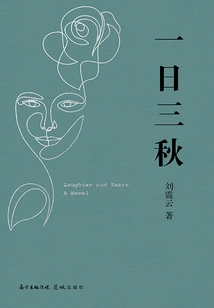
The novel "Three Autumns in One Day" quotes the folk legend of "Hua Er Niang", uses imaginary stories to describe the paintings painted by Uncle Liu in "my" memory during his lifetime, and explores the nature of Yanjin people's humor. Chen Changjie, Li Yansheng, and Cherry were selected from the two-meter-square troupe character sketches, and the characters that appeared around the protagonists included drivers, street sweepers, and restaurant owners. The life experiences and stories of several families were connected in series, and the forgotten emotions and thoughts of the world were recreated. Later, it leads to the ordinary father and son's understanding of the truth of life after experiencing the hardships of life. They realized at different times and places: an important moment in life is like three autumns in one day, but this moment will never come again. The novel is full of black humor, philosophy contained in secular life, and imagination that breaks down the barriers of daily life. Liu Zhenyun writes about human nature, land and destiny in reality and imagination. It is both humor and satire; it is both magic and reality.
The novel "Three Autumns in One Day" quotes the folk legend of "Hua Er Niang", uses imaginary stories to describe the paintings painted by Uncle Liu in "my" memory during his lifetime, and explores the nature of Yanjin people's humor. Chen Changjie, Li Yansheng, and Cherry were selected from the two-meter-square troupe character sketches, and the characters that appeared around the protagonists included drivers, street sweepers, and restaurant owners. The life experiences and stories of several families were connected in series, and the forgotten emotions and thoughts of the world were recreated. Later, it leads to the ordinary father and son's understanding of the truth of life after experiencing the hardships of life. They realized at different times and places: an important moment in life is like three autumns in one day, but this moment will never come again. The novel is full of black humor, philosophy contained in secular life, and imagination that breaks down the barriers of daily life. Liu Zhenyun writes about human nature, land and destiny in reality and imagination. It is both humor and satire; it is both magic and reality.
故乡相处流传(典藏版)
Liu Zhenyun
"The Legend of Living Together in Hometown" is a full-length fable written by the contemporary Chinese writer Liu Zhenyun. While the author is telling his story freely, confidently, and truthfully, he is also constantly using the past to satirize the present and criticize the past and present. Some of the author's morals may not be understood by readers, but readers can understand many morals that the author may not have expected. Both its drama and humor are top-notch.
"The Legend of Living Together in Hometown" is a full-length fable written by the contemporary Chinese writer Liu Zhenyun. While the author is telling his story freely, confidently, and truthfully, he is also constantly using the past to satirize the present and criticize the past and present. Some of the author's morals may not be understood by readers, but readers can understand many morals that the author may not have expected. Both its drama and humor are top-notch.
I'm Not Pan Jinlian (collector's Edition)
General Fiction我不是潘金莲(典藏版)
Liu Zhenyun
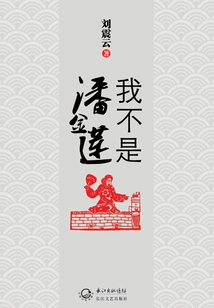
The original work of the movie "I'm Not Pan Jinlian" of the same name. The famous contemporary writer Liu Zhenyun's first novel after winning the "Mao Award" is also his first novel with a female protagonist. Being close to reality and describing the suffering of the people makes this novel a companion piece to "One Sentence is Worth Ten Thousand Sentences". Like "One Sentence is Worth Ten Thousand Sentences", the story is about a cuckold who wants to kill someone. In fact, he just wants to find someone to talk to in the crowd. The difference is that in this book, it is a cuckold woman. From killing people to tormenting people, she just wants to correct a sentence in the crowd. After going through a ridiculous divorce case, this woman who had wrongfully accused Pan Jinlian had to prove that the previous divorce was false, and she also wanted to prove that she was not Pan Jinlian, so she started to file a lawsuit. As a result, she was sued from the town to the county, city, and even to the National People's Congress in Beijing. Not only did she fail to say that the lie was false, but she was also dragged down by the court president, dean, county magistrate, and even the mayor. Even during the "Two Sessions", her province, city, and county staged a scene of siege and interception, which lasted for twenty years. Liu Zhenyun uses a seemingly absurd story to tell the real common sense of life. His writing stance makes him one of the few realist writers in the contemporary literary world who can dialogue with the times, people and country.
The original work of the movie "I'm Not Pan Jinlian" of the same name. The famous contemporary writer Liu Zhenyun's first novel after winning the "Mao Award" is also his first novel with a female protagonist. Being close to reality and describing the suffering of the people makes this novel a companion piece to "One Sentence is Worth Ten Thousand Sentences". Like "One Sentence is Worth Ten Thousand Sentences", the story is about a cuckold who wants to kill someone. In fact, he just wants to find someone to talk to in the crowd. The difference is that in this book, it is a cuckold woman. From killing people to tormenting people, she just wants to correct a sentence in the crowd. After going through a ridiculous divorce case, this woman who had wrongfully accused Pan Jinlian had to prove that the previous divorce was false, and she also wanted to prove that she was not Pan Jinlian, so she started to file a lawsuit. As a result, she was sued from the town to the county, city, and even to the National People's Congress in Beijing. Not only did she fail to say that the lie was false, but she was also dragged down by the court president, dean, county magistrate, and even the mayor. Even during the "Two Sessions", her province, city, and county staged a scene of siege and interception, which lasted for twenty years. Liu Zhenyun uses a seemingly absurd story to tell the real common sense of life. His writing stance makes him one of the few realist writers in the contemporary literary world who can dialogue with the times, people and country.
Reviewing the Past 1942 (collector's Edition)
General Fiction温故一九四二(典藏版)
Liu Zhenyun
"Reviewing the Past 1942" is an investigative novella by writer Liu Zhenyun, which tells a story about hunger. In 1942, China's Anti-Japanese War was in a strategic stalemate. There was a severe drought in Henan, and 30 million people left their homes to escape famine in Shaanxi. "I" relived that period of history, interviewed the memories of "my grandmother" and "my second uncle Peanut", and recorded this disaster that has almost been forgotten by this nation. After the novel was published, Wang Shuo recommended Feng Xiaogang to make a movie several times. However, from the novel to the movie, the project was approved, rejected, revised, and then approved again... After nineteen years of hardship, "1942" was finally released. In the script, Liu Zhenyun uses the escape routes of landlord Lao Fan, long-term worker Shuan Zhu, tenant Xianlu and his daughter-in-law Huazhi's family as the main line, and the mediation of American Time magazine reporter Bai Xiude and others, as well as the dire situation of the National Government of Chiang Kai-shek as the sub-line. It reproduces the survival attitude of our nation during the natural disaster in Henan in a more three-dimensional and vivid way than the novel.
"Reviewing the Past 1942" is an investigative novella by writer Liu Zhenyun, which tells a story about hunger. In 1942, China's Anti-Japanese War was in a strategic stalemate. There was a severe drought in Henan, and 30 million people left their homes to escape famine in Shaanxi. "I" relived that period of history, interviewed the memories of "my grandmother" and "my second uncle Peanut", and recorded this disaster that has almost been forgotten by this nation. After the novel was published, Wang Shuo recommended Feng Xiaogang to make a movie several times. However, from the novel to the movie, the project was approved, rejected, revised, and then approved again... After nineteen years of hardship, "1942" was finally released. In the script, Liu Zhenyun uses the escape routes of landlord Lao Fan, long-term worker Shuan Zhu, tenant Xianlu and his daughter-in-law Huazhi's family as the main line, and the mediation of American Time magazine reporter Bai Xiude and others, as well as the dire situation of the National Government of Chiang Kai-shek as the sub-line. It reproduces the survival attitude of our nation during the natural disaster in Henan in a more three-dimensional and vivid way than the novel.
Hometown World Yellow Flowers (collector's Edition)
General Fiction故乡天下黄花(典藏版)
Liu Zhenyun
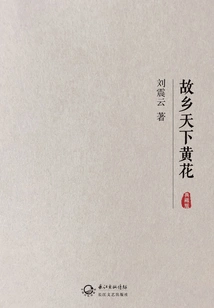
"Yellow Flowers in My Hometown" tells the story of Sun, the head of a village in the north, who was strangled to death in a kiln in the early years of the Republic of China. A murder case forged a feud between two families for generations. Things changed, stars changed, dynasties changed, who became the village chief, greedy for power and sex, and still fought and killed, blood spilled on the ground... A small village actually showed the social history of ancient China for half a century. The language of the novel is concise and humorous, and the characters and stories are endlessly charming, fully expressing the writer's literary character.
"Yellow Flowers in My Hometown" tells the story of Sun, the head of a village in the north, who was strangled to death in a kiln in the early years of the Republic of China. A murder case forged a feud between two families for generations. Things changed, stars changed, dynasties changed, who became the village chief, greedy for power and sex, and still fought and killed, blood spilled on the ground... A small village actually showed the social history of ancient China for half a century. The language of the novel is concise and humorous, and the characters and stories are endlessly charming, fully expressing the writer's literary character.
一句顶一万句(典藏版)
Liu Zhenyun
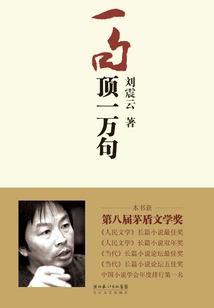
This book is the result of four years of hard work by the famous writer Liu Zhenyun. Hailed by the top five critics in Beijing as "China's One Hundred Years of Solitude (a work by Nobel Prize-winning writer Marquez)", it is Liu Zhenyun's most mature and majestic work to date. This novel has washed away all the lead and returned to its original nature. The writing style is always close to the suffering land and the people at the bottom who are as humble as grass. This is a rare masterpiece in the contemporary literary world that dares to face the truth. Famous critic Zhang Yiwu said that the book is Liu Zhenyun's "most ambitious and imaginative work, and the result of his most tenacious efforts to transcend himself." We believe that this book is the only best-selling and long-selling work among Liu Zhenyun's works that can win awards and remain in literary history.
This book is the result of four years of hard work by the famous writer Liu Zhenyun. Hailed by the top five critics in Beijing as "China's One Hundred Years of Solitude (a work by Nobel Prize-winning writer Marquez)", it is Liu Zhenyun's most mature and majestic work to date. This novel has washed away all the lead and returned to its original nature. The writing style is always close to the suffering land and the people at the bottom who are as humble as grass. This is a rare masterpiece in the contemporary literary world that dares to face the truth. Famous critic Zhang Yiwu said that the book is Liu Zhenyun's "most ambitious and imaginative work, and the result of his most tenacious efforts to transcend himself." We believe that this book is the only best-selling and long-selling work among Liu Zhenyun's works that can win awards and remain in literary history.
My Name is Liu Yuejin (collector's Edition)
General Fiction我叫刘跃进(典藏版)
Liu Zhenyun
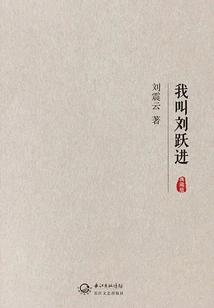
Liu Yuejin was a migrant worker at a construction site in Beijing. When he was on the street, someone robbed his bag, which contained all his property. While looking for the bag, he picked up another bag. This bag contained a huge secret, involving several lives in the upper class. So several groups of people looking for the bag started looking for Liu Yuejin again... Liu Yuejin was like an innocent sheep who accidentally broke into a pack of wolves. He considered himself unlucky but was not pessimistic. The problem is that all the wolves in the world are dressed in sheep's clothing and are affable; while all the sheep in the world are pretending to be wolves with big tails and showing off.
Liu Yuejin was a migrant worker at a construction site in Beijing. When he was on the street, someone robbed his bag, which contained all his property. While looking for the bag, he picked up another bag. This bag contained a huge secret, involving several lives in the upper class. So several groups of people looking for the bag started looking for Liu Yuejin again... Liu Yuejin was like an innocent sheep who accidentally broke into a pack of wolves. He considered himself unlucky but was not pessimistic. The problem is that all the wolves in the world are dressed in sheep's clothing and are affable; while all the sheep in the world are pretending to be wolves with big tails and showing off.
Mobile Phone (collector's Edition)
General Fiction手机(典藏版)
Liu Zhenyun
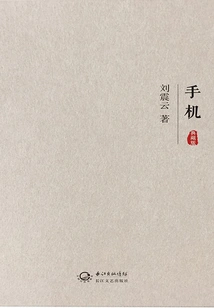
"Mobile Phone" is a classic novel by the contemporary famous writer Liu Zhenyun. It was adapted into a movie of the same name by Feng Xiaogang at the same time it was published in 2003, and its sales volume ranked first in the book rankings. In May 2010, the TV series adapted from the novel was simultaneously launched on the four satellite TV stations across the country. In the early stage of the promotion of the TV series, it has been enthusiastically pursued by TV stations across the country and has received a strong response. The TV series combines the mobile story line to show the original appearance of the novel's content. The co-starring roles of Wang Zhiwen and Chen Daoming will add further charm to the novel.
"Mobile Phone" is a classic novel by the contemporary famous writer Liu Zhenyun. It was adapted into a movie of the same name by Feng Xiaogang at the same time it was published in 2003, and its sales volume ranked first in the book rankings. In May 2010, the TV series adapted from the novel was simultaneously launched on the four satellite TV stations across the country. In the early stage of the promotion of the TV series, it has been enthusiastically pursued by TV stations across the country and has received a strong response. The TV series combines the mobile story line to show the original appearance of the novel's content. The co-starring roles of Wang Zhiwen and Chen Daoming will add further charm to the novel.
One Sentence is Worth Ten Thousand Sentences
General Fiction一句顶一万句
Liu Zhenyun
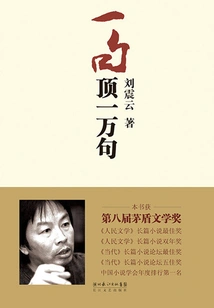
The winning work of the 8th Mao Dun Literature Award, the movie of the same name will be released on November 4. From the difficulty of finding the truth and the necessity of lying in "Cell Phone" to the contingency and inevitability of interpersonal relationships in "My Name is Liu Yuejin", the genius writer Liu Zhenyun spent three years writing "One Sentence is Worth Ten Thousand Sentences" to survive and to "find a close friend". The lonely and helpless Wu Moxi lost his only adopted daughter who could "speak", so he walked out of Yanjin in order to find her; the second half of the novel is written in the present: Niu Aiguo, the son of Wu Moxi's adopted daughter, also went to Yanjin in order to escape loneliness and find a "speakable" friend. One ran away and the other returned. They searched and spoke different words to different people, trying to express their inner conflicts and helplessness. From the wild countryside to the busy metropolis, from the middle of the 20th century to the beginning of the new century, whether they are high-ranking county magistrates, town mayors, or ordinary people such as teachers, barbers, butchers, dyers, missionaries, etc., When speaking becomes the only channel of communication, and language cannot go straight to the core, loneliness will always be with you! Ordinary people's events are connected into extraordinary stories. Liu Zhenyun said that this is his most satisfying work so far.
The winning work of the 8th Mao Dun Literature Award, the movie of the same name will be released on November 4. From the difficulty of finding the truth and the necessity of lying in "Cell Phone" to the contingency and inevitability of interpersonal relationships in "My Name is Liu Yuejin", the genius writer Liu Zhenyun spent three years writing "One Sentence is Worth Ten Thousand Sentences" to survive and to "find a close friend". The lonely and helpless Wu Moxi lost his only adopted daughter who could "speak", so he walked out of Yanjin in order to find her; the second half of the novel is written in the present: Niu Aiguo, the son of Wu Moxi's adopted daughter, also went to Yanjin in order to escape loneliness and find a "speakable" friend. One ran away and the other returned. They searched and spoke different words to different people, trying to express their inner conflicts and helplessness. From the wild countryside to the busy metropolis, from the middle of the 20th century to the beginning of the new century, whether they are high-ranking county magistrates, town mayors, or ordinary people such as teachers, barbers, butchers, dyers, missionaries, etc., When speaking becomes the only channel of communication, and language cannot go straight to the core, loneliness will always be with you! Ordinary people's events are connected into extraordinary stories. Liu Zhenyun said that this is his most satisfying work so far.
I Am Not Pan Jinlian
General Fiction我不是潘金莲
Liu Zhenyun
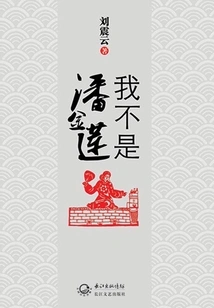
The film adapted from the book was directed by Feng Xiaogang. "I'm Not Pan Jinlian" is the first novel by the famous contemporary writer Liu Zhenyun after winning the Mao Prize. It is also his first novel with a female protagonist. Being close to reality and describing the suffering of the people makes this novel a companion piece to "One Sentence is Worth Ten Thousand Sentences". Like "One Sentence is Worth Ten Thousand Sentences", the story is about a cuckold who wants to kill someone. In fact, he just wants to find someone to talk to in the crowd. The difference is that in the book, a cuckold woman goes from killing people to tormenting people, just to correct a sentence in the crowd.
The film adapted from the book was directed by Feng Xiaogang. "I'm Not Pan Jinlian" is the first novel by the famous contemporary writer Liu Zhenyun after winning the Mao Prize. It is also his first novel with a female protagonist. Being close to reality and describing the suffering of the people makes this novel a companion piece to "One Sentence is Worth Ten Thousand Sentences". Like "One Sentence is Worth Ten Thousand Sentences", the story is about a cuckold who wants to kill someone. In fact, he just wants to find someone to talk to in the crowd. The difference is that in the book, a cuckold woman goes from killing people to tormenting people, just to correct a sentence in the crowd.