Library
Browse and search books
7 novels found
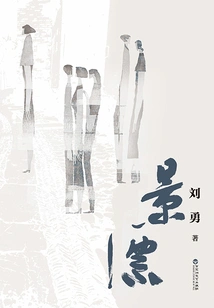
Beautiful Scenery
General Fiction景漂
Liu Yong
"Jingdiao" is a novel with realistic themes that describes the contemporary Jingdezhen ceramic youth who devote their passionate youth to persisting in the dream of ceramics. The work closely follows the strategic layout of a culturally strong province, uses the much-anticipated "scenery drifting" theme as creative elements, and focuses on telling the story of Jiangxi. Leaders and experts attending the meeting fully affirmed the creative positioning of the work, and demonstrated on the plot structure, character creation and creative techniques, etc., And reviewed the work from multiple perspectives such as publishing, creation, and IP extension.
"Jingdiao" is a novel with realistic themes that describes the contemporary Jingdezhen ceramic youth who devote their passionate youth to persisting in the dream of ceramics. The work closely follows the strategic layout of a culturally strong province, uses the much-anticipated "scenery drifting" theme as creative elements, and focuses on telling the story of Jiangxi. Leaders and experts attending the meeting fully affirmed the creative positioning of the work, and demonstrated on the plot structure, character creation and creative techniques, etc., And reviewed the work from multiple perspectives such as publishing, creation, and IP extension.
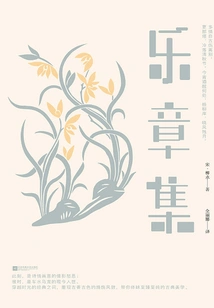
Collection of Movements
Literature乐章集
Liu Yong
The "Collection of Movements" written by Liu Yong mainly describes the emotions of men and women, urban life, city scenery, and travel. It is full of emotions and moving, and the text is elegant and graceful, combining elegance and vulgarity, and has a very high aesthetic value. In addition, "Collection of Movements" develops the form of the words and changes the taste of the words, making them easy to understand and catchy, which can be sung for a while and "sung all over the world". Zheng Wenzhuo, a poet in the Qing Dynasty, commented on Liu's Ci: "The high-pitched tone does not reduce the purity, and the long tune can especially use the majestic spirit and fresh energy to write the wonderful feelings and make the sound of swing."
The "Collection of Movements" written by Liu Yong mainly describes the emotions of men and women, urban life, city scenery, and travel. It is full of emotions and moving, and the text is elegant and graceful, combining elegance and vulgarity, and has a very high aesthetic value. In addition, "Collection of Movements" develops the form of the words and changes the taste of the words, making them easy to understand and catchy, which can be sung for a while and "sung all over the world". Zheng Wenzhuo, a poet in the Qing Dynasty, commented on Liu's Ci: "The high-pitched tone does not reduce the purity, and the long tune can especially use the majestic spirit and fresh energy to write the wonderful feelings and make the sound of swing."
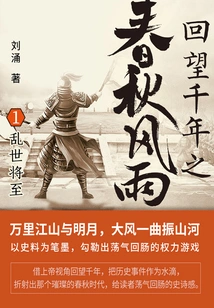
回望千年之春秋风雨1:乱世将至
Liu Yong
This book is the first work in the series of looking back at the millennium. This work sorts out a clear main line of the Spring and Autumn Period from the complex historical materials, which can help readers grasp the historical process of the Spring and Autumn Period from a macro perspective. The main line of Spring and Autumn is mainly divided into four stages. The early Spring and Autumn Period - after King Ping moved eastward, the Three Little Overlords of the Spring and Autumn Period headed by Zheng Zhuanggong supported the main line of the Early Spring and Autumn Period. The work revolves around the perspectives of Zheng, Qi and Chu, telling the historical events of the Early Spring and Autumn Period; the middle stage of the Spring and Autumn Period - after the rise of Duke Huan of Qi, the main line of the Early Spring and Autumn Period is continued, and the work revolves around The struggle for hegemony between Qi and Chu unfolds, telling the historical events from Duke Huan's first hegemony of the Central Plains to the battle between Qi and Chu over the Yangtze River and Huaihe River; the late Spring and Autumn Period - introduces the background of Qu Wo Dai Yi and the rise of the Jin State, taking Jin Wengong Chong'er's exile in various countries as the main line, and restoring the beginning and end of the Battle of Chengpu from multiple perspectives such as politics, military, and geography. From the Battle of Chengpu in 632 BC to the second annihilation of the military alliance in 546 BC, in nearly a hundred years, the struggle between Jin and Chu for hegemony became the main theme of the era. At the end of the Spring and Autumn Period - after the second war and alliance, the countries of the Spring and Autumn Period had a truce for forty years. While the external conflicts of each country were alleviated, the Jin, Chu, and Qi countries all experienced internal worries to varying degrees. The scholar-bureaucrat class rose up and gradually emptied the power of the princes and kings. This phenomenon had a profound impact on later generations, such as the division of the three families into Jin and the succession of the Tian family to Qi. During the same period, Wu and Yue in the southeast region rose one after another, pushing Wu and Yue's struggle for hegemony to its climax. In the end, King Gou Jian of Yue succeeded in his revenge. This established the pattern of the four great powers of Jin, Chu, Qi and Yue in the early Warring States Period.
This book is the first work in the series of looking back at the millennium. This work sorts out a clear main line of the Spring and Autumn Period from the complex historical materials, which can help readers grasp the historical process of the Spring and Autumn Period from a macro perspective. The main line of Spring and Autumn is mainly divided into four stages. The early Spring and Autumn Period - after King Ping moved eastward, the Three Little Overlords of the Spring and Autumn Period headed by Zheng Zhuanggong supported the main line of the Early Spring and Autumn Period. The work revolves around the perspectives of Zheng, Qi and Chu, telling the historical events of the Early Spring and Autumn Period; the middle stage of the Spring and Autumn Period - after the rise of Duke Huan of Qi, the main line of the Early Spring and Autumn Period is continued, and the work revolves around The struggle for hegemony between Qi and Chu unfolds, telling the historical events from Duke Huan's first hegemony of the Central Plains to the battle between Qi and Chu over the Yangtze River and Huaihe River; the late Spring and Autumn Period - introduces the background of Qu Wo Dai Yi and the rise of the Jin State, taking Jin Wengong Chong'er's exile in various countries as the main line, and restoring the beginning and end of the Battle of Chengpu from multiple perspectives such as politics, military, and geography. From the Battle of Chengpu in 632 BC to the second annihilation of the military alliance in 546 BC, in nearly a hundred years, the struggle between Jin and Chu for hegemony became the main theme of the era. At the end of the Spring and Autumn Period - after the second war and alliance, the countries of the Spring and Autumn Period had a truce for forty years. While the external conflicts of each country were alleviated, the Jin, Chu, and Qi countries all experienced internal worries to varying degrees. The scholar-bureaucrat class rose up and gradually emptied the power of the princes and kings. This phenomenon had a profound impact on later generations, such as the division of the three families into Jin and the succession of the Tian family to Qi. During the same period, Wu and Yue in the southeast region rose one after another, pushing Wu and Yue's struggle for hegemony to its climax. In the end, King Gou Jian of Yue succeeded in his revenge. This established the pattern of the four great powers of Jin, Chu, Qi and Yue in the early Warring States Period.
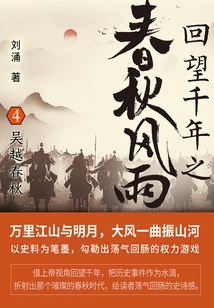
Looking Back at the Thousand Years of Spring and Autumn Storm 4: Wu Yue Spring and Autumn Period
History回望千年之春秋风雨4:吴越春秋
Liu Yong
This book is the first work in the series of looking back at the millennium. This work sorts out a clear main line of the Spring and Autumn Period from the complex historical materials, which can help readers grasp the historical process of the Spring and Autumn Period from a macro perspective. The main line of Spring and Autumn is mainly divided into four stages. The early Spring and Autumn Period - after King Ping moved eastward, the Three Little Overlords of the Spring and Autumn Period headed by Zheng Zhuanggong supported the main line of the Early Spring and Autumn Period. The work revolves around the perspectives of Zheng, Qi and Chu, telling the historical events of the Early Spring and Autumn Period; the middle stage of the Spring and Autumn Period - after the rise of Duke Huan of Qi, the main line of the Early Spring and Autumn Period is continued, and the work revolves around The struggle for hegemony between Qi and Chu unfolds, telling the historical events from Duke Huan's first hegemony of the Central Plains to the battle between Qi and Chu over the Yangtze River and Huaihe River; the late Spring and Autumn Period - introduces the background of Qu Wo Dai Yi and the rise of the Jin State, taking Jin Wengong Chong'er's exile in various countries as the main line, and restoring the beginning and end of the Battle of Chengpu from multiple perspectives such as politics, military, and geography. From the Battle of Chengpu in 632 BC to the second annihilation of the military alliance in 546 BC, in nearly a hundred years, the struggle between Jin and Chu for hegemony became the main theme of the era. At the end of the Spring and Autumn Period - after the second war and alliance, the countries of the Spring and Autumn Period had a truce for forty years. While the external conflicts of each country were alleviated, the Jin, Chu, and Qi countries all experienced internal worries to varying degrees. The scholar-bureaucrat class rose up and gradually emptied the power of the princes and kings. This phenomenon had a profound impact on later generations, such as the division of the three families into Jin and the succession of the Tian family to Qi. During the same period, Wu and Yue in the southeast region rose one after another, pushing Wu and Yue's struggle for hegemony to its climax. In the end, King Gou Jian of Yue succeeded in his revenge. This established the pattern of the four great powers of Jin, Chu, Qi and Yue in the early Warring States Period.
This book is the first work in the series of looking back at the millennium. This work sorts out a clear main line of the Spring and Autumn Period from the complex historical materials, which can help readers grasp the historical process of the Spring and Autumn Period from a macro perspective. The main line of Spring and Autumn is mainly divided into four stages. The early Spring and Autumn Period - after King Ping moved eastward, the Three Little Overlords of the Spring and Autumn Period headed by Zheng Zhuanggong supported the main line of the Early Spring and Autumn Period. The work revolves around the perspectives of Zheng, Qi and Chu, telling the historical events of the Early Spring and Autumn Period; the middle stage of the Spring and Autumn Period - after the rise of Duke Huan of Qi, the main line of the Early Spring and Autumn Period is continued, and the work revolves around The struggle for hegemony between Qi and Chu unfolds, telling the historical events from Duke Huan's first hegemony of the Central Plains to the battle between Qi and Chu over the Yangtze River and Huaihe River; the late Spring and Autumn Period - introduces the background of Qu Wo Dai Yi and the rise of the Jin State, taking Jin Wengong Chong'er's exile in various countries as the main line, and restoring the beginning and end of the Battle of Chengpu from multiple perspectives such as politics, military, and geography. From the Battle of Chengpu in 632 BC to the second annihilation of the military alliance in 546 BC, in nearly a hundred years, the struggle between Jin and Chu for hegemony became the main theme of the era. At the end of the Spring and Autumn Period - after the second war and alliance, the countries of the Spring and Autumn Period had a truce for forty years. While the external conflicts of each country were alleviated, the Jin, Chu, and Qi countries all experienced internal worries to varying degrees. The scholar-bureaucrat class rose up and gradually emptied the power of the princes and kings. This phenomenon had a profound impact on later generations, such as the division of the three families into Jin and the succession of the Tian family to Qi. During the same period, Wu and Yue in the southeast region rose one after another, pushing Wu and Yue's struggle for hegemony to its climax. In the end, King Gou Jian of Yue succeeded in his revenge. This established the pattern of the four great powers of Jin, Chu, Qi and Yue in the early Warring States Period.
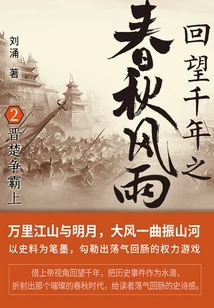
回望千年之春秋风雨2:晋楚争霸(上)
Liu Yong
This book is the first work in the series of looking back at the millennium. This work sorts out a clear main line of the Spring and Autumn Period from the complex historical materials, which can help readers grasp the historical process of the Spring and Autumn Period from a macro perspective. The main line of Spring and Autumn is mainly divided into four stages. The early Spring and Autumn Period - after King Ping moved eastward, the Three Little Overlords of the Spring and Autumn Period headed by Zheng Zhuanggong supported the main line of the Early Spring and Autumn Period. The work revolves around the perspectives of Zheng, Qi and Chu, telling the historical events of the Early Spring and Autumn Period; the middle stage of the Spring and Autumn Period - after the rise of Duke Huan of Qi, the main line of the Early Spring and Autumn Period is continued, and the work revolves around The struggle for hegemony between Qi and Chu unfolds, telling the historical events from Duke Huan's first hegemony of the Central Plains to the battle between Qi and Chu over the Yangtze River and Huaihe River; the late Spring and Autumn Period - introduces the background of Qu Wo Dai Yi and the rise of the Jin State, taking Jin Wengong Chong'er's exile in various countries as the main line, and restoring the beginning and end of the Battle of Chengpu from multiple perspectives such as politics, military, and geography. From the Battle of Chengpu in 632 BC to the second annihilation of the military alliance in 546 BC, in nearly a hundred years, the struggle between Jin and Chu for hegemony became the main theme of the era. At the end of the Spring and Autumn Period - after the second war and alliance, the countries of the Spring and Autumn Period had a truce for forty years. While the external conflicts of each country were alleviated, the Jin, Chu, and Qi countries all experienced internal worries to varying degrees. The scholar-bureaucrat class rose up and gradually emptied the power of the princes and kings. This phenomenon had a profound impact on later generations, such as the division of the three families into Jin and the succession of the Tian family to Qi. During the same period, Wu and Yue in the southeast region rose one after another, pushing Wu and Yue's struggle for hegemony to its climax. In the end, King Gou Jian of Yue succeeded in his revenge. This established the pattern of the four great powers of Jin, Chu, Qi and Yue in the early Warring States Period.
This book is the first work in the series of looking back at the millennium. This work sorts out a clear main line of the Spring and Autumn Period from the complex historical materials, which can help readers grasp the historical process of the Spring and Autumn Period from a macro perspective. The main line of Spring and Autumn is mainly divided into four stages. The early Spring and Autumn Period - after King Ping moved eastward, the Three Little Overlords of the Spring and Autumn Period headed by Zheng Zhuanggong supported the main line of the Early Spring and Autumn Period. The work revolves around the perspectives of Zheng, Qi and Chu, telling the historical events of the Early Spring and Autumn Period; the middle stage of the Spring and Autumn Period - after the rise of Duke Huan of Qi, the main line of the Early Spring and Autumn Period is continued, and the work revolves around The struggle for hegemony between Qi and Chu unfolds, telling the historical events from Duke Huan's first hegemony of the Central Plains to the battle between Qi and Chu over the Yangtze River and Huaihe River; the late Spring and Autumn Period - introduces the background of Qu Wo Dai Yi and the rise of the Jin State, taking Jin Wengong Chong'er's exile in various countries as the main line, and restoring the beginning and end of the Battle of Chengpu from multiple perspectives such as politics, military, and geography. From the Battle of Chengpu in 632 BC to the second annihilation of the military alliance in 546 BC, in nearly a hundred years, the struggle between Jin and Chu for hegemony became the main theme of the era. At the end of the Spring and Autumn Period - after the second war and alliance, the countries of the Spring and Autumn Period had a truce for forty years. While the external conflicts of each country were alleviated, the Jin, Chu, and Qi countries all experienced internal worries to varying degrees. The scholar-bureaucrat class rose up and gradually emptied the power of the princes and kings. This phenomenon had a profound impact on later generations, such as the division of the three families into Jin and the succession of the Tian family to Qi. During the same period, Wu and Yue in the southeast region rose one after another, pushing Wu and Yue's struggle for hegemony to its climax. In the end, King Gou Jian of Yue succeeded in his revenge. This established the pattern of the four great powers of Jin, Chu, Qi and Yue in the early Warring States Period.
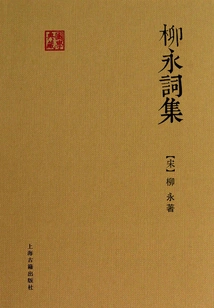
Liu Yong's Ci Collection
Literature柳永词集
Liu Yong
Liu Yong was a poet who carried out comprehensive innovation in Song poetry in the early Northern Song Dynasty. He devoted his whole life to writing lyrics and created a large number of slow lyrics and long tunes. He also made many innovations in expression techniques, image combinations, and theme development. Liu Ci mostly expressed the sentiments of citizens, especially the living conditions and inner world of prostitutes and singers, so it was widely spread. Therefore, it is said that "anywhere with well water, one can sing Liu Ci". Liu Yongyou's "Collection of Music" has been handed down to the world, and later poets such as Su Shi, Huang Tingjian, Qin Guan, and Zhou Bangyan were all influenced by it. This book contains all of Liu Yong's works and later generations' comments, and has an introduction written by Xie Taofang, making it easier for readers to understand Liu Yong and appreciate Liu's poems.
Liu Yong was a poet who carried out comprehensive innovation in Song poetry in the early Northern Song Dynasty. He devoted his whole life to writing lyrics and created a large number of slow lyrics and long tunes. He also made many innovations in expression techniques, image combinations, and theme development. Liu Ci mostly expressed the sentiments of citizens, especially the living conditions and inner world of prostitutes and singers, so it was widely spread. Therefore, it is said that "anywhere with well water, one can sing Liu Ci". Liu Yongyou's "Collection of Music" has been handed down to the world, and later poets such as Su Shi, Huang Tingjian, Qin Guan, and Zhou Bangyan were all influenced by it. This book contains all of Liu Yong's works and later generations' comments, and has an introduction written by Xie Taofang, making it easier for readers to understand Liu Yong and appreciate Liu's poems.
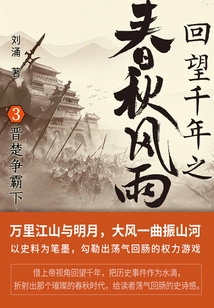
回望千年之春秋风雨3:晋楚争霸(下)
Liu Yong
This book is the first work in the series of looking back at the millennium. This work sorts out a clear main line of the Spring and Autumn Period from the complex historical materials, which can help readers grasp the historical process of the Spring and Autumn Period from a macro perspective. The main line of Spring and Autumn is mainly divided into four stages. The early Spring and Autumn Period - after King Ping moved eastward, the Three Little Overlords of the Spring and Autumn Period headed by Zheng Zhuanggong supported the main line of the Early Spring and Autumn Period. The work revolves around the perspectives of Zheng, Qi and Chu, telling the historical events of the Early Spring and Autumn Period; the middle stage of the Spring and Autumn Period - after the rise of Duke Huan of Qi, the main line of the Early Spring and Autumn Period is continued, and the work revolves around The struggle for hegemony between Qi and Chu unfolds, telling the historical events from Duke Huan's first hegemony of the Central Plains to the battle between Qi and Chu over the Yangtze River and Huaihe River; the late Spring and Autumn Period - introduces the background of Qu Wo Dai Yi and the rise of the Jin State, taking Jin Wengong Chong'er's exile in various countries as the main line, and restoring the beginning and end of the Battle of Chengpu from multiple perspectives such as politics, military, and geography. From the Battle of Chengpu in 632 BC to the second annihilation of the military alliance in 546 BC, in nearly a hundred years, the struggle between Jin and Chu for hegemony became the main theme of the era. At the end of the Spring and Autumn Period - after the second war and alliance, the countries of the Spring and Autumn Period had a truce for forty years. While the external conflicts of each country were alleviated, the Jin, Chu, and Qi countries all experienced internal worries to varying degrees. The scholar-bureaucrat class rose up and gradually emptied the power of the princes and kings. This phenomenon had a profound impact on later generations, such as the division of the three families into Jin and the succession of the Tian family to Qi. During the same period, Wu and Yue in the southeast region rose one after another, pushing Wu and Yue's struggle for hegemony to its climax. In the end, King Gou Jian of Yue succeeded in his revenge. This established the pattern of the four great powers of Jin, Chu, Qi and Yue in the early Warring States Period.
This book is the first work in the series of looking back at the millennium. This work sorts out a clear main line of the Spring and Autumn Period from the complex historical materials, which can help readers grasp the historical process of the Spring and Autumn Period from a macro perspective. The main line of Spring and Autumn is mainly divided into four stages. The early Spring and Autumn Period - after King Ping moved eastward, the Three Little Overlords of the Spring and Autumn Period headed by Zheng Zhuanggong supported the main line of the Early Spring and Autumn Period. The work revolves around the perspectives of Zheng, Qi and Chu, telling the historical events of the Early Spring and Autumn Period; the middle stage of the Spring and Autumn Period - after the rise of Duke Huan of Qi, the main line of the Early Spring and Autumn Period is continued, and the work revolves around The struggle for hegemony between Qi and Chu unfolds, telling the historical events from Duke Huan's first hegemony of the Central Plains to the battle between Qi and Chu over the Yangtze River and Huaihe River; the late Spring and Autumn Period - introduces the background of Qu Wo Dai Yi and the rise of the Jin State, taking Jin Wengong Chong'er's exile in various countries as the main line, and restoring the beginning and end of the Battle of Chengpu from multiple perspectives such as politics, military, and geography. From the Battle of Chengpu in 632 BC to the second annihilation of the military alliance in 546 BC, in nearly a hundred years, the struggle between Jin and Chu for hegemony became the main theme of the era. At the end of the Spring and Autumn Period - after the second war and alliance, the countries of the Spring and Autumn Period had a truce for forty years. While the external conflicts of each country were alleviated, the Jin, Chu, and Qi countries all experienced internal worries to varying degrees. The scholar-bureaucrat class rose up and gradually emptied the power of the princes and kings. This phenomenon had a profound impact on later generations, such as the division of the three families into Jin and the succession of the Tian family to Qi. During the same period, Wu and Yue in the southeast region rose one after another, pushing Wu and Yue's struggle for hegemony to its climax. In the end, King Gou Jian of Yue succeeded in his revenge. This established the pattern of the four great powers of Jin, Chu, Qi and Yue in the early Warring States Period.