Library
Browse and search books
14 novels found
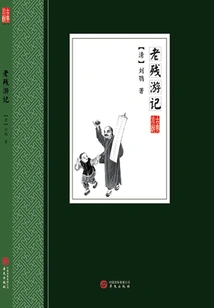
Lao Can's Travels
General Fiction老残游记
Liu E
"Lao Can's Travels" is a work handed down from generation to generation that is highly praised by Hu Shi, Wang Guowei, Lin Yutang and others. The novel takes the travels of a quack doctor as the main line, and humorously depicts the social beings in a specific environment. The opening chapter uses symbolic writing to point out the subtle relationship between individuals and times, and then goes on to write about the scenery of Daming Lake, Wang Xiaoyu's storytelling, the hatred of honest officials, a strange case, the frozen Yellow River, love and enlightenment... It has the fantasy of worldly novels, the insights of psychological novels, and the passion of martial arts novels. Some people think that its chapters are like bricks and tiles of Qin and Han Dynasties. They look exquisite individually, but together they do not make a full story. But if you read the content carefully, you will find that the beauty of it is that it is unconventional, written in a willful and unrestrained way. The innovative descriptions of sights and sounds are still textbook level today.
"Lao Can's Travels" is a work handed down from generation to generation that is highly praised by Hu Shi, Wang Guowei, Lin Yutang and others. The novel takes the travels of a quack doctor as the main line, and humorously depicts the social beings in a specific environment. The opening chapter uses symbolic writing to point out the subtle relationship between individuals and times, and then goes on to write about the scenery of Daming Lake, Wang Xiaoyu's storytelling, the hatred of honest officials, a strange case, the frozen Yellow River, love and enlightenment... It has the fantasy of worldly novels, the insights of psychological novels, and the passion of martial arts novels. Some people think that its chapters are like bricks and tiles of Qin and Han Dynasties. They look exquisite individually, but together they do not make a full story. But if you read the content carefully, you will find that the beauty of it is that it is unconventional, written in a willful and unrestrained way. The innovative descriptions of sights and sounds are still textbook level today.
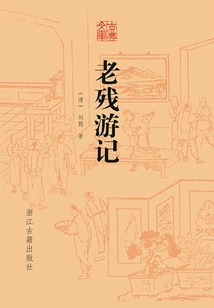
Lao Can's Travels (classical Library)
General Fiction老残游记(古典文库)
Liu E
This book is one of the four major condemnation novels in the late Qing Dynasty. The book draws on Lao Can's travels and experiences to expose the tyranny of "honest officials" and points out that the so-called "honest officials" who "don't need money" are actually executioners who are "eager to become high officials" and do not hesitate to kill people to take credit. The author himself is quite proud of this point, saying: "Novel has always exposed the evil of corrupt officials, and some have mentioned the evil of honest officials, starting from "The Travels of Lao Can"." This reflects the author's relatively progressive side that sympathizes with the suffering of the people, but his basic political views are backward, and he opposes the bourgeois democratic revolution and the anti-aggression struggle of the Boxer Rebellion. This is also clearly reflected in this book. Therefore, "Lao Can's Travels" is a book with both flaws and advantages.
This book is one of the four major condemnation novels in the late Qing Dynasty. The book draws on Lao Can's travels and experiences to expose the tyranny of "honest officials" and points out that the so-called "honest officials" who "don't need money" are actually executioners who are "eager to become high officials" and do not hesitate to kill people to take credit. The author himself is quite proud of this point, saying: "Novel has always exposed the evil of corrupt officials, and some have mentioned the evil of honest officials, starting from "The Travels of Lao Can"." This reflects the author's relatively progressive side that sympathizes with the suffering of the people, but his basic political views are backward, and he opposes the bourgeois democratic revolution and the anti-aggression struggle of the Boxer Rebellion. This is also clearly reflected in this book. Therefore, "Lao Can's Travels" is a book with both flaws and advantages.
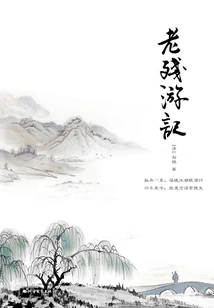
Lao Can's Travels
General Fiction老残游记
Liu E
"Lao Can's Travels" is based on the two-month brief travel of Lao Can, a bell-ringing charlatan, and connects all the social beings in the late Qing Dynasty. Through the description of Yuxian and Gangbi, two so-called "honest officials" who abused punishment and took care of human lives, we draw the tragic conclusion that "honest officials are more hateful than corrupt officials"; and through the image of Lao Can, a character who is proficient in medical skills and has a strong political consciousness, he expresses his desire to save the current situation.
"Lao Can's Travels" is based on the two-month brief travel of Lao Can, a bell-ringing charlatan, and connects all the social beings in the late Qing Dynasty. Through the description of Yuxian and Gangbi, two so-called "honest officials" who abused punishment and took care of human lives, we draw the tragic conclusion that "honest officials are more hateful than corrupt officials"; and through the image of Lao Can, a character who is proficient in medical skills and has a strong political consciousness, he expresses his desire to save the current situation.
Lao Can's Travels
General Fiction老残游记
Liu E
"Lao Can's Travels", a novella in the late Qing Dynasty, is Liu E's masterpiece and is widely circulated. The novel is based on the travels of an old man who is a doctor, and it digs deeply into social conflicts. Especially in the book, he dares to directly denounce upright officials who harm the country and harm the people, pointing out that sometimes the stupidity of upright officials is no better than corrupt officials. This criticism of the officialdom of the Qing court is very pertinent and insightful.
"Lao Can's Travels", a novella in the late Qing Dynasty, is Liu E's masterpiece and is widely circulated. The novel is based on the travels of an old man who is a doctor, and it digs deeply into social conflicts. Especially in the book, he dares to directly denounce upright officials who harm the country and harm the people, pointing out that sometimes the stupidity of upright officials is no better than corrupt officials. This criticism of the officialdom of the Qing court is very pertinent and insightful.
The Sequel to Lao Can's Travels
Literature老残游记续集
Liu E
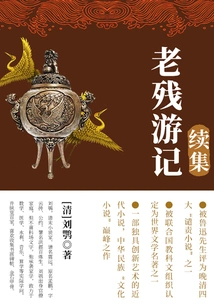
It describes the letter written by Ding Wei in the winter months outside the front gate of Beijing. Dong Gezi and west Yuan Gong came to visit. They talked about the recent rectification and new policies of the imperial court, and the streets were full of patrols. The author uses the words of Lao Can to reveal the corruption of bureaucracy and reflect the profound social content of worry and indignation.
It describes the letter written by Ding Wei in the winter months outside the front gate of Beijing. Dong Gezi and west Yuan Gong came to visit. They talked about the recent rectification and new policies of the imperial court, and the streets were full of patrols. The author uses the words of Lao Can to reveal the corruption of bureaucracy and reflect the profound social content of worry and indignation.
Lao Can's Travels
Literature老残游记
Liu E
"Lao Can's Travels" takes Lao Can, a charlatan, as the protagonist, and uses his travels and experiences as the main line to focus on describing the various evil deeds of "honest officials". As he shook the string bell in his hand, he linked up all the social beings in the late Qing Dynasty, and slowly unfolded a volume of social life in the late Qing Dynasty.
"Lao Can's Travels" takes Lao Can, a charlatan, as the protagonist, and uses his travels and experiences as the main line to focus on describing the various evil deeds of "honest officials". As he shook the string bell in his hand, he linked up all the social beings in the late Qing Dynasty, and slowly unfolded a volume of social life in the late Qing Dynasty.
Lao Can's Travels (hardcover Collection)
General Fiction老残游记(精装典藏本)
Liu E
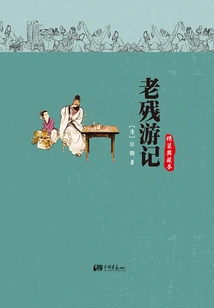
"The Travels of Lao Can" is the masterpiece of the novelist Liu E. It was rated by Mr. Lu Xun as one of the four major condemnation novels in the late Qing Dynasty. It was later translated into many languages and had a huge influence at home and abroad. The novel is based on the travels of an old man who is a doctor, and makes an in-depth exploration of social contradictions. Especially in the book, he dares to directly denounce upright officials who harm the country and harm the people, pointing out that sometimes the stupidity of upright officials is no better than corrupt officials. This criticism of the officialdom of the Qing court is very pertinent and insightful.
"The Travels of Lao Can" is the masterpiece of the novelist Liu E. It was rated by Mr. Lu Xun as one of the four major condemnation novels in the late Qing Dynasty. It was later translated into many languages and had a huge influence at home and abroad. The novel is based on the travels of an old man who is a doctor, and makes an in-depth exploration of social contradictions. Especially in the book, he dares to directly denounce upright officials who harm the country and harm the people, pointing out that sometimes the stupidity of upright officials is no better than corrupt officials. This criticism of the officialdom of the Qing court is very pertinent and insightful.
Lao Can's Travels
General Fiction老残游记
Liu E
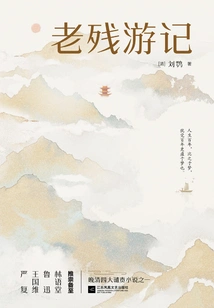
"Lao Can's Travels" is a work handed down from generation to generation that is highly praised by Hu Shi, Wang Guowei, Lin Yutang and others. The novel takes the travels of a quack doctor as the main line, and humorously depicts the social beings in a specific environment. The opening chapter uses symbolic writing to point out the subtle relationship between individuals and times, and then goes on to write about the scenery of Daming Lake, Wang Xiaoyu's storytelling, the hatred of honest officials, a strange case, the frozen Yellow River, love and enlightenment... It has the fantasy of worldly novels, the insights of psychological novels, and the passion of martial arts novels. Some people think that its chapters are like bricks and tiles of Qin and Han Dynasties. They look exquisite individually, but together they do not make a full story. But if you read the content carefully, you will find that the beauty of it is that it is unconventional, written in a willful and unrestrained way. The innovative descriptions of sights and sounds are still textbook level today.
"Lao Can's Travels" is a work handed down from generation to generation that is highly praised by Hu Shi, Wang Guowei, Lin Yutang and others. The novel takes the travels of a quack doctor as the main line, and humorously depicts the social beings in a specific environment. The opening chapter uses symbolic writing to point out the subtle relationship between individuals and times, and then goes on to write about the scenery of Daming Lake, Wang Xiaoyu's storytelling, the hatred of honest officials, a strange case, the frozen Yellow River, love and enlightenment... It has the fantasy of worldly novels, the insights of psychological novels, and the passion of martial arts novels. Some people think that its chapters are like bricks and tiles of Qin and Han Dynasties. They look exquisite individually, but together they do not make a full story. But if you read the content carefully, you will find that the beauty of it is that it is unconventional, written in a willful and unrestrained way. The innovative descriptions of sights and sounds are still textbook level today.
Lao Can's Travels
General Fiction老残游记
Liu E
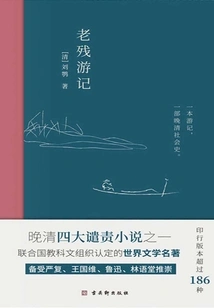
"The Travels of Lao Can" is one of the four most condemned novels of the late Qing Dynasty and has been recognized as a world literary masterpiece by UNESCO. It has been translated into English, French, German, Russian, Japanese and other languages, with more than 186 printed versions. It has been widely circulated and has far-reaching influence. The novel uses the travels of the quack doctor Lao Can as a clue to connect all the social beings in the late Qing Dynasty, and unfolds a comprehensive description of the social politics, economy, and culture at that time. Lao Can is a positive character who embodies the author's thoughts in the work. Although he does not enter an official career, he is concerned about the fate of the country and the nation, sympathizes with the suffering of the people, has a clear sense of right and wrong, and is brave and courageous. He does his best to relieve some people's suffering.
"The Travels of Lao Can" is one of the four most condemned novels of the late Qing Dynasty and has been recognized as a world literary masterpiece by UNESCO. It has been translated into English, French, German, Russian, Japanese and other languages, with more than 186 printed versions. It has been widely circulated and has far-reaching influence. The novel uses the travels of the quack doctor Lao Can as a clue to connect all the social beings in the late Qing Dynasty, and unfolds a comprehensive description of the social politics, economy, and culture at that time. Lao Can is a positive character who embodies the author's thoughts in the work. Although he does not enter an official career, he is concerned about the fate of the country and the nation, sympathizes with the suffering of the people, has a clear sense of right and wrong, and is brave and courageous. He does his best to relieve some people's suffering.
Lao Can's Travels
General Fiction老残游记
Liu E
"Lao Can's Travels" is the representative work of Liu E, a writer in the late Qing Dynasty. The novel uses the travels of the quack doctor Lao Can as a clue to connect all the social beings in the late Qing Dynasty, and unfolds a comprehensive description of the social politics, economy, and culture at that time. Through the description of two so-called "honest officials", Yuxian and Gangbi, who abused punishments, disregarded human lives, and other criminal acts, we came to the conclusion that "honest officials harmed the country and harmed the people", which exposed the darkness of the Qing Dynasty's officialdom. The language of "Lao Can's Travels" does not follow conventional narratives and pursues innovation. Among them, the depiction of the scenery of Daming Lake, the ice and snow of the Yellow River, and Wang Xiaoyu's storytelling are particularly artistic achievements.
"Lao Can's Travels" is the representative work of Liu E, a writer in the late Qing Dynasty. The novel uses the travels of the quack doctor Lao Can as a clue to connect all the social beings in the late Qing Dynasty, and unfolds a comprehensive description of the social politics, economy, and culture at that time. Through the description of two so-called "honest officials", Yuxian and Gangbi, who abused punishments, disregarded human lives, and other criminal acts, we came to the conclusion that "honest officials harmed the country and harmed the people", which exposed the darkness of the Qing Dynasty's officialdom. The language of "Lao Can's Travels" does not follow conventional narratives and pursues innovation. Among them, the depiction of the scenery of Daming Lake, the ice and snow of the Yellow River, and Wang Xiaoyu's storytelling are particularly artistic achievements.
Lao Can's Travels
Literature老残游记
Liu E
This book is written about the experiences and actions of a quack doctor Tie Ying (also known as Lao Can) during his travels. The old cripple makes a living by practicing medicine, and wanders around the world while ringing his bells. He was a man of indifference and did not enter an official career, but he was concerned about the fate of the country and the nation. He also had a clear sense of right and wrong and was chivalrous and courageous. He sympathized with the suffering of the people and did his best to save the people from the fire and water. Following Lao Can's footsteps, we can clearly see the social life in Shandong in the late Qing Dynasty in the book, and we can also discover some social contradictions in the old days.
This book is written about the experiences and actions of a quack doctor Tie Ying (also known as Lao Can) during his travels. The old cripple makes a living by practicing medicine, and wanders around the world while ringing his bells. He was a man of indifference and did not enter an official career, but he was concerned about the fate of the country and the nation. He also had a clear sense of right and wrong and was chivalrous and courageous. He sympathized with the suffering of the people and did his best to save the people from the fire and water. Following Lao Can's footsteps, we can clearly see the social life in Shandong in the late Qing Dynasty in the book, and we can also discover some social contradictions in the old days.
Lao Can's Travels
General Fiction老残游记
Liu E
"Lao Can's Travels" is a work handed down from generation to generation that is highly praised by Hu Shi, Wang Guowei, Lin Yutang and others. The novel takes the travels of a quack doctor as the main line, and humorously depicts the social beings in a specific environment. The opening chapter uses symbolic writing to point out the subtle relationship between individuals and times, and then goes on to write about the scenery of Daming Lake, Wang Xiaoyu's storytelling, the hatred of honest officials, a strange case, the frozen Yellow River, love and enlightenment... It has the fantasy of worldly novels, the insights of psychological novels, and the passion of martial arts novels. Some people think that its chapters are like bricks and tiles of Qin and Han Dynasties. They look exquisite individually, but together they do not make a full story. But if you read the content carefully, you will find that the beauty of it is that it is unconventional, written in a willful and unrestrained way. The innovative descriptions of sights and sounds are still textbook level today.
"Lao Can's Travels" is a work handed down from generation to generation that is highly praised by Hu Shi, Wang Guowei, Lin Yutang and others. The novel takes the travels of a quack doctor as the main line, and humorously depicts the social beings in a specific environment. The opening chapter uses symbolic writing to point out the subtle relationship between individuals and times, and then goes on to write about the scenery of Daming Lake, Wang Xiaoyu's storytelling, the hatred of honest officials, a strange case, the frozen Yellow River, love and enlightenment... It has the fantasy of worldly novels, the insights of psychological novels, and the passion of martial arts novels. Some people think that its chapters are like bricks and tiles of Qin and Han Dynasties. They look exquisite individually, but together they do not make a full story. But if you read the content carefully, you will find that the beauty of it is that it is unconventional, written in a willful and unrestrained way. The innovative descriptions of sights and sounds are still textbook level today.
Lao Can's Travels (the Most Classic Chinese Classical Novel)
General Fiction老残游记(中国古典小说最经典)
Liu E
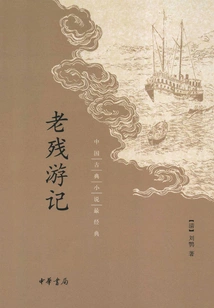
"The Travels of Lao Can" is one of the four "condemnation novels" in the late Qing Dynasty. It is a "crying" work by the author Liu E who laments the fate of the country and hopes to awaken the people and save the world. The novel takes the travels of Fang Langzhong and Lao Can as the main line, and conducts in-depth exploration of social contradictions. In particular, it directly denounces upright officials who harm the country and harms the people. It points out that sometimes the stupidity of upright officials is no better than corrupt officials. The criticism of the officialdom of the Qing court is pertinent to the current ills and has a unique insight. In terms of narrative, the novel has achieved a transformation from storyteller narrative to writer narrative, embodying superb descriptive skills and bringing late Qing novels to a new realm.
"The Travels of Lao Can" is one of the four "condemnation novels" in the late Qing Dynasty. It is a "crying" work by the author Liu E who laments the fate of the country and hopes to awaken the people and save the world. The novel takes the travels of Fang Langzhong and Lao Can as the main line, and conducts in-depth exploration of social contradictions. In particular, it directly denounces upright officials who harm the country and harms the people. It points out that sometimes the stupidity of upright officials is no better than corrupt officials. The criticism of the officialdom of the Qing court is pertinent to the current ills and has a unique insight. In terms of narrative, the novel has achieved a transformation from storyteller narrative to writer narrative, embodying superb descriptive skills and bringing late Qing novels to a new realm.
Lao Can's Travels
General Fiction老残游记
Liu E
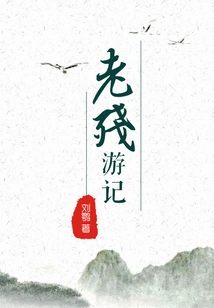
"Lao Can's Travels" is a novella in the late Qing Dynasty. It takes the travels of Lao Can, a practicing doctor, as the main line. It records the people and things Lao Can encounters during his travels, describes the unspoken rules of officialdom in the late Qing Dynasty, and puts forward the rare view that "upright officials harm the people." It explains the wonderful principles of Confucianism, Buddhism and Taoism, and promotes the Taigu School spirit of "inducing people to do good and leading people to be righteous". In addition, the book also mentions music, water conservancy construction, metaphysics, etc. It is a work with rich and unique content and a superb level. Today, it has been translated into several languages, sold around the world, and has been recognized as a world literary masterpiece by UNESCO.
"Lao Can's Travels" is a novella in the late Qing Dynasty. It takes the travels of Lao Can, a practicing doctor, as the main line. It records the people and things Lao Can encounters during his travels, describes the unspoken rules of officialdom in the late Qing Dynasty, and puts forward the rare view that "upright officials harm the people." It explains the wonderful principles of Confucianism, Buddhism and Taoism, and promotes the Taigu School spirit of "inducing people to do good and leading people to be righteous". In addition, the book also mentions music, water conservancy construction, metaphysics, etc. It is a work with rich and unique content and a superb level. Today, it has been translated into several languages, sold around the world, and has been recognized as a world literary masterpiece by UNESCO.