Library
Browse and search books
43 novels found
Collected Works of Liang Qichao (5)
Literature梁启超文集(五)
Liang Qichao
Liang Qichao is a famous thinker in modern China. He wrote magnificent works in his lifetime, amounting to 14 million words. His articles either expose and criticize the dark and ugly reality, or worry about the current situation of the motherland, and actively call for reform and self-improvement. The article is full of discussion, majestic and inspiring. It is a thorough analysis of China's current situation and has great influence. Some people commented on Liang Qichao's works: "Every article published makes the whole country stand out." This book selects Liang Qichao's "Young China Theory", "The Essays of He Guanzong", "Ten Kinds of Virtues in Opposite and Mutual Meaning", and "Theory of Transitional Era" for readers. The culture and wisdom of the East and the West merged with him, bursting out with unparalleled brilliance of that era. Even today, it still plays a very good role in teaching people, and it is still very rewarding to read.
Liang Qichao is a famous thinker in modern China. He wrote magnificent works in his lifetime, amounting to 14 million words. His articles either expose and criticize the dark and ugly reality, or worry about the current situation of the motherland, and actively call for reform and self-improvement. The article is full of discussion, majestic and inspiring. It is a thorough analysis of China's current situation and has great influence. Some people commented on Liang Qichao's works: "Every article published makes the whole country stand out." This book selects Liang Qichao's "Young China Theory", "The Essays of He Guanzong", "Ten Kinds of Virtues in Opposite and Mutual Meaning", and "Theory of Transitional Era" for readers. The culture and wisdom of the East and the West merged with him, bursting out with unparalleled brilliance of that era. Even today, it still plays a very good role in teaching people, and it is still very rewarding to read.
Collected Works of Liang Qichao (2)
Literature梁启超文集(二)
Liang Qichao
Liang Qichao is a famous thinker in modern China. He wrote magnificent works in his lifetime, amounting to 14 million words. His articles either expose and criticize the dark and ugly reality, or worry about the current situation of the motherland, and actively call for reform and self-improvement. The article is full of discussion, majestic and inspiring. It is a thorough analysis of China's current situation and has great influence. Some people commented on Liang Qichao's works: "Every article published makes the whole country stand out." This book selects Liang Qichao's "Young China Theory", "The Essays of He Guanzong", "Ten Kinds of Virtues in Opposite and Mutual Meaning", and "Theory of Transitional Era" for readers. The culture and wisdom of the East and the West merged with him, bursting out with unparalleled brilliance of that era. Even today, it still plays a very good role in teaching people, and it is still very rewarding to read.
Liang Qichao is a famous thinker in modern China. He wrote magnificent works in his lifetime, amounting to 14 million words. His articles either expose and criticize the dark and ugly reality, or worry about the current situation of the motherland, and actively call for reform and self-improvement. The article is full of discussion, majestic and inspiring. It is a thorough analysis of China's current situation and has great influence. Some people commented on Liang Qichao's works: "Every article published makes the whole country stand out." This book selects Liang Qichao's "Young China Theory", "The Essays of He Guanzong", "Ten Kinds of Virtues in Opposite and Mutual Meaning", and "Theory of Transitional Era" for readers. The culture and wisdom of the East and the West merged with him, bursting out with unparalleled brilliance of that era. Even today, it still plays a very good role in teaching people, and it is still very rewarding to read.
The Most Bitter and the Happiest
Literature最苦与最乐
Liang Qichao
"The Most Painful and the Most Happy" is an essential selection of Liang Qichao's literary works, covering current political commentaries, travel notes and family letters, academic essays, and biographies. It comprehensively reflects Liang Qichao's life context and work style. The book includes his representative masterpieces such as "The Hardest and Most Happy", "Dedication and Joyful Industry", "Tan Sitong's Biography", "Interesting Education and Educational Fun", etc., Which can not only help readers fully understand Liang Qichao's life and thoughts, but also help cultivate readers' positive and enterprising outlook on life. Among them, two articles, "The Most Painful and the Most Happy" and "Dedication and Happy Industry", have been included in the Ministry of Education's newly compiled junior high school Chinese textbooks.
"The Most Painful and the Most Happy" is an essential selection of Liang Qichao's literary works, covering current political commentaries, travel notes and family letters, academic essays, and biographies. It comprehensively reflects Liang Qichao's life context and work style. The book includes his representative masterpieces such as "The Hardest and Most Happy", "Dedication and Joyful Industry", "Tan Sitong's Biography", "Interesting Education and Educational Fun", etc., Which can not only help readers fully understand Liang Qichao's life and thoughts, but also help cultivate readers' positive and enterprising outlook on life. Among them, two articles, "The Most Painful and the Most Happy" and "Dedication and Happy Industry", have been included in the Ministry of Education's newly compiled junior high school Chinese textbooks.
Collected Works of Liang Qichao (4)
Literature梁启超文集(四)
Liang Qichao
Liang Qichao is a famous thinker in modern China. He wrote magnificent works in his lifetime, amounting to 14 million words. His articles either expose and criticize the dark and ugly reality, or worry about the current situation of the motherland, and actively call for reform and self-improvement. The article is full of discussion, majestic and inspiring. It is a thorough analysis of China's current situation and has great influence. Some people commented on Liang Qichao's works: "Every article published makes the whole country stand out." This book selects Liang Qichao's "Young China Theory", "The Essays of He Guanzong", "Ten Kinds of Virtues in Opposite and Mutual Meaning", and "Theory of Transitional Era" for readers. The culture and wisdom of the East and the West merged with him, bursting out with unparalleled brilliance of that era. Even today, it still plays a very good role in teaching people, and it is still very rewarding to read.
Liang Qichao is a famous thinker in modern China. He wrote magnificent works in his lifetime, amounting to 14 million words. His articles either expose and criticize the dark and ugly reality, or worry about the current situation of the motherland, and actively call for reform and self-improvement. The article is full of discussion, majestic and inspiring. It is a thorough analysis of China's current situation and has great influence. Some people commented on Liang Qichao's works: "Every article published makes the whole country stand out." This book selects Liang Qichao's "Young China Theory", "The Essays of He Guanzong", "Ten Kinds of Virtues in Opposite and Mutual Meaning", and "Theory of Transitional Era" for readers. The culture and wisdom of the East and the West merged with him, bursting out with unparalleled brilliance of that era. Even today, it still plays a very good role in teaching people, and it is still very rewarding to read.
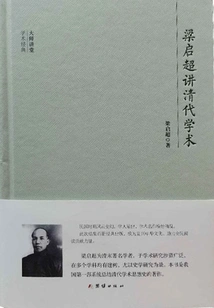
大师讲堂:梁启超讲清代学术
Liang Qichao
This book is the first monograph on Qing Dynasty scholarship. It systematically reviews the development of Chinese academic thought over the past 200 years from the end of the Ming Dynasty to Liang Qichao. It comprehensively discusses the philosophy, classics, history, and other natural sciences of the Qing Dynasty. It conducts a general historical inspection of the academics of each era as ideological trends, explores the causes, analyzes the points, analyzes the roots of decline, and elaborates on the representative figures and works of each era and each discipline. "Confucian Philosophy" is Liang Qichao's lecture notes at Tsinghua University in 1927, which comprehensively discusses the connotation, evolution, representative figures and research methods of Confucian philosophy.
This book is the first monograph on Qing Dynasty scholarship. It systematically reviews the development of Chinese academic thought over the past 200 years from the end of the Ming Dynasty to Liang Qichao. It comprehensively discusses the philosophy, classics, history, and other natural sciences of the Qing Dynasty. It conducts a general historical inspection of the academics of each era as ideological trends, explores the causes, analyzes the points, analyzes the roots of decline, and elaborates on the representative figures and works of each era and each discipline. "Confucian Philosophy" is Liang Qichao's lecture notes at Tsinghua University in 1927, which comprehensively discusses the connotation, evolution, representative figures and research methods of Confucian philosophy.
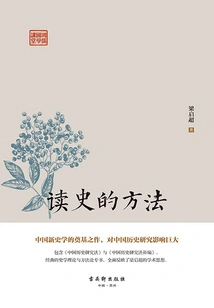
How to Read History
History读史的方法
Liang Qichao
This book consists of two parts: "Chinese Historical Research Method" and "Chinese Historical Research Method Supplement", both of which are lecture notes taught by Liang Qichao. "Chinese History Research Method" consists of six chapters. The first chapter discusses the definition, significance and scope of history; the second chapter reviews and evaluates China's old historiography; the third chapter talks about how to transform the old historiography and establish a new historiography; the fourth and fifth chapters focus on historical materials; the sixth chapter elaborates on the connection between historical facts. The "Supplement to Chinese Historical Research Methods" first discusses the purpose of compiling history, the four strengths of historians, outlines five types of special histories, and then discusses in detail the style, characteristics and compilation methods of various special histories.
This book consists of two parts: "Chinese Historical Research Method" and "Chinese Historical Research Method Supplement", both of which are lecture notes taught by Liang Qichao. "Chinese History Research Method" consists of six chapters. The first chapter discusses the definition, significance and scope of history; the second chapter reviews and evaluates China's old historiography; the third chapter talks about how to transform the old historiography and establish a new historiography; the fourth and fifth chapters focus on historical materials; the sixth chapter elaborates on the connection between historical facts. The "Supplement to Chinese Historical Research Methods" first discusses the purpose of compiling history, the four strengths of historians, outlines five types of special histories, and then discusses in detail the style, characteristics and compilation methods of various special histories.
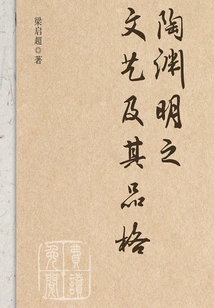
陶渊明之文艺及其品格
Liang Qichao
Liang Qichao's discussion of Tao is unique in its viewpoints, methods and writing style, creating a new era of studying Tao Yuanming from a modern academic perspective. Liang Qichao paid special attention to Tao Yuanming's status in literary history and believed that Tao was the second unique writer after Qu Yuan. He systematically discussed Tao Yuanming's "latent characteristics" from three aspects, and believed that Tao was the happiest person in the world, and his fundamental outlook on life was nature and freedom. Moreover, in addition to affirming that Tao Yuanming was "a noble person", he was also discerning and insightful, emphasizing that Tao Yuanming was an "extremely enthusiastic and heroic" person, "the most sentimental and sentimental" person, and an "extremely serious person with a strong sense of moral responsibility".
Liang Qichao's discussion of Tao is unique in its viewpoints, methods and writing style, creating a new era of studying Tao Yuanming from a modern academic perspective. Liang Qichao paid special attention to Tao Yuanming's status in literary history and believed that Tao was the second unique writer after Qu Yuan. He systematically discussed Tao Yuanming's "latent characteristics" from three aspects, and believed that Tao was the happiest person in the world, and his fundamental outlook on life was nature and freedom. Moreover, in addition to affirming that Tao Yuanming was "a noble person", he was also discerning and insightful, emphasizing that Tao Yuanming was an "extremely enthusiastic and heroic" person, "the most sentimental and sentimental" person, and an "extremely serious person with a strong sense of moral responsibility".
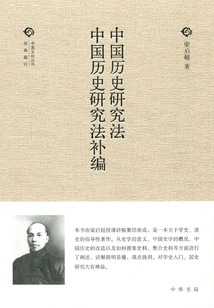
中国历史研究法:中国历史研究法补编(中国文化丛书·第二辑)
Liang Qichao
"The Supplement to Chinese Historical Research Methods" is one of the classic works of modern Chinese historical theory. It comprehensively reflects the academic thoughts of Liang Qichao, the pioneer of new history, and has a huge influence on Chinese historical research. The book is divided into six chapters. The first chapter discusses the definition, significance and scope of history; the second chapter reviews and evaluates China's old historiography; the third chapter talks about how to transform the old historiography and establish a new historiography; the fourth and fifth chapters focus on historical materials; the sixth chapter elaborates on the connection between historical facts. "Supplement to Chinese Historical Research Methods" was a lecture delivered by Liang Qichao at Tsinghua University from October 1926 to May 1927.
"The Supplement to Chinese Historical Research Methods" is one of the classic works of modern Chinese historical theory. It comprehensively reflects the academic thoughts of Liang Qichao, the pioneer of new history, and has a huge influence on Chinese historical research. The book is divided into six chapters. The first chapter discusses the definition, significance and scope of history; the second chapter reviews and evaluates China's old historiography; the third chapter talks about how to transform the old historiography and establish a new historiography; the fourth and fifth chapters focus on historical materials; the sixth chapter elaborates on the connection between historical facts. "Supplement to Chinese Historical Research Methods" was a lecture delivered by Liang Qichao at Tsinghua University from October 1926 to May 1927.
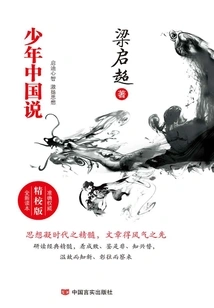
Young China Says
Literature少年中国说
Liang Qichao
"Young China" is a stunning article written by Mr. Liang Qichao in 1900. It once inspired many Chinese people. When I read it, I can still feel the vigorous enthusiasm, outstanding artistic beauty and profound cultural heritage contained in the words. This book starts with "Young China" and selects Mr. Liang Qichao's writings (excerpts), articles, and academic speeches from different periods. The selected articles mainly focus on the author's academic thoughts, cultural concepts, academic methods, life insights, and conduct. It can be said that each article demonstrates Mr. Liang Qichao's unique and unbridled writing style and inspiring thoughts that keep pace with the times. It is highly informative and readable.
"Young China" is a stunning article written by Mr. Liang Qichao in 1900. It once inspired many Chinese people. When I read it, I can still feel the vigorous enthusiasm, outstanding artistic beauty and profound cultural heritage contained in the words. This book starts with "Young China" and selects Mr. Liang Qichao's writings (excerpts), articles, and academic speeches from different periods. The selected articles mainly focus on the author's academic thoughts, cultural concepts, academic methods, life insights, and conduct. It can be said that each article demonstrates Mr. Liang Qichao's unique and unbridled writing style and inspiring thoughts that keep pace with the times. It is highly informative and readable.
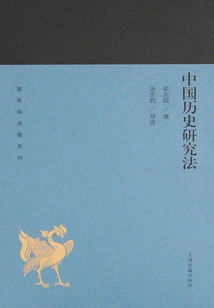
中国历史研究法
Liang Qichao
"Chinese History Research Methods" is Liang Qichao's work on Eastern and Western history. It combines the past and current situation of Chinese history books, systematically organizes them, specializes in lectures, and analyzes them in detail. It is concise and comprehensive, with theories, methods, examples, and judgments. It is a masterpiece of modern Chinese history.
"Chinese History Research Methods" is Liang Qichao's work on Eastern and Western history. It combines the past and current situation of Chinese history books, systematically organizes them, specializes in lectures, and analyzes them in detail. It is concise and comprehensive, with theories, methods, examples, and judgments. It is a masterpiece of modern Chinese history.
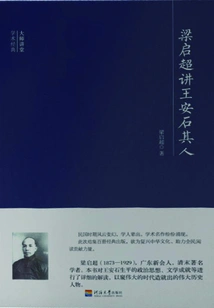
大师讲堂学术经典:梁启超讲王安石其人
Liang Qichao
Liang Qichao is the pioneer of modern Chinese biographical literature. His commentary on Wang Anshi is a modern biography classic that represents his "constitutional" ideal. By judging one and another, weighing right and wrong, it strives to give readers a real Wang Anshi and a real history. It can be said that the perspective is unique, the consciousness is innovative, the discussion is rigorous, and the judgment is fair. It is a classic discussion among biographies, which is refreshing to read and enlightening.
Liang Qichao is the pioneer of modern Chinese biographical literature. His commentary on Wang Anshi is a modern biography classic that represents his "constitutional" ideal. By judging one and another, weighing right and wrong, it strives to give readers a real Wang Anshi and a real history. It can be said that the perspective is unique, the consciousness is innovative, the discussion is rigorous, and the judgment is fair. It is a classic discussion among biographies, which is refreshing to read and enlightening.
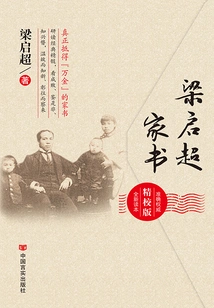
Liang Qichao's Family Letters
Literature梁启超家书
Liang Qichao
As a cultural giant in China's modern history, Liang Qichao's achievements were not limited to academic and ideological fields. He also used the power of love and example to carefully teach his nine children, making them all successful. Letters from home are an important means and medium for Liang Qichao to educate his children and convey his calm and calm thoughts. It can be said that Liang Qichao is the second person in history after Zeng Guofan to develop the literary style of letters from home to the extreme. This book is carefully selected and edited from hundreds of thousands of words of family letters written by Liang Qichao.
As a cultural giant in China's modern history, Liang Qichao's achievements were not limited to academic and ideological fields. He also used the power of love and example to carefully teach his nine children, making them all successful. Letters from home are an important means and medium for Liang Qichao to educate his children and convey his calm and calm thoughts. It can be said that Liang Qichao is the second person in history after Zeng Guofan to develop the literary style of letters from home to the extreme. This book is carefully selected and edited from hundreds of thousands of words of family letters written by Liang Qichao.
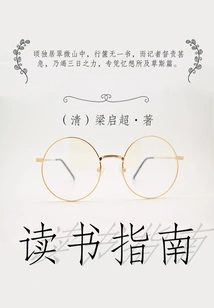
Reading Guide
Literature读书指南
Liang Qichao
"Reading Guide" brings together Mr. Liang Qichao's "Essentials of Introductory Books on Chinese Studies and Their Reading Methods" and "Essential Books and Their Reading Methods". "Essentials of Introductory Books on Chinese Studies and How to Read them" introduces basic Chinese classics, explains the characteristics and reading methods of each book, and the text is simple and concise. "Analects of Important Books and How to Read them" is a lecture he gave when he taught "A Summary of Group Books" at Tsinghua University. Before it was published, it had been "requested and circulated from everywhere" and was very popular among young students. It systematically introduces classics such as The Analects of Confucius, Historical Records, Zuo Zhuan, and Book of Songs, and carefully examines issues such as the author of each book, the year and process of its creation, the authenticity and order of the content, the value and reading method, and the quality of the proofs and interpretations, etc., Providing detailed and useful guidance.
"Reading Guide" brings together Mr. Liang Qichao's "Essentials of Introductory Books on Chinese Studies and Their Reading Methods" and "Essential Books and Their Reading Methods". "Essentials of Introductory Books on Chinese Studies and How to Read them" introduces basic Chinese classics, explains the characteristics and reading methods of each book, and the text is simple and concise. "Analects of Important Books and How to Read them" is a lecture he gave when he taught "A Summary of Group Books" at Tsinghua University. Before it was published, it had been "requested and circulated from everywhere" and was very popular among young students. It systematically introduces classics such as The Analects of Confucius, Historical Records, Zuo Zhuan, and Book of Songs, and carefully examines issues such as the author of each book, the year and process of its creation, the authenticity and order of the content, the value and reading method, and the quality of the proofs and interpretations, etc., Providing detailed and useful guidance.
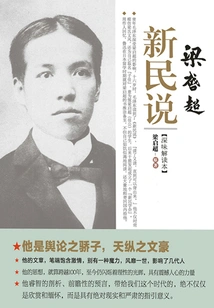
Liang Qichao Xinmin Said
Literature梁启超新民说
Liang Qichao
This book is based on "New People's Theory" published by Shanghai Zhonghua Book Company in 1936. It combines the editor's collection and selection of academic papers that study the influence of "New People's Theory" over the past century since its publication, and public opinion on Liang Qichao's contribution to the history of Chinese enlightenment thought. Based on the 20 sections of the book, the publication background is carefully designed in terms of style. There are four columns: , social response, appreciation of the original text, and today's highlights, in order to preserve Liang Rengong's "emotional writing style", inspiring and exciting writing charm, and at the same time help everyone better understand and digest these precious cultural heritages that have spanned a hundred years and still have strong vitality and practical guiding significance. "New People's Theory" reveals this truth: in order for Chinese society to realize modernization, it must first realize the modernization of Chinese people. When we read "Xin Min Shuo" today, we still feel the tremors in our hearts. This is actually because Liang Rengong's predictions about the future changes in Chinese people's personality characteristics and changes in social customs were extremely accurate and to the point. This is tantamount to a guiding light for us who are currently at the forefront of great ideological changes and are striving to find a way out in the spiritual and cultural fields.
This book is based on "New People's Theory" published by Shanghai Zhonghua Book Company in 1936. It combines the editor's collection and selection of academic papers that study the influence of "New People's Theory" over the past century since its publication, and public opinion on Liang Qichao's contribution to the history of Chinese enlightenment thought. Based on the 20 sections of the book, the publication background is carefully designed in terms of style. There are four columns: , social response, appreciation of the original text, and today's highlights, in order to preserve Liang Rengong's "emotional writing style", inspiring and exciting writing charm, and at the same time help everyone better understand and digest these precious cultural heritages that have spanned a hundred years and still have strong vitality and practical guiding significance. "New People's Theory" reveals this truth: in order for Chinese society to realize modernization, it must first realize the modernization of Chinese people. When we read "Xin Min Shuo" today, we still feel the tremors in our hearts. This is actually because Liang Rengong's predictions about the future changes in Chinese people's personality characteristics and changes in social customs were extremely accurate and to the point. This is tantamount to a guiding light for us who are currently at the forefront of great ideological changes and are striving to find a way out in the spiritual and cultural fields.
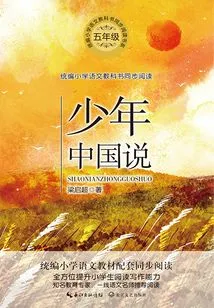
Young China Says
Literature少年中国说
Liang Qichao
This book is a selection of Liang Qichao's classic essays. The book is divided into three parts: messages of self-cultivation, intellectual education, and feelings about family and country. It excerpts articles on learning, life, fun, education and other related topics. It is full of interest, thought-provoking, and speculative, and is helpful for young readers to establish a positive and enterprising outlook on life. Among them, "Young China Theory" was compiled and selected as a primary school Chinese textbook compiled by the Ministry of Education.
This book is a selection of Liang Qichao's classic essays. The book is divided into three parts: messages of self-cultivation, intellectual education, and feelings about family and country. It excerpts articles on learning, life, fun, education and other related topics. It is full of interest, thought-provoking, and speculative, and is helpful for young readers to establish a positive and enterprising outlook on life. Among them, "Young China Theory" was compiled and selected as a primary school Chinese textbook compiled by the Ministry of Education.
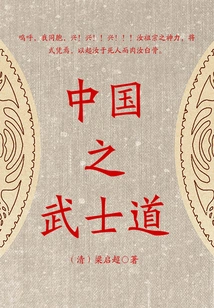
梁启超经典著作:中国之武士道
Liang Qichao
Liang Qichao's "The Way of the Warriors in China" was written in October 1904. Liang Qichao was 32 years old at this time. He was edited by the Qing government due to the failure of the Reform Movement of 1898 and fled to Japan. He wrote this book to promote the martial spirit of the Chinese nation and to use the martial virtues of the ancestors as a model for future generations. He selected more than 70 famous figures from the Spring and Autumn Period and the Warring States Period to awaken and innovate the national spirit and thinking by commemorating their spirit of sacrifice that they did not hesitate to fight for their personal reputation or national interests.
Liang Qichao's "The Way of the Warriors in China" was written in October 1904. Liang Qichao was 32 years old at this time. He was edited by the Qing government due to the failure of the Reform Movement of 1898 and fled to Japan. He wrote this book to promote the martial spirit of the Chinese nation and to use the martial virtues of the ancestors as a model for future generations. He selected more than 70 famous figures from the Spring and Autumn Period and the Warring States Period to awaken and innovate the national spirit and thinking by commemorating their spirit of sacrifice that they did not hesitate to fight for their personal reputation or national interests.
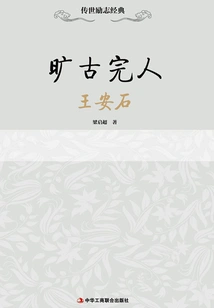
旷古完人:王安石
Liang Qichao
As a rare perfect man in the thousands of years of Chinese civilization, Wang Anshi's character and contributions are worthy of admiration and learning by future generations. The text in this book mainly focuses on Wang Anshi's political thoughts, presenting readers with a brave, tenacious, upright and upright character, reproducing Wang Anshi's talents and demeanor, and making it convenient for readers to read and learn.
As a rare perfect man in the thousands of years of Chinese civilization, Wang Anshi's character and contributions are worthy of admiration and learning by future generations. The text in this book mainly focuses on Wang Anshi's political thoughts, presenting readers with a brave, tenacious, upright and upright character, reproducing Wang Anshi's talents and demeanor, and making it convenient for readers to read and learn.
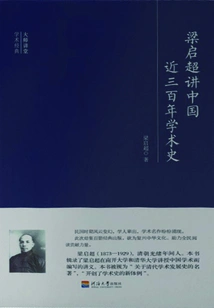
梁启超讲中国近三百年学术史
Liang Qichao
During the Republic of China, the situation was changing, scholars emerged in large numbers, and academic masterpieces emerged one after another. This collection of 100 volumes of classics is intended to contribute to the revival of Chinese culture and help all people read.
During the Republic of China, the situation was changing, scholars emerged in large numbers, and academic masterpieces emerged one after another. This collection of 100 volumes of classics is intended to contribute to the revival of Chinese culture and help all people read.
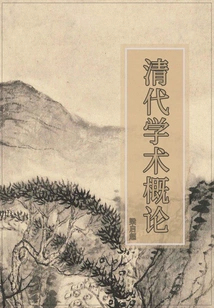
Introduction to Qing Dynasty Academics
Literature清代学术概论
Liang Qichao
"Introduction to the Academics of the Qing Dynasty" covers the academic fields of philosophy, classics, history, archaeology, geography, epigraphy, philology, Buddhism, fine arts, poetry, calendar, mathematics, water conservancy and other academic fields, and runs through the main line of the rise and inheritance of the ideological trends of the times. It can be described as majestic, clear and coherent, and has been called "a treasure in modern academic history" by later researchers.
"Introduction to the Academics of the Qing Dynasty" covers the academic fields of philosophy, classics, history, archaeology, geography, epigraphy, philology, Buddhism, fine arts, poetry, calendar, mathematics, water conservancy and other academic fields, and runs through the main line of the rise and inheritance of the ideological trends of the times. It can be described as majestic, clear and coherent, and has been called "a treasure in modern academic history" by later researchers.
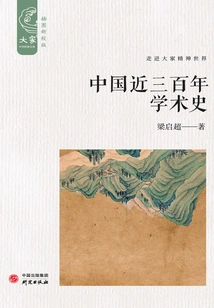
中国近三百年学术史
Liang Qichao
"China's Academic History in the Past Three Hundred Years" is one of the masterpieces of the famous scholar Liang Qichao. It was originally the lecture notes of Liang Qichao's lectures on the academic history of China in the past three hundred years at Tsinghua University from the autumn of 1923 to the spring and summer of 1924. The book was divided into sixteen lectures. The content of this book describes the evolution of Chinese academics since the Ming and Qing Dynasties. It is intertwined and has complex levels. It uses issues to describe history, characters (schools) to describe history, and disciplines to describe history. It consists of three major sections: the history of social ideological trends, the history of schools, and the history of disciplines. The book consists of sixteen topics, which can be divided into three parts: Topics 1 to 4 are the first part, which mainly discusses the academic changes and political influence in the Qing Dynasty, and reveals the political reasons for the tortuous academic development in the Qing Dynasty. Topics five to twelve constitute the second part, which summarizes the scholarship in the Qing Dynasty, mainly before the mid-Qing Dynasty. Special Topics 5 to 11 discuss in detail several important schools from the early Qing Dynasty to the mid-Qing Dynasty in the form of schools and academic cases, including representative figures, academic achievements, scholarly experience and methods, making the academic history before the mid-Qing Dynasty clearly visible; Special Topic 12 also introduces other famous non-mainstream academic figures in the early Qing Dynasty and their achievements who influenced the later development of Qing Dynasty studies under the title "Remnants of the Waves of Learning in the Early Qing Dynasty". Brief Commentary on Shaohe; Topics 13 to 16, titled "The Total Achievements of Qing Dynasty Scholars in Collating Old Learning", provide a comprehensive discussion of Qing Dynasty academics such as Confucian classics and its related derivatives such as elementary school, collation, forgery identification, compilation, and other representative figures and academic achievements; historiography and its related derivatives such as local chronicles, geography, and genealogy, representative figures and achievements; and achievements of representative figures in calendar calculation and other natural sciences. Starting from the main characteristics of the academic history of "distinguishing academic chapters and examining the origins" of academic history, he made a more detailed discussion of the academic origins, representatives, sources of instruction, main achievements and academic gains and losses of various schools in different periods of the Qing Dynasty, and comprehensively and in-depth summarized the academic achievements of the Qing Dynasty.
"China's Academic History in the Past Three Hundred Years" is one of the masterpieces of the famous scholar Liang Qichao. It was originally the lecture notes of Liang Qichao's lectures on the academic history of China in the past three hundred years at Tsinghua University from the autumn of 1923 to the spring and summer of 1924. The book was divided into sixteen lectures. The content of this book describes the evolution of Chinese academics since the Ming and Qing Dynasties. It is intertwined and has complex levels. It uses issues to describe history, characters (schools) to describe history, and disciplines to describe history. It consists of three major sections: the history of social ideological trends, the history of schools, and the history of disciplines. The book consists of sixteen topics, which can be divided into three parts: Topics 1 to 4 are the first part, which mainly discusses the academic changes and political influence in the Qing Dynasty, and reveals the political reasons for the tortuous academic development in the Qing Dynasty. Topics five to twelve constitute the second part, which summarizes the scholarship in the Qing Dynasty, mainly before the mid-Qing Dynasty. Special Topics 5 to 11 discuss in detail several important schools from the early Qing Dynasty to the mid-Qing Dynasty in the form of schools and academic cases, including representative figures, academic achievements, scholarly experience and methods, making the academic history before the mid-Qing Dynasty clearly visible; Special Topic 12 also introduces other famous non-mainstream academic figures in the early Qing Dynasty and their achievements who influenced the later development of Qing Dynasty studies under the title "Remnants of the Waves of Learning in the Early Qing Dynasty". Brief Commentary on Shaohe; Topics 13 to 16, titled "The Total Achievements of Qing Dynasty Scholars in Collating Old Learning", provide a comprehensive discussion of Qing Dynasty academics such as Confucian classics and its related derivatives such as elementary school, collation, forgery identification, compilation, and other representative figures and academic achievements; historiography and its related derivatives such as local chronicles, geography, and genealogy, representative figures and achievements; and achievements of representative figures in calendar calculation and other natural sciences. Starting from the main characteristics of the academic history of "distinguishing academic chapters and examining the origins" of academic history, he made a more detailed discussion of the academic origins, representatives, sources of instruction, main achievements and academic gains and losses of various schools in different periods of the Qing Dynasty, and comprehensively and in-depth summarized the academic achievements of the Qing Dynasty.
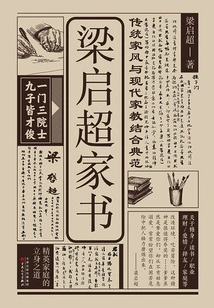
Liang Qichao's Family Letters
Literature梁启超家书
Liang Qichao
"Liang Qichao's Family Letters" compiles and selects hundreds of letters written by Liang Qichao to his family between 1898 and 1928. In the letters, Liang Qichao is "full of emotion in his writing". He uses his own insights and love, taking into account the personality characteristics of each child, and communicates on aspects such as self-cultivation, reading, career, financial management, love, choosing friends, family, etc. It has both a sense of the general direction of life and a delicate sense of life. There is no harsh scolding or condescending attitude. In front of the children, Liang Qichao is not only a father, a mentor, but also a close friend. He pays attention to children's physical and mental health and allows them to develop in an all-round way. This interesting and companionable educational concept is not only advanced, but also has important reference significance for the present. In addition to the instructions and guidance in letters, Liang Qichao also set an example in real life. His active life adapted to the choices of the times, and his wisdom in running a family with his wife, all set an example for his children, which is still of practical significance today.
"Liang Qichao's Family Letters" compiles and selects hundreds of letters written by Liang Qichao to his family between 1898 and 1928. In the letters, Liang Qichao is "full of emotion in his writing". He uses his own insights and love, taking into account the personality characteristics of each child, and communicates on aspects such as self-cultivation, reading, career, financial management, love, choosing friends, family, etc. It has both a sense of the general direction of life and a delicate sense of life. There is no harsh scolding or condescending attitude. In front of the children, Liang Qichao is not only a father, a mentor, but also a close friend. He pays attention to children's physical and mental health and allows them to develop in an all-round way. This interesting and companionable educational concept is not only advanced, but also has important reference significance for the present. In addition to the instructions and guidance in letters, Liang Qichao also set an example in real life. His active life adapted to the choices of the times, and his wisdom in running a family with his wife, all set an example for his children, which is still of practical significance today.
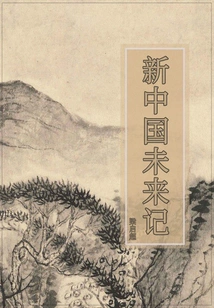
The Future of New China
General Fiction新中国未来记
Liang Qichao
The opening text of "The Future of New China" states that "2513 years after the birth of Confucius, that is, 1962 AD", China's reform was successful, and all friendly countries sent envoys to celebrate. This novel predicted the prosperity of "New China" in the next sixty years, and was only written in 5 chapters. One of the protagonists was named Huang Keqiang, who advocated a constitutional monarchy; the other Li Qubing advocated a French-style revolution, and the two sides started a fierce debate.
The opening text of "The Future of New China" states that "2513 years after the birth of Confucius, that is, 1962 AD", China's reform was successful, and all friendly countries sent envoys to celebrate. This novel predicted the prosperity of "New China" in the next sixty years, and was only written in 5 chapters. One of the protagonists was named Huang Keqiang, who advocated a constitutional monarchy; the other Li Qubing advocated a French-style revolution, and the two sides started a fierce debate.
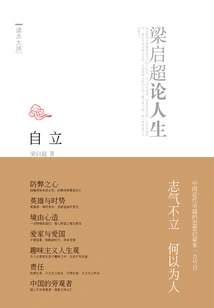
Self-reliance: Liang Qichao on Life
Literature自立:梁启超论人生
Liang Qichao
"Self-Reliance: Liang Qichao on Life" collects various writings from Mr. Liang Qichao's life, newly arranged in the form of fragments and quotations. The content is detailed and substantial, covering all aspects of reading, scholarship, current affairs, life, etc. His important works and excellent works are included. "Self-Reliance: Liang Qichao on Life" respects the original work, tries to maintain the style of the original work, and authentically reproduces the style of a generation of masters; it is also equipped with precious photos of the author to provide readers with an intuitive reading experience.
"Self-Reliance: Liang Qichao on Life" collects various writings from Mr. Liang Qichao's life, newly arranged in the form of fragments and quotations. The content is detailed and substantial, covering all aspects of reading, scholarship, current affairs, life, etc. His important works and excellent works are included. "Self-Reliance: Liang Qichao on Life" respects the original work, tries to maintain the style of the original work, and authentically reproduces the style of a generation of masters; it is also equipped with precious photos of the author to provide readers with an intuitive reading experience.
戊戌政变记
Liang Qichao
"Records of the 1898 Revolution" written by Liang Qichao is a very distinctive chronicle-style history book. The author integrated the dialectical understanding of traditional chronicle-style history books into the writing of "Records of the 1898 Revolution". In terms of compilation thought, the author has established a relatively systematic and rigorous guiding ideology, that is, establishing a "historical site group" to expand the scope of recording of the chronicle and strengthening the logical connection between events; establishing "using the method of biography to transform the chronicle", emphasizing the role of great men in the chronicle; attaching importance to historical theory, and clarifying the author's views and opinions on the historical process. The compilation practice of "Record of the 1898 Revolution" shows that it is a representative work of the transition from traditional chronicle style to modern style.
"Records of the 1898 Revolution" written by Liang Qichao is a very distinctive chronicle-style history book. The author integrated the dialectical understanding of traditional chronicle-style history books into the writing of "Records of the 1898 Revolution". In terms of compilation thought, the author has established a relatively systematic and rigorous guiding ideology, that is, establishing a "historical site group" to expand the scope of recording of the chronicle and strengthening the logical connection between events; establishing "using the method of biography to transform the chronicle", emphasizing the role of great men in the chronicle; attaching importance to historical theory, and clarifying the author's views and opinions on the historical process. The compilation practice of "Record of the 1898 Revolution" shows that it is a representative work of the transition from traditional chronicle style to modern style.
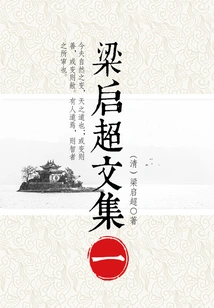
Collected Works of Liang Qichao (1)
Literature梁启超文集(一)
Liang Qichao
Liang Qichao is a famous thinker in modern China. He wrote magnificent works in his lifetime, amounting to 14 million words. His articles either expose and criticize the dark and ugly reality, or worry about the current situation of the motherland, and actively call for reform and self-improvement. The article is full of discussion, majestic and inspiring. It is a thorough analysis of China's current situation and has great influence. Some people commented on Liang Qichao's works: "Every article published makes the whole country stand out." This book selects Liang Qichao's "Young China Theory", "The Essays of He Guanzong", "Ten Kinds of Virtues in Opposite and Mutual Meaning", and "Theory of Transitional Era" for readers. The culture and wisdom of the East and the West merged with him, bursting out with unparalleled brilliance of that era. Even today, it still plays a very good role in teaching people, and it is still very rewarding to read.
Liang Qichao is a famous thinker in modern China. He wrote magnificent works in his lifetime, amounting to 14 million words. His articles either expose and criticize the dark and ugly reality, or worry about the current situation of the motherland, and actively call for reform and self-improvement. The article is full of discussion, majestic and inspiring. It is a thorough analysis of China's current situation and has great influence. Some people commented on Liang Qichao's works: "Every article published makes the whole country stand out." This book selects Liang Qichao's "Young China Theory", "The Essays of He Guanzong", "Ten Kinds of Virtues in Opposite and Mutual Meaning", and "Theory of Transitional Era" for readers. The culture and wisdom of the East and the West merged with him, bursting out with unparalleled brilliance of that era. Even today, it still plays a very good role in teaching people, and it is still very rewarding to read.
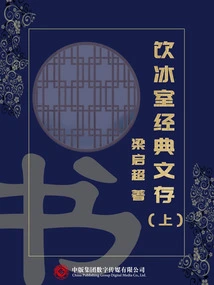
饮冰室经典文存(上)
Liang Qichao
"Bingbing Room Classic Collection" selects Liang Qichao's works in many fields. The "ice-drinking room" refers to the study room in Liang Qichao's former residence. He kept writing throughout his life, and his writings were rich and wide-ranging, focusing mainly on discussions and reflections on political commentary, history and literature. This book is the first volume and includes works such as "On the Harm of Immutable Laws", "Ten Kinds of Opposite Virtues and Mutual Meanings", "On Freedom", "Young China" and other works.
"Bingbing Room Classic Collection" selects Liang Qichao's works in many fields. The "ice-drinking room" refers to the study room in Liang Qichao's former residence. He kept writing throughout his life, and his writings were rich and wide-ranging, focusing mainly on discussions and reflections on political commentary, history and literature. This book is the first volume and includes works such as "On the Harm of Immutable Laws", "Ten Kinds of Opposite Virtues and Mutual Meanings", "On Freedom", "Young China" and other works.
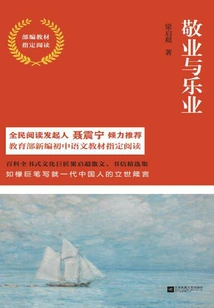
Dedication and Joy in Work
Literature敬业与乐业
Liang Qichao
This book collects Liang Qichao's famous essays, presenting readers with the most classic articles. His prose either exposes and criticizes the dark and ugly reality, or worries about the current situation of the motherland, or introduces advanced Western ideas and technology, actively calls for reform and self-improvement, and uses prose as a propaganda tool for his reform ideas. In terms of form, his prose is full of discussion and momentum, and his writing is often emotional and highly inspiring; his language is both elegant and clear, and full of elegance and interest. His works "Dedication and Joy" and "The Most Suffering and the Most Joy" were selected into Chinese middle school Chinese textbooks.
This book collects Liang Qichao's famous essays, presenting readers with the most classic articles. His prose either exposes and criticizes the dark and ugly reality, or worries about the current situation of the motherland, or introduces advanced Western ideas and technology, actively calls for reform and self-improvement, and uses prose as a propaganda tool for his reform ideas. In terms of form, his prose is full of discussion and momentum, and his writing is often emotional and highly inspiring; his language is both elegant and clear, and full of elegance and interest. His works "Dedication and Joy" and "The Most Suffering and the Most Joy" were selected into Chinese middle school Chinese textbooks.
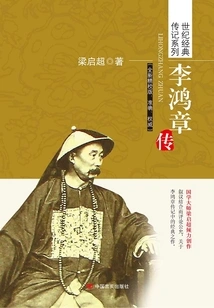
Biography of Li Hongzhang (collection)
Literature李鸿章传(典藏)
Liang Qichao
Liang Qichao (February 23, 1873 - January 19, 1929), also known as Zhuoru, Renfu, Rengong, also known as the master of Yinbingshi, Yinbingzi, Ai Shike, a new citizen of China, and the master of Free Zhai. During the Guangxu period of the Qing Dynasty, he was a thinker, politician, educator, historian and writer in modern China. One of the leaders of the Reform Movement of 1898 (Hundred Days Reform), a representative figure of modern Chinese reformists and neo-Legalists. Liang Qichao is recognized as an outstanding scholar in the late Qing Dynasty, an encyclopedic figure in Chinese history, and one of the rare figures who can still make great achievements in academic research after withdrawing from the political stage. Celebrity comments: Mr. Ren Gong is highly educated and erudite, which is rare in modern times. --Chen Yinke: His momentum and scale are a bit like Li Shimin and Kublai Khan. Although they did not reach the founding of the country, their momentum and scale are already frightening. --Zheng Zhenduo To be honest, Liang Rengong's status was indeed a representative of revolutionaries at that time. He was born when China's feudal system was broken by capitalism. He shouldered the mission of the times, flaunting free thought and fighting against the remnants of feudalism. Before his new and vigorous remarks, almost all the old ideas and customs were like fallen leaves in the wind, completely losing their brilliance. It can be said that no one among the teenagers of twenty years ago-in other words, the children of the proletarian class at that time-had not been baptized by his thoughts or writings, whether they were in favor or against. He is a powerful spokesperson of the bourgeois revolutionary era, and his achievements are indeed not inferior to those of Zhang Taiyan. --Guo Moruo's "The Biography of Li Hongzhang" fairly and objectively describes Li Hongzhang's legendary life from his early years of isolation to suppressing the Taiping Army, participating in the Sino-Japanese War of 1894, founding the Westernization Movement, and navigating the history of world diplomacy. It restores a real Li Hongzhang from a historical perspective.
Liang Qichao (February 23, 1873 - January 19, 1929), also known as Zhuoru, Renfu, Rengong, also known as the master of Yinbingshi, Yinbingzi, Ai Shike, a new citizen of China, and the master of Free Zhai. During the Guangxu period of the Qing Dynasty, he was a thinker, politician, educator, historian and writer in modern China. One of the leaders of the Reform Movement of 1898 (Hundred Days Reform), a representative figure of modern Chinese reformists and neo-Legalists. Liang Qichao is recognized as an outstanding scholar in the late Qing Dynasty, an encyclopedic figure in Chinese history, and one of the rare figures who can still make great achievements in academic research after withdrawing from the political stage. Celebrity comments: Mr. Ren Gong is highly educated and erudite, which is rare in modern times. --Chen Yinke: His momentum and scale are a bit like Li Shimin and Kublai Khan. Although they did not reach the founding of the country, their momentum and scale are already frightening. --Zheng Zhenduo To be honest, Liang Rengong's status was indeed a representative of revolutionaries at that time. He was born when China's feudal system was broken by capitalism. He shouldered the mission of the times, flaunting free thought and fighting against the remnants of feudalism. Before his new and vigorous remarks, almost all the old ideas and customs were like fallen leaves in the wind, completely losing their brilliance. It can be said that no one among the teenagers of twenty years ago-in other words, the children of the proletarian class at that time-had not been baptized by his thoughts or writings, whether they were in favor or against. He is a powerful spokesperson of the bourgeois revolutionary era, and his achievements are indeed not inferior to those of Zhang Taiyan. --Guo Moruo's "The Biography of Li Hongzhang" fairly and objectively describes Li Hongzhang's legendary life from his early years of isolation to suppressing the Taiping Army, participating in the Sino-Japanese War of 1894, founding the Westernization Movement, and navigating the history of world diplomacy. It restores a real Li Hongzhang from a historical perspective.
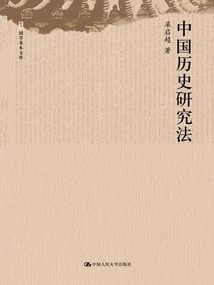
中国历史研究法
Liang Qichao
This book is a masterpiece of historical theory that Liang Qichao dabbled in Eastern and Western history in his later years. It combines the past and current situation of Chinese history books and systematically organizes historical theory. It is analytically analyzed, concise and comprehensive, with theories, methods, examples and judgments. It is worthy of being a masterpiece of modern Chinese history. The author has a deep understanding of traditional Chinese history and fully understands the essence of Western historical research. Combined with his own research experience, many of his academic experiences still have important reference value to this day.
This book is a masterpiece of historical theory that Liang Qichao dabbled in Eastern and Western history in his later years. It combines the past and current situation of Chinese history books and systematically organizes historical theory. It is analytically analyzed, concise and comprehensive, with theories, methods, examples and judgments. It is worthy of being a masterpiece of modern Chinese history. The author has a deep understanding of traditional Chinese history and fully understands the essence of Western historical research. Combined with his own research experience, many of his academic experiences still have important reference value to this day.
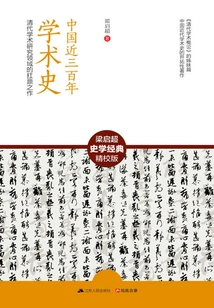
中国近三百年学术史
Liang Qichao
"The Academic History of China in the Past Three Hundred Years" is Liang Qichao's historical masterpiece. It was originally a lecture notes compiled when he taught at Tsinghua University, Nankai University and other universities. It fully explains the development of academics in the Qing Dynasty and its value and position in the development of Chinese history and culture. This book is divided into 16 lectures, taking social trends of thought, school figures and subject development as clues to show the changes in Chinese academics from the 17th century to the 19th century. The content is informative and the viewpoints are novel. In the research and writing of academic history, this book has groundbreaking value and has become a must-read for researchers in related professions. Through this book, readers can not only feel the author's rigorous academic attitude, but also gain a comprehensive and systematic understanding of Qing Dynasty scholarship, as well as the connection between China's historical development and ideological culture.
"The Academic History of China in the Past Three Hundred Years" is Liang Qichao's historical masterpiece. It was originally a lecture notes compiled when he taught at Tsinghua University, Nankai University and other universities. It fully explains the development of academics in the Qing Dynasty and its value and position in the development of Chinese history and culture. This book is divided into 16 lectures, taking social trends of thought, school figures and subject development as clues to show the changes in Chinese academics from the 17th century to the 19th century. The content is informative and the viewpoints are novel. In the research and writing of academic history, this book has groundbreaking value and has become a must-read for researchers in related professions. Through this book, readers can not only feel the author's rigorous academic attitude, but also gain a comprehensive and systematic understanding of Qing Dynasty scholarship, as well as the connection between China's historical development and ideological culture.
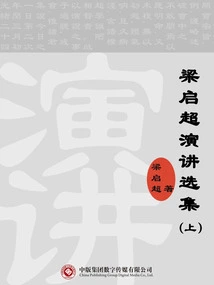
梁启超演讲选集(上)
Liang Qichao
"Selected Speeches of Liang Qichao" is a selection of Mr. Liang Qichao's speech texts. Liang Qichao was a famous scholar and politician in modern Chinese history. His life was full of ups and downs and was extremely dramatic. His literary theory is extensive and almost all-encompassing, radical and involves almost all aspects of the current situation, showing an advanced Chinese's open-mindedness and pursuit of continuous improvement after going to the world. This is the first volume.
"Selected Speeches of Liang Qichao" is a selection of Mr. Liang Qichao's speech texts. Liang Qichao was a famous scholar and politician in modern Chinese history. His life was full of ups and downs and was extremely dramatic. His literary theory is extensive and almost all-encompassing, radical and involves almost all aspects of the current situation, showing an advanced Chinese's open-mindedness and pursuit of continuous improvement after going to the world. This is the first volume.
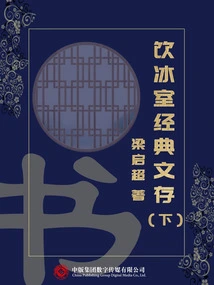
饮冰室经典文存(下)
Liang Qichao
"Bingbing Room Classic Collection" selects Liang Qichao's works in many fields. The "ice-drinking room" refers to the study room in Liang Qichao's former residence. He kept writing throughout his life, and his writings were rich and wide-ranging, focusing mainly on discussions and reflections on political commentary, history and literature. This book is the second volume and includes works such as "Introduction to China's Evolution in Fifty Years", "Scientific Spirit and Eastern and Western Culture", "Learning and Skills", and "Two Main Roads to State Governance".
"Bingbing Room Classic Collection" selects Liang Qichao's works in many fields. The "ice-drinking room" refers to the study room in Liang Qichao's former residence. He kept writing throughout his life, and his writings were rich and wide-ranging, focusing mainly on discussions and reflections on political commentary, history and literature. This book is the second volume and includes works such as "Introduction to China's Evolution in Fifty Years", "Scientific Spirit and Eastern and Western Culture", "Learning and Skills", and "Two Main Roads to State Governance".
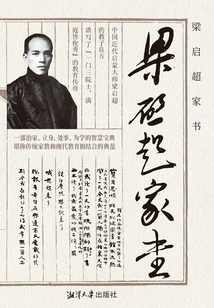
Liang Qichao's Family Letters
Literature梁启超家书
Liang Qichao
"Liang Qichao's Family Letters" mainly collects the letters written by Liang Qichao to his wife and children from 1898 to 1928, expressing his deep concern for his wife and children between the lines. From more than a hundred letters from home, we can see that Liang Qichao was a kind and open-minded loving father who cared about the emotional life of his children; he was a wise mentor who guided his children's academic and financial management; he was the backbone of the nation who was self-reliant and self-reliant, and each of his children he cultivated became elites. Among them, architecture expert Liang Sicheng, archeology expert Liang Siyong, and rocket expert Liang Sili were selected as academicians, which is rare in Chinese history. There are some personal factors in this, but they are inseparable from Liang Qichao's words and deeds. His educational philosophy still has important reference and inspiration value for today's Chinese family education.
"Liang Qichao's Family Letters" mainly collects the letters written by Liang Qichao to his wife and children from 1898 to 1928, expressing his deep concern for his wife and children between the lines. From more than a hundred letters from home, we can see that Liang Qichao was a kind and open-minded loving father who cared about the emotional life of his children; he was a wise mentor who guided his children's academic and financial management; he was the backbone of the nation who was self-reliant and self-reliant, and each of his children he cultivated became elites. Among them, architecture expert Liang Sicheng, archeology expert Liang Siyong, and rocket expert Liang Sili were selected as academicians, which is rare in Chinese history. There are some personal factors in this, but they are inseparable from Liang Qichao's words and deeds. His educational philosophy still has important reference and inspiration value for today's Chinese family education.
梁启超演讲选集(下)
Liang Qichao
"Selected Speeches of Liang Qichao" is a selection of Mr. Liang Qichao's speech texts. Liang Qichao was a famous scholar and politician in modern Chinese history. His life was full of ups and downs and was extremely dramatic. His literary theory is extensive and almost all-encompassing, radical and involves almost all aspects of the current situation, showing an advanced Chinese's open-mindedness and pursuit of continuous improvement after going to the world. This book is the second volume.
"Selected Speeches of Liang Qichao" is a selection of Mr. Liang Qichao's speech texts. Liang Qichao was a famous scholar and politician in modern Chinese history. His life was full of ups and downs and was extremely dramatic. His literary theory is extensive and almost all-encompassing, radical and involves almost all aspects of the current situation, showing an advanced Chinese's open-mindedness and pursuit of continuous improvement after going to the world. This book is the second volume.
Two Types of Chinese Studies Guidance
Literature国学指导二种
Liang Qichao
"Two Kinds of Guidance on Chinese Studies" is a compilation of Mr. Liang Qichao's two works that guide young people on how to read Chinese classics, "Essential Contents of Introductory Books on Chinese Studies and How to Read them" and "Answers to Essential Books and How to Read them". In the spring of 1923, a reporter from "Tsinghua Weekly" asked Mr. Liang Qichao to draft "Essentials of an Introductory Book on Chinese Studies and How to Read it", and "supervision was very urgent". Mr. Liang "struggled his best in three days" to complete it. The book manuscript lists a reading list of Chinese classics for young people from six aspects: "Books on Cultivation, Application and Relationship with Ideological History", "Books on Political History and Other Philology", "Books on Rhymes", "Books on Elementary School and Grammar" and "Books on Casual Reading". "Solving Problems and Reading Methods of Essential Books" is a lecture given by Mr. Ren Gong at Tsinghua University in 1923. The manuscript discusses Chinese classics such as "The Analects of Confucius, Mencius, University, Doctrine of the Mean, Filial Piety", "Historical Records", "Xunzi", "Han Feizi", "Zuo Zhuan Guoyu", "The Book of Songs", "Chu Ci", "Book of Rites", "Dadai Liji Erya" and other Chinese classics. It summarizes and summarizes the author, year of writing, content and value, reading method, its annotations and related books, etc.
"Two Kinds of Guidance on Chinese Studies" is a compilation of Mr. Liang Qichao's two works that guide young people on how to read Chinese classics, "Essential Contents of Introductory Books on Chinese Studies and How to Read them" and "Answers to Essential Books and How to Read them". In the spring of 1923, a reporter from "Tsinghua Weekly" asked Mr. Liang Qichao to draft "Essentials of an Introductory Book on Chinese Studies and How to Read it", and "supervision was very urgent". Mr. Liang "struggled his best in three days" to complete it. The book manuscript lists a reading list of Chinese classics for young people from six aspects: "Books on Cultivation, Application and Relationship with Ideological History", "Books on Political History and Other Philology", "Books on Rhymes", "Books on Elementary School and Grammar" and "Books on Casual Reading". "Solving Problems and Reading Methods of Essential Books" is a lecture given by Mr. Ren Gong at Tsinghua University in 1923. The manuscript discusses Chinese classics such as "The Analects of Confucius, Mencius, University, Doctrine of the Mean, Filial Piety", "Historical Records", "Xunzi", "Han Feizi", "Zuo Zhuan Guoyu", "The Book of Songs", "Chu Ci", "Book of Rites", "Dadai Liji Erya" and other Chinese classics. It summarizes and summarizes the author, year of writing, content and value, reading method, its annotations and related books, etc.
Introduction to Qing Dynasty Academics
Literature清代学术概论
Liang Qichao
"Introduction to Academic Thought in the Qing Dynasty" is my country's first work that systematically summarizes the history of academic thought in the Qing Dynasty. The book analyzes the academic thoughts of the Qing Dynasty, covering philosophy, classics, history, archaeology, geography, epigraphy, philology, Buddhism, fine arts, poetry, calendar, mathematics, water conservancy and other academic fields. In "Introduction to Academics in the Qing Dynasty", Liang Qichao divided the evolution of academic thought in the Qing Dynasty into four stages: the enlightenment period, the heyday, the degeneration period, and the decline period. He made an in-depth analysis of the interconnections, academic achievements and limitations of each stage, and put forward many precise insights. A notable feature of "Introduction to Academics in the Qing Dynasty" is that it breaks through the traditional academic history framework of "study cases" and uses "trends of thought" as the main axis to expound the academic thoughts of the Qing Dynasty. Another notable feature of "Introduction to Qing Dynasty Academics" is that it reveals the characteristics of Qing Dynasty academic thought through the comparison of Chinese and Western cultures.
"Introduction to Academic Thought in the Qing Dynasty" is my country's first work that systematically summarizes the history of academic thought in the Qing Dynasty. The book analyzes the academic thoughts of the Qing Dynasty, covering philosophy, classics, history, archaeology, geography, epigraphy, philology, Buddhism, fine arts, poetry, calendar, mathematics, water conservancy and other academic fields. In "Introduction to Academics in the Qing Dynasty", Liang Qichao divided the evolution of academic thought in the Qing Dynasty into four stages: the enlightenment period, the heyday, the degeneration period, and the decline period. He made an in-depth analysis of the interconnections, academic achievements and limitations of each stage, and put forward many precise insights. A notable feature of "Introduction to Academics in the Qing Dynasty" is that it breaks through the traditional academic history framework of "study cases" and uses "trends of thought" as the main axis to expound the academic thoughts of the Qing Dynasty. Another notable feature of "Introduction to Qing Dynasty Academics" is that it reveals the characteristics of Qing Dynasty academic thought through the comparison of Chinese and Western cultures.
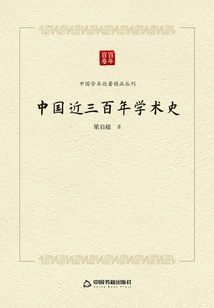
中国近三百年学术史
Liang Qichao
This book summarizes the academic achievements of the Qing Dynasty, especially the academic achievements of the Qianjia School, as well as its academic experience and methods. The book has a total of sixteen lectures, including: reaction and pioneer, the aftermath of Yangming School and its revision - Huanglizhou, the remaining records of the waves of learning in the early Qing Dynasty, etc.
This book summarizes the academic achievements of the Qing Dynasty, especially the academic achievements of the Qianjia School, as well as its academic experience and methods. The book has a total of sixteen lectures, including: reaction and pioneer, the aftermath of Yangming School and its revision - Huanglizhou, the remaining records of the waves of learning in the early Qing Dynasty, etc.
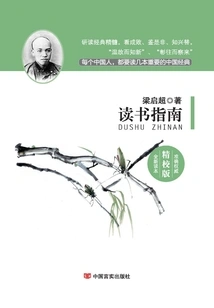
Reading Guide
Literature读书指南
Liang Qichao
I think that a Chinese who has received a middle school education or above should read several very important books in his country... Mr. Shao. However, when reading ancient books today, the first thing is that it cannot arouse interest; the second thing is that there is not much time to immerse oneself in studying among the vast books; the third thing is that it takes patience and time to read it reluctantly, but it is also difficult to get the gist. ... If you want to remedy this shortcoming, books such as "Problems Solved by Essential Books" or "Reading Methods of Essential Books" cannot but be said to meet the urgent requirements of the times. Although I haven't done a good job in these articles, I finally want to add a little fun and save a little energy for young people on this road. --Liang Qichao. About the author Liang Qichao (February 23, 1873 - January 19, 1929) was a representative figure of modern China's reformers, an ideological enlightener in modern China, a great social activist, and was called the pride of the public opinion circle by his time. He is also a heavyweight scholar and one of the four professors of the School of Chinese Studies at Tsinghua University in the early Republic of China. His articles are full of discussion, majestic and unrestricted, and often emotional and highly motivating. His representative work "Young China" has influenced and inspired several generations of Chinese people. Liang Qichao is recognized as an encyclopedic figure in Chinese history, and one of the rare figures who can still make great achievements in academic research after retiring from the political stage. Introduction: "Reading Guide" is a collection of Mr. Liang Qichao's "Essentials of Introductory Books on Chinese Studies and Their Reading Methods" and "Essential Books and Their Reading Methods". The former introduces basic Chinese classics, explains the characteristics and reading methods of each book, and the text is simple and concise. The latter was a lecture note for the "Summary of Groups of Books" he taught at Tsinghua School, and gave a systematic introduction to classics such as The Analects of Confucius, Historical Records, Zuozhuan, and The Book of Songs. In addition, the appendix also includes several texts such as "Two Main Roads to Governance". The author talks about many personal reading experiences in the book, which still have important enlightenment significance for us today.
I think that a Chinese who has received a middle school education or above should read several very important books in his country... Mr. Shao. However, when reading ancient books today, the first thing is that it cannot arouse interest; the second thing is that there is not much time to immerse oneself in studying among the vast books; the third thing is that it takes patience and time to read it reluctantly, but it is also difficult to get the gist. ... If you want to remedy this shortcoming, books such as "Problems Solved by Essential Books" or "Reading Methods of Essential Books" cannot but be said to meet the urgent requirements of the times. Although I haven't done a good job in these articles, I finally want to add a little fun and save a little energy for young people on this road. --Liang Qichao. About the author Liang Qichao (February 23, 1873 - January 19, 1929) was a representative figure of modern China's reformers, an ideological enlightener in modern China, a great social activist, and was called the pride of the public opinion circle by his time. He is also a heavyweight scholar and one of the four professors of the School of Chinese Studies at Tsinghua University in the early Republic of China. His articles are full of discussion, majestic and unrestricted, and often emotional and highly motivating. His representative work "Young China" has influenced and inspired several generations of Chinese people. Liang Qichao is recognized as an encyclopedic figure in Chinese history, and one of the rare figures who can still make great achievements in academic research after retiring from the political stage. Introduction: "Reading Guide" is a collection of Mr. Liang Qichao's "Essentials of Introductory Books on Chinese Studies and Their Reading Methods" and "Essential Books and Their Reading Methods". The former introduces basic Chinese classics, explains the characteristics and reading methods of each book, and the text is simple and concise. The latter was a lecture note for the "Summary of Groups of Books" he taught at Tsinghua School, and gave a systematic introduction to classics such as The Analects of Confucius, Historical Records, Zuozhuan, and The Book of Songs. In addition, the appendix also includes several texts such as "Two Main Roads to Governance". The author talks about many personal reading experiences in the book, which still have important enlightenment significance for us today.
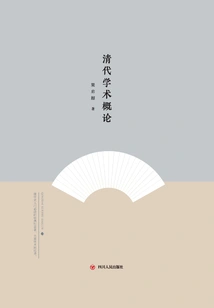
大师讲传统文化:清代学术概论
Liang Qichao
The first draft of "Masters Speak of Traditional Culture Series: An Introduction to Qing Dynasty Academics" was written in 1920. It was originally a preface written by Liang Qichao for his friend Jiang Fangzhen's "History of the European Renaissance". This book is not a specialized historical work that simply discusses the "transformation of the ideological world" in the Qing Dynasty. It is also a personal academic memoir of Liang Qichao. In the book, Liang Qichao re-discussed the academic development of the Qing Dynasty and proposed "retroversion as liberation" as the general characteristic of the academic development of the Qing Dynasty. Mr. Liang's summary of Qing Dynasty academic theories and the academic spirit he displayed are still of benefit to today's Chinese academic circles.
The first draft of "Masters Speak of Traditional Culture Series: An Introduction to Qing Dynasty Academics" was written in 1920. It was originally a preface written by Liang Qichao for his friend Jiang Fangzhen's "History of the European Renaissance". This book is not a specialized historical work that simply discusses the "transformation of the ideological world" in the Qing Dynasty. It is also a personal academic memoir of Liang Qichao. In the book, Liang Qichao re-discussed the academic development of the Qing Dynasty and proposed "retroversion as liberation" as the general characteristic of the academic development of the Qing Dynasty. Mr. Liang's summary of Qing Dynasty academic theories and the academic spirit he displayed are still of benefit to today's Chinese academic circles.
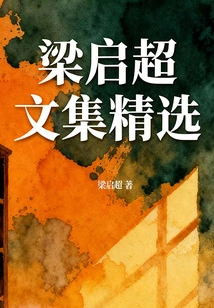
Selected Works of Liang Qichao
Literature梁启超文集精选
Liang Qichao
This book selects Liang Qichao's political commentaries, essays, biographies, and wonderful speeches and collects them into one volume. It collects excellent chapters such as "Introduction to China's Evolution in Fifty Years", "Theory of the Transitional Era", "How I Will Serve the Country in the Future", "The Ratio of Civilization and Heroes", "Autobiography at Thirty", and biographies of the Six Gentlemen of 1898. These wonderful words, like the beating pulse of the times, elaborate on the constitutional proposition of promoting civil rights and opening a parliament, and analyze the paths and methods of reform and innovation, with both historical depth and practical concern. The lines are filled with the feelings of family and country and the sharpness of thought of the "owner of the ice-drinking room", which is a vivid portrayal of the ideological trend of saving the country from the nation in modern times. These texts spanning a century provide a precious model for future generations to understand the awakening and pursuit of modern China. These words are so inspiring that they still have strong spiritual power even today.
This book selects Liang Qichao's political commentaries, essays, biographies, and wonderful speeches and collects them into one volume. It collects excellent chapters such as "Introduction to China's Evolution in Fifty Years", "Theory of the Transitional Era", "How I Will Serve the Country in the Future", "The Ratio of Civilization and Heroes", "Autobiography at Thirty", and biographies of the Six Gentlemen of 1898. These wonderful words, like the beating pulse of the times, elaborate on the constitutional proposition of promoting civil rights and opening a parliament, and analyze the paths and methods of reform and innovation, with both historical depth and practical concern. The lines are filled with the feelings of family and country and the sharpness of thought of the "owner of the ice-drinking room", which is a vivid portrayal of the ideological trend of saving the country from the nation in modern times. These texts spanning a century provide a precious model for future generations to understand the awakening and pursuit of modern China. These words are so inspiring that they still have strong spiritual power even today.
梁启超政论精选
Liang Qichao
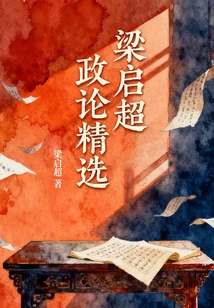
This book contains seven excellent political essays including Liang Qichao's "Introduction to China's Evolution in Fifty Years", "Theory of the Transitional Era", "Bitter Condemnation", and "The Proletariat and the Unemployed Class". It summarizes the difficult progress of the Chinese nation in terms of national expansion, abolition of imperial examinations, and ideological awakening. The author acknowledges the regression of concrete politics and emphasizes that the people have realized the fundamental consciousness of "national founding" and "democratic spirit." These wonderful articles are not only the crystallization of Liang Qichao's thoughts on seeking a prescription to save the country, but also a true portrayal of modern China's difficult search amidst drastic changes. It is like an eternal mirror, reflecting the great spirit of the people who have advanced from tradition to modernity. Liang's strong spiritual core, like a candle, constantly inspires each generation of Chinese people to continue to shoulder the historical responsibility of national rejuvenation.
This book contains seven excellent political essays including Liang Qichao's "Introduction to China's Evolution in Fifty Years", "Theory of the Transitional Era", "Bitter Condemnation", and "The Proletariat and the Unemployed Class". It summarizes the difficult progress of the Chinese nation in terms of national expansion, abolition of imperial examinations, and ideological awakening. The author acknowledges the regression of concrete politics and emphasizes that the people have realized the fundamental consciousness of "national founding" and "democratic spirit." These wonderful articles are not only the crystallization of Liang Qichao's thoughts on seeking a prescription to save the country, but also a true portrayal of modern China's difficult search amidst drastic changes. It is like an eternal mirror, reflecting the great spirit of the people who have advanced from tradition to modernity. Liang's strong spiritual core, like a candle, constantly inspires each generation of Chinese people to continue to shoulder the historical responsibility of national rejuvenation.
中国历史研究法
Liang Qichao
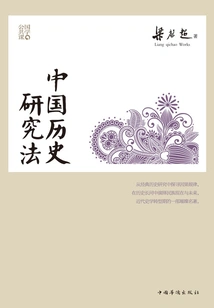
"Chinese Historical Research Methods" is another masterpiece after Liang's "New Historiography". It is based on the methods accumulated in traditional historiography, combined with the latest developments in Western historiography at that time, and compiled using new academic perspectives. With his broad academic vision, the author elaborates on the identification of historical materials, textual research of historical events, discussion of historical sites, and compilation of historical books, and constructs a unique historical theoretical system. The empirical remarks scattered throughout "Chinese History Research Methods" are quite friendly and interesting to beginners of history. It can be called an excellent reading book for cultivating interest in historical research.
"Chinese Historical Research Methods" is another masterpiece after Liang's "New Historiography". It is based on the methods accumulated in traditional historiography, combined with the latest developments in Western historiography at that time, and compiled using new academic perspectives. With his broad academic vision, the author elaborates on the identification of historical materials, textual research of historical events, discussion of historical sites, and compilation of historical books, and constructs a unique historical theoretical system. The empirical remarks scattered throughout "Chinese History Research Methods" are quite friendly and interesting to beginners of history. It can be called an excellent reading book for cultivating interest in historical research.
大师讲传统文化:中国历史研究法 中国历史研究法补编
Liang Qichao
"Masters Speak of Traditional Culture Series: Research Methods of Chinese History? Supplement to Research Methods of Chinese History" is the first work in modern times to systematically expound historical theory. It consists of three parts: "Research Methods of Chinese History", "Several Important Issues in Researching Cultural History" and "Supplement to Research Methods of Chinese History". "Chinese History Research Method" discusses the definition, significance and scope of history; reviews and evaluates China's old historiography; and puts forward proposals for the establishment of new historiography. "Several Important Issues in the Study of Cultural History" is a repair and revision of the "Chinese History Research Method". "Supplement to Chinese Historical Research Methods" focuses on how to do professional history.
"Masters Speak of Traditional Culture Series: Research Methods of Chinese History? Supplement to Research Methods of Chinese History" is the first work in modern times to systematically expound historical theory. It consists of three parts: "Research Methods of Chinese History", "Several Important Issues in Researching Cultural History" and "Supplement to Research Methods of Chinese History". "Chinese History Research Method" discusses the definition, significance and scope of history; reviews and evaluates China's old historiography; and puts forward proposals for the establishment of new historiography. "Several Important Issues in the Study of Cultural History" is a repair and revision of the "Chinese History Research Method". "Supplement to Chinese Historical Research Methods" focuses on how to do professional history.