Library
Browse and search books
11 novels found
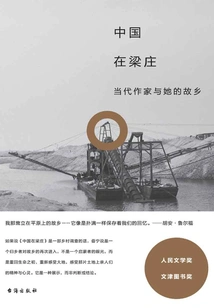
China in Liangzhuang
Literature中国在梁庄
Liang Hong
The new hardcover edition of the People's Literature Prize "China in Liangzhuang" was shockingly unveiled. In Liangzhuang, you can see your invisible hometown and another side of China. "China in Liangzhuang", after five months of investigation and interviews, restores the history of changes in Liangzhuang in the past forty years, and records the real life scenes of people in this land and the practical difficulties they face: such as the hopelessness of left-behind children in rural areas, the lack of elderly care, education, and medical care for farmers, the destruction of the rural natural environment, the fission of rural families, and the crisis of farmers' "sexual well-being"... It records the pain of China's transformation and the trauma of the countryside.
The new hardcover edition of the People's Literature Prize "China in Liangzhuang" was shockingly unveiled. In Liangzhuang, you can see your invisible hometown and another side of China. "China in Liangzhuang", after five months of investigation and interviews, restores the history of changes in Liangzhuang in the past forty years, and records the real life scenes of people in this land and the practical difficulties they face: such as the hopelessness of left-behind children in rural areas, the lack of elderly care, education, and medical care for farmers, the destruction of the rural natural environment, the fission of rural families, and the crisis of farmers' "sexual well-being"... It records the pain of China's transformation and the trauma of the countryside.
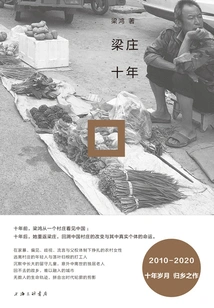
Ten Years in Liangzhuang
Literature梁庄十年
Liang Hong
In 2010, "China in Liangzhuang" was published for the first time, showing us the changes in Chinese villages in an era of rapid change. Ten years later, the author Liang Hong returned to his hometown again and revisited the people and events described in the book. In the past ten years, everything is changing, but it seems that nothing has changed: some people have left here forever, and some wandering people have returned here. The appearance of the village, the river and the land are all different from before. However, despite the changes in personnel, the vitality and vitality revealed by Liangzhuang and Liangzhuang people remain the same as before. On his return this time, Liang Hong re-examined his hometown from a new perspective. With delicate description and keen insight, he brought the people of Liangzhuang back to our sight. By tracing their lives, he traced the long and powerful lifeline of an ordinary village - this lifeline belongs to both those who were "born here, grew up here, and died here" and also belong to those who are part of the same current of the times.
In 2010, "China in Liangzhuang" was published for the first time, showing us the changes in Chinese villages in an era of rapid change. Ten years later, the author Liang Hong returned to his hometown again and revisited the people and events described in the book. In the past ten years, everything is changing, but it seems that nothing has changed: some people have left here forever, and some wandering people have returned here. The appearance of the village, the river and the land are all different from before. However, despite the changes in personnel, the vitality and vitality revealed by Liangzhuang and Liangzhuang people remain the same as before. On his return this time, Liang Hong re-examined his hometown from a new perspective. With delicate description and keen insight, he brought the people of Liangzhuang back to our sight. By tracing their lives, he traced the long and powerful lifeline of an ordinary village - this lifeline belongs to both those who were "born here, grew up here, and died here" and also belong to those who are part of the same current of the times.
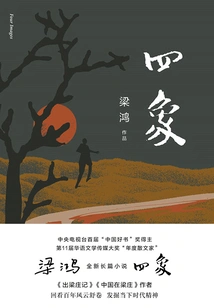
Four Images
General Fiction四象
Liang Hong
"The Story of Leaving Liangzhuang" and "China in Liangzhuang" are novels written by Liang Hong. A Christian elder, a foreign military attaché, an IT elite, a girl who knows all plants well... Four characters, four appearances, their life experiences are closely intertwined, linking together the long and tortuous story of a village. They came with the secrets of Liangzhuang, full of urgency, passion and ups and downs. They were familiar with human wisdom and all desires, and their vision was to build an utopia in the reality of Liangzhuang. Unexpectedly, differences had already been quietly buried... Living and dead, above and below ground, history and present... They are still a part of us, and their stories continue.
"The Story of Leaving Liangzhuang" and "China in Liangzhuang" are novels written by Liang Hong. A Christian elder, a foreign military attaché, an IT elite, a girl who knows all plants well... Four characters, four appearances, their life experiences are closely intertwined, linking together the long and tortuous story of a village. They came with the secrets of Liangzhuang, full of urgency, passion and ups and downs. They were familiar with human wisdom and all desires, and their vision was to build an utopia in the reality of Liangzhuang. Unexpectedly, differences had already been quietly buried... Living and dead, above and below ground, history and present... They are still a part of us, and their stories continue.
The Disappearance of "aura": the Evolution of Narrative Aesthetics in Contemporary Literature
Literature“灵光”的消逝:当代文学叙事美学的嬗变
Liang Hong
This book is a collection of contemporary literary criticism by the famous writer Liang Hong. It reviews contemporary Chinese literature from different perspectives such as family novels, female identity, and local literature. When Benjamin discussed the value of traditional art, he used a very emotional theoretical term - "aura". "What is aura? The strange entanglement of time and space, the unique appearance of distant things, which although far away, seems to be right in front of you." Resting quietly at noon in summer, following the arc of the mountain on the horizon, or following a branch projected on the viewer, until the 'now' becomes part of the image - this is breathing the aura of the distant mountains and branches." Needless to say, In Hardy's English countryside, Faulkner's southern towns, Marquez's Macondo village, in Lu Xun's Shaoxing, Shen Congwen's Xiangxi, Mo Yan's Gaomi Northeast Township, Yan Lianke's Raked Mountains, Bi Feiyu's Wangjiazhuang, Wang Anyi's Shanghai Hutong The existence of this "aura" can be felt everywhere. It is reflected from the dust, sunshine and wilderness of the countryside, from life, myths and history. It passes through the soul and condenses into a spiritual homeland, stimulating the deepest emotional throbbing of mankind.
This book is a collection of contemporary literary criticism by the famous writer Liang Hong. It reviews contemporary Chinese literature from different perspectives such as family novels, female identity, and local literature. When Benjamin discussed the value of traditional art, he used a very emotional theoretical term - "aura". "What is aura? The strange entanglement of time and space, the unique appearance of distant things, which although far away, seems to be right in front of you." Resting quietly at noon in summer, following the arc of the mountain on the horizon, or following a branch projected on the viewer, until the 'now' becomes part of the image - this is breathing the aura of the distant mountains and branches." Needless to say, In Hardy's English countryside, Faulkner's southern towns, Marquez's Macondo village, in Lu Xun's Shaoxing, Shen Congwen's Xiangxi, Mo Yan's Gaomi Northeast Township, Yan Lianke's Raked Mountains, Bi Feiyu's Wangjiazhuang, Wang Anyi's Shanghai Hutong The existence of this "aura" can be felt everywhere. It is reflected from the dust, sunshine and wilderness of the countryside, from life, myths and history. It passes through the soul and condenses into a spiritual homeland, stimulating the deepest emotional throbbing of mankind.
外省笔记:20世纪河南文学
Liang Hong
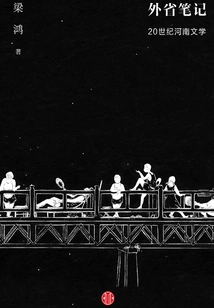
The author of "Notes from Other Provinces" not only loves and thinks about his hometown in the culture of other provinces in Henan, but he is also able to transcend the culture of his hometown at all times and make more discerning, passionate and heart-wrenching analyses. And from China's non-mainstream regional culture, it captures a special existence in the history of modern and contemporary Chinese literature. It covers a wide range of contents, including both modern literature and contemporary literature. However, it does not appear fragmented and appears complete and unified in time and space.
The author of "Notes from Other Provinces" not only loves and thinks about his hometown in the culture of other provinces in Henan, but he is also able to transcend the culture of his hometown at all times and make more discerning, passionate and heart-wrenching analyses. And from China's non-mainstream regional culture, it captures a special existence in the history of modern and contemporary Chinese literature. It covers a wide range of contents, including both modern literature and contemporary literature. However, it does not appear fragmented and appears complete and unified in time and space.
Liang Guangzheng's Light
General Fiction梁光正的光
Liang Hong
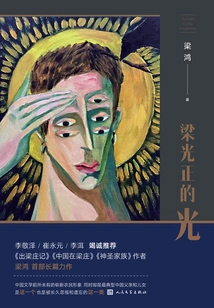
The story is narrated from the perspective of "I" Liang Dongyu, starting from the fact that Dongyu's father Liang Guangzheng insists on searching for relatives in his later years. She and her siblings are also forced to follow her father to review Liang Guang's life of constant struggle and failure just like Sisyphus. At the same time, they are also forced by the strong inertia of memory to go back to their respective boyhoods, re-face some past events that have been dusty for many years, and truly examine their own hearts and their emotions towards their father and other family members.
The story is narrated from the perspective of "I" Liang Dongyu, starting from the fact that Dongyu's father Liang Guangzheng insists on searching for relatives in his later years. She and her siblings are also forced to follow her father to review Liang Guang's life of constant struggle and failure just like Sisyphus. At the same time, they are also forced by the strong inertia of memory to go back to their respective boyhoods, re-face some past events that have been dusty for many years, and truly examine their own hearts and their emotions towards their father and other family members.
Erosion
General Fiction侵蚀
Liang Hong
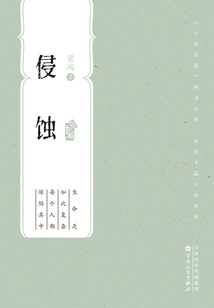
Liang Hong narrates the vicissitudes of life of little people and the trivialities of life with compassion and compassion. The novel uses the day before Yang Yousheng's work report as the narrative space to tell the story of his bleak life experiences. Yang Yousheng always sees people who once appeared in his life at night. These real and illusory people add up to his desolate and meaningless life. "Erosion" sees the big from the small, and deeply analyzes the psychological state of men who have lived in a stable and comfortable environment for a long time, are timid and fragile when facing setbacks, and are addicted to emptiness and pain and cannot extricate themselves from the mid-life crisis.
Liang Hong narrates the vicissitudes of life of little people and the trivialities of life with compassion and compassion. The novel uses the day before Yang Yousheng's work report as the narrative space to tell the story of his bleak life experiences. Yang Yousheng always sees people who once appeared in his life at night. These real and illusory people add up to his desolate and meaningless life. "Erosion" sees the big from the small, and deeply analyzes the psychological state of men who have lived in a stable and comfortable environment for a long time, are timid and fragile when facing setbacks, and are addicted to emptiness and pain and cannot extricate themselves from the mid-life crisis.
Holy Family
General Fiction神圣家族
Liang Hong
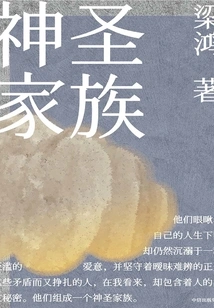
"Holy Family" is Liang Hong's first collection of short and medium-sized novels. It contains 12 stories of Wuzhen that can be written independently but are interrelated. It describes the folk world and the complex shape of human life in contemporary small towns in China. The 12 main characters in the novel, including the young Ah Qing, the homeless man Dequan, the doctor Yi Zhi, the beauty Caihong who never leaves the store, the old Li Ge who knows Yin and Yang Xianer, the young civil servant Hong Zhong who studies the Book of Changes, the depressed primary school teacher Mingliang, etc. They sit in Wuzhen and look out. Liang Hong placed the stories of these characters on the edge of social status, but each with their own pain, contradictions and struggles, in a mutating, seemingly indestructible and crumbling rural landscape. Through their tragic and joyous lives, he showed the light of life buried deep in the desolate place.
"Holy Family" is Liang Hong's first collection of short and medium-sized novels. It contains 12 stories of Wuzhen that can be written independently but are interrelated. It describes the folk world and the complex shape of human life in contemporary small towns in China. The 12 main characters in the novel, including the young Ah Qing, the homeless man Dequan, the doctor Yi Zhi, the beauty Caihong who never leaves the store, the old Li Ge who knows Yin and Yang Xianer, the young civil servant Hong Zhong who studies the Book of Changes, the depressed primary school teacher Mingliang, etc. They sit in Wuzhen and look out. Liang Hong placed the stories of these characters on the edge of social status, but each with their own pain, contradictions and struggles, in a mutating, seemingly indestructible and crumbling rural landscape. Through their tragic and joyous lives, he showed the light of life buried deep in the desolate place.
History and My Moment
Literature历史与我的瞬间
Liang Hong
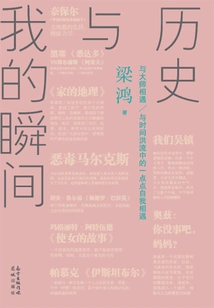
"History and My Moments" is a collection of essays by scholar and writer Liang Hong, divided into three volumes. The first series looks at the "return and departure" of Liangzhuang from internal and external perspectives, the childhood growth experience, the ups and downs of the villagers' lives, and the complex and deep emotions for their hometown. The second volume of "The Freedom of Literature in the Trees" interprets the works of world classic writers, such as Joyce, Marquez, Hesse, Oz, etc. It has the intellectual and rational analysis of typical scholar's prose, but it does not stop at the text, but can integrate the expressions of writers from various countries in different cultural contexts on similar themes (such as women, love, death, etc.), Analyze the "human" factors behind it, and find the point of dialogue between classics and the present. The third volume of "Moon on a Thousand Rivers, Cloudless in a Thousand Miles" focuses on the domestic literary scene, looking back at contemporary writers and critics (Li Jingze, Xu Zechen, Lu Min, Zhang Ning, etc.), With unique insights.
"History and My Moments" is a collection of essays by scholar and writer Liang Hong, divided into three volumes. The first series looks at the "return and departure" of Liangzhuang from internal and external perspectives, the childhood growth experience, the ups and downs of the villagers' lives, and the complex and deep emotions for their hometown. The second volume of "The Freedom of Literature in the Trees" interprets the works of world classic writers, such as Joyce, Marquez, Hesse, Oz, etc. It has the intellectual and rational analysis of typical scholar's prose, but it does not stop at the text, but can integrate the expressions of writers from various countries in different cultural contexts on similar themes (such as women, love, death, etc.), Analyze the "human" factors behind it, and find the point of dialogue between classics and the present. The third volume of "Moon on a Thousand Rivers, Cloudless in a Thousand Miles" focuses on the domestic literary scene, looking back at contemporary writers and critics (Li Jingze, Xu Zechen, Lu Min, Zhang Ning, etc.), With unique insights.
我不想缺席人世间的任何一场悲喜剧
Liang Hong
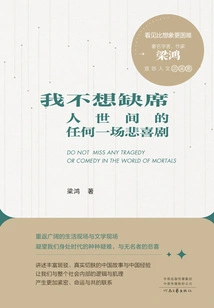
This book is a collection of humanistic lectures and interviews by the famous writer and scholar Liang Hong. It not only talks about literature and life, but also talks about Chinese society and our current era. Share the writer's most thoughtful creative experience, the most authentic inner world, the most warm humanistic insights, and restore the literary scene. Liang Hong pays attention to the joys and sorrows of ordinary people and ordinary families in urban and rural areas, from which he can see into people's emotions and fate in the process of China's modernization development and urbanization, showing the writer's strong and deep humanistic care. The text retains the style and original appearance of the live conversation, just like a heart-to-heart chat with the reader.
This book is a collection of humanistic lectures and interviews by the famous writer and scholar Liang Hong. It not only talks about literature and life, but also talks about Chinese society and our current era. Share the writer's most thoughtful creative experience, the most authentic inner world, the most warm humanistic insights, and restore the literary scene. Liang Hong pays attention to the joys and sorrows of ordinary people and ordinary families in urban and rural areas, from which he can see into people's emotions and fate in the process of China's modernization development and urbanization, showing the writer's strong and deep humanistic care. The text retains the style and original appearance of the live conversation, just like a heart-to-heart chat with the reader.
“灵光”的消逝:当代文学叙事美学的嬗变(第二版)
Liang Hong
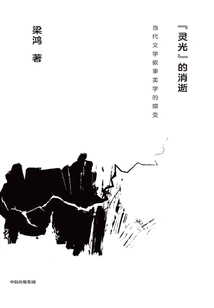
"The Disappearance of "Aura": The Evolution of Contemporary Literary Narrative Aesthetics", literature full of "aura" is disappearing, which not only refers to the disappearance of nostalgia, earth and related charm in literature, but also refers to the gradual loss of the soul's sensitivity to this "landscape". This is a change in the worldview of an era, and many hidden shields are revealed, allowing us to see the complex, noisy, and symbiotic contemporary reality. With the help of Benjamin's "aura" theory, the author makes an in-depth review of contemporary Chinese literature from different perspectives such as family novels, female identity, and local literature. The contemporary classic writers involved include Wang Shuo, Bi Feiyu, Wang Anyi, Lin Bai, etc.
"The Disappearance of "Aura": The Evolution of Contemporary Literary Narrative Aesthetics", literature full of "aura" is disappearing, which not only refers to the disappearance of nostalgia, earth and related charm in literature, but also refers to the gradual loss of the soul's sensitivity to this "landscape". This is a change in the worldview of an era, and many hidden shields are revealed, allowing us to see the complex, noisy, and symbiotic contemporary reality. With the help of Benjamin's "aura" theory, the author makes an in-depth review of contemporary Chinese literature from different perspectives such as family novels, female identity, and local literature. The contemporary classic writers involved include Wang Shuo, Bi Feiyu, Wang Anyi, Lin Bai, etc.