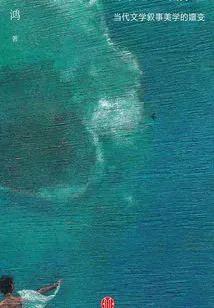
The Disappearance of "aura": the Evolution of Narrative Aesthetics in Contemporary Literature
by Liang Hong
About This Novel
This book is a collection of contemporary literary criticism by the famous writer Liang Hong. It reviews contemporary Chinese literature from different perspectives such as family novels, female identity, and local literature. When Benjamin discussed the value of traditional art, he used a very emotional theoretical term - "aura". "What is aura? The strange entanglement of time and space, the unique appearance of distant things, which although far away, seems to be right in front of you." Resting quietly at noon in summer, following the arc of the mountain on the horizon, or following a branch projected on the viewer, until the 'now' becomes part of the image - this is breathing the aura of the distant mountains and branches." Needless to say, In Hardy's English countryside, Faulkner's southern towns, Marquez's Macondo village, in Lu Xun's Shaoxing, Shen Congwen's Xiangxi, Mo Yan's Gaomi Northeast Township, Yan Lianke's Raked Mountains, Bi Feiyu's Wangjiazhuang, Wang Anyi's Shanghai Hutong The existence of this "aura" can be felt everywhere. It is reflected from the dust, sunshine and wilderness of the countryside, from life, myths and history. It passes through the soul and condenses into a spiritual homeland, stimulating the deepest emotional throbbing of mankind.
Official Sources
What Readers Think
Rating
Community(0)
Rating
Community(0)