Library
Browse and search books
6 novels found

Two Murderers
General Fiction两个凶手
Li Shijiang
In the coastal areas of eastern Fujian, a kind of economic activity called "mutual aid association" is active among the people. The organizer of the mutual aid association is called "Huitou" and the members are called "Huika". Mutual aid meetings are generally held once a month, sometimes half a month, or once a day during crazy times, called "daily meetings." This has basically deviated from the original intention of economic mutual aid and turned into a trap for illegal fund-raising. Let's talk about how a mutual aid club works. For example, for a five-hundred-yuan mutual aid association, the association organized fifty members, and the bids were made once a month. It took fifty months, that is, four years and two months to complete the bids. In the first month, each huika will pay 500 yuan, and the entire 25,000 yuan will be given to the huitou. After that, the huitou can repay 500 yuan every month without interest. Starting from the second month, Huika starts bidding.
In the coastal areas of eastern Fujian, a kind of economic activity called "mutual aid association" is active among the people. The organizer of the mutual aid association is called "Huitou" and the members are called "Huika". Mutual aid meetings are generally held once a month, sometimes half a month, or once a day during crazy times, called "daily meetings." This has basically deviated from the original intention of economic mutual aid and turned into a trap for illegal fund-raising. Let's talk about how a mutual aid club works. For example, for a five-hundred-yuan mutual aid association, the association organized fifty members, and the bids were made once a month. It took fifty months, that is, four years and two months to complete the bids. In the first month, each huika will pay 500 yuan, and the entire 25,000 yuan will be given to the huitou. After that, the huitou can repay 500 yuan every month without interest. Starting from the second month, Huika starts bidding.

Three Lanes and Seven Lanes
General Fiction三坊七巷
Li Shijiang
Li Shijiang was born in Ningde, Fujian Province in 1974 and graduated from Beijing Normal University in 1997. Currently living in Beijing, writing full-time. Published four works in Taiwan including "More Fake Than Love" and "They Are All Great", and published the novel "Xiaoyaoyou" in the Mainland, which won the 2006 "Chinese Literature Media Award". In 2007, he released the masterpiece "Fu Shou Chun", which was awarded "Top Ten Best Books of the Year" by "New Express". The short story "Covered Bridge's Lost Dream: Migrant Workers' Version" was selected into the German version of "Selected Chinese Short Stories in the 21st Century" to be exhibited at the Frankfurt Book Fair. Some works have been translated into English, French, Japanese and other languages and are widely circulated overseas. He also wrote the historical biography "Living Like Cao Cao". "Three Lanes and Seven Alleys" is his first fictional historical novel.
Li Shijiang was born in Ningde, Fujian Province in 1974 and graduated from Beijing Normal University in 1997. Currently living in Beijing, writing full-time. Published four works in Taiwan including "More Fake Than Love" and "They Are All Great", and published the novel "Xiaoyaoyou" in the Mainland, which won the 2006 "Chinese Literature Media Award". In 2007, he released the masterpiece "Fu Shou Chun", which was awarded "Top Ten Best Books of the Year" by "New Express". The short story "Covered Bridge's Lost Dream: Migrant Workers' Version" was selected into the German version of "Selected Chinese Short Stories in the 21st Century" to be exhibited at the Frankfurt Book Fair. Some works have been translated into English, French, Japanese and other languages and are widely circulated overseas. He also wrote the historical biography "Living Like Cao Cao". "Three Lanes and Seven Alleys" is his first fictional historical novel.
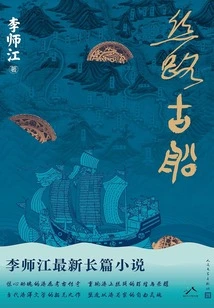
Silk Road Ancient Ship
General Fiction丝路古船
Li Shijiang
This work is a novel with the theme of "Maritime Silk Road". As the poaching operation proceeds step by step, the author uses the characters in the case to dig into the historical materials of the late Yuan and early Ming Dynasties, overlapping the history and reality of the "Maritime Silk Road". The historical appearance of the ancient Quanzhou Port, which was the starting point of the Maritime Silk Road, was also salvaged. A young boat boy goes to sea with his father Lao Ou, encounters a shipwreck, and is rescued by the pirate Chi Muchiang. However, he is accidentally involved in a robbery related to the Maritime Silk Road... An antiquities dealer practices painting, and accidentally obtains several pieces of blue and white porcelain from the Yuan Dynasty. Later, he followed the clues and consulted historical records through his friend Li Yundan. He learned that there was a sunken ship near Wanjiao that was full of gold, silver and blue and white porcelain from the Yuan Dynasty. He summoned his "inmate" Chi Muxiang to form a gang and plot to steal it... At the end of the Yuan Dynasty and the beginning of the Ming Dynasty, Chen Qiusheng, a Fujianese, went to Annan to do business. When he learned that there was a famine in his hometown, Chen Qiusheng took a huge risk and asked his son to bring the sweet potato vines back to his hometown to save the villagers. In the third year of Xuande in the Ming Dynasty, Chen returned home with his family, gold, silver, and Yuan blue and white porcelain. Unexpectedly, he encountered pirates, and Chen resolutely decided to sink the ship... The battle between good and evil between the police and the fishing gangs was narrated in a thrilling and thrilling way. The main characters were vividly portrayed, and at the same time they showed the complex love and hatred.
This work is a novel with the theme of "Maritime Silk Road". As the poaching operation proceeds step by step, the author uses the characters in the case to dig into the historical materials of the late Yuan and early Ming Dynasties, overlapping the history and reality of the "Maritime Silk Road". The historical appearance of the ancient Quanzhou Port, which was the starting point of the Maritime Silk Road, was also salvaged. A young boat boy goes to sea with his father Lao Ou, encounters a shipwreck, and is rescued by the pirate Chi Muchiang. However, he is accidentally involved in a robbery related to the Maritime Silk Road... An antiquities dealer practices painting, and accidentally obtains several pieces of blue and white porcelain from the Yuan Dynasty. Later, he followed the clues and consulted historical records through his friend Li Yundan. He learned that there was a sunken ship near Wanjiao that was full of gold, silver and blue and white porcelain from the Yuan Dynasty. He summoned his "inmate" Chi Muxiang to form a gang and plot to steal it... At the end of the Yuan Dynasty and the beginning of the Ming Dynasty, Chen Qiusheng, a Fujianese, went to Annan to do business. When he learned that there was a famine in his hometown, Chen Qiusheng took a huge risk and asked his son to bring the sweet potato vines back to his hometown to save the villagers. In the third year of Xuande in the Ming Dynasty, Chen returned home with his family, gold, silver, and Yuan blue and white porcelain. Unexpectedly, he encountered pirates, and Chen resolutely decided to sink the ship... The battle between good and evil between the police and the fishing gangs was narrated in a thrilling and thrilling way. The main characters were vividly portrayed, and at the same time they showed the complex love and hatred.
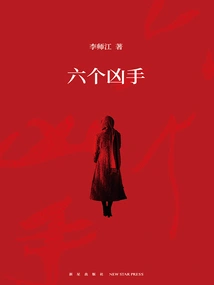
Six Murderers
General Fiction六个凶手
Li Shijiang
The original work of the movie "Love in Love". Revenge is redemption! Sexual assault victim serial murder case, based on a true story. "Six Murderers" is a collection of social crime mystery novels written by Li Shijiang, a genius born in the 1970s. Among them, "Six Murderers" has been adapted into the movie "Six Murderers", which will be released soon. "Six Murderers" describes a complicated and confusing serial murder case, a hellish love, and a period of irreversible revenge and redemption. If the wife is raped, what should the husband do? "Chinese Knot" is a brilliant look at China's patriarchal society. "The Culprit" is an indulgent "Guess the Murderer Game". The boss is hit by his own driver and is knocked into a coma. The murderer may be the driver, his wife, his lover, a gang involved in gangs, or a business rival. However, the truth is revealed, and the murderer is... "Two Murderers" writes about a woman's journey of escaping from crime, and it is also the process of redemption of her conscience. They are victims, case solvers, and murderers. Only revenge can illuminate their lives!
The original work of the movie "Love in Love". Revenge is redemption! Sexual assault victim serial murder case, based on a true story. "Six Murderers" is a collection of social crime mystery novels written by Li Shijiang, a genius born in the 1970s. Among them, "Six Murderers" has been adapted into the movie "Six Murderers", which will be released soon. "Six Murderers" describes a complicated and confusing serial murder case, a hellish love, and a period of irreversible revenge and redemption. If the wife is raped, what should the husband do? "Chinese Knot" is a brilliant look at China's patriarchal society. "The Culprit" is an indulgent "Guess the Murderer Game". The boss is hit by his own driver and is knocked into a coma. The murderer may be the driver, his wife, his lover, a gang involved in gangs, or a business rival. However, the truth is revealed, and the murderer is... "Two Murderers" writes about a woman's journey of escaping from crime, and it is also the process of redemption of her conscience. They are victims, case solvers, and murderers. Only revenge can illuminate their lives!
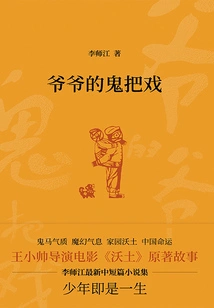
Grandpa's Trick
General Fiction爷爷的鬼把戏
Li Shijiang
The original story of the film "Fertile Soil" directed by Wang Xiaoshuai. When my grandfather passed away, I was only ten years old. I still have an impression of the scene at that time, but it was just the flowers blooming and falling that I witnessed when I was young. After I turned forty, I felt nostalgic. My grandfather loved me so much, but I often disliked him, which made me regretful. Life and death are so vast, where can I express my thoughts? This kind of knot prompted me to write "Grandpa's Tricks" in one breath. Words are such wonderful things. After writing them, I felt that the worlds of life and death were connected. Death is not such a terrible and decisive thing. In the time and space we cannot see, love continues. It can be said that death is another kind of life.
The original story of the film "Fertile Soil" directed by Wang Xiaoshuai. When my grandfather passed away, I was only ten years old. I still have an impression of the scene at that time, but it was just the flowers blooming and falling that I witnessed when I was young. After I turned forty, I felt nostalgic. My grandfather loved me so much, but I often disliked him, which made me regretful. Life and death are so vast, where can I express my thoughts? This kind of knot prompted me to write "Grandpa's Tricks" in one breath. Words are such wonderful things. After writing them, I felt that the worlds of life and death were connected. Death is not such a terrible and decisive thing. In the time and space we cannot see, love continues. It can be said that death is another kind of life.
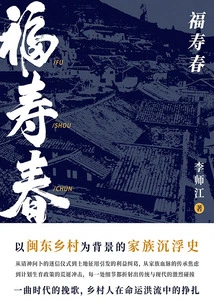
Fu Shouchun
General Fiction福寿春
Li Shijiang
"Fu Shouchun" is set in the countryside of eastern Fujian, focusing on the ups and downs of the family of Li Furen, the Chang couple and their four sons - An Chun, Er Chun, San Chun and Xi Chun. The story begins with a brief period of prosperity when Erchun got married, but gradually declined due to the intertwining of economic pressure and human weakness. The eldest son, Anchun, was indolent and in debt; in the second spring, he went south to Guangzhou, but was in crisis due to misappropriation of family savings; in the third spring, he was idle and became a gangster in the countryside; while the youngest son, Xichun, tried to break free from the shackles of the land, but fell into deeper confusion. As the breadwinner of the family, Chang struggled with livelihood and ethics with the tenacity and shrewdness of a traditional peasant woman, but she gradually became unable to do so under the pressure of the times. The novel describes the "eternity" of rural life in a delicate way: from the superstitious rituals of asking gods for divination to the interest entanglements caused by land expropriation, from the anxiety of inheriting family blood to the absurd impact of the family planning policy, every detail reflects the fierce collision between tradition and modernity. The book has neither the pastoral filter nor the condescending criticism, but uses an almost line drawing method to present the struggle and compromise of rural people in the torrent of destiny. Just like Chang's contradictory behavior when fighting for compensation, it not only reveals the selfishness of human nature, but also contains the helplessness of survival, allowing readers to get a glimpse of the true background of the countryside in the blurred zone of "right and wrong." "Fu Shou Chun" ends with Li Furen finally converting to Buddhism, which is a metaphor for the dissolution and rebirth of the traditional rural spirit. This work is not only an elegy for the disappearing rural life, but also uses the unique writing style of "Eastern Soul and Western Skill" to integrate the readability of genre novels with the philosophy of pure literature. The book depicts the fate of three generations of the Chang family, which not only shows the warmth and shackles of traditional ethics, but also reveals the dual dilemmas of rural economy and faith under the wave of modernization.
"Fu Shouchun" is set in the countryside of eastern Fujian, focusing on the ups and downs of the family of Li Furen, the Chang couple and their four sons - An Chun, Er Chun, San Chun and Xi Chun. The story begins with a brief period of prosperity when Erchun got married, but gradually declined due to the intertwining of economic pressure and human weakness. The eldest son, Anchun, was indolent and in debt; in the second spring, he went south to Guangzhou, but was in crisis due to misappropriation of family savings; in the third spring, he was idle and became a gangster in the countryside; while the youngest son, Xichun, tried to break free from the shackles of the land, but fell into deeper confusion. As the breadwinner of the family, Chang struggled with livelihood and ethics with the tenacity and shrewdness of a traditional peasant woman, but she gradually became unable to do so under the pressure of the times. The novel describes the "eternity" of rural life in a delicate way: from the superstitious rituals of asking gods for divination to the interest entanglements caused by land expropriation, from the anxiety of inheriting family blood to the absurd impact of the family planning policy, every detail reflects the fierce collision between tradition and modernity. The book has neither the pastoral filter nor the condescending criticism, but uses an almost line drawing method to present the struggle and compromise of rural people in the torrent of destiny. Just like Chang's contradictory behavior when fighting for compensation, it not only reveals the selfishness of human nature, but also contains the helplessness of survival, allowing readers to get a glimpse of the true background of the countryside in the blurred zone of "right and wrong." "Fu Shou Chun" ends with Li Furen finally converting to Buddhism, which is a metaphor for the dissolution and rebirth of the traditional rural spirit. This work is not only an elegy for the disappearing rural life, but also uses the unique writing style of "Eastern Soul and Western Skill" to integrate the readability of genre novels with the philosophy of pure literature. The book depicts the fate of three generations of the Chang family, which not only shows the warmth and shackles of traditional ethics, but also reveals the dual dilemmas of rural economy and faith under the wave of modernization.