Library
Browse and search books
13 novels found
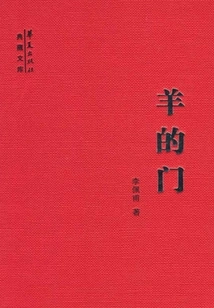
Sheep's Gate
General Fiction羊的门
Li Peifu
This book uses the intersection of history and reality as the basic structural framework to create the image of Hu Tiancheng, the head of Hujiapu who "has not failed for forty years". He is undoubtedly a wise man and actioner in the Central Plains. His sense of superiority over others in the village is based on his original and true understanding of "land" and "people". Based on his planned "repair" of "fathers and fellow villagers", his courage to successfully control the villagers under his control is consistent with his previous experience. The far-sighted management of the "human field" is closely connected; he spent forty years to build a huge network of relationships from the township to the county, from the provincial capital to the capital, which ensured his miraculous power to control the wind and rain, and the brilliance of "only success and no failure". The author reflects on Hu Tiancheng the ups and downs of Chinese society in the past forty years. Through the ups and downs and struggles of county magistrate Hu Guoqing in today's officialdom, the author vividly presents to readers the reality of warmth and cruelty, cooperation and competition, authenticity and alienation, emotions and interests, etc. Through the characters' smoke-free fights in officialdom and love circles, the work penetrates the spiritual core of this ancient land with the coldness of realism, and has a strong realistic impact. Its profound critical strength is enough to shock the world.
This book uses the intersection of history and reality as the basic structural framework to create the image of Hu Tiancheng, the head of Hujiapu who "has not failed for forty years". He is undoubtedly a wise man and actioner in the Central Plains. His sense of superiority over others in the village is based on his original and true understanding of "land" and "people". Based on his planned "repair" of "fathers and fellow villagers", his courage to successfully control the villagers under his control is consistent with his previous experience. The far-sighted management of the "human field" is closely connected; he spent forty years to build a huge network of relationships from the township to the county, from the provincial capital to the capital, which ensured his miraculous power to control the wind and rain, and the brilliance of "only success and no failure". The author reflects on Hu Tiancheng the ups and downs of Chinese society in the past forty years. Through the ups and downs and struggles of county magistrate Hu Guoqing in today's officialdom, the author vividly presents to readers the reality of warmth and cruelty, cooperation and competition, authenticity and alienation, emotions and interests, etc. Through the characters' smoke-free fights in officialdom and love circles, the work penetrates the spiritual core of this ancient land with the coldness of realism, and has a strong realistic impact. Its profound critical strength is enough to shock the world.
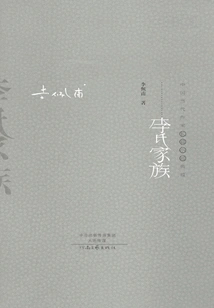
Lee Family
General Fiction李氏家族
Li Peifu
The novel "The Li Family" can be called the masterpiece of writer Li Peifu. The writer extends his brushwork to the distant past of the plain countryside. In the form of the "nonsense" told by the seventh grandmother in Dali Zhuang Village, the author gives a panoramic and three-dimensional narration of the rise and fall of a family's reproduction and development, as well as the ups and downs of different generations. In the history of this family, there have been all kinds of characters: there was a man who broke into the imperial city and complained to the emperor; there was a shady, shrewd and capable young lady; there was a new champion who studied hard for three years and became famous in one fell swoop; there was also a leader of a beggar gang who had a fortune of tens of millions and controlled the thirteen counties of Kyushu... As With the development of the times and the changes in society, the descendants of the Li family living in the tide of reform include mayors who have prospered, managers who are unkind to get rich, lovers who are drunk and dreaming of life, and wives who have divorced and never returned... The writer has created many characters with flesh and blood, ready to be revealed; good and evil, loyal and traitorous, success and failure, rich and poor, each has its own destiny. The strong contrast between history and reality, as well as the ups and downs of the fate of characters, constitute a magnificent picture of life.
The novel "The Li Family" can be called the masterpiece of writer Li Peifu. The writer extends his brushwork to the distant past of the plain countryside. In the form of the "nonsense" told by the seventh grandmother in Dali Zhuang Village, the author gives a panoramic and three-dimensional narration of the rise and fall of a family's reproduction and development, as well as the ups and downs of different generations. In the history of this family, there have been all kinds of characters: there was a man who broke into the imperial city and complained to the emperor; there was a shady, shrewd and capable young lady; there was a new champion who studied hard for three years and became famous in one fell swoop; there was also a leader of a beggar gang who had a fortune of tens of millions and controlled the thirteen counties of Kyushu... As With the development of the times and the changes in society, the descendants of the Li family living in the tide of reform include mayors who have prospered, managers who are unkind to get rich, lovers who are drunk and dreaming of life, and wives who have divorced and never returned... The writer has created many characters with flesh and blood, ready to be revealed; good and evil, loyal and traitorous, success and failure, rich and poor, each has its own destiny. The strong contrast between history and reality, as well as the ups and downs of the fate of characters, constitute a magnificent picture of life.
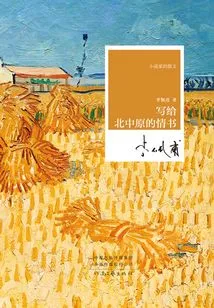
写给北中原的情书
Li Peifu
Li Peifu is the most representative figure among writers from Central Plains. Starting from the publication of his debut novel in 1978, he has been writing for more than 40 years. He has been writing continuously and has created nearly five million words of works. "The love for literature is the proposition of my life." Li Peifu once said.
Li Peifu is the most representative figure among writers from Central Plains. Starting from the publication of his debut novel in 1978, he has been writing for more than 40 years. He has been writing continuously and has created nearly five million words of works. "The love for literature is the proposition of my life." Li Peifu once said.
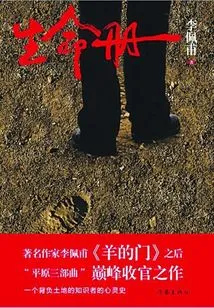
Book of Life (winner of the 9th Mao Dun Literature Award)
General Fiction生命册(第九届茅盾文学奖获奖作品)
Li Peifu
Li Peifu, the author of "Book of Life", is accustomed to starting from the hinterland of the Central Plains culture and writing about the prosperity and decline of the land on the plains and the various situations of life on it. In his works, the countryside and the city, history and reality, ideals and desires are juxtaposed, and he tries to explore the relationship between the times and people's destiny. "Book of Life" not only describes the living conditions of villagers who catered to, refused, or drifted away during the political movements in the second half of the twentieth century, but also describes how villagers "escaped" from the countryside and persisted and lost in the face of the temptation of materialistic cities. Underlying all the narratives are the folk tales and legends inherited from the ancient countryside. Here, the deep-rooted consciousness passed down from generation to generation among the people has been implanted in the soul memory of the "city people" who "walk with the land on their backs", providing a certain sense of feedback and nourishment for the "city people" who are confused and trapped in the face of new values.
Li Peifu, the author of "Book of Life", is accustomed to starting from the hinterland of the Central Plains culture and writing about the prosperity and decline of the land on the plains and the various situations of life on it. In his works, the countryside and the city, history and reality, ideals and desires are juxtaposed, and he tries to explore the relationship between the times and people's destiny. "Book of Life" not only describes the living conditions of villagers who catered to, refused, or drifted away during the political movements in the second half of the twentieth century, but also describes how villagers "escaped" from the countryside and persisted and lost in the face of the temptation of materialistic cities. Underlying all the narratives are the folk tales and legends inherited from the ancient countryside. Here, the deep-rooted consciousness passed down from generation to generation among the people has been implanted in the soul memory of the "city people" who "walk with the land on their backs", providing a certain sense of feedback and nourishment for the "city people" who are confused and trapped in the face of new values.
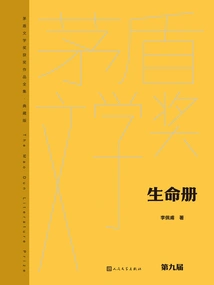
Book of Life
General Fiction生命册
Li Peifu
"The Book of Life" is a novel that the famous writer Li Peifu devoted five years to writing. It is the pinnacle of his "Plain Trilogy" after "The Sheep's Gate" and "The Lamp of the City". This is a book of self-reflection and a fifty-year spiritual history of a person. It traces the changes in urban and rural areas and writes about the dilapidated lives and remaining beliefs in contemporary China. In the changes of time and land, the spirits of the characters fissioned, and they all turned to their own opposites. In these helplessness and desolation, in the various alienated life trajectories, there are hidden the true meaning of life.
"The Book of Life" is a novel that the famous writer Li Peifu devoted five years to writing. It is the pinnacle of his "Plain Trilogy" after "The Sheep's Gate" and "The Lamp of the City". This is a book of self-reflection and a fifty-year spiritual history of a person. It traces the changes in urban and rural areas and writes about the dilapidated lives and remaining beliefs in contemporary China. In the changes of time and land, the spirits of the characters fissioned, and they all turned to their own opposites. In these helplessness and desolation, in the various alienated life trajectories, there are hidden the true meaning of life.
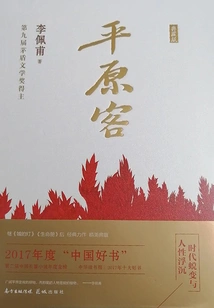
Pingyuanke (collector's Edition)
General Fiction平原客(典藏版)
Li Peifu
The story takes place on the plains of central Henan. Li Delin, a doctor studying in the United States and the country's chief wheat expert, was born and raised in Meiling. He is rooted in and relies on the impact plain at the intersection of Chu and Han. His blood is connected with it, and he has become the most outstanding researcher, sower and harvester in Meiling. The rhythm of his life should have followed the ups and downs of the wheat waves, endlessly, with an endless smooth road in life. If Liu Jinding had not become his student, if Luo Qiuyi could always see the light in his eyes, if there were no Xie Zhichang, no Xu Ercai, no Helian Dongshan... Or even an official career, what would his life be like?
The story takes place on the plains of central Henan. Li Delin, a doctor studying in the United States and the country's chief wheat expert, was born and raised in Meiling. He is rooted in and relies on the impact plain at the intersection of Chu and Han. His blood is connected with it, and he has become the most outstanding researcher, sower and harvester in Meiling. The rhythm of his life should have followed the ups and downs of the wheat waves, endlessly, with an endless smooth road in life. If Liu Jinding had not become his student, if Luo Qiuyi could always see the light in his eyes, if there were no Xie Zhichang, no Xu Ercai, no Helian Dongshan... Or even an official career, what would his life be like?
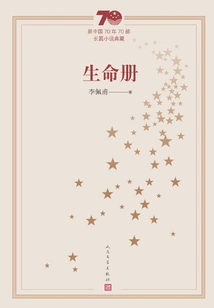
新中国70年70部长篇小说典藏:生命册
Li Peifu
This book is the most important part of the "Plains Trilogy" created by the author. It won the 9th Mao Dun Literary Award (first edition by Writers Press) because of its profound thoughts and outstanding artistic features. The protagonist "I" in the novel is an intellectual who moves from the countryside to the city, a "person who walks with the land on his back." From the countryside to the provincial capital to Beijing, and then from Beijing to Shanghai, my identity has also changed from a university teacher to a "Beijing drifter" gunman, a trader on the stock market, and the person in charge of a listed company. From his intricate social relationships, we can see the chaotic world between the city and the countryside.
This book is the most important part of the "Plains Trilogy" created by the author. It won the 9th Mao Dun Literary Award (first edition by Writers Press) because of its profound thoughts and outstanding artistic features. The protagonist "I" in the novel is an intellectual who moves from the countryside to the city, a "person who walks with the land on his back." From the countryside to the provincial capital to Beijing, and then from Beijing to Shanghai, my identity has also changed from a university teacher to a "Beijing drifter" gunman, a trader on the stock market, and the person in charge of a listed company. From his intricate social relationships, we can see the chaotic world between the city and the countryside.
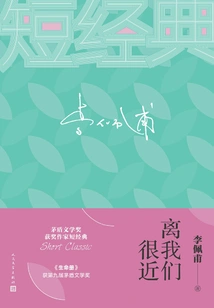
Very Close to Us (grand Prize Short Classic)
General Fiction离我们很近(茅奖短经典)
Li Peifu
It has been more than thirty years since the Mao Dun Literature Award was established, and nearly forty writers have participated in the award-winning works. Most of these writers have been working in the literary world for many years. In addition to novels, they have also made outstanding achievements in the fields of "short" genres such as novellas, short stories and essays. This time, from an artistic perspective, we selected the first batch of classic works of novellas, short stories and essays by some award-winning writers, compiled them into a collection of about 200,000 words, and assembled them into this set of "Short Classics of Mao Dun Literature Award Winning Writers". "Close to Us" is a collection of Li Peifu's works.
It has been more than thirty years since the Mao Dun Literature Award was established, and nearly forty writers have participated in the award-winning works. Most of these writers have been working in the literary world for many years. In addition to novels, they have also made outstanding achievements in the fields of "short" genres such as novellas, short stories and essays. This time, from an artistic perspective, we selected the first batch of classic works of novellas, short stories and essays by some award-winning writers, compiled them into a collection of about 200,000 words, and assembled them into this set of "Short Classics of Mao Dun Literature Award Winning Writers". "Close to Us" is a collection of Li Peifu's works.
Pingyuanke
General Fiction平原客
Li Peifu
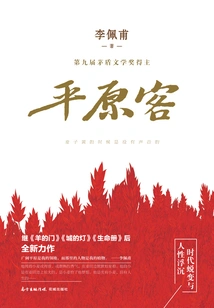
2017 Chinese Good Books, 2017 Top Ten Digital Reading Works, 2017 Key Theme Publications: Ranked No. 1 In the 2017 China Original Literature and Art Premium Publishing Project (Phase II). Li Peifu, winner of the 9th Mao Dun Literature Award, has created a new masterpiece following "The Sheep's Gate", "The Lamp of the City" and "Book of Life", describing the changes of the times and the ups and downs of human nature!
2017 Chinese Good Books, 2017 Top Ten Digital Reading Works, 2017 Key Theme Publications: Ranked No. 1 In the 2017 China Original Literature and Art Premium Publishing Project (Phase II). Li Peifu, winner of the 9th Mao Dun Literature Award, has created a new masterpiece following "The Sheep's Gate", "The Lamp of the City" and "Book of Life", describing the changes of the times and the ups and downs of human nature!
Heluotu
General Fiction河洛图
Li Peifu
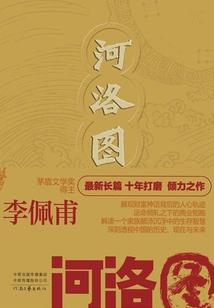
The novel "He Luo Tu" is the latest masterpiece of Mao Dun Literature Award winner Li Peifu, which took ten years to be polished. "He Luo Tu" is based on the millions of people from the Kang family in Gongyi, Henan. It describes the entrepreneurial history of three generations centered on Kang Xiucai, Zhou Tinglan, and Kang Huiwen, who were nurtured by the Heluo culture, from "farming and studying people" to "Central Plains Gods of Wealth"; in the face of the conflict between luck and fate, and the coercion of time and trend, how they followed the trend, came back from the dead, and moved towards prosperity and prosperity. Its thrilling and arduous journey with twists and turns reflects the national destiny and family situation from the late Qing Dynasty to the Republic of China. By describing the Kang family's ancient motto of "Leave Remains" and the heirloom of "Benevolence and Trust", the writer vividly portrays the image of a generation of Henan merchants who were loyal to the country in the face of great right and wrong, cared about the people in the face of huge wealth, and were tolerant in the face of grudges and hatreds, as well as the feelings of family and country that benefited the world.
The novel "He Luo Tu" is the latest masterpiece of Mao Dun Literature Award winner Li Peifu, which took ten years to be polished. "He Luo Tu" is based on the millions of people from the Kang family in Gongyi, Henan. It describes the entrepreneurial history of three generations centered on Kang Xiucai, Zhou Tinglan, and Kang Huiwen, who were nurtured by the Heluo culture, from "farming and studying people" to "Central Plains Gods of Wealth"; in the face of the conflict between luck and fate, and the coercion of time and trend, how they followed the trend, came back from the dead, and moved towards prosperity and prosperity. Its thrilling and arduous journey with twists and turns reflects the national destiny and family situation from the late Qing Dynasty to the Republic of China. By describing the Kang family's ancient motto of "Leave Remains" and the heirloom of "Benevolence and Trust", the writer vividly portrays the image of a generation of Henan merchants who were loyal to the country in the face of great right and wrong, cared about the people in the face of huge wealth, and were tolerant in the face of grudges and hatreds, as well as the feelings of family and country that benefited the world.
The Light of the City (republic Writers Library)
General Fiction城的灯(共和国作家文库)
Li Peifu
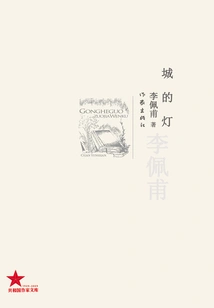
Through the mutual observation of history and reality, the writer examines the difficult process of farmers "escaping" from the countryside and entering the city in the dual structure of urban and rural areas in China. This book constructs a unique "sieged city" world: there is "glorious light" in the city, which is pleasant and clean; outside the city, there is a huge black hole that is constantly being swallowed by darkness. In the abyss of desire, sin is rampant. In the throes of entanglement and biting inside and outside the city, Li Peifu uses his characters to show us the weight of life in the struggle against suffering and desire. This struggle is also a more profound reflection on his living conditions and value ideals.
Through the mutual observation of history and reality, the writer examines the difficult process of farmers "escaping" from the countryside and entering the city in the dual structure of urban and rural areas in China. This book constructs a unique "sieged city" world: there is "glorious light" in the city, which is pleasant and clean; outside the city, there is a huge black hole that is constantly being swallowed by darkness. In the abyss of desire, sin is rampant. In the throes of entanglement and biting inside and outside the city, Li Peifu uses his characters to show us the weight of life in the struggle against suffering and desire. This struggle is also a more profound reflection on his living conditions and value ideals.
茅盾文学奖获奖作品全集:生命册
Li Peifu
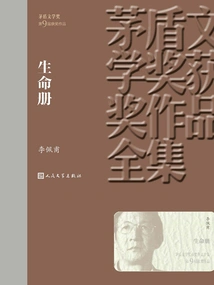
Written in the first person, the novel takes the life and psychological transformation of the protagonist Wu Zhipeng from plain rural areas to cities as the main line, outlines the scene of social changes in the past fifty years, and records the "book of life" belonging to many people. In the author's writing, "countryside and city, history and reality, ideals and desires are juxtaposed, and he tries to find out the relationship between the times and the fate of the characters." The novel completes the examination of the destiny of a generation through the description of a series of life choices and mental states made by intellectuals represented by the protagonist and "Camel" during the period of social transformation, such as graduating from college, entering the "system" job, resigning, and going into business.
Written in the first person, the novel takes the life and psychological transformation of the protagonist Wu Zhipeng from plain rural areas to cities as the main line, outlines the scene of social changes in the past fifty years, and records the "book of life" belonging to many people. In the author's writing, "countryside and city, history and reality, ideals and desires are juxtaposed, and he tries to find out the relationship between the times and the fate of the characters." The novel completes the examination of the destiny of a generation through the description of a series of life choices and mental states made by intellectuals represented by the protagonist and "Camel" during the period of social transformation, such as graduating from college, entering the "system" job, resigning, and going into business.
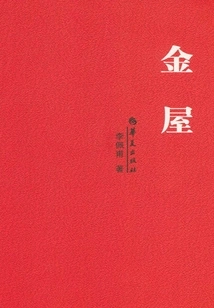
Golden House
General Fiction金屋
Li Peifu
The book "Golden House" profoundly demonstrates the changes in the mentality and life of Chinese rural people under the baptism of the commodity economy. The work profoundly expresses the shock and hope that reform has brought to rural areas and farmers. The quiet and peaceful ancient countryside has quietly undergone a series of changes under the impact of the commodity economy, but faith and reason eventually became people's spiritual home. The author uses a realistic style and a series of plot arrangements and character creation to show the grand theme that rural reform is the general trend and the people's aspiration. The author has a broad vision and solid foundation, showing us a vivid picture of contemporary rural reform and a high-pitched ode to reform.
The book "Golden House" profoundly demonstrates the changes in the mentality and life of Chinese rural people under the baptism of the commodity economy. The work profoundly expresses the shock and hope that reform has brought to rural areas and farmers. The quiet and peaceful ancient countryside has quietly undergone a series of changes under the impact of the commodity economy, but faith and reason eventually became people's spiritual home. The author uses a realistic style and a series of plot arrangements and character creation to show the grand theme that rural reform is the general trend and the people's aspiration. The author has a broad vision and solid foundation, showing us a vivid picture of contemporary rural reform and a high-pitched ode to reform.