Library
Browse and search books
19 novels found
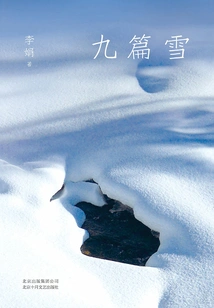
Nine Pieces of Snow
Literature九篇雪
Li Juan
Li Juan, the winner of the People's Literature Award and the Lu Xun Literature Award, is a stunning and famous work in the literary world. It has been a best-seller for nearly 20 years and is highly recommended by Liu Liangcheng and Li Jingze! "When I wrote these words, I was deeply in love with a person, and my love and desire for him permeated the lines." It writes the story of Li Juan's life in the Altay grassland of Xinjiang as a girl, yarding the village, setting up tents, doing business, driving cattle, and herding. Sheep, looking for sparrows, living in the mountains, walking in the Gobi desert, carrying water, eating and catching meat... Groups of daily scenes show the unknown aspects of life in Altay to the world. It is a mesmerizing pastoral of the Western Regions that hides the primitive wildness. Even in difficult and desperate places, bright fruits will be produced. When we leave there, what we are thinking about is how to come back better - this book is like Li Juan's personal souvenir album, retaining the true images of her girlhood full of strange hope, and also playing the prelude to her rich and beautiful literary world.
Li Juan, the winner of the People's Literature Award and the Lu Xun Literature Award, is a stunning and famous work in the literary world. It has been a best-seller for nearly 20 years and is highly recommended by Liu Liangcheng and Li Jingze! "When I wrote these words, I was deeply in love with a person, and my love and desire for him permeated the lines." It writes the story of Li Juan's life in the Altay grassland of Xinjiang as a girl, yarding the village, setting up tents, doing business, driving cattle, and herding. Sheep, looking for sparrows, living in the mountains, walking in the Gobi desert, carrying water, eating and catching meat... Groups of daily scenes show the unknown aspects of life in Altay to the world. It is a mesmerizing pastoral of the Western Regions that hides the primitive wildness. Even in difficult and desperate places, bright fruits will be produced. When we leave there, what we are thinking about is how to come back better - this book is like Li Juan's personal souvenir album, retaining the true images of her girlhood full of strange hope, and also playing the prelude to her rich and beautiful literary world.
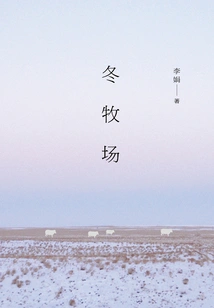
Winter Pasture
Literature冬牧场
Li Juan
In the winter of 2010, Li Juan followed a family of Kazakh herders she knew well into the winter pastures and deserts of southern Altay, and lived a very difficult and different wilderness life. This book is the most authentic, touching, in-depth and precious panoramic record of this period of life. Li Juan is the first Han Chinese writer to describe the winter herding life of the Kazakh people. In her affectionate yet restrained words, she presents the unique survival landscape of Altai's last "wilderness master" when she transitions to winter.
In the winter of 2010, Li Juan followed a family of Kazakh herders she knew well into the winter pastures and deserts of southern Altay, and lived a very difficult and different wilderness life. This book is the most authentic, touching, in-depth and precious panoramic record of this period of life. Li Juan is the first Han Chinese writer to describe the winter herding life of the Kazakh people. In her affectionate yet restrained words, she presents the unique survival landscape of Altai's last "wilderness master" when she transitions to winter.
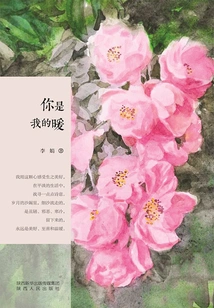
You Are My Warmth
Literature你是我的暖
Li Juan
Li Juan is a contracted writer for the magazines "Reader", "Maxim" and "Wenyuan". Her works have been frequently selected into the annual Chinese prose anthology, 23 kinds of middle school teaching aids, and more than 30 kinds of Chinese test questions and Chinese simulation test questions for the college entrance examination and high school entrance examination. This selection contains all of her influential prose works. The writings include writers Shen Congwen, Zhang Ailing, Yang Jiang, Zhang Chonghe, Huang Yongyu, and painters Qi Baishi, Miller, Feng Zikai, Zhang Zhen, etc. In her writing, the master is like a neighbor. She talks about art and people, narrates and cherishes people, all at her fingertips, and every word is fragrant. She writes about life with fireworks, using emotions as broad as a river, sensual and calm, clear and elegant. He writes about the scenery of the four seasons and travel notes about mountains and rivers in a casual and relaxed manner. Every word is exquisite, and the beauty of human feelings and art are revealed between the lines, and the writer's warmth and affection for art and life flow.
Li Juan is a contracted writer for the magazines "Reader", "Maxim" and "Wenyuan". Her works have been frequently selected into the annual Chinese prose anthology, 23 kinds of middle school teaching aids, and more than 30 kinds of Chinese test questions and Chinese simulation test questions for the college entrance examination and high school entrance examination. This selection contains all of her influential prose works. The writings include writers Shen Congwen, Zhang Ailing, Yang Jiang, Zhang Chonghe, Huang Yongyu, and painters Qi Baishi, Miller, Feng Zikai, Zhang Zhen, etc. In her writing, the master is like a neighbor. She talks about art and people, narrates and cherishes people, all at her fingertips, and every word is fragrant. She writes about life with fireworks, using emotions as broad as a river, sensual and calm, clear and elegant. He writes about the scenery of the four seasons and travel notes about mountains and rivers in a casual and relaxed manner. Every word is exquisite, and the beauty of human feelings and art are revealed between the lines, and the writer's warmth and affection for art and life flow.
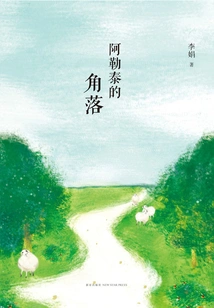
Corner of Altay
Literature阿勒泰的角落
Li Juan
The frontier shepherds who come and go in the wind and rain, the turbulent life of constantly migrating with the family, the snowshoe hare only twenty centimeters away from spring, the goldfish fed in the wind-swept desert... The life that should have been heavy, barren and desolate has a different kind of warmth, abundance and joy under Li Juan's unique and sparkling brushwork. If we do not intend to recognize that the life wandering in sadness and the ups and downs of desire is our original life, then there is always another clean and bright life waiting for people to claim it. It is because of this work that Li Juan is highly praised by many literary masters such as Liu Liangcheng, Wang Anyi, Zhu Tianwen, Li Jingze, Chen Cun, etc., And is also loved by readers. She won the second Presenceism Prose Award and the fourth Tianshan Literary Award.
The frontier shepherds who come and go in the wind and rain, the turbulent life of constantly migrating with the family, the snowshoe hare only twenty centimeters away from spring, the goldfish fed in the wind-swept desert... The life that should have been heavy, barren and desolate has a different kind of warmth, abundance and joy under Li Juan's unique and sparkling brushwork. If we do not intend to recognize that the life wandering in sadness and the ups and downs of desire is our original life, then there is always another clean and bright life waiting for people to claim it. It is because of this work that Li Juan is highly praised by many literary masters such as Liu Liangcheng, Wang Anyi, Zhu Tianwen, Li Jingze, Chen Cun, etc., And is also loved by readers. She won the second Presenceism Prose Award and the fourth Tianshan Literary Award.
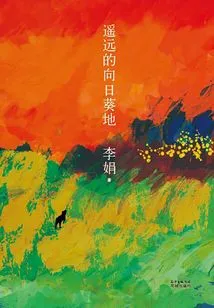
Distant Sunflower Field
Literature遥远的向日葵地
Li Juan
2017 Chinese Good Books, winner of the 7th Lu Xun Literature Award. The sunflowers in Altay are more intense than those in Arles, and the closest relatives and livestock are all family members. Li Juan, a critically acclaimed new generation of non-fiction prose writer, is a new masterpiece following the "Sheep Road" trilogy. Mother took her poultry and livestock with her family and moved to the Gobi on the banks of the Ulungu River. They settled in a "winter nest" beside a sunflower field and began a farming life full of hardships and adventures. A hundred acres of sunflower land opened up in the desert experienced goose-throated antelopes, three replantings, and successive droughts and insect pests until the harvest, with a faint hope and a long wait in between... In these auspicious records, the author focused his thoughts on the details of the lives of his family members for the first time. They and the boundless desert constitute a complete ecological sample.
2017 Chinese Good Books, winner of the 7th Lu Xun Literature Award. The sunflowers in Altay are more intense than those in Arles, and the closest relatives and livestock are all family members. Li Juan, a critically acclaimed new generation of non-fiction prose writer, is a new masterpiece following the "Sheep Road" trilogy. Mother took her poultry and livestock with her family and moved to the Gobi on the banks of the Ulungu River. They settled in a "winter nest" beside a sunflower field and began a farming life full of hardships and adventures. A hundred acres of sunflower land opened up in the desert experienced goose-throated antelopes, three replantings, and successive droughts and insect pests until the harvest, with a faint hope and a long wait in between... In these auspicious records, the author focused his thoughts on the details of the lives of his family members for the first time. They and the boundless desert constitute a complete ecological sample.
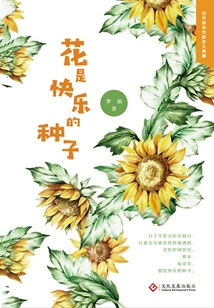
Flowers Are the Seeds of Happiness
Literature花是快乐的种子
Li Juan
Most of this book records warm fragments of the world. The stories are authentic and instructive. These fragments are all beautiful things experienced by the author in his life. Every story and sentiment in it is full of positive energy. At the same time, the author carefully created this work with the unique sensitivity and vision of women. With her profound writing skills, she used a description method that combines insights and stories to make this book more readable. The words are delicate and touching, and the writing style is fashionable, among which the family stories are better.
Most of this book records warm fragments of the world. The stories are authentic and instructive. These fragments are all beautiful things experienced by the author in his life. Every story and sentiment in it is full of positive energy. At the same time, the author carefully created this work with the unique sensitivity and vision of women. With her profound writing skills, she used a description method that combines insights and stories to make this book more readable. The words are delicate and touching, and the writing style is fashionable, among which the family stories are better.
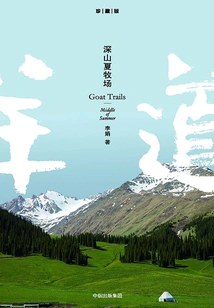
深山夏牧场(珍藏版)
Li Juan
The life of a sheep is dark, silent, sensitive, and patient. The disabled little black sheep and the earless sheep, I wonder if they care about their differences, will they secretly feel inferior and hopeless because of this? However, everyone in this world suffers from shortcomings at birth. In addition to enduring pain all day long, they also need to experience the complete growth process and appreciate happiness. ... More often than not, they always forget their own illness again and again, forgetting that they are more likely to die. Therefore, the life of the sheep is pure and strong.
The life of a sheep is dark, silent, sensitive, and patient. The disabled little black sheep and the earless sheep, I wonder if they care about their differences, will they secretly feel inferior and hopeless because of this? However, everyone in this world suffers from shortcomings at birth. In addition to enduring pain all day long, they also need to experience the complete growth process and appreciate happiness. ... More often than not, they always forget their own illness again and again, forgetting that they are more likely to die. Therefore, the life of the sheep is pure and strong.
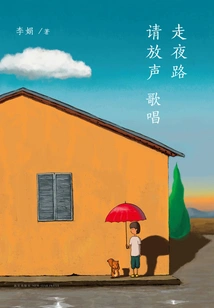
Please Sing Loudly When Walking at Night
Literature走夜路请放声歌唱
Li Juan
The joy in the Gobi Desert is as open and open as poverty, and the twists and turns in life are as deep and shallow as joy. This time Li Juan told more of her own story, writing about her youth and growth as a human being, as well as her innate loneliness and hesitation, optimism and strength. When I feel dark, I step forward and open the window directly to let in the sunlight or starlight. Please sing loudly when walking at night. If you don't sing and wake up in the dark night, you will never get out of this dense forest, this rugged and slender mountain road, this lonely and tired heart - in Li Juan's words, the world is bright, human feelings are warm, and the suffering of survival turns into poetry and love. There may be a lot of helplessness and sadness in the world, but it doesn't matter, we can all become what we most want to be.
The joy in the Gobi Desert is as open and open as poverty, and the twists and turns in life are as deep and shallow as joy. This time Li Juan told more of her own story, writing about her youth and growth as a human being, as well as her innate loneliness and hesitation, optimism and strength. When I feel dark, I step forward and open the window directly to let in the sunlight or starlight. Please sing loudly when walking at night. If you don't sing and wake up in the dark night, you will never get out of this dense forest, this rugged and slender mountain road, this lonely and tired heart - in Li Juan's words, the world is bright, human feelings are warm, and the suffering of survival turns into poetry and love. There may be a lot of helplessness and sadness in the world, but it doesn't matter, we can all become what we most want to be.
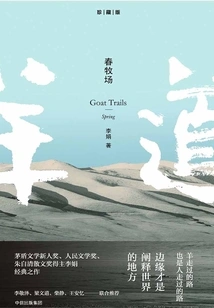
Spring Pasture (collector's Edition)
Literature春牧场(珍藏版)
Li Juan
The "Sheep Path" trilogy records Li Juan's days of nomadic life in the rough and vast Altay Mountains of Xinjiang, following the Kazakh Zakba's mother's family through cold and heat. The grassland life of the Kazakh people, who live in pursuit of water and grass, is presented here. In the face of the tranquility and cruelty of nature, the indifference, tenacity and wisdom displayed by this nomadic people make every tiny life in the universe appear so unique.
The "Sheep Path" trilogy records Li Juan's days of nomadic life in the rough and vast Altay Mountains of Xinjiang, following the Kazakh Zakba's mother's family through cold and heat. The grassland life of the Kazakh people, who live in pursuit of water and grass, is presented here. In the face of the tranquility and cruelty of nature, the indifference, tenacity and wisdom displayed by this nomadic people make every tiny life in the universe appear so unique.
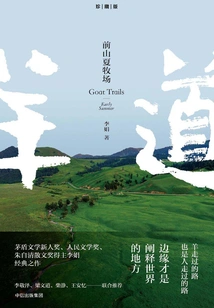
前山夏牧场(珍藏版)
Li Juan
"Sheep spread out on the entire hillside, moving in an orderly manner along hundreds of arcs (that is, sheep paths) that are parallel to the slope." The Kazakh herdsmen in the nomadic areas of northern Xinjiang are probably the last and purest nomadic people in the world. The Sheep Trail is the only road that Kazakh herdsmen must pass in their lives. It is the arduous and magnificent migration road arranged by nature for them. They dress up and trek on the road of their ancestors to complete their lives, youth, aging, poverty, love... They are truly "on the road". The "Sheep Path" trilogy records Li Juan's days of nomadic life in the rough and vast Altay Mountains of Xinjiang, following the Kazakh Zakba's mother's family through cold and heat. The grassland life of the Kazakh people, who live in pursuit of water and grass, is presented here. In the face of the tranquility and cruelty of nature, the indifference, tenacity and wisdom displayed by this nomadic people make every tiny life in the universe appear so unique.
"Sheep spread out on the entire hillside, moving in an orderly manner along hundreds of arcs (that is, sheep paths) that are parallel to the slope." The Kazakh herdsmen in the nomadic areas of northern Xinjiang are probably the last and purest nomadic people in the world. The Sheep Trail is the only road that Kazakh herdsmen must pass in their lives. It is the arduous and magnificent migration road arranged by nature for them. They dress up and trek on the road of their ancestors to complete their lives, youth, aging, poverty, love... They are truly "on the road". The "Sheep Path" trilogy records Li Juan's days of nomadic life in the rough and vast Altay Mountains of Xinjiang, following the Kazakh Zakba's mother's family through cold and heat. The grassland life of the Kazakh people, who live in pursuit of water and grass, is presented here. In the face of the tranquility and cruelty of nature, the indifference, tenacity and wisdom displayed by this nomadic people make every tiny life in the universe appear so unique.
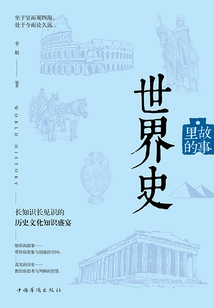
World History in Stories
History故事里的世界史
Li Juan
This book is based on historical chronology and important figures and events that have influenced the social and historical process in various eras. It covers all aspects of politics, economy, military, culture, art, etc. It vividly, truly, objectively and comprehensively reproduces the wonderful moments and rich connotations of world history.
This book is based on historical chronology and important figures and events that have influenced the social and historical process in various eras. It covers all aspects of politics, economy, military, culture, art, etc. It vividly, truly, objectively and comprehensively reproduces the wonderful moments and rich connotations of world history.
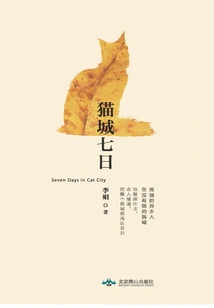
Seven Days in Cat City
General Fiction猫城七日
Li Juan
This is a strong "dystopian novel". A small utopian city isolated from the world, a shocking story buried in the dust. Cat City is the most isolated and isolated place in the world, an ancient town. Cat City wants to open up contact with the outside world but encounters repeated accidents. The only way Cat City can connect to the outside world is Sanba Town. "As long as Sanba Town is still there, you can return to Cat City."
This is a strong "dystopian novel". A small utopian city isolated from the world, a shocking story buried in the dust. Cat City is the most isolated and isolated place in the world, an ancient town. Cat City wants to open up contact with the outside world but encounters repeated accidents. The only way Cat City can connect to the outside world is Sanba Town. "As long as Sanba Town is still there, you can return to Cat City."
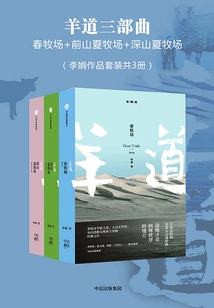
Sheep Road Trilogy: Spring Pasture + Front Mountain Summer Pasture + Deep Mountain Summer Pasture
Literature羊道三部曲:春牧场+前山夏牧场+深山夏牧场
Li Juan
This set includes: "Spring Pasture", "Summer Pasture in the Front Mountain", and "Summer Pasture in the Deep Mountains". The sheep spread across the entire hillside, moving forward in an orderly manner along hundreds of arcs (that is, sheep paths) that are parallel to the slope. The Kazakh herdsmen in the nomadic areas of northern Xinjiang are probably the last pure nomadic people in the world. The "Sheep Path" trilogy records Li Juan's days of nomadic life in the rough and vast Altay Mountains of Xinjiang, following the Kazakh Zakba's mother's family through cold and heat. The grassland life of the Kazakh people, who live in pursuit of water and grass, is presented here. In the face of the tranquility and cruelty of nature, the indifference, tenacity and wisdom displayed by this nomadic people make every tiny life in the universe appear so unique.
This set includes: "Spring Pasture", "Summer Pasture in the Front Mountain", and "Summer Pasture in the Deep Mountains". The sheep spread across the entire hillside, moving forward in an orderly manner along hundreds of arcs (that is, sheep paths) that are parallel to the slope. The Kazakh herdsmen in the nomadic areas of northern Xinjiang are probably the last pure nomadic people in the world. The "Sheep Path" trilogy records Li Juan's days of nomadic life in the rough and vast Altay Mountains of Xinjiang, following the Kazakh Zakba's mother's family through cold and heat. The grassland life of the Kazakh people, who live in pursuit of water and grass, is presented here. In the face of the tranquility and cruelty of nature, the indifference, tenacity and wisdom displayed by this nomadic people make every tiny life in the universe appear so unique.
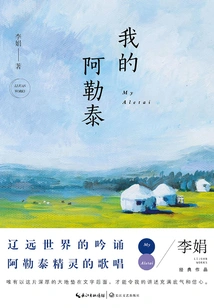
My Altay
Literature我的阿勒泰
Li Juan
"My Altay" is one of Li Juan's famous prose works and representative works. The original ecology records every bit of the author's life in the Altay region of northern Xinjiang, including the memories and insights of people and events. The text in the book is clear and pure, and the texture is pure. It reproduces the scenery and people in northern Xinjiang in an original way, and is full of a simple and refreshing atmosphere. Ten years ago, the author wrote down her life and insights in dense words on scraps of paper collected everywhere, and submitted them to literary journals in Xinjiang. Some senior editors believed that it was impossible for a girl in her twenties to write such fresh and talented works. But Liu Liangcheng, a famous writer in Xinjiang, discovered her and published her first work under the title "Nine Pieces of Snow". Only then did people begin to know that there was a girl from Xinjiang named Li Juan. Since then, her prose has been published in Southern Weekend and Wenhui Po. It is a completely genius work and has caused shock in the literary world. It is hard for people to imagine that a girl who has not received a complete higher education, whose reading scope is mainly limited to Jin Yong and Qiong Yao, and who has been living in the wilderness of northern Xinjiang, can write such fresh, lively, spiritual and vital words. Her works and books have successively won the Best Chinese Prose Award of the Year and been included in the top ten best books of the year. They are likely to become one of the prose classics of this era. Before the release of this new illustrated revised edition, the author personally revised and polished the book's contents and text, wrote a new preface, and divided the book into two parts: "Part 1: In Memory" and "Part 2: In the Corner" to make the content more pure and concentrated. At the same time, the book also includes exquisite photography works by the author's friend, the writer and photographer Kang Jian, who has lived in northern Xinjiang for many years and has deep feelings for Altay, for the readers' enjoyment.
"My Altay" is one of Li Juan's famous prose works and representative works. The original ecology records every bit of the author's life in the Altay region of northern Xinjiang, including the memories and insights of people and events. The text in the book is clear and pure, and the texture is pure. It reproduces the scenery and people in northern Xinjiang in an original way, and is full of a simple and refreshing atmosphere. Ten years ago, the author wrote down her life and insights in dense words on scraps of paper collected everywhere, and submitted them to literary journals in Xinjiang. Some senior editors believed that it was impossible for a girl in her twenties to write such fresh and talented works. But Liu Liangcheng, a famous writer in Xinjiang, discovered her and published her first work under the title "Nine Pieces of Snow". Only then did people begin to know that there was a girl from Xinjiang named Li Juan. Since then, her prose has been published in Southern Weekend and Wenhui Po. It is a completely genius work and has caused shock in the literary world. It is hard for people to imagine that a girl who has not received a complete higher education, whose reading scope is mainly limited to Jin Yong and Qiong Yao, and who has been living in the wilderness of northern Xinjiang, can write such fresh, lively, spiritual and vital words. Her works and books have successively won the Best Chinese Prose Award of the Year and been included in the top ten best books of the year. They are likely to become one of the prose classics of this era. Before the release of this new illustrated revised edition, the author personally revised and polished the book's contents and text, wrote a new preface, and divided the book into two parts: "Part 1: In Memory" and "Part 2: In the Corner" to make the content more pure and concentrated. At the same time, the book also includes exquisite photography works by the author's friend, the writer and photographer Kang Jian, who has lived in northern Xinjiang for many years and has deep feelings for Altay, for the readers' enjoyment.
Flowers Are the Seeds of Happiness
Literature花是快乐的种子
Li Juan
Most of this book records warm fragments of the world. The stories are authentic and instructive. These fragments are all beautiful things experienced by the author in his life. Every story and sentiment in it is full of positive energy. At the same time, the author carefully created this work with the unique sensitivity and vision of women. With her profound writing skills, she used a description method that combines insights and stories to make this book more readable. The words are delicate and touching, and the writing style is fashionable, among which the family stories are better.
Most of this book records warm fragments of the world. The stories are authentic and instructive. These fragments are all beautiful things experienced by the author in his life. Every story and sentiment in it is full of positive energy. At the same time, the author carefully created this work with the unique sensitivity and vision of women. With her profound writing skills, she used a description method that combines insights and stories to make this book more readable. The words are delicate and touching, and the writing style is fashionable, among which the family stories are better.
Chinese History in Stories
History故事里的中国史
Li Juan
This book is based on historical chronology and important figures and events that have influenced the social and historical process in various eras. It covers all aspects of politics, economy, military, culture, art, etc. It vividly, truly, objectively and comprehensively reproduces the wonderful moments and rich connotations of Chinese history.
This book is based on historical chronology and important figures and events that have influenced the social and historical process in various eras. It covers all aspects of politics, economy, military, culture, art, etc. It vividly, truly, objectively and comprehensively reproduces the wonderful moments and rich connotations of Chinese history.
Remember One and Forget Three or Two
Literature记一忘三二
Li Juan
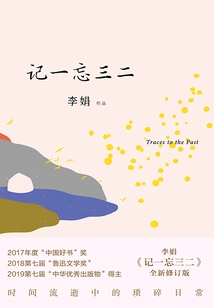
The 2020 newly revised edition of "Remember One and Forget Three Two" by Li Juan, winner of the "Lu Xun Literature Award" and "China's Good Book" award. The author replaced and revised tens of thousands of words, and added a new preface. "Remember One and Forget Three Two" is a collection of essays written by writer Li Juan over the past ten years. More than thirty articles titled "Memories" are casual and casual, recording Li Juan's daily thoughts from many aspects such as family, friendship, love, work, life, interests and even dreams - dependent on her mother and "separation", settling in a large yard in the wilderness and no longer living a homeless life, the violence she suffered when she was a teenager and the care she received, etc., Etc., Which become more and more clear as she grows up. All kinds of words are written casually, plain and humorous, but at the same time contain an irresistible warmth and poetry, forming scenes of "tearful smiles" that connect the trivial daily life in the passage of time.
The 2020 newly revised edition of "Remember One and Forget Three Two" by Li Juan, winner of the "Lu Xun Literature Award" and "China's Good Book" award. The author replaced and revised tens of thousands of words, and added a new preface. "Remember One and Forget Three Two" is a collection of essays written by writer Li Juan over the past ten years. More than thirty articles titled "Memories" are casual and casual, recording Li Juan's daily thoughts from many aspects such as family, friendship, love, work, life, interests and even dreams - dependent on her mother and "separation", settling in a large yard in the wilderness and no longer living a homeless life, the violence she suffered when she was a teenager and the care she received, etc., Etc., Which become more and more clear as she grows up. All kinds of words are written casually, plain and humorous, but at the same time contain an irresistible warmth and poetry, forming scenes of "tearful smiles" that connect the trivial daily life in the passage of time.
Distant Sunflower Field
Literature遥远的向日葵地
Li Juan
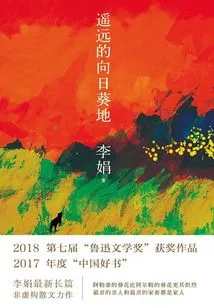
This book is the latest collection of words written by Li Juan in the past two years and published in the "Distant Sunflower Field" column of the Pen Club of Wenhui Po. The "Sunflower Field" is located on the south bank of the Ulungu River in the Altay Gobi Grassland. It is a barren land contracted by Li Juan's mother many years ago. Li Juan, as always, uses her delicate and bright writing style to record the people who work here and their simple and different life details: her hard-working and optimistic mother, her elderly and sick grandmother, the big dog, the ugly dog, the small dog, the tiger, the chickens, ducks and geese, and the growing number of people. Huasheng was destroyed by goose-throated antelopes and replanted again. The ninety acres of sunflower land that was planted and destroyed again... Depicts not only the tenacity and hard work of the mother and the border people, but also their inner aspirations and persistence. It also expresses their concerns about the environment and their doubts about survival. It presents an existential experience that is completely exposed to the fragility of nature, but at the same time full of fun and dignity.
This book is the latest collection of words written by Li Juan in the past two years and published in the "Distant Sunflower Field" column of the Pen Club of Wenhui Po. The "Sunflower Field" is located on the south bank of the Ulungu River in the Altay Gobi Grassland. It is a barren land contracted by Li Juan's mother many years ago. Li Juan, as always, uses her delicate and bright writing style to record the people who work here and their simple and different life details: her hard-working and optimistic mother, her elderly and sick grandmother, the big dog, the ugly dog, the small dog, the tiger, the chickens, ducks and geese, and the growing number of people. Huasheng was destroyed by goose-throated antelopes and replanted again. The ninety acres of sunflower land that was planted and destroyed again... Depicts not only the tenacity and hard work of the mother and the border people, but also their inner aspirations and persistence. It also expresses their concerns about the environment and their doubts about survival. It presents an existential experience that is completely exposed to the fragility of nature, but at the same time full of fun and dignity.
我的阿勒泰(马伊琍、周依然、于适主演同名影视剧原著)
Li Juan
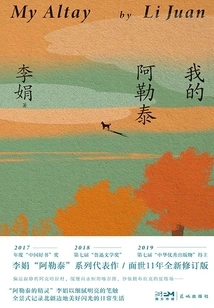
The remote and silent village of Akhara, the slow and eternal Kawutu, the summer pasture of Shayi Hengbulak... "The Elf of Altay" Li Juan recorded the beautiful and shining moments of the northern frontier in a panoramic manner with delicate and bright strokes. The whole book is divided into two parts. The first series of memories (2007-2009) records the detailed and persevering life scenes in Kawutu and Akhara villages; the second series of corners (2002-2006) originally describes the daily life of Li Juan, her mother and her elderly grandmother who migrated and moved with the herdsmen: opening a grocery store, working as a tailor, and helping the herders. Folk cars and clothes, going to pick wild fungus deep in the mountains; the bulging tents on the Shayihengbulak grassland in spring, the noisy and grand Aken singing concert on the pasture in summer, the long and solid snow road after winter... Gobi, grassland, forest, snow-capped mountains, horses and herdsmen, the delicate and bright words show the profound and rich living landscape of nomadic people in the border areas.
The remote and silent village of Akhara, the slow and eternal Kawutu, the summer pasture of Shayi Hengbulak... "The Elf of Altay" Li Juan recorded the beautiful and shining moments of the northern frontier in a panoramic manner with delicate and bright strokes. The whole book is divided into two parts. The first series of memories (2007-2009) records the detailed and persevering life scenes in Kawutu and Akhara villages; the second series of corners (2002-2006) originally describes the daily life of Li Juan, her mother and her elderly grandmother who migrated and moved with the herdsmen: opening a grocery store, working as a tailor, and helping the herders. Folk cars and clothes, going to pick wild fungus deep in the mountains; the bulging tents on the Shayihengbulak grassland in spring, the noisy and grand Aken singing concert on the pasture in summer, the long and solid snow road after winter... Gobi, grassland, forest, snow-capped mountains, horses and herdsmen, the delicate and bright words show the profound and rich living landscape of nomadic people in the border areas.