Library
Browse and search books
7 novels found
On National Defense
Military国防论
Jiang Baili
After the September 18th Incident in 1931, the famous general Jiang Baili devoted himself to the research of national defense theory in order to fight against the invasion of Japanese militarism. He published a series of articles and gave lectures at Hangzhou Central Aviation School and Lushan Officer Training Corps. In the summer of 1937, he reorganized some of the relevant articles, speeches, and earlier works into a book, named "On National Defense", which was first printed by the Lushan Officer Training Corps and then published by Shanghai Dagong Newspaper.
After the September 18th Incident in 1931, the famous general Jiang Baili devoted himself to the research of national defense theory in order to fight against the invasion of Japanese militarism. He published a series of articles and gave lectures at Hangzhou Central Aviation School and Lushan Officer Training Corps. In the summer of 1937, he reorganized some of the relevant articles, speeches, and earlier works into a book, named "On National Defense", which was first printed by the Lushan Officer Training Corps and then published by Shanghai Dagong Newspaper.
On National Defense
Military国防论
Jiang Baili
This book is a masterpiece of military science by Jiang Baili, a master of military science, and it is also the foundation work of China's modern national defense theory. The book is divided into seven chapters, providing a theoretical and systematic explanation of China's national defense during the Republic of China from the perspectives of defense economy, world defense theory, traditional Chinese defense thought, and modern culture. Its main argument is: trade space for time, "win or lose, just don't make peace with it"; second, don't be afraid of being swallowed by whales, just afraid of cannibalization, and resist the war in an all-out way; third, start a war in Shanghai, use geographical conditions to weaken the Japanese offensive, prevent the Japanese from reaching the second ridge (Hunan) to form a confrontation, and form a long-term battlefield. His conclusion was: The resistance against Japan must be based on the people and fight a protracted war. In addition to "On National Defense", this book also specifically includes Mr. Jiang Baili's classic works such as "A Brief Commentary on Sun Tzu" and "The Japanese: A Study of a Foreigner".
This book is a masterpiece of military science by Jiang Baili, a master of military science, and it is also the foundation work of China's modern national defense theory. The book is divided into seven chapters, providing a theoretical and systematic explanation of China's national defense during the Republic of China from the perspectives of defense economy, world defense theory, traditional Chinese defense thought, and modern culture. Its main argument is: trade space for time, "win or lose, just don't make peace with it"; second, don't be afraid of being swallowed by whales, just afraid of cannibalization, and resist the war in an all-out way; third, start a war in Shanghai, use geographical conditions to weaken the Japanese offensive, prevent the Japanese from reaching the second ridge (Hunan) to form a confrontation, and form a long-term battlefield. His conclusion was: The resistance against Japan must be based on the people and fight a protracted war. In addition to "On National Defense", this book also specifically includes Mr. Jiang Baili's classic works such as "A Brief Commentary on Sun Tzu" and "The Japanese: A Study of a Foreigner".

民国学术文化名著:国防论
Jiang Baili
This book is hailed as the pinnacle of the "national defense theoretical system with Chinese characteristics" in modern times. It is General Jiang Baili's summary of the economy, politics, military, and culture of European and American powers since World War I after inspecting various European countries. It absorbs new Western military theories and ancient Chinese military thought, and expounds his propositions on national defense construction.
This book is hailed as the pinnacle of the "national defense theoretical system with Chinese characteristics" in modern times. It is General Jiang Baili's summary of the economy, politics, military, and culture of European and American powers since World War I after inspecting various European countries. It absorbs new Western military theories and ancient Chinese military thought, and expounds his propositions on national defense construction.
1931\
蒋百里讲欧洲文艺复兴史
Jiang Baili
This book is based on a selection of "History of the European Renaissance", China's first classic work on the Renaissance published in 1921. It is the ideological product of Jiang Baili after he traveled to Europe with Liang Qichao from 1918 to 1920. It integrates history, culture and art, and is profound and inspiring. After traveling in Europe, Jiang Baili saw the grand scene of "all the flowers blooming and good valleys growing", and believed that China must embark on the road of Renaissance that is "people's discovery" and "the world's discovery", because this road is actually the spring thunder of the human spiritual world and the dawn of our nation's dream. The two points put forward in the book that "people's ideas are the world's ideas" are vivid footnotes of "democracy and science" and are in line with the spirit of the times.
This book is based on a selection of "History of the European Renaissance", China's first classic work on the Renaissance published in 1921. It is the ideological product of Jiang Baili after he traveled to Europe with Liang Qichao from 1918 to 1920. It integrates history, culture and art, and is profound and inspiring. After traveling in Europe, Jiang Baili saw the grand scene of "all the flowers blooming and good valleys growing", and believed that China must embark on the road of Renaissance that is "people's discovery" and "the world's discovery", because this road is actually the spring thunder of the human spiritual world and the dawn of our nation's dream. The two points put forward in the book that "people's ideas are the world's ideas" are vivid footnotes of "democracy and science" and are in line with the spirit of the times.
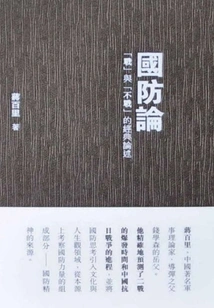
国防论:“战”与“不战”的经典论述
Jiang Baili
Jiang Baili, the father-in-law of Qian Xuesen, a famous Chinese military theorist and the father of missiles. He accurately predicted the outbreak of World War II and the course of China's Anti-Japanese War, introduced national defense thinking into the fields of culture and outlook on life, and examined the origin of the national defense spirit, an integral part of national defense power. This book brings together the essence of Mr. Jiang Baili's military writings. After summarizing the economic, political, military, and cultural aspects of Europe and the United States since World War I, and absorbing new Western military theories and ancient Chinese military thought, he expounded his views on China's national defense construction.
Jiang Baili, the father-in-law of Qian Xuesen, a famous Chinese military theorist and the father of missiles. He accurately predicted the outbreak of World War II and the course of China's Anti-Japanese War, introduced national defense thinking into the fields of culture and outlook on life, and examined the origin of the national defense spirit, an integral part of national defense power. This book brings together the essence of Mr. Jiang Baili's military writings. After summarizing the economic, political, military, and cultural aspects of Europe and the United States since World War I, and absorbing new Western military theories and ancient Chinese military thought, he expounded his views on China's national defense construction.
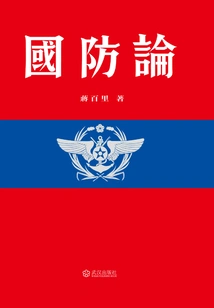
On National Defense
Military国防论
Jiang Baili
"On National Defense" is a collection of Jiang Baili's military essays, first published by Shanghai Ta Kung Pao in 1937. The first article, "National Defense Economics," emphasizes the establishment of a national defense system that can both feed and fight wars based on China's economic strength. The second part, "Recent World Defense Trends," introduces Douhet's air supremacy thought and Ludendorff's total war thought. The third article, "Historically Explaining the Basic Principles of Defense Economics," strongly advocates the national defense principle of "consistency between living conditions and combat conditions." The fourth chapter, "On National Defense Twenty Years Ago," introduces political and military strategy, the relationship between national power, force and military strength, as well as the contents of the compulsory military conscription system. The fifth article, "On National Defense Fifteen Years Ago," explains the significance of disarmament, military and civilian defense, and a detailed explanation of the compulsory militia system. The sixth chapter, "The Forefather of Chinese National Defense Theory" explains the modern national defense theory by explaining "Sun Tzu·Ji Pian". The seventh article, "The Origin of Modern Culture and the Establishment of a New Outlook on Life," is an essay about the author's trip to Rome. In "On National Defense", Jiang Baili's main arguments are: first, trade space for time, "Whether you win or lose, just don't make peace with it"; second, don't be afraid of being swallowed up, only afraid of cannibalization, and resist the war in an all-out way; third, start a war in Shanghai, use the geographical conditions to weaken the Japanese offensive, prevent the Japanese army from reaching the second ridge (Hunan) to form a confrontation, and form a long-term battlefield. His conclusion was: The resistance against Japan must be based on the people and fight a protracted war.
"On National Defense" is a collection of Jiang Baili's military essays, first published by Shanghai Ta Kung Pao in 1937. The first article, "National Defense Economics," emphasizes the establishment of a national defense system that can both feed and fight wars based on China's economic strength. The second part, "Recent World Defense Trends," introduces Douhet's air supremacy thought and Ludendorff's total war thought. The third article, "Historically Explaining the Basic Principles of Defense Economics," strongly advocates the national defense principle of "consistency between living conditions and combat conditions." The fourth chapter, "On National Defense Twenty Years Ago," introduces political and military strategy, the relationship between national power, force and military strength, as well as the contents of the compulsory military conscription system. The fifth article, "On National Defense Fifteen Years Ago," explains the significance of disarmament, military and civilian defense, and a detailed explanation of the compulsory militia system. The sixth chapter, "The Forefather of Chinese National Defense Theory" explains the modern national defense theory by explaining "Sun Tzu·Ji Pian". The seventh article, "The Origin of Modern Culture and the Establishment of a New Outlook on Life," is an essay about the author's trip to Rome. In "On National Defense", Jiang Baili's main arguments are: first, trade space for time, "Whether you win or lose, just don't make peace with it"; second, don't be afraid of being swallowed up, only afraid of cannibalization, and resist the war in an all-out way; third, start a war in Shanghai, use the geographical conditions to weaken the Japanese offensive, prevent the Japanese army from reaching the second ridge (Hunan) to form a confrontation, and form a long-term battlefield. His conclusion was: The resistance against Japan must be based on the people and fight a protracted war.