Library
Browse and search books
2 novels found
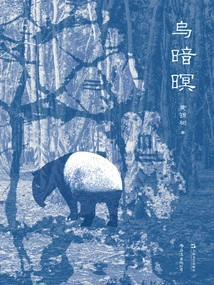
Dark and Dark
General Fiction乌暗暝
Huang Jinshu
"Dark Darkness" is a collection of Huang Jinshu's two early short story collections. The story mostly takes place in the small town of Jiaolin in Southeast Asia: Chinese immigrants to Southeast Asia are in an environment surrounded by wild beasts, racial oppression, colonial aggression, and identity anxiety, and face various forms of separation, disappearance, and death. Huang Jinshu actively uses meta-fiction (meta-fiction), satire, collage and other techniques to dialogue with the historical malaise, and presents Malaysian Chinese literature and the situation of Malaysian Chinese in a "possessed" way. Behind each piece of black text is the author's repair and reconstruction of the missing ethnic memory, as well as his introspection and thinking about the collective destiny of the Nanyang Chinese.
"Dark Darkness" is a collection of Huang Jinshu's two early short story collections. The story mostly takes place in the small town of Jiaolin in Southeast Asia: Chinese immigrants to Southeast Asia are in an environment surrounded by wild beasts, racial oppression, colonial aggression, and identity anxiety, and face various forms of separation, disappearance, and death. Huang Jinshu actively uses meta-fiction (meta-fiction), satire, collage and other techniques to dialogue with the historical malaise, and presents Malaysian Chinese literature and the situation of Malaysian Chinese in a "possessed" way. Behind each piece of black text is the author's repair and reconstruction of the missing ethnic memory, as well as his introspection and thinking about the collective destiny of the Nanyang Chinese.
Emptiness and Rewriting
Literature空午与重写
Huang Jinshu
This article discusses some contemporary novelists of the Sirius Poetry Society, such as Chen Ruixian, Ju Fan, Song Ziheng, Wen Xiangying, Xiao Hei, Hong Quan, Zhang Ruixing, etc., As well as late comers such as He Shufang, focusing on the differences between their earlier and later writings. Some stopped writing, while some continued the existing modern path and explored more deeply; some "transformed to reality" and had already abandoned their early experiments; some became more mature, and some became duller. After decades of life, these authors can still let the modern clock face continue, even if the literary trend has been updated several times. From these different cases, this article attempts to revise Wen Renping's theory of modernism and consider some basic questions about Malaysian Chinese modernist novels: What kind of projection does the continuous modern time have on the novel itself? Does the paradox of time enter literature itself? What are the manifestations of departures and "latecomers"?
This article discusses some contemporary novelists of the Sirius Poetry Society, such as Chen Ruixian, Ju Fan, Song Ziheng, Wen Xiangying, Xiao Hei, Hong Quan, Zhang Ruixing, etc., As well as late comers such as He Shufang, focusing on the differences between their earlier and later writings. Some stopped writing, while some continued the existing modern path and explored more deeply; some "transformed to reality" and had already abandoned their early experiments; some became more mature, and some became duller. After decades of life, these authors can still let the modern clock face continue, even if the literary trend has been updated several times. From these different cases, this article attempts to revise Wen Renping's theory of modernism and consider some basic questions about Malaysian Chinese modernist novels: What kind of projection does the continuous modern time have on the novel itself? Does the paradox of time enter literature itself? What are the manifestations of departures and "latecomers"?