Library
Browse and search books
5 novels found
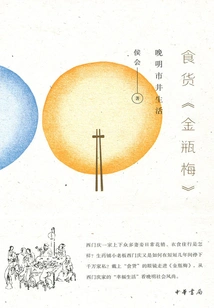
食货《金瓶梅》:晚明市井生活
Hou Hui
"The Plum in the Golden Lotus" is a rare novel in ancient China that takes the perspective of ordinary people in the market, understands with the thoughts of the ordinary people, loves and hates with the emotions of the ordinary people, and tells it in the language of the ordinary people. In addition to the joys and sorrows of the characters and the ups and downs of the plot, the economic motivations hidden deep in the story and behind human nature are also worthy of scrutiny. The amount of economic information in "Jin Ping Mei" can be regarded as the best among Chinese novels. Not only did Ximen Qing make a business, buy a house, accept a bribe, send a generous gift and other "major events" with detailed descriptions of their value, but also detailed details such as selling wine, tailoring clothes, shaving heads, polishing mirrors, buying sweat towels, weighing melon seeds, and even rewarding cooks and sending sedan bearers. This book starts with food and discusses the firewood, rice prices, and personnel disputes in "The Plum in the Golden Ping". It uses our normal mentality of working to earn money and support our families to understand the ancients, observe life, and touch the secular life of the people in the late Ming Dynasty. From Ximen Qing's methods of making and distributing wealth, the life and death entanglement between the "poor" Golden Lotus and the "rich" Ping'er, to the ugly faces of the slaves and gangsters seen through the eyes of money, in the face of money, all hypocrisy is removed, and naked humanity is revealed. Ximen Qing's path of fortune and destruction, driven by the desire for money and female lust, is particularly thought-provoking and thought-provoking.
"The Plum in the Golden Lotus" is a rare novel in ancient China that takes the perspective of ordinary people in the market, understands with the thoughts of the ordinary people, loves and hates with the emotions of the ordinary people, and tells it in the language of the ordinary people. In addition to the joys and sorrows of the characters and the ups and downs of the plot, the economic motivations hidden deep in the story and behind human nature are also worthy of scrutiny. The amount of economic information in "Jin Ping Mei" can be regarded as the best among Chinese novels. Not only did Ximen Qing make a business, buy a house, accept a bribe, send a generous gift and other "major events" with detailed descriptions of their value, but also detailed details such as selling wine, tailoring clothes, shaving heads, polishing mirrors, buying sweat towels, weighing melon seeds, and even rewarding cooks and sending sedan bearers. This book starts with food and discusses the firewood, rice prices, and personnel disputes in "The Plum in the Golden Ping". It uses our normal mentality of working to earn money and support our families to understand the ancients, observe life, and touch the secular life of the people in the late Ming Dynasty. From Ximen Qing's methods of making and distributing wealth, the life and death entanglement between the "poor" Golden Lotus and the "rich" Ping'er, to the ugly faces of the slaves and gangsters seen through the eyes of money, in the face of money, all hypocrisy is removed, and naked humanity is revealed. Ximen Qing's path of fortune and destruction, driven by the desire for money and female lust, is particularly thought-provoking and thought-provoking.
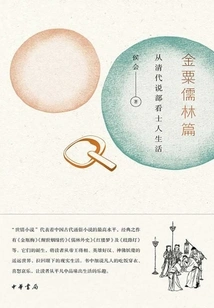
Jinsu Scholars Chapter: Looking at the Lives of Scholars from the Perspective of the Qing Dynasty
Literature金粟儒林篇:从清代说部看士人生活
Hou Hui
"Novel about worldly affairs" represents the highest level of popular novels in ancient China. Classic works include "The Plum in the Golden Vase", "The Story of Marriage that Awakens the World", "The Scholars", "A Dream of Red Mansions" and "The Lamp on the Cross Road", etc. Their birth brings readers back to the current real life from the distant world of emperors, generals, heroes, gods, Buddhas and monsters. The book details ordinary people's eating, dressing, joys, sorrows, and joys, allowing readers to taste the joy of life from the ordinary.
"Novel about worldly affairs" represents the highest level of popular novels in ancient China. Classic works include "The Plum in the Golden Vase", "The Story of Marriage that Awakens the World", "The Scholars", "A Dream of Red Mansions" and "The Lamp on the Cross Road", etc. Their birth brings readers back to the current real life from the distant world of emperors, generals, heroes, gods, Buddhas and monsters. The book details ordinary people's eating, dressing, joys, sorrows, and joys, allowing readers to taste the joy of life from the ordinary.
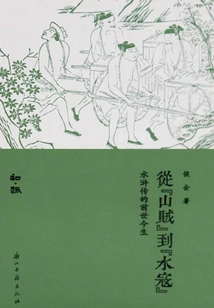
从山贼到水寇:水浒传的前世今生(知趣丛书)
Hou Hui
Quote from classics and provide a new interpretation of the heroic legend of "Water Margin". "Water Margin", one of the four great classics, is a representative work of heroic and legendary novels. The original work is based on the historical Song Jiang Uprising and tells a story of rivers and lakes represented by one hundred and eight heroes. Using various historical materials as evidence, this book traces the writing process of the Water Margin story and novel step by step, and reveals the secret connection between Zhong Xiang, Yang Yao's Dongting Lake Uprising and "Water Margin", which is refreshing. The appendix reflects the basic fact that ancient Chinese novels often have complex connections with folk religion.
Quote from classics and provide a new interpretation of the heroic legend of "Water Margin". "Water Margin", one of the four great classics, is a representative work of heroic and legendary novels. The original work is based on the historical Song Jiang Uprising and tells a story of rivers and lakes represented by one hundred and eight heroes. Using various historical materials as evidence, this book traces the writing process of the Water Margin story and novel step by step, and reveals the secret connection between Zhong Xiang, Yang Yao's Dongting Lake Uprising and "Water Margin", which is refreshing. The appendix reflects the basic fact that ancient Chinese novels often have complex connections with folk religion.
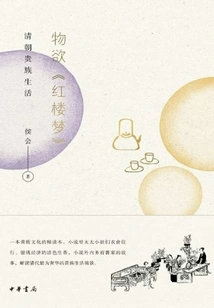
物欲《红楼梦》:清朝贵族生活
Hou Hui
Those who have always analyzed "A Dream of Red Mansions" mostly start from the perspectives of love, ethics, politics, philosophy, etc. "A Dream of Red Mansions: Revealing the Secrets of Noble Life" takes a unique approach and tries to interpret "A Dream of Red Mansions" from the perspective of material life and money economy. "A Dream of Red Mansions: Revealing the Secrets of Noble Life" has fifty sections and is divided into three series. The first volume, "Essential Clothing, Food, Housing and Transportation", attempts to explore the theme of the novel and the author's interests through the material life of Jia's family. The basic necessities, food, housing and transportation described in "A Dream of Red Mansions" represented the most luxurious level of material enjoyment of that era, and had the potential to surpass the royal family. While this volume discusses basic necessities, food, housing and transportation, there are also many unique interpretations and interesting discoveries. The second volume "Money Economy" further focuses on works from an economic perspective. From the gold and silver prices at that time to the price level, the financial situation of the Jia family was also analyzed. The third volume, "The Truth About the Cao Family," leads readers to move their gaze from inside the book to outside the book, paying attention to the economic and material life history of the Cao family, which is the source of material for the novel. So we saw the shabby "payslips" of Cao Xi and Cao Yin's father and son; we learned about the huge deficit caused by the Cao family's taking over. The answers behind many of the puzzles in the novel are revealed for the first time in "A Dream of Red Mansions: Noble Life Revealed".
Those who have always analyzed "A Dream of Red Mansions" mostly start from the perspectives of love, ethics, politics, philosophy, etc. "A Dream of Red Mansions: Revealing the Secrets of Noble Life" takes a unique approach and tries to interpret "A Dream of Red Mansions" from the perspective of material life and money economy. "A Dream of Red Mansions: Revealing the Secrets of Noble Life" has fifty sections and is divided into three series. The first volume, "Essential Clothing, Food, Housing and Transportation", attempts to explore the theme of the novel and the author's interests through the material life of Jia's family. The basic necessities, food, housing and transportation described in "A Dream of Red Mansions" represented the most luxurious level of material enjoyment of that era, and had the potential to surpass the royal family. While this volume discusses basic necessities, food, housing and transportation, there are also many unique interpretations and interesting discoveries. The second volume "Money Economy" further focuses on works from an economic perspective. From the gold and silver prices at that time to the price level, the financial situation of the Jia family was also analyzed. The third volume, "The Truth About the Cao Family," leads readers to move their gaze from inside the book to outside the book, paying attention to the economic and material life history of the Cao family, which is the source of material for the novel. So we saw the shabby "payslips" of Cao Xi and Cao Yin's father and son; we learned about the huge deficit caused by the Cao family's taking over. The answers behind many of the puzzles in the novel are revealed for the first time in "A Dream of Red Mansions: Noble Life Revealed".
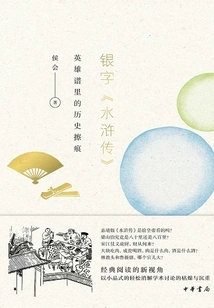
water Margin" in Silver Letters
General Fiction银字《水浒传》
Hou Hui
Compared with several worldly romance novels such as "Jin Ping Mei" and "A Dream of Red Mansions", "Water Margin" was written earlier and contains richer historical and cultural information. The first and second volumes of this book are an exploration and research of the mystery and version of "Water Margin". "Water Margin" is rooted in the Washe language (i. E. Yinzi'er) and has a deep imprint on the market. Almost all of the most exciting character stories take place in the background of the market; the book's content about food, clothing, housing, transportation, money economy, market style, people's livelihood and even the criminal law system, swords, guns and armor are mainly discussed in the third to seventh series. The eighth volume, "Salute to the Heroes of the Past," sorts out the reference relationship between the "Water Margin" story and other historical-themed works.
Compared with several worldly romance novels such as "Jin Ping Mei" and "A Dream of Red Mansions", "Water Margin" was written earlier and contains richer historical and cultural information. The first and second volumes of this book are an exploration and research of the mystery and version of "Water Margin". "Water Margin" is rooted in the Washe language (i. E. Yinzi'er) and has a deep imprint on the market. Almost all of the most exciting character stories take place in the background of the market; the book's content about food, clothing, housing, transportation, money economy, market style, people's livelihood and even the criminal law system, swords, guns and armor are mainly discussed in the third to seventh series. The eighth volume, "Salute to the Heroes of the Past," sorts out the reference relationship between the "Water Margin" story and other historical-themed works.