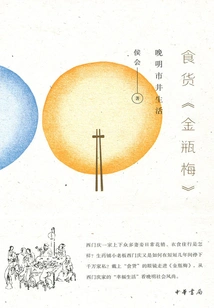
Food Goods "jin Ping Mei": Market Life in the Late Ming Dynasty
by Hou Hui
About This Novel
"The Plum in the Golden Lotus" is a rare novel in ancient China that takes the perspective of ordinary people in the market, understands with the thoughts of the ordinary people, loves and hates with the emotions of the ordinary people, and tells it in the language of the ordinary people. In addition to the joys and sorrows of the characters and the ups and downs of the plot, the economic motivations hidden deep in the story and behind human nature are also worthy of scrutiny. The amount of economic information in "Jin Ping Mei" can be regarded as the best among Chinese novels. Not only did Ximen Qing make a business, buy a house, accept a bribe, send a generous gift and other "major events" with detailed descriptions of their value, but also detailed details such as selling wine, tailoring clothes, shaving heads, polishing mirrors, buying sweat towels, weighing melon seeds, and even rewarding cooks and sending sedan bearers. This book starts with food and discusses the firewood, rice prices, and personnel disputes in "The Plum in the Golden Ping". It uses our normal mentality of working to earn money and support our families to understand the ancients, observe life, and touch the secular life of the people in the late Ming Dynasty. From Ximen Qing's methods of making and distributing wealth, the life and death entanglement between the "poor" Golden Lotus and the "rich" Ping'er, to the ugly faces of the slaves and gangsters seen through the eyes of money, in the face of money, all hypocrisy is removed, and naked humanity is revealed. Ximen Qing's path of fortune and destruction, driven by the desire for money and female lust, is particularly thought-provoking and thought-provoking.
Official Sources
What Readers Think
Rating
Community(0)
Rating
Community(0)