Library
Browse and search books
7 novels found
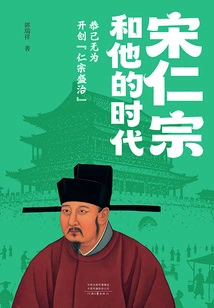
Song Renzong and His Era
History宋仁宗和他的时代
Guo Ruixiang
This book starts from first-hand historical materials and uses time as the axis, from Song Renzong's pro-government to Jiayou's opening of science and Su Shi's examination, to comprehensively display the unparalleled splendor of the Song Dynasty's Renzong Dynasty, and also reveal the disputes and power struggles behind the prosperous age, thereby revealing the political characteristics, temperament of the times and humanistic atmosphere of the Song Dynasty. The author has a novel point of view, trying to break through the inherent one-dimensional impression of characters and events, and also conducts a new excavation and interpretation of historical materials.
This book starts from first-hand historical materials and uses time as the axis, from Song Renzong's pro-government to Jiayou's opening of science and Su Shi's examination, to comprehensively display the unparalleled splendor of the Song Dynasty's Renzong Dynasty, and also reveal the disputes and power struggles behind the prosperous age, thereby revealing the political characteristics, temperament of the times and humanistic atmosphere of the Song Dynasty. The author has a novel point of view, trying to break through the inherent one-dimensional impression of characters and events, and also conducts a new excavation and interpretation of historical materials.
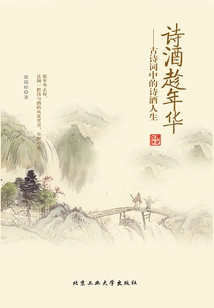
诗酒趁年华:古诗词中的诗酒人生
Guo Ruixiang
Following the aroma, soul, and culture of wine in ancient poetry, we analyze the spiritual world and taste of life conveyed by poetry and wine. This is an appreciation of ancient poetry, but the focus is not on the analysis itself, but on thinking about life and interpreting the world through poetry. The whole book is based on emotion and is divided into four parts: joy, thought, sadness, and indulgence, which represent the four emotional tones of wine. The author selects 24 wine poems from past dynasties, representing 24 kinds of emotions. Through words full of tension and expression, it conveys a large number of valuable cultural and social messages, and is highly artistic and readable.
Following the aroma, soul, and culture of wine in ancient poetry, we analyze the spiritual world and taste of life conveyed by poetry and wine. This is an appreciation of ancient poetry, but the focus is not on the analysis itself, but on thinking about life and interpreting the world through poetry. The whole book is based on emotion and is divided into four parts: joy, thought, sadness, and indulgence, which represent the four emotional tones of wine. The author selects 24 wine poems from past dynasties, representing 24 kinds of emotions. Through words full of tension and expression, it conveys a large number of valuable cultural and social messages, and is highly artistic and readable.
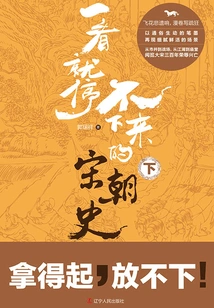
一看就停不下来的宋朝史(下)
Guo Ruixiang
The Song Dynasty was one of the most controversial dynasties in Chinese history. Its territory was almost the smallest in history and surrounded by crises. However, it was also the most prosperous and prosperous dynasty in Chinese history. The people lived in an environment with relatively clear politics, relatively civilized society, and relatively relaxed life. The large-scale development of the south of the Yangtze River, the booming foreign trade, and the technological advancement of agricultural handicrafts... "The History of the Song Dynasty that I can't stop at once" is divided into two volumes. The second volume is based on exploring the process of the demise of the Southern Song Dynasty and the deep logic contained in it. It uses characters or groups of characters as structural blocks and the timeline of events as narrative clues. It uses a combination of blocks to advance the plot and focuses on showing the appearance of all living beings before and after the demise of the Southern Song Dynasty. Through the narration, portrayal and analysis of typical characters, this magnificent historical event is strung together, trying to decipher the cultural code of the politics of scholar-bureaucrats in the Song Dynasty from the inherent facial makeup of the characters.
The Song Dynasty was one of the most controversial dynasties in Chinese history. Its territory was almost the smallest in history and surrounded by crises. However, it was also the most prosperous and prosperous dynasty in Chinese history. The people lived in an environment with relatively clear politics, relatively civilized society, and relatively relaxed life. The large-scale development of the south of the Yangtze River, the booming foreign trade, and the technological advancement of agricultural handicrafts... "The History of the Song Dynasty that I can't stop at once" is divided into two volumes. The second volume is based on exploring the process of the demise of the Southern Song Dynasty and the deep logic contained in it. It uses characters or groups of characters as structural blocks and the timeline of events as narrative clues. It uses a combination of blocks to advance the plot and focuses on showing the appearance of all living beings before and after the demise of the Southern Song Dynasty. Through the narration, portrayal and analysis of typical characters, this magnificent historical event is strung together, trying to decipher the cultural code of the politics of scholar-bureaucrats in the Song Dynasty from the inherent facial makeup of the characters.
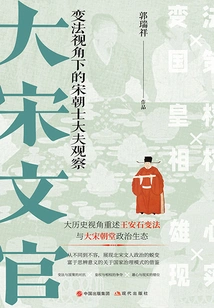
大宋文官:变法视角下的宋朝士大夫观察
Guo Ruixiang
Renzong died, his heir succeeded to the throne, and the national treasury was insufficient. Xixia was ready to move. Internal and external conflicts became apparent again. The national policies of Zhao and Song Dynasties that had been implemented for nearly a century were facing adjustments. Song Shenzong was an emperor who wanted to make great achievements, and boldly asked Wang Anshi to carry out reforms. However, this reform was controversial from the beginning, and it also led to the division of the civil service class. Although Wang Anshi and Sima Guang were both capable ministers, they attacked each other due to their different political views, which plunged the government into a quagmire of party disputes and was unable to extricate itself. The loose and tolerant political environment suffered a devastating blow. The entire society underwent a series of profound changes, whose influence lasted until at least the end of the 19th century. This book starts from Renzong's establishment of heirs and ends with Yuanyou's transformation. It uses time as the axis, viewpoints as bones, and historical facts as flesh. It reproduces the turmoil of major historical events such as Xining Reform, Yuanfeng Reform, and Yuanyou's Reform. It reveals the evolution of Song Dynasty civil servants from disparity to intolerance, the transition of Song Dynasty politics from centralization to imperial autocracy, and the transformation of social thoughts from openness and tolerance to restraint and conservatism. This provides readers with ample historical facts and dimensions of thinking to deeply understand the political ecology of the Song Dynasty, the spiritual pattern of scholar-bureaucrats such as Wang Anshi and Sima Guang, and even the political characteristics and trends of the entire imperial society. From the perspective of big history, he also put forward his own insights into the national governance model, talent selection mechanism, human choice in the destiny of the times, etc.
Renzong died, his heir succeeded to the throne, and the national treasury was insufficient. Xixia was ready to move. Internal and external conflicts became apparent again. The national policies of Zhao and Song Dynasties that had been implemented for nearly a century were facing adjustments. Song Shenzong was an emperor who wanted to make great achievements, and boldly asked Wang Anshi to carry out reforms. However, this reform was controversial from the beginning, and it also led to the division of the civil service class. Although Wang Anshi and Sima Guang were both capable ministers, they attacked each other due to their different political views, which plunged the government into a quagmire of party disputes and was unable to extricate itself. The loose and tolerant political environment suffered a devastating blow. The entire society underwent a series of profound changes, whose influence lasted until at least the end of the 19th century. This book starts from Renzong's establishment of heirs and ends with Yuanyou's transformation. It uses time as the axis, viewpoints as bones, and historical facts as flesh. It reproduces the turmoil of major historical events such as Xining Reform, Yuanfeng Reform, and Yuanyou's Reform. It reveals the evolution of Song Dynasty civil servants from disparity to intolerance, the transition of Song Dynasty politics from centralization to imperial autocracy, and the transformation of social thoughts from openness and tolerance to restraint and conservatism. This provides readers with ample historical facts and dimensions of thinking to deeply understand the political ecology of the Song Dynasty, the spiritual pattern of scholar-bureaucrats such as Wang Anshi and Sima Guang, and even the political characteristics and trends of the entire imperial society. From the perspective of big history, he also put forward his own insights into the national governance model, talent selection mechanism, human choice in the destiny of the times, etc.
一看就停不下来的宋朝史(上)
Guo Ruixiang
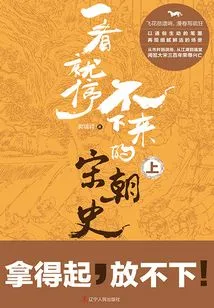
The Song Dynasty was one of the most controversial dynasties in Chinese history. Its territory was almost the smallest in history and surrounded by crises. However, it was also the most prosperous and prosperous dynasty in Chinese history. The people lived in an environment with relatively clear politics, relatively civilized society, and relatively relaxed life. The large-scale development of the south of the Yangtze River, the vigorous development of foreign trade, the technological progress of agricultural handicrafts... "The History of the Song Dynasty that I can't stop at one glance" is divided into two volumes. The first volume unfolds the Northern Song Dynasty through historical cross-sections from the palace to the court, from celebrities to commoners, from prosperity to the end. The vast picture scroll uses popular language, delicate writing style, and fascinating plot design to narrate the history of the Song Dynasty, allowing readers to interpret historical events, restore historical truth, and study historical wisdom together with the author, and feel the interest and charm of history in the vivid historical narrative.
The Song Dynasty was one of the most controversial dynasties in Chinese history. Its territory was almost the smallest in history and surrounded by crises. However, it was also the most prosperous and prosperous dynasty in Chinese history. The people lived in an environment with relatively clear politics, relatively civilized society, and relatively relaxed life. The large-scale development of the south of the Yangtze River, the vigorous development of foreign trade, the technological progress of agricultural handicrafts... "The History of the Song Dynasty that I can't stop at one glance" is divided into two volumes. The first volume unfolds the Northern Song Dynasty through historical cross-sections from the palace to the court, from celebrities to commoners, from prosperity to the end. The vast picture scroll uses popular language, delicate writing style, and fascinating plot design to narrate the history of the Song Dynasty, allowing readers to interpret historical events, restore historical truth, and study historical wisdom together with the author, and feel the interest and charm of history in the vivid historical narrative.
The History of the Song Dynasty That You Can't Stop Reading Once You Read it (2 Volumes in Total)
History一看就停不下来的宋朝史(套装共2册)
Guo Ruixiang
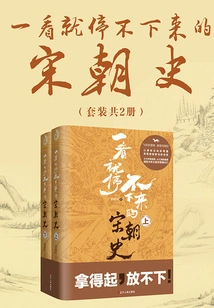
The Song Dynasty was one of the most controversial dynasties in Chinese history. Its territory was almost the smallest in history and surrounded by crises. However, it was also the most prosperous and prosperous dynasty in Chinese history. The people lived in an environment with relatively clear politics, relatively civilized society, and relatively relaxed life. The large-scale development of the south of the Yangtze River, the booming of foreign trade, and the technological advancement of agricultural handicrafts... However, due to endless internal greed and fighting, they entered their twilight years early, lingering under the iron heel of the northern nomads, and finally ended in an extremely absurd and tragic way. This series of books uses popular and smooth narrative techniques to show the prosperity and undercurrents of the Song Dynasty, and explore the underlying reasons for the rise and fall of the Song Dynasty. "The History of the Song Dynasty I Can't Stop Reading" is divided into two volumes. The first volume unfolds the magnificent picture of the Northern Song Dynasty through historical cross-sections from the palace to the court, from celebrities to commoners, from prosperity to the end, using popular language and delicate details. The writing style and fascinating plot design narrate the history of the Song Dynasty, allowing readers to interpret historical events with the author, restore historical truth, study historical wisdom, and feel the interest and charm of history in the vivid historical narrative.
The Song Dynasty was one of the most controversial dynasties in Chinese history. Its territory was almost the smallest in history and surrounded by crises. However, it was also the most prosperous and prosperous dynasty in Chinese history. The people lived in an environment with relatively clear politics, relatively civilized society, and relatively relaxed life. The large-scale development of the south of the Yangtze River, the booming of foreign trade, and the technological advancement of agricultural handicrafts... However, due to endless internal greed and fighting, they entered their twilight years early, lingering under the iron heel of the northern nomads, and finally ended in an extremely absurd and tragic way. This series of books uses popular and smooth narrative techniques to show the prosperity and undercurrents of the Song Dynasty, and explore the underlying reasons for the rise and fall of the Song Dynasty. "The History of the Song Dynasty I Can't Stop Reading" is divided into two volumes. The first volume unfolds the magnificent picture of the Northern Song Dynasty through historical cross-sections from the palace to the court, from celebrities to commoners, from prosperity to the end, using popular language and delicate details. The writing style and fascinating plot design narrate the history of the Song Dynasty, allowing readers to interpret historical events with the author, restore historical truth, study historical wisdom, and feel the interest and charm of history in the vivid historical narrative.
临安之变:绍兴体制与南宋中兴
Guo Ruixiang
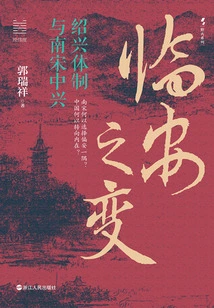
Why did the Southern Song Dynasty choose peace? Why did China turn inward? What seemed like a renaissance was actually the beginning of national decline. The review of the fall of the Northern Song Dynasty, the bitterness of the founding of the Southern Song Dynasty, the various behaviors of scholars traveling south, the helpless desolation of generals, and the formation of national character... Historical writer Guo Ruixiang will help you understand how the Southern Song Dynasty was established! The Southern Song Dynasty was a regime with a weak sense of existence, and it was also an era with far-reaching influence. It is weak in a corner of peace and has always been threatened by the political power in the north. At the same time, it had far-reaching influence, internalized the cultural model, created the "Shaoxing system", and brought Chinese politics into a period of dictatorship. This book was written from the fourth year of Jianyan (1130) to the twelfth year of Shaoxing (1142). It comprehensively presents the fierce political, military, and cultural shocks in the early Southern Song Dynasty, and reveals the formation process and internal logic of the territorial security, political dictatorship, and cultural stagnation of the Southern Song Dynasty.
Why did the Southern Song Dynasty choose peace? Why did China turn inward? What seemed like a renaissance was actually the beginning of national decline. The review of the fall of the Northern Song Dynasty, the bitterness of the founding of the Southern Song Dynasty, the various behaviors of scholars traveling south, the helpless desolation of generals, and the formation of national character... Historical writer Guo Ruixiang will help you understand how the Southern Song Dynasty was established! The Southern Song Dynasty was a regime with a weak sense of existence, and it was also an era with far-reaching influence. It is weak in a corner of peace and has always been threatened by the political power in the north. At the same time, it had far-reaching influence, internalized the cultural model, created the "Shaoxing system", and brought Chinese politics into a period of dictatorship. This book was written from the fourth year of Jianyan (1130) to the twelfth year of Shaoxing (1142). It comprehensively presents the fierce political, military, and cultural shocks in the early Southern Song Dynasty, and reveals the formation process and internal logic of the territorial security, political dictatorship, and cultural stagnation of the Southern Song Dynasty.