Library
Browse and search books
13 novels found
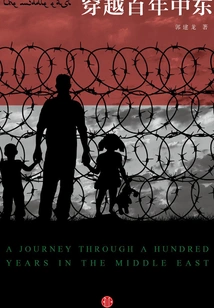
Traveling Through the Middle East for a Century
General Fiction穿越百年中东
Guo Jianlong
The starting point of the modern Middle East problem was the collapse of the Ottoman Turkish Empire after World War I. Before World War I, almost the entire Middle East was under the wings of the Ottoman Empire. With the collapse of the empire, a series of Arab states were established. However, due to the political immaturity, economic imbalance, and frequent religious conflicts of the newly-established country, disputes have continued for nearly a hundred years. This book uses a wandering and research method to discuss the ins and outs of the centuries-old disputes in the Middle East. Taking the historical context as a guide, the book summarizes the Middle East issues into several major topics and divides them into chapters, interspersed with the author's on-site observations, and reproduces the centuries-old contradictions and conflicts in the Middle East in the form of stories.
The starting point of the modern Middle East problem was the collapse of the Ottoman Turkish Empire after World War I. Before World War I, almost the entire Middle East was under the wings of the Ottoman Empire. With the collapse of the empire, a series of Arab states were established. However, due to the political immaturity, economic imbalance, and frequent religious conflicts of the newly-established country, disputes have continued for nearly a hundred years. This book uses a wandering and research method to discuss the ins and outs of the centuries-old disputes in the Middle East. Taking the historical context as a guide, the book summarizes the Middle East issues into several major topics and divides them into chapters, interspersed with the author's on-site observations, and reproduces the centuries-old contradictions and conflicts in the Middle East in the form of stories.
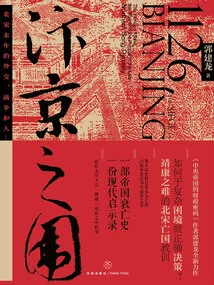
汴京之围:北宋末年的外交、战争和人
Guo Jianlong
This book traces the complete historical details of the Jingkang disaster at the end of the Northern Song Dynasty, tells the peace and war between the Song, Liao, and Jin parties, focusing on the key moments of the great changes in the history of the Northern Song Dynasty, and the causes and consequences of the overall crisis that broke out in the empire from the inside out. During the Xuanhe period of the Northern Song Dynasty, the empire was prosperous, but hidden dangers under the prosperous times had become an undercurrent. Internal crises such as financial difficulties, chronic military diseases, and vicious party disputes, as well as external crises such as military threats from the Liao and Jin countries in the north, made the empire gradually unstable. In order to "recover" the Sixteen Prefectures of Yanyun as a strategic barrier, Song Huizong decided to unite with the Jin Dynasty to destroy the Liao Dynasty. Although the Song-Jin alliance gradually encroached on the Liao Kingdom, the Jin State took advantage of this to see the weakness of the Northern Song Dynasty. Coupled with the complicated interest disputes between the two countries, the Jin State turned south to attack the Song Dynasty. In the first year of Jingkang (1126), the Jin army besieged Bianjing for the second time, and the city fell in November. The Northern Song Dynasty collapsed suddenly, and only three years passed from its prosperity to its demise.
This book traces the complete historical details of the Jingkang disaster at the end of the Northern Song Dynasty, tells the peace and war between the Song, Liao, and Jin parties, focusing on the key moments of the great changes in the history of the Northern Song Dynasty, and the causes and consequences of the overall crisis that broke out in the empire from the inside out. During the Xuanhe period of the Northern Song Dynasty, the empire was prosperous, but hidden dangers under the prosperous times had become an undercurrent. Internal crises such as financial difficulties, chronic military diseases, and vicious party disputes, as well as external crises such as military threats from the Liao and Jin countries in the north, made the empire gradually unstable. In order to "recover" the Sixteen Prefectures of Yanyun as a strategic barrier, Song Huizong decided to unite with the Jin Dynasty to destroy the Liao Dynasty. Although the Song-Jin alliance gradually encroached on the Liao Kingdom, the Jin State took advantage of this to see the weakness of the Northern Song Dynasty. Coupled with the complicated interest disputes between the two countries, the Jin State turned south to attack the Song Dynasty. In the first year of Jingkang (1126), the Jin army besieged Bianjing for the second time, and the city fell in November. The Northern Song Dynasty collapsed suddenly, and only three years passed from its prosperity to its demise.
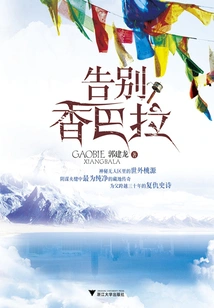
Farewell to Shambhala
General Fiction告别香巴拉
Guo Jianlong
In the 1970s, Fang Yimin, an economist who was sent to Qinghai, was persecuted and escaped to Tibet's no-man's land with a narrow escape. He accidentally entered Shambhala, an incredible utopian world. Here, there is an electrician, a geologist, a physicist, a lama and physician, a hunter and his daughter, together with a large number of treasures, forming an independent world that is transcendent from the world. Fang Yimin took root and gave birth to his son Fang Mingjue. Everyone imparted their best knowledge to him. After Fang Mingjue grew up, people decided to let him return to normal society. The people who once persecuted Fang Yimin relied on the capital of the 1990s to dominate the country. Fang Mingjue shoulders the important task of revenge, punishing evil and promoting good. He is fighting alone against a powerful group. What can help him is the wisdom of the aging people in Shambhala and the huge wealth...
In the 1970s, Fang Yimin, an economist who was sent to Qinghai, was persecuted and escaped to Tibet's no-man's land with a narrow escape. He accidentally entered Shambhala, an incredible utopian world. Here, there is an electrician, a geologist, a physicist, a lama and physician, a hunter and his daughter, together with a large number of treasures, forming an independent world that is transcendent from the world. Fang Yimin took root and gave birth to his son Fang Mingjue. Everyone imparted their best knowledge to him. After Fang Mingjue grew up, people decided to let him return to normal society. The people who once persecuted Fang Yimin relied on the capital of the 1990s to dominate the country. Fang Mingjue shoulders the important task of revenge, punishing evil and promoting good. He is fighting alone against a powerful group. What can help him is the wisdom of the aging people in Shambhala and the huge wealth...
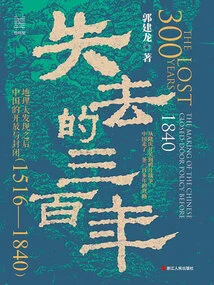
失去的三百年:地理大发现之后中国的开放与封闭(1516—1840)(经纬度丛书)
Guo Jianlong
Let you understand China's opening up and failure in the three hundred years from the late Ming Dynasty to the late Qing Dynasty. China has also had the opportunity to learn from the West and open up to the world. Whether it is technology, business, capital or institutions, China has had the urge to learn. China has opened up to the outside world more than once in its history, but if lessons are not learned, any opening up to the outside world will eventually return to the original point of closure after drawing a circle. The content described in this book is not to praise the greatness of ancient dynasties, but to explore China's objective gains and losses in the more than three hundred years from the geographical discovery to the outbreak of the Opium War. Let people understand that China is not inherently closed. It had a large-scale opening up hundreds of years ago and introduced all the most advanced Western technology and knowledge at that time. However, due to the nature of the feudal centralized regime, Chinese society forgot everything it had learned and returned to a traditional closed society.
Let you understand China's opening up and failure in the three hundred years from the late Ming Dynasty to the late Qing Dynasty. China has also had the opportunity to learn from the West and open up to the world. Whether it is technology, business, capital or institutions, China has had the urge to learn. China has opened up to the outside world more than once in its history, but if lessons are not learned, any opening up to the outside world will eventually return to the original point of closure after drawing a circle. The content described in this book is not to praise the greatness of ancient dynasties, but to explore China's objective gains and losses in the more than three hundred years from the geographical discovery to the outbreak of the Opium War. Let people understand that China is not inherently closed. It had a large-scale opening up hundreds of years ago and introduced all the most advanced Western technology and knowledge at that time. However, due to the nature of the feudal centralized regime, Chinese society forgot everything it had learned and returned to a traditional closed society.
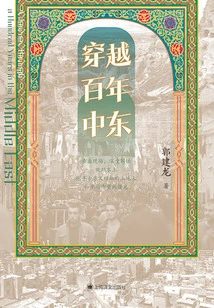
穿越百年中东
Guo Jianlong
A must-read to understand the century-old chaos in the Middle East. Here, peace is an illusion and war is eternal. After the smoke of World War I cleared, the declining Ottoman Empire completely collapsed amid the carving up of power by European powers, and the continued turmoil in the modern Middle East was the long aftershock it caused. A series of new Arab states were established, and they were prone to conflicts and disputes. This book is like a travelogue traveling through time and space in the Middle East, cleverly intertwining the author's on-site observations with historical retrospection. The book discusses major problems in the Middle East in chapters, digs deeply into the root causes of contradictions and conflicts hidden in the depths of time, and presents readers with a neutral and objective panoramic view of the chaos in the Middle East. It is not only a historical work, but also a profound reflection on the emergence, continuation and end of the chaos in the Middle East, leading us to jointly explore the dawn of peace and hope in that ancient and mysterious land.
A must-read to understand the century-old chaos in the Middle East. Here, peace is an illusion and war is eternal. After the smoke of World War I cleared, the declining Ottoman Empire completely collapsed amid the carving up of power by European powers, and the continued turmoil in the modern Middle East was the long aftershock it caused. A series of new Arab states were established, and they were prone to conflicts and disputes. This book is like a travelogue traveling through time and space in the Middle East, cleverly intertwining the author's on-site observations with historical retrospection. The book discusses major problems in the Middle East in chapters, digs deeply into the root causes of contradictions and conflicts hidden in the depths of time, and presents readers with a neutral and objective panoramic view of the chaos in the Middle East. It is not only a historical work, but also a profound reflection on the emergence, continuation and end of the chaos in the Middle East, leading us to jointly explore the dawn of peace and hope in that ancient and mysterious land.
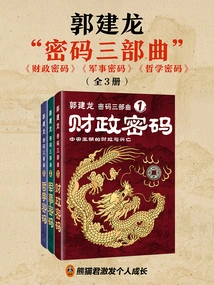
郭建龙“密码三部曲”(全3册)
Guo Jianlong
Historical writer Guo Jianlong's "Code Trilogy" interprets the rise and fall of ancient Chinese dynasties from financial, military and philosophical perspectives! "Financial Code" uses the gains and losses of the fiscal systems of past dynasties to explore the internal causes of dynasty changes! "Military Code" uses geography and war as its context to look at the success or failure of each dynasty's military strategy! "Philosophy Code" searches for the ruling logic of ancient Chinese dynasties in the context of political philosophy! Yu Minhong, Liu Suli, Yu Shicun, Yang Bin, Shi Zhan, Luo Zhenyu, Li Shuo, Zhang Mingyang highly recommend! "The Fiscal Code" explains the relationship between the rise and fall of ancient Chinese dynasties and finance from three aspects: land system, currency monopoly, and government-owned industries. The whole book uses the three cycles of the evolution of the central dynasty's financial system as the division criteria. The first cycle covers the Qin, Han, Wei, Jin and Southern Dynasties, taking the official industries established by Emperor Wu of the Han Dynasty, Wang Mang's financial monopoly, and the land and household registration system in the Wei and Jin Dynasties as clues; the second cycle covers the Northern Wei, Northern Zhou, Sui, Tang and Song Dynasties, starting with the land reform of the Northern Wei Dynasty, and discusses The land equalization system ended with the great collapse caused by the financial reforms of the Song Dynasty; the third cycle is the Liao, Jin, Yuan, Ming and Qing dynasties, starting from the experimental fiscal policies of the Yuan Dynasty government, then discussing the conservative finance of the Ming and Qing dynasties, and ending with the efforts of fiscal modernization and its inertia in the late Qing Dynasty. The book "Military Code" provides a detailed analysis of the military geography of ancient China, analyzing the most critical geographical elements in the wars of past dynasties and how these elements played a role in the wars. Through on-the-spot investigation and citation of historical materials, the most typical wars and military actions of each era are selected, and the movement of strategic locations from Guanzhong to the Yangtze River Basin and border areas is illustrated, which is also accompanied by the unification, division and expansion of dynasties. It analyzes the military logic behind major wars and its impact on the rise and fall of previous dynasties. "The Philosophical Code" starts from the Western Han Dynasty and describes the evolution of thought after the arrival of the era of great unification. By explaining the ins and outs of the development of philosophy, readers can clearly see how and why Chinese philosophy evolved, and understand the mystery of the interaction between politics and philosophy. The political philosophy of the Central Dynasty can be regarded as the history of ideological formatting and counter-formatting. This book divides it into two major cycles: the first cycle started with Confucianism in the Western Han Dynasty, passed through the "rebellion" of metaphysics in the Wei, Jin, Southern and Northern Dynasties, and the birth of Buddhism, until the three religions coexisted and competed with each other in the Sui and Tang Dynasties; the second cycle lasted from the Song Dynasty to the late Qing Dynasty, including the establishment of the Taoist system in the Song Dynasty, the ideological control of Neo-Confucianism, the birth and reflection of the Ming Dynasty's philosophy of mind, and the rise and development of practical science in the Qing Dynasty.
Historical writer Guo Jianlong's "Code Trilogy" interprets the rise and fall of ancient Chinese dynasties from financial, military and philosophical perspectives! "Financial Code" uses the gains and losses of the fiscal systems of past dynasties to explore the internal causes of dynasty changes! "Military Code" uses geography and war as its context to look at the success or failure of each dynasty's military strategy! "Philosophy Code" searches for the ruling logic of ancient Chinese dynasties in the context of political philosophy! Yu Minhong, Liu Suli, Yu Shicun, Yang Bin, Shi Zhan, Luo Zhenyu, Li Shuo, Zhang Mingyang highly recommend! "The Fiscal Code" explains the relationship between the rise and fall of ancient Chinese dynasties and finance from three aspects: land system, currency monopoly, and government-owned industries. The whole book uses the three cycles of the evolution of the central dynasty's financial system as the division criteria. The first cycle covers the Qin, Han, Wei, Jin and Southern Dynasties, taking the official industries established by Emperor Wu of the Han Dynasty, Wang Mang's financial monopoly, and the land and household registration system in the Wei and Jin Dynasties as clues; the second cycle covers the Northern Wei, Northern Zhou, Sui, Tang and Song Dynasties, starting with the land reform of the Northern Wei Dynasty, and discusses The land equalization system ended with the great collapse caused by the financial reforms of the Song Dynasty; the third cycle is the Liao, Jin, Yuan, Ming and Qing dynasties, starting from the experimental fiscal policies of the Yuan Dynasty government, then discussing the conservative finance of the Ming and Qing dynasties, and ending with the efforts of fiscal modernization and its inertia in the late Qing Dynasty. The book "Military Code" provides a detailed analysis of the military geography of ancient China, analyzing the most critical geographical elements in the wars of past dynasties and how these elements played a role in the wars. Through on-the-spot investigation and citation of historical materials, the most typical wars and military actions of each era are selected, and the movement of strategic locations from Guanzhong to the Yangtze River Basin and border areas is illustrated, which is also accompanied by the unification, division and expansion of dynasties. It analyzes the military logic behind major wars and its impact on the rise and fall of previous dynasties. "The Philosophical Code" starts from the Western Han Dynasty and describes the evolution of thought after the arrival of the era of great unification. By explaining the ins and outs of the development of philosophy, readers can clearly see how and why Chinese philosophy evolved, and understand the mystery of the interaction between politics and philosophy. The political philosophy of the Central Dynasty can be regarded as the history of ideological formatting and counter-formatting. This book divides it into two major cycles: the first cycle started with Confucianism in the Western Han Dynasty, passed through the "rebellion" of metaphysics in the Wei, Jin, Southern and Northern Dynasties, and the birth of Buddhism, until the three religions coexisted and competed with each other in the Sui and Tang Dynasties; the second cycle lasted from the Song Dynasty to the late Qing Dynasty, including the establishment of the Taoist system in the Song Dynasty, the ideological control of Neo-Confucianism, the birth and reflection of the Ming Dynasty's philosophy of mind, and the rise and development of practical science in the Qing Dynasty.
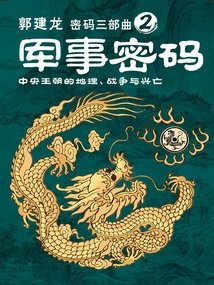
军事密码(郭建龙“密码三部曲”之二)
Guo Jianlong
A history of China based on war and geography, describing the evolution of China's military strategy and its successes and failures over more than two thousand years. The new version comes with a map! The second part of "Code Trilogy" by historical writer Guo Jianlong, also includes "Financial Code" and "Philosophical Code"! Highly recommended by Yu Minhong, Liu Suli, Yu Shicun, Yang Bin, Shi Zhan, Luo Zhenyu and Li Shuo! This book provides a detailed analysis of the military geography of ancient China, analyzing the most critical geographical elements in the wars of past dynasties and how these elements played a role in the wars. Through on-the-spot investigation and citation of historical materials, the author selects the most typical wars and military operations of each era, and explains the movement of strategic locations from Guanzhong to the Yangtze River Basin and border areas, which was also accompanied by the unification, division and expansion of dynasties. He also divided the two thousand years of ancient China from the Spring and Autumn Period and the Warring States Period to the late Qing Dynasty into five evolutionary eras of military strategy, and analyzed the military logic behind major wars and their impact on the rise and fall of previous dynasties.
A history of China based on war and geography, describing the evolution of China's military strategy and its successes and failures over more than two thousand years. The new version comes with a map! The second part of "Code Trilogy" by historical writer Guo Jianlong, also includes "Financial Code" and "Philosophical Code"! Highly recommended by Yu Minhong, Liu Suli, Yu Shicun, Yang Bin, Shi Zhan, Luo Zhenyu and Li Shuo! This book provides a detailed analysis of the military geography of ancient China, analyzing the most critical geographical elements in the wars of past dynasties and how these elements played a role in the wars. Through on-the-spot investigation and citation of historical materials, the author selects the most typical wars and military operations of each era, and explains the movement of strategic locations from Guanzhong to the Yangtze River Basin and border areas, which was also accompanied by the unification, division and expansion of dynasties. He also divided the two thousand years of ancient China from the Spring and Autumn Period and the Warring States Period to the late Qing Dynasty into five evolutionary eras of military strategy, and analyzed the military logic behind major wars and their impact on the rise and fall of previous dynasties.
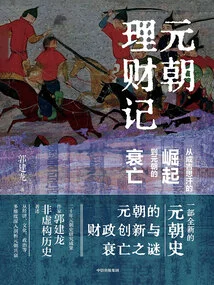
元朝理财记:从成吉思汗的崛起到元朝的衰亡
Guo Jianlong
Did the Yuan Dynasty die from inflation? From the rise of Genghis Khan to the decline and fall of the Yuan Dynasty, this is a history of the rise and decline of the Yuan Dynasty with finance as the line. A new work by the well-known historical writer Guo Jianlong! This book begins with the financial impact of Genghis Khan's Western expeditions. Genghis Khan adopted various measures such as the military plunder system, the Darucha Chi system, and the surrender system. He used the commercial spirit to establish a larger global political power and laid important economic, cultural, and political foundations for the Yuan Dynasty, the most commercial dynasty in ancient Chinese history. During the Kublai Khan period, serious financial risks and institutional malpractices arose due to the massive conquests. Subsequent emperors rotated like a revolving lantern, paving the way for the outcome of the Yuan Dynasty. The rulers of the Yuan Dynasty were hesitant between the Mongolian and Han cultures, and the financial and political imbalance between the north and the south made the Yuan Dynasty's life hang on a thread. Open this book to unearth the mystery of the short life of the Yuan Dynasty from multiple dimensions and get a glimpse of the financial undercurrent of the historical evolution of ancient China.
Did the Yuan Dynasty die from inflation? From the rise of Genghis Khan to the decline and fall of the Yuan Dynasty, this is a history of the rise and decline of the Yuan Dynasty with finance as the line. A new work by the well-known historical writer Guo Jianlong! This book begins with the financial impact of Genghis Khan's Western expeditions. Genghis Khan adopted various measures such as the military plunder system, the Darucha Chi system, and the surrender system. He used the commercial spirit to establish a larger global political power and laid important economic, cultural, and political foundations for the Yuan Dynasty, the most commercial dynasty in ancient Chinese history. During the Kublai Khan period, serious financial risks and institutional malpractices arose due to the massive conquests. Subsequent emperors rotated like a revolving lantern, paving the way for the outcome of the Yuan Dynasty. The rulers of the Yuan Dynasty were hesitant between the Mongolian and Han cultures, and the financial and political imbalance between the north and the south made the Yuan Dynasty's life hang on a thread. Open this book to unearth the mystery of the short life of the Yuan Dynasty from multiple dimensions and get a glimpse of the financial undercurrent of the historical evolution of ancient China.

Under the Smoke of Three Thousand Pagodas: a Cultural Journey of Five Countries in Southeast Asia
Literature三千佛塔烟云下:东南亚五国文化纪行
Guo Jianlong
Cultural traveler Guo Jianlong spent more than four months traveling throughout the Indochina Peninsula, exploring the historical evolution and cultural changes of the five Southeast Asian countries during his travels, piecing together a historical picture of the five Southeast Asian countries for nearly a thousand years, and presenting us with a fresh and unique Southeast Asia in addition to the scenery.
Cultural traveler Guo Jianlong spent more than four months traveling throughout the Indochina Peninsula, exploring the historical evolution and cultural changes of the five Southeast Asian countries during his travels, piecing together a historical picture of the five Southeast Asian countries for nearly a thousand years, and presenting us with a fresh and unique Southeast Asia in addition to the scenery.
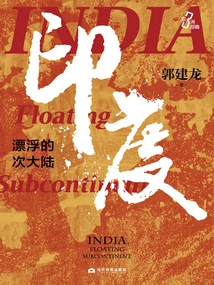
印度:漂浮的次大陆
Guo Jianlong
A wild journey around India's 5,000-year civilization history! 55 Days, 70 cities, hundreds of cultural sites, more than 20,000 kilometers... One of the "Asian Trilogy" by historical writer Guo Jianlong, taking you to experience the distant history and reality of the Indian subcontinent up close! Yu Minhong and Luo Zhenyu jointly recommend! In India, Guo Jianlong met countless tourists and Indians: engineers, professors, as well as soldiers, migrant workers, and homeless people. He slept at the station, ate, laughed, and played with them... While he relived India's great history and culture, he experienced India's present moment, and repeatedly traveled between history and reality. Starting from the prosperity and replacement of Indian dynasties to the emergence of various colorful religions in India, Guo Jianlong shows the 5,000-year history and reality of India from multiple perspectives such as politics, economy, and history, showing readers the splendor and splendor of the ancient civilized country, as well as the flexibility, tolerance, and vitality of secular life.
A wild journey around India's 5,000-year civilization history! 55 Days, 70 cities, hundreds of cultural sites, more than 20,000 kilometers... One of the "Asian Trilogy" by historical writer Guo Jianlong, taking you to experience the distant history and reality of the Indian subcontinent up close! Yu Minhong and Luo Zhenyu jointly recommend! In India, Guo Jianlong met countless tourists and Indians: engineers, professors, as well as soldiers, migrant workers, and homeless people. He slept at the station, ate, laughed, and played with them... While he relived India's great history and culture, he experienced India's present moment, and repeatedly traveled between history and reality. Starting from the prosperity and replacement of Indian dynasties to the emergence of various colorful religions in India, Guo Jianlong shows the 5,000-year history and reality of India from multiple perspectives such as politics, economy, and history, showing readers the splendor and splendor of the ancient civilized country, as well as the flexibility, tolerance, and vitality of secular life.

郭建龙“亚洲三部曲”(全3册)
Guo Jianlong
To understand China, you need to understand the culture and history surrounding China. Historical writer Guo Jianlong's field investigation work "Asia Trilogy"! A wild journey through 5,000 years of Indian civilization history! A mysterious and colorful journey through the history of Southeast Asian civilization! A journey through the Mongolian and Yuan Empire spanning eight hundred years! "India: The Floating Subcontinent": 55 days, 70 cities, hundreds of cultural sites, more than 20,000 kilometers... Takes you to experience the distant history and reality of the Indian subcontinent up close! "Under the Smoke of Three Thousand Pagodas": A cultural tour of five Southeast Asian countries: Vietnam, Shupu Village, Thailand, Myanmar, and Laos! More than 4 months, 5 countries, and more than 70 urban cultural sites... The separation and union of Vietnam and the Champa Kingdom; the splendor of the Angkor Dynasty in Cambodia; the prosperity of the Sukhothai Dynasty in Thailand; the glory of the Bagan Dynasty and Konbaung Dynasty in Myanmar; the difficult progress of the Lan Xang Kingdom in Laos; and the suffering and glory of the Indochina Peninsula. After many investigations, countless trips, exchanges and data reviews, Guo Jianlong sorted out the history, development logic and special relationship between this region and China that was both unfamiliar and forced to maintain contact with China. "Crossing Mongolia": One person, one bicycle, 26 days and nights, more than 2,000 kilometers, from Genghis Khan's hometown to the land finally conquered by the Mongols! This is an arduous ride measured with both feet, and it is also the historical journey of Mongolian civilization by "history and culture traveler" Guo Jianlong - this is the Eurasian passage that is broader than the Silk Road. Here are the amazing nomadic peoples in history. Their stormy conquests reshaped the entire world, and also created prosperity and peace within the vast empire.
To understand China, you need to understand the culture and history surrounding China. Historical writer Guo Jianlong's field investigation work "Asia Trilogy"! A wild journey through 5,000 years of Indian civilization history! A mysterious and colorful journey through the history of Southeast Asian civilization! A journey through the Mongolian and Yuan Empire spanning eight hundred years! "India: The Floating Subcontinent": 55 days, 70 cities, hundreds of cultural sites, more than 20,000 kilometers... Takes you to experience the distant history and reality of the Indian subcontinent up close! "Under the Smoke of Three Thousand Pagodas": A cultural tour of five Southeast Asian countries: Vietnam, Shupu Village, Thailand, Myanmar, and Laos! More than 4 months, 5 countries, and more than 70 urban cultural sites... The separation and union of Vietnam and the Champa Kingdom; the splendor of the Angkor Dynasty in Cambodia; the prosperity of the Sukhothai Dynasty in Thailand; the glory of the Bagan Dynasty and Konbaung Dynasty in Myanmar; the difficult progress of the Lan Xang Kingdom in Laos; and the suffering and glory of the Indochina Peninsula. After many investigations, countless trips, exchanges and data reviews, Guo Jianlong sorted out the history, development logic and special relationship between this region and China that was both unfamiliar and forced to maintain contact with China. "Crossing Mongolia": One person, one bicycle, 26 days and nights, more than 2,000 kilometers, from Genghis Khan's hometown to the land finally conquered by the Mongols! This is an arduous ride measured with both feet, and it is also the historical journey of Mongolian civilization by "history and culture traveler" Guo Jianlong - this is the Eurasian passage that is broader than the Silk Road. Here are the amazing nomadic peoples in history. Their stormy conquests reshaped the entire world, and also created prosperity and peace within the vast empire.
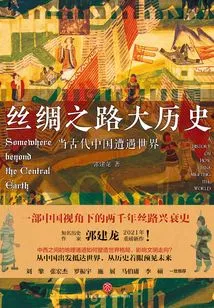
丝绸之路大历史:当古代中国遭遇世界
Guo Jianlong
For more than two thousand years, China's unique geographical conditions have created China's unique tradition of unification and the resilient continuity of Chinese civilization. However, since Zhang Qian emptied the Western Regions, there have been an endless stream of envoys, monks, and businessmen throughout the dynasties with different missions and purposes. They set out from China, either through the mountains and Gobi deserts in the west, or across the oceans, all the way westward to explore the wider world outside of China. The materials and ideas they brought back have also profoundly affected the living world of the Chinese people. Thus the Silk Road was born. This is a history of two thousand years of civilizational exchange between ancient China and the Western world. It is also a grand history of the formation, prosperity, evolution and decline of the Silk Road from a Chinese perspective. Through meticulous excavation of historical materials and vivid and popular words, the author restores the legendary experiences of important diplomats, monks, explorers, etc. On the Silk Road. During the Western Han Dynasty, Zhang Qian served as an envoy to the west to communicate with the Yuezhi and Wusun to jointly attack the Xiongnu, opening up the road to the Western Regions. During the Tang Dynasty, Xuanzang went to India to learn Buddhist scriptures. Entering the Song Dynasty, maritime trade in the southeast flourished, and porcelain and silk were exported overseas. During the Ming and Qing Dynasties, with the strict implementation of the maritime ban policy, the Silk Road gradually weakened. The Silk Road is not only a historical road of conquest, belief, trade and empire, but also a future road that determines the direction of human civilization in the current new era.
For more than two thousand years, China's unique geographical conditions have created China's unique tradition of unification and the resilient continuity of Chinese civilization. However, since Zhang Qian emptied the Western Regions, there have been an endless stream of envoys, monks, and businessmen throughout the dynasties with different missions and purposes. They set out from China, either through the mountains and Gobi deserts in the west, or across the oceans, all the way westward to explore the wider world outside of China. The materials and ideas they brought back have also profoundly affected the living world of the Chinese people. Thus the Silk Road was born. This is a history of two thousand years of civilizational exchange between ancient China and the Western world. It is also a grand history of the formation, prosperity, evolution and decline of the Silk Road from a Chinese perspective. Through meticulous excavation of historical materials and vivid and popular words, the author restores the legendary experiences of important diplomats, monks, explorers, etc. On the Silk Road. During the Western Han Dynasty, Zhang Qian served as an envoy to the west to communicate with the Yuezhi and Wusun to jointly attack the Xiongnu, opening up the road to the Western Regions. During the Tang Dynasty, Xuanzang went to India to learn Buddhist scriptures. Entering the Song Dynasty, maritime trade in the southeast flourished, and porcelain and silk were exported overseas. During the Ming and Qing Dynasties, with the strict implementation of the maritime ban policy, the Silk Road gradually weakened. The Silk Road is not only a historical road of conquest, belief, trade and empire, but also a future road that determines the direction of human civilization in the current new era.
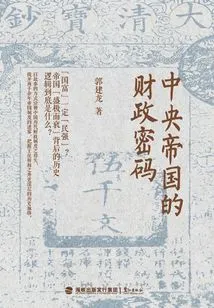
中央帝国的财政密码
Guo Jianlong
The author of this book takes Chinese dynasties as the basis and modern economic theory as the latitude, from the Qin and Han Dynasties to the late Qing Dynasty, to comb in detail the changes in the financial system of the central empire that lasted for more than two thousand years, to analyze the gains and losses of the financial systems of past dynasties, and to try to explain from the land tax system, the currency system, and the official economy that the rise and fall of traditional Chinese politics is closely related to the financial status of the empire. This book is divided into three parts, using the three social and financial reconstructions in Chinese history as the criteria for dividing stages. The first part focuses on the period from the Qin and Han Dynasties to the Southern Dynasties, using the state-owned system established by Emperor Wu of the Han Dynasty, the financial monopoly of Emperor Wu of the Han Dynasty and Wang Mang, and the land and household registration system in the Wei, Jin, Southern and Northern Dynasties as clues to interpret the financial phenomena during this period; the second part uses the land state-owned reform in the Northern Wei Dynasty It begins with the great chaos caused by the state ownership of land in the Tang Dynasty and ended with the great collapse caused by the financial reform in the Song Dynasty. The third part starts with the experimental fiscal policy of the Yuan Dynasty government, then discusses the conservative finance in the Ming and Qing Dynasties, and ends with the efforts and inertia of fiscal modernization in the late Qing Dynasty.
The author of this book takes Chinese dynasties as the basis and modern economic theory as the latitude, from the Qin and Han Dynasties to the late Qing Dynasty, to comb in detail the changes in the financial system of the central empire that lasted for more than two thousand years, to analyze the gains and losses of the financial systems of past dynasties, and to try to explain from the land tax system, the currency system, and the official economy that the rise and fall of traditional Chinese politics is closely related to the financial status of the empire. This book is divided into three parts, using the three social and financial reconstructions in Chinese history as the criteria for dividing stages. The first part focuses on the period from the Qin and Han Dynasties to the Southern Dynasties, using the state-owned system established by Emperor Wu of the Han Dynasty, the financial monopoly of Emperor Wu of the Han Dynasty and Wang Mang, and the land and household registration system in the Wei, Jin, Southern and Northern Dynasties as clues to interpret the financial phenomena during this period; the second part uses the land state-owned reform in the Northern Wei Dynasty It begins with the great chaos caused by the state ownership of land in the Tang Dynasty and ended with the great collapse caused by the financial reform in the Song Dynasty. The third part starts with the experimental fiscal policy of the Yuan Dynasty government, then discusses the conservative finance in the Ming and Qing Dynasties, and ends with the efforts and inertia of fiscal modernization in the late Qing Dynasty.