Library
Browse and search books
3 novels found
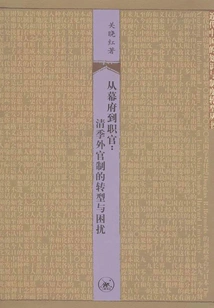
从幕府到职官:清季外官制的转型与困扰
Guan Xiaohong
The reform of the official system in the late Qing Dynasty changed the original "internal and external maintenance" pattern to a top-down focus, which was an important part of the transformation of modern political systems. The overall goal of the reform is to imitate the West and transition from an autocratic monarchy to a constitutional monarchy. The Qing court tried to lay a constitutional foundation for official governance through official system reform, and then refreshed the official system and proposed a political platform; however, the reform led to serious irregularities in the ruling order, sharp social conflicts, and the Qing court's rapid demise. Its shortcomings are mainly that the monarchs and ministers only care about their own selfish interests, obstruct reforms, and cannot respond to the interests of all aspects of society. The outcome is also very different from their expectations.
The reform of the official system in the late Qing Dynasty changed the original "internal and external maintenance" pattern to a top-down focus, which was an important part of the transformation of modern political systems. The overall goal of the reform is to imitate the West and transition from an autocratic monarchy to a constitutional monarchy. The Qing court tried to lay a constitutional foundation for official governance through official system reform, and then refreshed the official system and proposed a political platform; however, the reform led to serious irregularities in the ruling order, sharp social conflicts, and the Qing court's rapid demise. Its shortcomings are mainly that the monarchs and ministers only care about their own selfish interests, obstruct reforms, and cannot respond to the interests of all aspects of society. The outcome is also very different from their expectations.
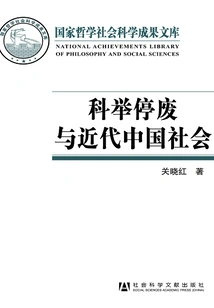
科举停废与近代中国社会
Guan Xiaohong
The abolition of the imperial examination was one of the most important changes in modern society. Whether we can evaluate it realistically and draw lessons from it depends on a comprehensive and clear understanding of the relevant historical facts. In particular, the decision-making process, the intention of the system change, the aftermath arrangements, the feelings of the relevant people and the actual impact on all parties in society are crucial. This research result has corrected some biases and misunderstandings in the past, and is conducive to deepening the understanding of the relationship between the abolition of the imperial examination and modern society, and has important academic value. This research result confirms that institutional changes are not isolated. The process of the immediate suspension of the imperial examination must be examined in conjunction with the overall changes in society in the late Qing Dynasty and the early Republic of China in order to rectify the source. If the relevant connections are ignored or separated, it will not only easily confuse the difference between direct and indirect effects, but even amplify the individual into the whole, hindering correct judgment and leading to misunderstanding of other related issues. Therefore, the research results have application value in methodology.
The abolition of the imperial examination was one of the most important changes in modern society. Whether we can evaluate it realistically and draw lessons from it depends on a comprehensive and clear understanding of the relevant historical facts. In particular, the decision-making process, the intention of the system change, the aftermath arrangements, the feelings of the relevant people and the actual impact on all parties in society are crucial. This research result has corrected some biases and misunderstandings in the past, and is conducive to deepening the understanding of the relationship between the abolition of the imperial examination and modern society, and has important academic value. This research result confirms that institutional changes are not isolated. The process of the immediate suspension of the imperial examination must be examined in conjunction with the overall changes in society in the late Qing Dynasty and the early Republic of China in order to rectify the source. If the relevant connections are ignored or separated, it will not only easily confuse the difference between direct and indirect effects, but even amplify the individual into the whole, hindering correct judgment and leading to misunderstanding of other related issues. Therefore, the research results have application value in methodology.
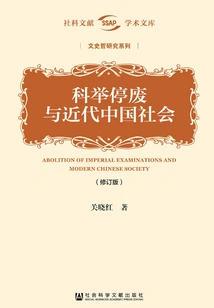
科举停废与近代中国社会(修订版)
Guan Xiaohong
The abolition of the imperial examination was one of the most important changes in modern society. Based on the full exploration of historical materials, especially the use of a large number of media historical materials, the author linked the abolition of the imperial examination with the overall social changes in the late Qing Dynasty. Through careful exploration, he corrected some misunderstandings in the past, allowing readers to have a clearer understanding of the relationship between the abolition of the imperial examination and modern society. The study confirmed that the change in the system was not isolated. The process of abolishing the imperial examination must be linked to the overall changes in society at the end of the Qing Dynasty and the beginning of the Republic of China in order to rectify the source.
The abolition of the imperial examination was one of the most important changes in modern society. Based on the full exploration of historical materials, especially the use of a large number of media historical materials, the author linked the abolition of the imperial examination with the overall social changes in the late Qing Dynasty. Through careful exploration, he corrected some misunderstandings in the past, allowing readers to have a clearer understanding of the relationship between the abolition of the imperial examination and modern society. The study confirmed that the change in the system was not isolated. The process of abolishing the imperial examination must be linked to the overall changes in society at the end of the Qing Dynasty and the beginning of the Republic of China in order to rectify the source.