Library
Browse and search books
13 novels found

顾城经典诗歌100首(人文经典文库)
Gu Cheng
"100 Classic Poems of Gucheng" is one of the "Humanities Classics Library" series. Gu Cheng's poetry is a unique branch in the Chinese poetry world. As one of the most representative figures of contemporary Chinese "misty poetry", Gu Cheng's poetry has become a specimen that cannot be ignored in the study of Chinese literature, Chinese poetry, contemporary Chinese cultural trends and even the spiritual history of contemporary people. This collection is included in the Humanities Classic Library. Taking into account the quality and form of the series, the Humanities Society and Gu Cheng's family jointly compiled and selected this collection of Haizi's poems, which collects the poet's 100 most representative short poems, such as "A Generation", "I am a Wayward Child", "Grave Bed", etc., And also includes Gu Cheng's conversations. While reading easily, you can feel the eternal charm of classic works.
"100 Classic Poems of Gucheng" is one of the "Humanities Classics Library" series. Gu Cheng's poetry is a unique branch in the Chinese poetry world. As one of the most representative figures of contemporary Chinese "misty poetry", Gu Cheng's poetry has become a specimen that cannot be ignored in the study of Chinese literature, Chinese poetry, contemporary Chinese cultural trends and even the spiritual history of contemporary people. This collection is included in the Humanities Classic Library. Taking into account the quality and form of the series, the Humanities Society and Gu Cheng's family jointly compiled and selected this collection of Haizi's poems, which collects the poet's 100 most representative short poems, such as "A Generation", "I am a Wayward Child", "Grave Bed", etc., And also includes Gu Cheng's conversations. While reading easily, you can feel the eternal charm of classic works.

President, Your Beloved Wife Ran Away Again
Modern Romance总裁,你的娇妻又逃跑了
Gu Cheng
Qin Muyan: "Since I love you hopelessly, I am willing to break your wings so that you only have eyes for me." Zhou Ruoyan: "Perversion is so scary, and perverted love is even more terrifying..."
Qin Muyan: "Since I love you hopelessly, I am willing to break your wings so that you only have eyes for me." Zhou Ruoyan: "Perversion is so scary, and perverted love is even more terrifying..."

President, Please Get Pregnant
Modern Romance总裁请接好孕
Gu Cheng
Zhou Weiwei had to undergo in vitro fertilization surgery because of her husband. As a result, her husband cheated on her during her pregnancy. Fortunately, the child was fine. After giving birth to a pair of twins, she went abroad with one of her children. A few years later, she returned to the country with her child, only to see another child who looked exactly like her own child. At the same time, the child's father also appeared in her life and pursued her.
Zhou Weiwei had to undergo in vitro fertilization surgery because of her husband. As a result, her husband cheated on her during her pregnancy. Fortunately, the child was fine. After giving birth to a pair of twins, she went abroad with one of her children. A few years later, she returned to the country with her child, only to see another child who looked exactly like her own child. At the same time, the child's father also appeared in her life and pursued her.

Gu Cheng's Poems
Literature顾城的诗
Gu Cheng
"Gu Cheng's Poems" is one of the Blue Star Poetry Library series. This manuscript is edited and selected by the author's close relatives, and it compiles the author's essence works since his poetry creation. Gu Cheng's poetry is a unique branch in the Chinese poetry circle, writing the history of contemporary literature. Since the new era, several poets have been indispensable, and Gu Cheng is one of them. This manuscript clearly demonstrates the author's poetic quality and is a very good material for appreciating and learning poetry and studying contemporary Chinese literature. As one of the most representative figures of contemporary Chinese "misty poetry", Gu Cheng's poetry has become a specimen that cannot be ignored in the study of Chinese literature, Chinese poetry, contemporary Chinese cultural trends and even the spiritual history of contemporary people.
"Gu Cheng's Poems" is one of the Blue Star Poetry Library series. This manuscript is edited and selected by the author's close relatives, and it compiles the author's essence works since his poetry creation. Gu Cheng's poetry is a unique branch in the Chinese poetry circle, writing the history of contemporary literature. Since the new era, several poets have been indispensable, and Gu Cheng is one of them. This manuscript clearly demonstrates the author's poetic quality and is a very good material for appreciating and learning poetry and studying contemporary Chinese literature. As one of the most representative figures of contemporary Chinese "misty poetry", Gu Cheng's poetry has become a specimen that cannot be ignored in the study of Chinese literature, Chinese poetry, contemporary Chinese cultural trends and even the spiritual history of contemporary people.

做神女的那些日子
Gu Cheng
Good people have to go through thousands of tribulations to become a Buddha, while evil people only need to put down the butcher's knife.
Good people have to go through thousands of tribulations to become a Buddha, while evil people only need to put down the butcher's knife.
南明史(上)
Gu Cheng
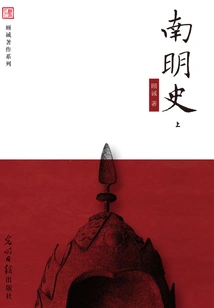
The characteristic of the book "History of the Southern Ming Dynasty" is that it basically focuses on the struggle of the Dashun Army, the remnants of the Daxi Army, and Zheng Chenggong and other people against the Qing Dynasty. The thread throughout the book emphasizes that the main reason for the failure of the twenty-year anti-Qing struggle was that the anti-Qing forces were riddled with internal contradictions and were severely dispersed, which offset the anti-Qing forces. The history of the Southern Ming Dynasty includes the history of the anti-Qing movements in various places since the Dashun army conquered Beijing and the Qing army entered the Pass to conquer the Central Plains, until the fall of the Kuidong anti-Qing base in the year of Kangxi. It is a struggle for hegemony among heroes and a continuation of the Ming Dynasty. It is also an important part of the history of the early Qing Dynasty. It was called "Southern Ming" because the Ming Dynasty with Beijing as its capital had fallen. The battles during this period were mainly fought in the south, and they were fought under the banner of reviving the Ming Dynasty. The Hongguang, Longwu, Lu Jianguo, and Yongli dynasties were all established in the south. However, the fight against the tyrannical rule of the Qing Dynasty was not limited to the south. There were continuous anti-Qing movements in Shaanxi, Gansu, Shanxi, Hebei, Shandong, Henan and other places. "History of the Southern Ming Dynasty" has solid historical materials and rich content. It is known as a milestone in the study of the history of the Southern Ming Dynasty. It has won the China National Book Award and the first prize for outstanding achievements in philosophy and social sciences in Beijing.
The characteristic of the book "History of the Southern Ming Dynasty" is that it basically focuses on the struggle of the Dashun Army, the remnants of the Daxi Army, and Zheng Chenggong and other people against the Qing Dynasty. The thread throughout the book emphasizes that the main reason for the failure of the twenty-year anti-Qing struggle was that the anti-Qing forces were riddled with internal contradictions and were severely dispersed, which offset the anti-Qing forces. The history of the Southern Ming Dynasty includes the history of the anti-Qing movements in various places since the Dashun army conquered Beijing and the Qing army entered the Pass to conquer the Central Plains, until the fall of the Kuidong anti-Qing base in the year of Kangxi. It is a struggle for hegemony among heroes and a continuation of the Ming Dynasty. It is also an important part of the history of the early Qing Dynasty. It was called "Southern Ming" because the Ming Dynasty with Beijing as its capital had fallen. The battles during this period were mainly fought in the south, and they were fought under the banner of reviving the Ming Dynasty. The Hongguang, Longwu, Lu Jianguo, and Yongli dynasties were all established in the south. However, the fight against the tyrannical rule of the Qing Dynasty was not limited to the south. There were continuous anti-Qing movements in Shaanxi, Gansu, Shanxi, Hebei, Shandong, Henan and other places. "History of the Southern Ming Dynasty" has solid historical materials and rich content. It is known as a milestone in the study of the history of the Southern Ming Dynasty. It has won the China National Book Award and the first prize for outstanding achievements in philosophy and social sciences in Beijing.
南明史(下)
Gu Cheng
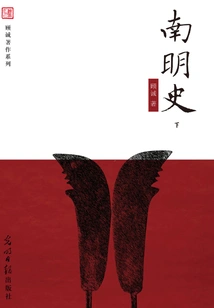
The characteristic of the book "History of the Southern Ming Dynasty" is that it basically focuses on the struggle of the Dashun Army, the remnants of the Daxi Army, and Zheng Chenggong and other people against the Qing Dynasty. The thread throughout the book emphasizes that the main reason for the failure of the twenty-year anti-Qing struggle was that the anti-Qing forces were riddled with internal contradictions and were severely dispersed, which offset the anti-Qing forces. The history of the Southern Ming Dynasty includes the history of the anti-Qing movements in various places since the Dashun army conquered Beijing and the Qing army entered the Pass to conquer the Central Plains, until the fall of the Kuidong anti-Qing base in the year of Kangxi. It is a struggle for hegemony among heroes and a continuation of the Ming Dynasty. It is also an important part of the history of the early Qing Dynasty. It was called "Southern Ming" because the Ming Dynasty with Beijing as its capital had fallen. The battles during this period were mainly fought in the south, and they were fought under the banner of reviving the Ming Dynasty. The Hongguang, Longwu, Lu Jianguo, and Yongli dynasties were all established in the south. However, the fight against the tyrannical rule of the Qing Dynasty was not limited to the south. There were continuous anti-Qing movements in Shaanxi, Gansu, Shanxi, Hebei, Shandong, Henan and other places. "History of the Southern Ming Dynasty" has solid historical materials and rich content. It is known as a milestone in the study of the history of the Southern Ming Dynasty. It has won the China National Book Award and the first prize for outstanding achievements in philosophy and social sciences in Beijing.
The characteristic of the book "History of the Southern Ming Dynasty" is that it basically focuses on the struggle of the Dashun Army, the remnants of the Daxi Army, and Zheng Chenggong and other people against the Qing Dynasty. The thread throughout the book emphasizes that the main reason for the failure of the twenty-year anti-Qing struggle was that the anti-Qing forces were riddled with internal contradictions and were severely dispersed, which offset the anti-Qing forces. The history of the Southern Ming Dynasty includes the history of the anti-Qing movements in various places since the Dashun army conquered Beijing and the Qing army entered the Pass to conquer the Central Plains, until the fall of the Kuidong anti-Qing base in the year of Kangxi. It is a struggle for hegemony among heroes and a continuation of the Ming Dynasty. It is also an important part of the history of the early Qing Dynasty. It was called "Southern Ming" because the Ming Dynasty with Beijing as its capital had fallen. The battles during this period were mainly fought in the south, and they were fought under the banner of reviving the Ming Dynasty. The Hongguang, Longwu, Lu Jianguo, and Yongli dynasties were all established in the south. However, the fight against the tyrannical rule of the Qing Dynasty was not limited to the south. There were continuous anti-Qing movements in Shaanxi, Gansu, Shanxi, Hebei, Shandong, Henan and other places. "History of the Southern Ming Dynasty" has solid historical materials and rich content. It is known as a milestone in the study of the history of the Southern Ming Dynasty. It has won the China National Book Award and the first prize for outstanding achievements in philosophy and social sciences in Beijing.
明末农民战争史
Gu Cheng
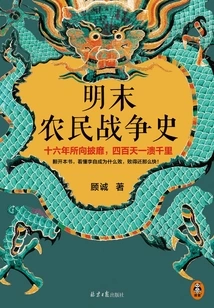
He was invincible for sixteen years, and fell thousands of miles away in four hundred days. Open this book and understand why Li Zicheng failed, and he failed so quickly! In March 1644, Li Zicheng invaded Beijing and the Ming Dynasty fell. He had been fighting for sixteen years. In April of the same year, Li Zicheng was defeated at Shanhaiguan and the Qing army entered the pass. In May of the following year, Li Zicheng sacrificed his life in Jiugong Mountain in Huguang, only 400 days before the fall of the Ming Dynasty. Public opinion lost ground: Dashun's army intensified torture and torture during the pursuit of stolen goods, and the Jin gentry was disgraced. In order to gain a foothold in Han territory, the Qing army aggressively sought to win over Han officials, gentry and landlords. These people had been attacked by the peasant army and all welcomed the Qing army. Strategic mistake: In Dashun's mind, the Ming and Qing wars were a matter of the previous dynasty. They did not have any enemies with the Qing Dynasty, so they could live in peace. They thought that after Wu Sangui surrendered, the Northeast issue would be solved, and the Qing army would be ignored. Misplacement of personnel: Dashun Army lacks a group of strategic talents who can look at the world and coordinate the overall situation. However, the Qing court recruited a group of "guides" such as Fan Wencheng and Hong Chengchou before entering the customs.
He was invincible for sixteen years, and fell thousands of miles away in four hundred days. Open this book and understand why Li Zicheng failed, and he failed so quickly! In March 1644, Li Zicheng invaded Beijing and the Ming Dynasty fell. He had been fighting for sixteen years. In April of the same year, Li Zicheng was defeated at Shanhaiguan and the Qing army entered the pass. In May of the following year, Li Zicheng sacrificed his life in Jiugong Mountain in Huguang, only 400 days before the fall of the Ming Dynasty. Public opinion lost ground: Dashun's army intensified torture and torture during the pursuit of stolen goods, and the Jin gentry was disgraced. In order to gain a foothold in Han territory, the Qing army aggressively sought to win over Han officials, gentry and landlords. These people had been attacked by the peasant army and all welcomed the Qing army. Strategic mistake: In Dashun's mind, the Ming and Qing wars were a matter of the previous dynasty. They did not have any enemies with the Qing Dynasty, so they could live in peace. They thought that after Wu Sangui surrendered, the Northeast issue would be solved, and the Qing army would be ignored. Misplacement of personnel: Dashun Army lacks a group of strategic talents who can look at the world and coordinate the overall situation. However, the Qing court recruited a group of "guides" such as Fan Wencheng and Hong Chengchou before entering the customs.
顾诚明史系列(全3册)
Gu Cheng
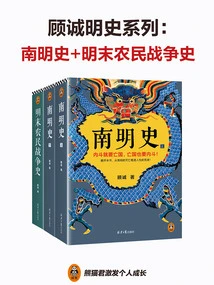
Let's first look at Li Zicheng's carelessness and loss of his country, and then look at the infighting between the emperors and ministers of the Southern Ming Dynasty and the destruction of the country! "History of Peasant War in the Late Ming Dynasty": In March 1644, Li Zicheng invaded Beijing and the Ming Dynasty was destroyed. He had been fighting for sixteen years at this time. In April of the same year, Li Zicheng was defeated at Shanhaiguan and the Qing army entered the customs. In May of the following year, Li Zicheng sacrificed his life in Jiugong Mountain in Huguang, only four hundred days before the demise of the Ming Dynasty. Loss of public opinion, strategic mistakes, and poor hiring decisions! Open this book and understand why Li Zicheng failed, and he failed so quickly! "History of the Southern Ming Dynasty": Infighting will lead to the destruction of the country, and subjugation of the country will also lead to internal fighting! There is nothing more absurd than this in human nature! In March 1644 AD, the Dashun Army led by Li Zicheng captured Beijing, and Emperor Chongzhen hanged himself. With the support of military general Ma Shiying and others, King Fu Zhu Yousong ascended the throne in Nanjing and changed his reign to Yuan Hongguang, but internal strife also continued. The Hongguang, Longwu, and Yongli regimes were successively established. The monarchs and ministers of Nanming lost countless opportunities for comebacks in the constant internal strife and headed for failure. Open the Gu Cheng Ming History series and see through the absurdity of human nature from the demise of the Ming Dynasty!
Let's first look at Li Zicheng's carelessness and loss of his country, and then look at the infighting between the emperors and ministers of the Southern Ming Dynasty and the destruction of the country! "History of Peasant War in the Late Ming Dynasty": In March 1644, Li Zicheng invaded Beijing and the Ming Dynasty was destroyed. He had been fighting for sixteen years at this time. In April of the same year, Li Zicheng was defeated at Shanhaiguan and the Qing army entered the customs. In May of the following year, Li Zicheng sacrificed his life in Jiugong Mountain in Huguang, only four hundred days before the demise of the Ming Dynasty. Loss of public opinion, strategic mistakes, and poor hiring decisions! Open this book and understand why Li Zicheng failed, and he failed so quickly! "History of the Southern Ming Dynasty": Infighting will lead to the destruction of the country, and subjugation of the country will also lead to internal fighting! There is nothing more absurd than this in human nature! In March 1644 AD, the Dashun Army led by Li Zicheng captured Beijing, and Emperor Chongzhen hanged himself. With the support of military general Ma Shiying and others, King Fu Zhu Yousong ascended the throne in Nanjing and changed his reign to Yuan Hongguang, but internal strife also continued. The Hongguang, Longwu, and Yongli regimes were successively established. The monarchs and ministers of Nanming lost countless opportunities for comebacks in the constant internal strife and headed for failure. Open the Gu Cheng Ming History series and see through the absurdity of human nature from the demise of the Ming Dynasty!
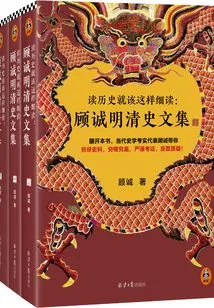
读历史就该这样细读:顾诚明清史文集(全3册)
Gu Cheng
Li Zicheng's general Li Yan doesn't actually exist? Is Shen Wansan, the "richest man in the Ming Dynasty", actually from the Yuan Dynasty? ... Behind these seemingly astonishing views are the results of Mr. Gu Cheng's extremely careful exfiltration of historical data and extremely rigorous reasoning and research. For example, when he wrote the article "Questioning Li Yan", he not only looked through various archives and anthologies, but even consulted more than a thousand local chronicles, and thus believed that Li Yan, who was recorded in many historical records, was actually fictional. In the article "Research on the Deeds of Shen Wansan and His Family", he pointed out that various historical materials, including "History of the Ming Dynasty", were incorrect. Shen Wansan, the "richest man in the Ming Dynasty", was actually from the Yuan Dynasty. Articles such as "A New Exploration on the Number of Cultivated Land in the Early Ming Dynasty", "The Transformation of the Guard System in the Qing Dynasty", "The Territory Management System of the Ming Empire" and "On the Wei Book in the Ming Dynasty" have an unshakable classic status in the academic world because of their pioneering contributions. Open this book, and Gu Cheng, a representative of contemporary history research, will lead you to exhaust the historical materials, investigate to the root, conduct rigorous research, and question repeatedly!
Li Zicheng's general Li Yan doesn't actually exist? Is Shen Wansan, the "richest man in the Ming Dynasty", actually from the Yuan Dynasty? ... Behind these seemingly astonishing views are the results of Mr. Gu Cheng's extremely careful exfiltration of historical data and extremely rigorous reasoning and research. For example, when he wrote the article "Questioning Li Yan", he not only looked through various archives and anthologies, but even consulted more than a thousand local chronicles, and thus believed that Li Yan, who was recorded in many historical records, was actually fictional. In the article "Research on the Deeds of Shen Wansan and His Family", he pointed out that various historical materials, including "History of the Ming Dynasty", were incorrect. Shen Wansan, the "richest man in the Ming Dynasty", was actually from the Yuan Dynasty. Articles such as "A New Exploration on the Number of Cultivated Land in the Early Ming Dynasty", "The Transformation of the Guard System in the Qing Dynasty", "The Territory Management System of the Ming Empire" and "On the Wei Book in the Ming Dynasty" have an unshakable classic status in the academic world because of their pioneering contributions. Open this book, and Gu Cheng, a representative of contemporary history research, will lead you to exhaust the historical materials, investigate to the root, conduct rigorous research, and question repeatedly!
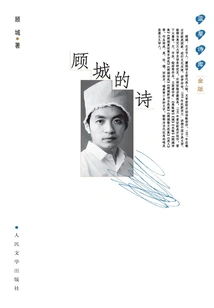
Gu Cheng's Poems
Literature顾城的诗
Gu Cheng
This manuscript is edited and selected by the author's close relatives, and it compiles the author's essence works since his poetry creation. Gu Cheng's poetry is a unique branch in the Chinese poetry circle, writing the history of contemporary literature. Since the new era, several poets have been indispensable, and Gu Cheng is one of them. This manuscript clearly demonstrates the author's poetic quality and is a good resource for appreciating and learning poetry and studying contemporary Chinese literature.
This manuscript is edited and selected by the author's close relatives, and it compiles the author's essence works since his poetry creation. Gu Cheng's poetry is a unique branch in the Chinese poetry circle, writing the history of contemporary literature. Since the new era, several poets have been indispensable, and Gu Cheng is one of them. This manuscript clearly demonstrates the author's poetic quality and is a good resource for appreciating and learning poetry and studying contemporary Chinese literature.
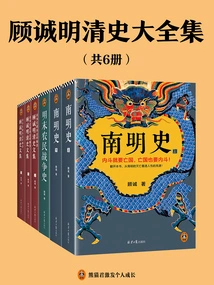
顾诚明清史大全集(共6册)
Gu Cheng
"History of Peasant War in the Late Ming Dynasty": In March 1644, Li Zicheng invaded Beijing and the Ming Dynasty was destroyed. He had been fighting for sixteen years at this time. In April of the same year, Li Zicheng was defeated at Shanhaiguan and the Qing army entered the customs. In May of the following year, Li Zicheng sacrificed his life in Jiugong Mountain in Huguang, only four hundred days before the demise of the Ming Dynasty. "History of the Southern Ming Dynasty": Infighting will lead to the destruction of the country, and subjugation of the country will also lead to internal fighting! There is nothing more absurd than this in human nature! "This is how you should read history carefully: Collected Works of Gu Cheng's Ming and Qing History": Does Li Zicheng's general Li Yan actually exist? Behind these seemingly astonishing views are the results of Mr. Gu Cheng's extremely careful exfiltration of historical data and extremely rigorous reasoning and research. Articles such as "A New Exploration on the Number of Cultivated Land in the Early Ming Dynasty", "The Transformation of the Guard System in the Qing Dynasty", "The Territory Management System of the Ming Empire" and "On the Wei Book in the Ming Dynasty" have an unshakable classic status in the academic world because of their pioneering contributions.
"History of Peasant War in the Late Ming Dynasty": In March 1644, Li Zicheng invaded Beijing and the Ming Dynasty was destroyed. He had been fighting for sixteen years at this time. In April of the same year, Li Zicheng was defeated at Shanhaiguan and the Qing army entered the customs. In May of the following year, Li Zicheng sacrificed his life in Jiugong Mountain in Huguang, only four hundred days before the demise of the Ming Dynasty. "History of the Southern Ming Dynasty": Infighting will lead to the destruction of the country, and subjugation of the country will also lead to internal fighting! There is nothing more absurd than this in human nature! "This is how you should read history carefully: Collected Works of Gu Cheng's Ming and Qing History": Does Li Zicheng's general Li Yan actually exist? Behind these seemingly astonishing views are the results of Mr. Gu Cheng's extremely careful exfiltration of historical data and extremely rigorous reasoning and research. Articles such as "A New Exploration on the Number of Cultivated Land in the Early Ming Dynasty", "The Transformation of the Guard System in the Qing Dynasty", "The Territory Management System of the Ming Empire" and "On the Wei Book in the Ming Dynasty" have an unshakable classic status in the academic world because of their pioneering contributions.
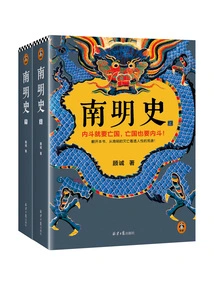
南明史(全集)
Gu Cheng
If there is internal fighting, the country will be destroyed, and if the country is destroyed, there will be internal fighting! There is nothing more absurd than this in human nature! In March 1644 AD, the Dashun Army led by Li Zicheng captured Beijing, and Emperor Chongzhen hanged himself. When the news reached Nanjing, the capital of the capital, the question of who to appoint as the new emperor became urgent. Civil and military officials rushed to take the lead in front of the new emperor, but they did not expect that this kind of ulterior motives left huge hidden dangers for the Nanming regime. With the support of military general Ma Shiying and others, King Fu Zhu Yousong ascended the throne and changed the Yuan Dynasty to Hongguang. These "strategic" heroes also caused an imbalance of power within Nanming, which in turn triggered constant internal strife. The Hongguang regime, the Longwu regime, and the Yongli regime successively established themselves, and successively competed with the Dashun army and the Qing army. However, fierce internal struggles caused the Nanming monarchs and ministers to lose countless opportunities for comebacks in the constant internal strife, leading to failure. Nanming made his debut in the midst of infighting, and also fell apart in the midst of infighting! Open this book and see through the absurdity of human nature from the demise of Nanming!
If there is internal fighting, the country will be destroyed, and if the country is destroyed, there will be internal fighting! There is nothing more absurd than this in human nature! In March 1644 AD, the Dashun Army led by Li Zicheng captured Beijing, and Emperor Chongzhen hanged himself. When the news reached Nanjing, the capital of the capital, the question of who to appoint as the new emperor became urgent. Civil and military officials rushed to take the lead in front of the new emperor, but they did not expect that this kind of ulterior motives left huge hidden dangers for the Nanming regime. With the support of military general Ma Shiying and others, King Fu Zhu Yousong ascended the throne and changed the Yuan Dynasty to Hongguang. These "strategic" heroes also caused an imbalance of power within Nanming, which in turn triggered constant internal strife. The Hongguang regime, the Longwu regime, and the Yongli regime successively established themselves, and successively competed with the Dashun army and the Qing army. However, fierce internal struggles caused the Nanming monarchs and ministers to lose countless opportunities for comebacks in the constant internal strife, leading to failure. Nanming made his debut in the midst of infighting, and also fell apart in the midst of infighting! Open this book and see through the absurdity of human nature from the demise of Nanming!