Library
Browse and search books
4 novels found

昨日的边城:1589-1950的马边
Gong Jingran
Mabian is located in Xiaoliangshan District on the southwest edge of the Sichuan Basin, at the junction of Leshan City, Yibin City and Liangshan Yi Autonomous Prefecture in Sichuan Province. Before the Qing Dynasty, there were two core areas in the southwest frontier, one was the Sichuan-Tibet area represented by the Jinchuan River and the Big River, and the other was the Xiaoliangshan area represented by Mabian. Mabian has historically been a mixed area of Yi and Han people, but in modern times it has experienced the process of transforming from a frontier to an inland area. This book intercepts several major events in Mabian over more than 400 years and details the people who have been forgotten in the era. In a slow and measured writing style, it writes from the founding of Mabian in the 17th year of Wanli in the Ming Dynasty to the eve of the start of the socialist experiment in 1950. All aspects of Mabian's political economy, cultural customs, and social life are interspersed among them, and a three-dimensional picture of the centuries-old history of a small frontier town is vividly unfolded in front of readers.
Mabian is located in Xiaoliangshan District on the southwest edge of the Sichuan Basin, at the junction of Leshan City, Yibin City and Liangshan Yi Autonomous Prefecture in Sichuan Province. Before the Qing Dynasty, there were two core areas in the southwest frontier, one was the Sichuan-Tibet area represented by the Jinchuan River and the Big River, and the other was the Xiaoliangshan area represented by Mabian. Mabian has historically been a mixed area of Yi and Han people, but in modern times it has experienced the process of transforming from a frontier to an inland area. This book intercepts several major events in Mabian over more than 400 years and details the people who have been forgotten in the era. In a slow and measured writing style, it writes from the founding of Mabian in the 17th year of Wanli in the Ming Dynasty to the eve of the start of the socialist experiment in 1950. All aspects of Mabian's political economy, cultural customs, and social life are interspersed among them, and a three-dimensional picture of the centuries-old history of a small frontier town is vividly unfolded in front of readers.
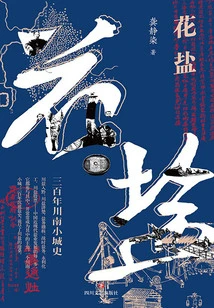
Flower Salt
History花盐
Gong Jingran
"Yesterday's Border Town" is one of the trilogy of "Yesterday's Border Town" written by Gong Jingran Xiaocheng. Three hundred years of history of this small town in southern Sichuan recreates a former salt industry town. A non-fiction work on the history, geography and culture of Sichuan and Sichuan, a dual witness of history and literature. Sichuan salt enters Guizhou, Sichuan salt helps Chu, salt audit, wartime salt affairs, Wynn Chemical, Sichuan salt stock... It has participated in every step of the development of China's modern salt industry and often becomes the protagonist. A small town in southern Sichuan, with a history of three hundred years of sinking salt, tells the story of the vicissitudes of Sichuan salt. "Flower Salt" is the second in Gong Jingran's Small Town series. It focuses on Wutong Bridge and uses the local flower salt industry as a link to connect the three hundred years from the early Qing Dynasty to the present. This book is a revision of "Qiao Tan Ji". Due to the discovery of new materials in the process, it started anew and changed the conceptual structure. The book is divided into six parts: the brine spring, the place where wells were dug, the Spring and Autumn Period of Shang Dynasty, the important town of westward migration, salt in the play, and salty rivers and lakes. It is not only a timeline of the three hundred years of development of the small town, but also an interpretation of the small town from six dimensions.
"Yesterday's Border Town" is one of the trilogy of "Yesterday's Border Town" written by Gong Jingran Xiaocheng. Three hundred years of history of this small town in southern Sichuan recreates a former salt industry town. A non-fiction work on the history, geography and culture of Sichuan and Sichuan, a dual witness of history and literature. Sichuan salt enters Guizhou, Sichuan salt helps Chu, salt audit, wartime salt affairs, Wynn Chemical, Sichuan salt stock... It has participated in every step of the development of China's modern salt industry and often becomes the protagonist. A small town in southern Sichuan, with a history of three hundred years of sinking salt, tells the story of the vicissitudes of Sichuan salt. "Flower Salt" is the second in Gong Jingran's Small Town series. It focuses on Wutong Bridge and uses the local flower salt industry as a link to connect the three hundred years from the early Qing Dynasty to the present. This book is a revision of "Qiao Tan Ji". Due to the discovery of new materials in the process, it started anew and changed the conceptual structure. The book is divided into six parts: the brine spring, the place where wells were dug, the Spring and Autumn Period of Shang Dynasty, the important town of westward migration, salt in the play, and salty rivers and lakes. It is not only a timeline of the three hundred years of development of the small town, but also an interpretation of the small town from six dimensions.
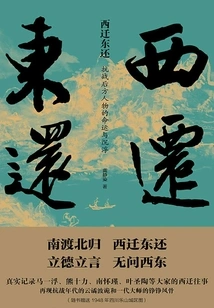
Move West and Return East
History西迁东还
Gong Jingran
This book tells the story of Chinese intellectuals and national elites who moved westward to the rear of Sichuan during the Anti-Japanese War of the Republic of China, including Ma Yifu, Xiong Shili, Ye Shengtao, Zhu Dongrun, Nan Huaijin, Ling Shuhua, He Changqun, Fan Xudong, etc. They either founded education, wrote books, or revived industry, etc., Leaving important historical marks in Sichuan and Sichuan. The author conducted detailed exploration and research on the fate of these historical figures by consulting archives and conducting on-site visits. He rationally sorted out the personnel entanglements buried deep in history and reproduced their ups and downs in the war. When the fate of an individual meets the rise and fall of a country, and when the rich history merges with personal honor and disgrace, the author's poetic words are like the echo of the times, calling us to return to the historical scene and feel the fate and complex life situations in the great era.
This book tells the story of Chinese intellectuals and national elites who moved westward to the rear of Sichuan during the Anti-Japanese War of the Republic of China, including Ma Yifu, Xiong Shili, Ye Shengtao, Zhu Dongrun, Nan Huaijin, Ling Shuhua, He Changqun, Fan Xudong, etc. They either founded education, wrote books, or revived industry, etc., Leaving important historical marks in Sichuan and Sichuan. The author conducted detailed exploration and research on the fate of these historical figures by consulting archives and conducting on-site visits. He rationally sorted out the personnel entanglements buried deep in history and reproduced their ups and downs in the war. When the fate of an individual meets the rise and fall of a country, and when the rich history merges with personal honor and disgrace, the author's poetic words are like the echo of the times, calling us to return to the historical scene and feel the fate and complex life situations in the great era.
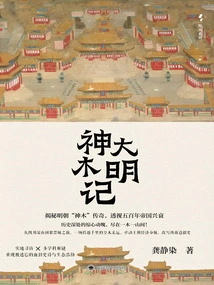
Daming Shenmuji
History大明神木记
Gong Jingran
[Historical version of "Lychees in Chang'an", see how the Ming officials traveled thousands of miles to transport sacred trees to Beijing. ] In the fourth year of Yongle in the Ming Dynasty (1406), Zhu Di decided to move the capital to Beijing, and the construction of the Forbidden City was put on the agenda. Song Li, who was the Minister of Industry at the time, received the task of purchasing huge trees for the construction of the palace. Among the "Six Ministers of Imperial Wood Purchasing" who also received the order, Song Li had the highest official position, and the Sichuan he was going to was the farthest away and had the richest nanmu resources, which clearly shows that the imperial court had high hopes for him. Song Li knew that although this matter was painful, it was a major event that would bring glory to the ancestors. For this reason, I visited Sichuan five times and traveled thousands of miles, and finally came across an exciting story: Rumor has it that in Huangzhongxi Mountain in Mahu Prefecture, one night, a giant tree suddenly "walked on a smooth road", and the blocking stones separated automatically, and the giant tree slid to the river unscathed. When this news reached the capital, it became an auspicious omen that demonstrated the gods and emperor's virtues. Zhu Di was overjoyed and ordered Huangzhongxi Mountain to be renamed "Shenmu Mountain" and a temple to be built and a monument to be built. Since then, imperial trees and giant trees have also had a new name - "sacred trees". Is it really so smooth? It should be noted that the road to Shu is as difficult as climbing to the sky. The reason why Shenmu Mountain is densely covered with thousand-year-old nanmu is precisely because the mountain is steep and inaccessible. To cut down and transport a nanmu tree, tens of millions of manpower are needed: axemen who chop down trees, men who pave roads, stonemasons who clear roadblocks, blacksmiths who provide tools, and sailors who transport the trees... After the construction of the Ming Palace, it was burned down and rebuilt several times, and it was expanded several times during the Jiajing and Wanli years. The demand for imperial wood has continued for more than 200 years. For this purpose, hundreds of millions of taels of silver were spent, and countless craftsmen were recruited. "The officials and servants died of exhaustion, staffs died, and guests died. They were banned in the temples, restrained in travel, and begged in the market, facing each other." Until the nanmu was cut down, the imperial power and local forces continued to dispute... Let's see how this history of the transfer of sacred trees reveals the clues to the Ming Dynasty's transition from prosperity to decline.
[Historical version of "Lychees in Chang'an", see how the Ming officials traveled thousands of miles to transport sacred trees to Beijing. ] In the fourth year of Yongle in the Ming Dynasty (1406), Zhu Di decided to move the capital to Beijing, and the construction of the Forbidden City was put on the agenda. Song Li, who was the Minister of Industry at the time, received the task of purchasing huge trees for the construction of the palace. Among the "Six Ministers of Imperial Wood Purchasing" who also received the order, Song Li had the highest official position, and the Sichuan he was going to was the farthest away and had the richest nanmu resources, which clearly shows that the imperial court had high hopes for him. Song Li knew that although this matter was painful, it was a major event that would bring glory to the ancestors. For this reason, I visited Sichuan five times and traveled thousands of miles, and finally came across an exciting story: Rumor has it that in Huangzhongxi Mountain in Mahu Prefecture, one night, a giant tree suddenly "walked on a smooth road", and the blocking stones separated automatically, and the giant tree slid to the river unscathed. When this news reached the capital, it became an auspicious omen that demonstrated the gods and emperor's virtues. Zhu Di was overjoyed and ordered Huangzhongxi Mountain to be renamed "Shenmu Mountain" and a temple to be built and a monument to be built. Since then, imperial trees and giant trees have also had a new name - "sacred trees". Is it really so smooth? It should be noted that the road to Shu is as difficult as climbing to the sky. The reason why Shenmu Mountain is densely covered with thousand-year-old nanmu is precisely because the mountain is steep and inaccessible. To cut down and transport a nanmu tree, tens of millions of manpower are needed: axemen who chop down trees, men who pave roads, stonemasons who clear roadblocks, blacksmiths who provide tools, and sailors who transport the trees... After the construction of the Ming Palace, it was burned down and rebuilt several times, and it was expanded several times during the Jiajing and Wanli years. The demand for imperial wood has continued for more than 200 years. For this purpose, hundreds of millions of taels of silver were spent, and countless craftsmen were recruited. "The officials and servants died of exhaustion, staffs died, and guests died. They were banned in the temples, restrained in travel, and begged in the market, facing each other." Until the nanmu was cut down, the imperial power and local forces continued to dispute... Let's see how this history of the transfer of sacred trees reveals the clues to the Ming Dynasty's transition from prosperity to decline.