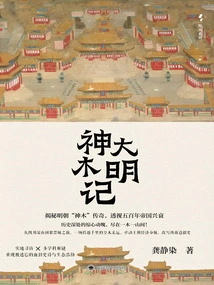
Daming Shenmuji
by Gong Jingran
About This Novel
[Historical version of "Lychees in Chang'an", see how the Ming officials traveled thousands of miles to transport sacred trees to Beijing. ] In the fourth year of Yongle in the Ming Dynasty (1406), Zhu Di decided to move the capital to Beijing, and the construction of the Forbidden City was put on the agenda. Song Li, who was the Minister of Industry at the time, received the task of purchasing huge trees for the construction of the palace. Among the "Six Ministers of Imperial Wood Purchasing" who also received the order, Song Li had the highest official position, and the Sichuan he was going to was the farthest away and had the richest nanmu resources, which clearly shows that the imperial court had high hopes for him. Song Li knew that although this matter was painful, it was a major event that would bring glory to the ancestors. For this reason, I visited Sichuan five times and traveled thousands of miles, and finally came across an exciting story: Rumor has it that in Huangzhongxi Mountain in Mahu Prefecture, one night, a giant tree suddenly "walked on a smooth road", and the blocking stones separated automatically, and the giant tree slid to the river unscathed. When this news reached the capital, it became an auspicious omen that demonstrated the gods and emperor's virtues. Zhu Di was overjoyed and ordered Huangzhongxi Mountain to be renamed "Shenmu Mountain" and a temple to be built and a monument to be built. Since then, imperial trees and giant trees have also had a new name - "sacred trees". Is it really so smooth? It should be noted that the road to Shu is as difficult as climbing to the sky. The reason why Shenmu Mountain is densely covered with thousand-year-old nanmu is precisely because the mountain is steep and inaccessible. To cut down and transport a nanmu tree, tens of millions of manpower are needed: axemen who chop down trees, men who pave roads, stonemasons who clear roadblocks, blacksmiths who provide tools, and sailors who transport the trees... After the construction of the Ming Palace, it was burned down and rebuilt several times, and it was expanded several times during the Jiajing and Wanli years. The demand for imperial wood has continued for more than 200 years. For this purpose, hundreds of millions of taels of silver were spent, and countless craftsmen were recruited. "The officials and servants died of exhaustion, staffs died, and guests died. They were banned in the temples, restrained in travel, and begged in the market, facing each other." Until the nanmu was cut down, the imperial power and local forces continued to dispute... Let's see how this history of the transfer of sacred trees reveals the clues to the Ming Dynasty's transition from prosperity to decline.
Official Sources
What Readers Think
Rating
Community(0)
Rating
Community(0)