Library
Browse and search books
16 novels found
别笑,这是大清正史3
Fog Blocks The River
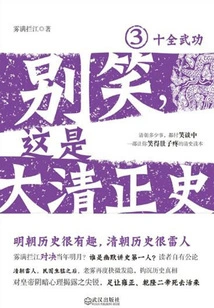
This book is the third part of the series "Don't laugh, this is the official history of the Qing Dynasty". It describes the history of about 80 years from the struggle of various scholars in the late Kangxi period to the pacification of the White Lotus Sect in the early Jiaqing period. Among them, the political struggles and military expeditions of the Yongzheng and Qianlong dynasties run through the entire article, and the so-called "ten complete martial arts" of Emperor Qianlong is the highlight of the author's full discussion. In the book, Emperor Yongzheng faked his edicts and usurped the throne, killed his brothers, slaughtered heroes, tortured scholars and was mysteriously assassinated. Emperor Qianlong's embarrassing "perfect martial arts" such as the two battles between Junggar, the battle of Jinchuan and Jinchuan, and the battle of Burma, the tragic literary prison and various religious uprisings are all reflected in the best features. The author has a vicious eye and a clear mind, and ruthlessly exposes the lies about the so-called prosperous times of the Kangxi, Yongzheng and Qianlong dynasties, and vividly exposes the darkness and perversion in the hearts of Yongzheng and Qianlong, which is enough to shock and send chills down the spine of readers who have been poisoned by textbooks. The description of the war, especially the achievements of famous generals such as Yue Zhongqi, Zhaohui, and Fukang'an, is very wonderful. Compared with the previous two volumes, "Don't Laugh, This is the Official History of the Qing Dynasty 3: The Complete Martial Arts" has more proficient writing techniques, more sophisticated outlines, more incisive descriptions of characters, more fluent and vivid text, and more detailed and powerful research. After all, Laowu is Laowu, and every time it brings different expectations.
This book is the third part of the series "Don't laugh, this is the official history of the Qing Dynasty". It describes the history of about 80 years from the struggle of various scholars in the late Kangxi period to the pacification of the White Lotus Sect in the early Jiaqing period. Among them, the political struggles and military expeditions of the Yongzheng and Qianlong dynasties run through the entire article, and the so-called "ten complete martial arts" of Emperor Qianlong is the highlight of the author's full discussion. In the book, Emperor Yongzheng faked his edicts and usurped the throne, killed his brothers, slaughtered heroes, tortured scholars and was mysteriously assassinated. Emperor Qianlong's embarrassing "perfect martial arts" such as the two battles between Junggar, the battle of Jinchuan and Jinchuan, and the battle of Burma, the tragic literary prison and various religious uprisings are all reflected in the best features. The author has a vicious eye and a clear mind, and ruthlessly exposes the lies about the so-called prosperous times of the Kangxi, Yongzheng and Qianlong dynasties, and vividly exposes the darkness and perversion in the hearts of Yongzheng and Qianlong, which is enough to shock and send chills down the spine of readers who have been poisoned by textbooks. The description of the war, especially the achievements of famous generals such as Yue Zhongqi, Zhaohui, and Fukang'an, is very wonderful. Compared with the previous two volumes, "Don't Laugh, This is the Official History of the Qing Dynasty 3: The Complete Martial Arts" has more proficient writing techniques, more sophisticated outlines, more incisive descriptions of characters, more fluent and vivid text, and more detailed and powerful research. After all, Laowu is Laowu, and every time it brings different expectations.
别笑,这是大清正史2
Fog Blocks The River
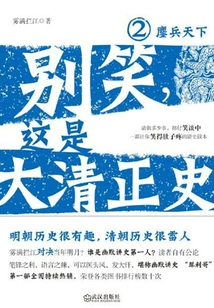
This book is the second part of the series "Don't laugh, this is the official history of the Qing Dynasty". It depicts the 50-year history from the birth of the demon king Zhang Xianzhong (606 AD) to the fifty-ninth year of Kangxi (70 years) when Yue Zhongqi entered Tibet and defeated the Junggar soldiers. With his sharp writing and pungent words, the author vividly reproduces the rogue bandits wreaking havoc on the world, the struggle and survival of the small court of the Southern Ming Dynasty, the bloody suppression after the Qing troops entered the pass, Zheng Chenggong's increasing frustration and unyielding loyalty, Emperor Shunzhi's crazy and frustrated struggle for love, and Kangxi's "haha" martial arts in capturing Oboi, pacifying San Francisco, and destroying Junggar. In this book, the image of the all-powerful historical figure is completely overturned. The heroic image of the "great traitor" Wu Sangui is more majestic in benevolence and loyalty. The Mingjun Kangxi, the emperor through the ages and widely praised by later generations, was a pervert with twisted psychology, surly personality, and shameless behavior. At first reading, it seems like a thunderous shock, which makes people's hair stand on end and is difficult to accept. But if you think about it carefully, you can find the infinite true meaning in it. Compared with the first part, the text of this book is smoother, the description is more vivid, the research is more detailed, and the views are more insightful. It is indeed written by Lao Wu, and you will gain a lot from reading it.
This book is the second part of the series "Don't laugh, this is the official history of the Qing Dynasty". It depicts the 50-year history from the birth of the demon king Zhang Xianzhong (606 AD) to the fifty-ninth year of Kangxi (70 years) when Yue Zhongqi entered Tibet and defeated the Junggar soldiers. With his sharp writing and pungent words, the author vividly reproduces the rogue bandits wreaking havoc on the world, the struggle and survival of the small court of the Southern Ming Dynasty, the bloody suppression after the Qing troops entered the pass, Zheng Chenggong's increasing frustration and unyielding loyalty, Emperor Shunzhi's crazy and frustrated struggle for love, and Kangxi's "haha" martial arts in capturing Oboi, pacifying San Francisco, and destroying Junggar. In this book, the image of the all-powerful historical figure is completely overturned. The heroic image of the "great traitor" Wu Sangui is more majestic in benevolence and loyalty. The Mingjun Kangxi, the emperor through the ages and widely praised by later generations, was a pervert with twisted psychology, surly personality, and shameless behavior. At first reading, it seems like a thunderous shock, which makes people's hair stand on end and is difficult to accept. But if you think about it carefully, you can find the infinite true meaning in it. Compared with the first part, the text of this book is smoother, the description is more vivid, the research is more detailed, and the views are more insightful. It is indeed written by Lao Wu, and you will gain a lot from reading it.
别笑,这是大清正史1
Fog Blocks The River
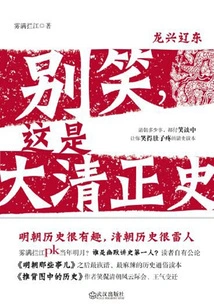
"Don't laugh, this is the official history of the Qing Dynasty" narrates the 86 years of history from the birth of Nurhachi (559) to the second year of Shunzhi (645) when Shi Kefa was trapped in Yangzhou. This was an extraordinary period of great turmoil and change with the rise of the Qing Dynasty and the demise of the Ming Dynasty. The historical events that occurred were both exciting and bloody. Tragic. The author tells the story eloquently, although he laughs and scolds, but he is joking but not abusive: it seems casual, but in fact it has good intentions; it looks like a novelist's words, but in fact it is based on trusting history. The characters in the book, whether they are the great heroes Xiong Tingbi, Yuan Chonghuan, Nurhaci, Huang Taiji, etc., Or the traitor Wu Sangui, whether they are the tragic Emperor Chongzhen, or the talented and powerful Dorgon, all have changed their past serious and stereotyped faces, and their characters have suddenly become vivid with playful ridicule. Although the book repeatedly describes the tragic scenes of raging wars and thousands of troops fighting, the calm and cold humorous narrative style makes readers feel heavy while laughing, laughing, and ridiculing.
"Don't laugh, this is the official history of the Qing Dynasty" narrates the 86 years of history from the birth of Nurhachi (559) to the second year of Shunzhi (645) when Shi Kefa was trapped in Yangzhou. This was an extraordinary period of great turmoil and change with the rise of the Qing Dynasty and the demise of the Ming Dynasty. The historical events that occurred were both exciting and bloody. Tragic. The author tells the story eloquently, although he laughs and scolds, but he is joking but not abusive: it seems casual, but in fact it has good intentions; it looks like a novelist's words, but in fact it is based on trusting history. The characters in the book, whether they are the great heroes Xiong Tingbi, Yuan Chonghuan, Nurhaci, Huang Taiji, etc., Or the traitor Wu Sangui, whether they are the tragic Emperor Chongzhen, or the talented and powerful Dorgon, all have changed their past serious and stereotyped faces, and their characters have suddenly become vivid with playful ridicule. Although the book repeatedly describes the tragic scenes of raging wars and thousands of troops fighting, the calm and cold humorous narrative style makes readers feel heavy while laughing, laughing, and ridiculing.
民国就是这么生猛(共4册)
Fog Blocks The River
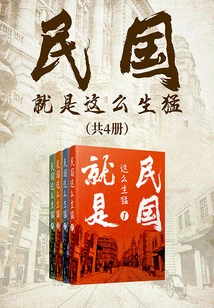
Exclusive historical materials, cutting-edge viewpoints, the Chinese version of WikiLeaks; the "new master of humorous history telling" Wu Manlan Jiang Biao fiercely begins to talk about the history of the Republic of China! The Revolution of 1911 was like a storm; in the early years of the Republic of China, there were great changes. The fierce bloody battles and shocking plots made the history of the Republic of China even more tragic!
Exclusive historical materials, cutting-edge viewpoints, the Chinese version of WikiLeaks; the "new master of humorous history telling" Wu Manlan Jiang Biao fiercely begins to talk about the history of the Republic of China! The Revolution of 1911 was like a storm; in the early years of the Republic of China, there were great changes. The fierce bloody battles and shocking plots made the history of the Republic of China even more tragic!
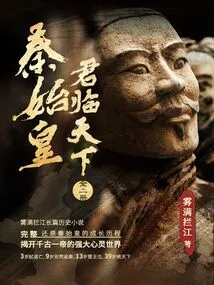
Qin Shihuang: Ruler of the World (two Volumes)
General Fiction秦始皇:君临天下(全二册)
Fog Blocks The River
The Qin Dynasty is a mystery. Qin Shihuang is even more of a mystery within a mystery! In 259 BC, Qin Shihuang was born in Handan, Zhao State. In 257 BC, his father cut off his tail to survive, leaving the 3-year-old Qin Shihuang and his mother Zhao Ji behind, and fled back to Qin alone. In 251 BC, the 9-year-old Qin Shihuang and his mother appeared again and returned to Qin safely. In 247 BC, at the age of 13, he defeated his opponents and ascended to the throne with an undisputed advantage. In 238 BC, at the age of 22, he began to take charge of the government, suppressing dissidents and putting down rebellions. In 221 BC, at the age of 39, he destroyed the six kingdoms, unified the world, established the Qin Dynasty, and became the first "emperor" in Chinese history. From running away at the age of 3 to dominating the world at the age of 39, what exactly has he experienced in these years? How did he survive? How did he win the throne? How does he control his subordinates? What clever ways does he have to deal with his opponents' challenges? What did he have mastered that allowed him to overwhelm the six nations of the world with an overwhelming advantage?
The Qin Dynasty is a mystery. Qin Shihuang is even more of a mystery within a mystery! In 259 BC, Qin Shihuang was born in Handan, Zhao State. In 257 BC, his father cut off his tail to survive, leaving the 3-year-old Qin Shihuang and his mother Zhao Ji behind, and fled back to Qin alone. In 251 BC, the 9-year-old Qin Shihuang and his mother appeared again and returned to Qin safely. In 247 BC, at the age of 13, he defeated his opponents and ascended to the throne with an undisputed advantage. In 238 BC, at the age of 22, he began to take charge of the government, suppressing dissidents and putting down rebellions. In 221 BC, at the age of 39, he destroyed the six kingdoms, unified the world, established the Qin Dynasty, and became the first "emperor" in Chinese history. From running away at the age of 3 to dominating the world at the age of 39, what exactly has he experienced in these years? How did he survive? How did he win the throne? How does he control his subordinates? What clever ways does he have to deal with his opponents' challenges? What did he have mastered that allowed him to overwhelm the six nations of the world with an overwhelming advantage?
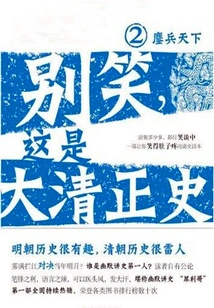
别笑,这是大清正史2:鏖兵天下
Fog Blocks The River
This book describes the 105-year history from the birth of the demon king Zhang Xianzhong (1606 AD) to the fifty-ninth year of Kangxi (1720) when Yue Zhongqi entered Tibet and defeated the Junggar soldiers. With his sharp writing style and spicy words, the author vividly reproduces Zheng Chenggong's ever-increasing frustration and loyalty, Emperor Shunzhi's crazy and frustrated struggle for love, and Kangxi's "haha" martial arts of capturing Oboi, pacifying San Francisco, and destroying Junggar. In this book, the image of the all-powerful historical figure is completely overturned. The heroic image of the "great traitor" Wu Sangui is more majestic in benevolence and loyalty. The Mingjun Kangxi, the emperor through the ages and widely praised by later generations, was a pervert with twisted psychology, surly personality, and shameless behavior. At first reading, it seems like a thunderous shock, which makes people's hair stand on end and is difficult to accept. But if you think about it carefully, you can find the infinite true meaning in it.
This book describes the 105-year history from the birth of the demon king Zhang Xianzhong (1606 AD) to the fifty-ninth year of Kangxi (1720) when Yue Zhongqi entered Tibet and defeated the Junggar soldiers. With his sharp writing style and spicy words, the author vividly reproduces Zheng Chenggong's ever-increasing frustration and loyalty, Emperor Shunzhi's crazy and frustrated struggle for love, and Kangxi's "haha" martial arts of capturing Oboi, pacifying San Francisco, and destroying Junggar. In this book, the image of the all-powerful historical figure is completely overturned. The heroic image of the "great traitor" Wu Sangui is more majestic in benevolence and loyalty. The Mingjun Kangxi, the emperor through the ages and widely praised by later generations, was a pervert with twisted psychology, surly personality, and shameless behavior. At first reading, it seems like a thunderous shock, which makes people's hair stand on end and is difficult to accept. But if you think about it carefully, you can find the infinite true meaning in it.
历史真的很有料
Fog Blocks The River
This is the essence of decades of historical writing by Wu Manlanjiang, the chief lecturer of Zhiqu history. It follows the author's consistent easy-to-understand, humorous, and witty style, peeling off the scraps and fragments of history to explain power, human nature, love, life, differences, elegance, anecdotes... History is in the details, human nature is in the details, 988 informative and colorful histories, each of which is said to slightly change your worldview.
This is the essence of decades of historical writing by Wu Manlanjiang, the chief lecturer of Zhiqu history. It follows the author's consistent easy-to-understand, humorous, and witty style, peeling off the scraps and fragments of history to explain power, human nature, love, life, differences, elegance, anecdotes... History is in the details, human nature is in the details, 988 informative and colorful histories, each of which is said to slightly change your worldview.
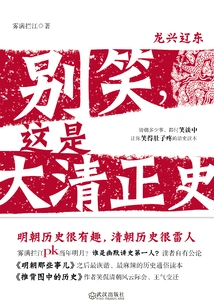
别笑,这是大清正史1:龙兴辽东
Fog Blocks The River
This book narrates the 86-year history from the birth of Nurhachi (1559) to the second year of Shunzhi (1645) when Shi Kefa was trapped in Yangzhou. This was an extraordinary period of great turmoil and change with the rise of the Qing Dynasty and the demise of the Ming Dynasty. The historical events that occurred were both exciting and bloody. The author tells the story eloquently, although he laughs and scolds, but he is joking but not abusive; it seems casual but actually has good intentions; it seems like a novelist's words, but in fact he is based on trusting history. The characters in the book, whether they are the great heroes Xiong Tingbi, Yuan Chonghuan, Nurhachi, Huang Taiji, or the great traitor Wu Sangui, whether they are the tragic Emperor Chongzhen, or the talented and powerful Dorgon, all have changed their past serious and stereotyped faces, and their playful ridicule has suddenly made their characters vivid.
This book narrates the 86-year history from the birth of Nurhachi (1559) to the second year of Shunzhi (1645) when Shi Kefa was trapped in Yangzhou. This was an extraordinary period of great turmoil and change with the rise of the Qing Dynasty and the demise of the Ming Dynasty. The historical events that occurred were both exciting and bloody. The author tells the story eloquently, although he laughs and scolds, but he is joking but not abusive; it seems casual but actually has good intentions; it seems like a novelist's words, but in fact he is based on trusting history. The characters in the book, whether they are the great heroes Xiong Tingbi, Yuan Chonghuan, Nurhachi, Huang Taiji, or the great traitor Wu Sangui, whether they are the tragic Emperor Chongzhen, or the talented and powerful Dorgon, all have changed their past serious and stereotyped faces, and their playful ridicule has suddenly made their characters vivid.
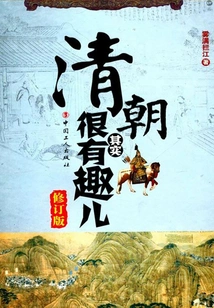
清朝其实很有趣儿(修订版)
Fog Blocks The River
The Qing Dynasty was a controversial dynasty. In the early stage of the Pass, the Han people resisted one after another during the Seven Days Massacre in Yangzhou and the Three Massacres in Jiading, and it took three dynasties to calm down; in the later stage, foreign enemies invaded and lost power and humiliated the country, bringing China into a dark period of humiliation for more than a century... The Qing Dynasty was another mysterious era. The Queen Mother's marriage, Shunzhi becoming a monk, Yongzheng's assassination, and Qianlong's life experience. These four major Qing palace mysteries have been suspenseful for hundreds of years and are still a hotly discussed topic... This book has been supplemented with articles about the Qing Dynasty from 2010 to 2017. The author restores a real Qing Dynasty based on historical data, using novel perspectives and humorous words.
The Qing Dynasty was a controversial dynasty. In the early stage of the Pass, the Han people resisted one after another during the Seven Days Massacre in Yangzhou and the Three Massacres in Jiading, and it took three dynasties to calm down; in the later stage, foreign enemies invaded and lost power and humiliated the country, bringing China into a dark period of humiliation for more than a century... The Qing Dynasty was another mysterious era. The Queen Mother's marriage, Shunzhi becoming a monk, Yongzheng's assassination, and Qianlong's life experience. These four major Qing palace mysteries have been suspenseful for hundreds of years and are still a hotly discussed topic... This book has been supplemented with articles about the Qing Dynasty from 2010 to 2017. The author restores a real Qing Dynasty based on historical data, using novel perspectives and humorous words.
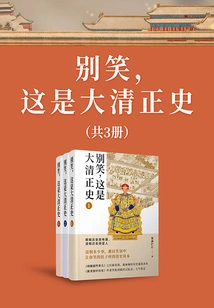
别笑,这是大清正史(共3册)
Fog Blocks The River
The first part narrates the 86-year history from the birth of Nurhaci (1559) to the second year of Shunzhi (1645) when Shi Kefa was trapped in Yangzhou. This was an extraordinary period of great turmoil and change with the rise of the Qing Dynasty and the demise of the Ming Dynasty. The historical events that occurred were both exciting and bloody. Tragic. The second part depicts the 15-year history from the birth of the demon king Zhang Xianzhong (AD 166) to the fifty-ninth year of Kangxi (AD 172) when Yue Zhongqi entered Tibet and defeated the Junggar soldiers. The rogue bandits wreaked havoc on the world, the small imperial court of the Southern Ming Dynasty struggled to survive, the bloody suppression after the Qing troops entered the customs, Zheng Chenggong became more courageous and loyal after being frustrated, Emperor Shunzhi fought crazy and frustrated for love, Kangxi captured Oboi, pacified the San Francisco, and destroyed Galdan's "haha" martial arts. The third part describes the history of about 8 years from the struggle of various scholars in the last years of Kangxi to the pacification of the White Lotus Sect in the early years of Jiaqing. Among them, the political struggles and military expeditions of the Yongzheng and Qianlong dynasties run through the entire article, and the so-called "ten complete martial arts" of Emperor Qianlong is the highlight of the author's full discussion.
The first part narrates the 86-year history from the birth of Nurhaci (1559) to the second year of Shunzhi (1645) when Shi Kefa was trapped in Yangzhou. This was an extraordinary period of great turmoil and change with the rise of the Qing Dynasty and the demise of the Ming Dynasty. The historical events that occurred were both exciting and bloody. Tragic. The second part depicts the 15-year history from the birth of the demon king Zhang Xianzhong (AD 166) to the fifty-ninth year of Kangxi (AD 172) when Yue Zhongqi entered Tibet and defeated the Junggar soldiers. The rogue bandits wreaked havoc on the world, the small imperial court of the Southern Ming Dynasty struggled to survive, the bloody suppression after the Qing troops entered the customs, Zheng Chenggong became more courageous and loyal after being frustrated, Emperor Shunzhi fought crazy and frustrated for love, Kangxi captured Oboi, pacified the San Francisco, and destroyed Galdan's "haha" martial arts. The third part describes the history of about 8 years from the struggle of various scholars in the last years of Kangxi to the pacification of the White Lotus Sect in the early years of Jiaqing. Among them, the political struggles and military expeditions of the Yongzheng and Qianlong dynasties run through the entire article, and the so-called "ten complete martial arts" of Emperor Qianlong is the highlight of the author's full discussion.
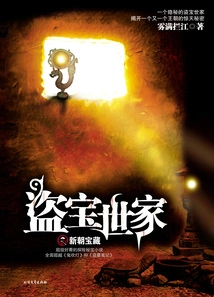
A Family of Treasure Thieves
General Fiction盗宝世家
Fog Blocks The River
This is the story of a mysterious family of treasure thieves. Throughout the ages, dynasties have changed and countless countries have perished. When the building is about to collapse and the dynasty is in danger, all the treasures in the country are hidden, waiting for a comeback. They pinned their hopes on these gold and silver treasures for their chance of recovery. In order to ensure the safety of these treasures, they used the most mysterious method in the secret door, called the "" when they were buried underground. The art of Xifang is by no means comparable to ordinary agency news. Time enters the 20th century, and the protagonist Xia Tingge abandons his family and joins the army to become a soldier. He was ordered to lead a small team to suppress bandits in the Jiuhua Mountain area of Anhui Province and rescue a captured female college student. During the search, they accidentally entered a cave. Unexpectedly, the cave turned out to be the place where Wang Mang of the Han Dynasty buried his treasure... Xia Tingge and his teammates encountered many dangers in the cave. Almost the entire team was destroyed. The Yin and Yang boat, Cordyceps sinensis, man-eating giant scorpion, Yin Xiu, dragon dragon... There were such weird and complicated things in the cave. Can Xia Tingge rescue the female college student? What shocking secrets are buried in Wang Mang's underground palace? Waiting for you to open it. The plot of the work is exciting, ups and downs, and gripping. Patients with heart disease are not allowed to read it.
This is the story of a mysterious family of treasure thieves. Throughout the ages, dynasties have changed and countless countries have perished. When the building is about to collapse and the dynasty is in danger, all the treasures in the country are hidden, waiting for a comeback. They pinned their hopes on these gold and silver treasures for their chance of recovery. In order to ensure the safety of these treasures, they used the most mysterious method in the secret door, called the "" when they were buried underground. The art of Xifang is by no means comparable to ordinary agency news. Time enters the 20th century, and the protagonist Xia Tingge abandons his family and joins the army to become a soldier. He was ordered to lead a small team to suppress bandits in the Jiuhua Mountain area of Anhui Province and rescue a captured female college student. During the search, they accidentally entered a cave. Unexpectedly, the cave turned out to be the place where Wang Mang of the Han Dynasty buried his treasure... Xia Tingge and his teammates encountered many dangers in the cave. Almost the entire team was destroyed. The Yin and Yang boat, Cordyceps sinensis, man-eating giant scorpion, Yin Xiu, dragon dragon... There were such weird and complicated things in the cave. Can Xia Tingge rescue the female college student? What shocking secrets are buried in Wang Mang's underground palace? Waiting for you to open it. The plot of the work is exciting, ups and downs, and gripping. Patients with heart disease are not allowed to read it.

全透视简明中国通史
Fog Blocks The River
This series of books uses the perspective of ordinary people to peel off the bones of historical materials from the past to the present, stripping away the political and literary attire of history, and peeling off layers of old suits, allowing you to step out of the brainwashed and obscured history and see the original body of history. What you are seeing now is real history - full frontal nudity, passionate perspective, vivid and flesh-and-blood! ! ! Is Huangdi a technical geek? Behind the abdication of the Five Emperors, political conspiracies of "princelings" fighting against "son-in-law gangs" were unfolding everywhere. Why did Dayu and Tushan fail to carry out their love to the end? Jiang Ziya was unable to do anything, and he ate everything without leaving anything. King Zhou Wen actually liked this about him. During the Spring and Autumn Period, etiquette broke down and music collapsed, and the drama of power reversal and elimination was staged everywhere. Confucius, Laozi, and Mozi took turns to appear. How did they make political investments? Are Xia Jie and Shang Zhou really so cruel? What are the unspeakable secrets behind Pan Geng's move to the capital? King Wen of Zhou married the aunt of King Zhou of Shang, and they turned out to be one family.
This series of books uses the perspective of ordinary people to peel off the bones of historical materials from the past to the present, stripping away the political and literary attire of history, and peeling off layers of old suits, allowing you to step out of the brainwashed and obscured history and see the original body of history. What you are seeing now is real history - full frontal nudity, passionate perspective, vivid and flesh-and-blood! ! ! Is Huangdi a technical geek? Behind the abdication of the Five Emperors, political conspiracies of "princelings" fighting against "son-in-law gangs" were unfolding everywhere. Why did Dayu and Tushan fail to carry out their love to the end? Jiang Ziya was unable to do anything, and he ate everything without leaving anything. King Zhou Wen actually liked this about him. During the Spring and Autumn Period, etiquette broke down and music collapsed, and the drama of power reversal and elimination was staged everywhere. Confucius, Laozi, and Mozi took turns to appear. How did they make political investments? Are Xia Jie and Shang Zhou really so cruel? What are the unspeakable secrets behind Pan Geng's move to the capital? King Wen of Zhou married the aunt of King Zhou of Shang, and they turned out to be one family.
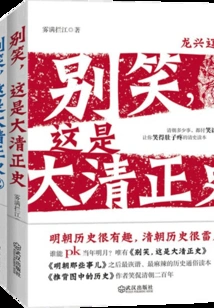
别笑,这是大清正史
Fog Blocks The River
Fog blocking the river versus the bright moon back then? Who is the first person to tell history with humor? Readers will be able to decide for themselves! Many events in the Qing Dynasty are discussed in writing. A Qing history book that will make you laugh until your stomach hurts: "Don't laugh, this is the official history of the Qing Dynasty" tells the history of the Qing Dynasty from the birth of Nurhaci (1559) to the second year of Shunzhi (1645) when Shi Kefa was trapped in Yangzhou for 86 years. This was an extraordinary period of great turmoil and change with the rise of the Qing Dynasty and the demise of the Ming Dynasty. The historical events that occurred were both exciting and bloody. Tragic. The author tells the story eloquently, although he laughs and scolds, but he is joking but not abusive: it seems casual, but in fact it has good intentions; it looks like a novelist's words, but in fact it is based on trusting history. The characters in the book, whether they are the great heroes Xiong Tingbi, Yuan Chonghuan, Nurhaci, Huang Taiji, etc., Or the traitor Wu Sangui, whether they are the tragic Emperor Chongzhen, or the talented and powerful Dorgon, all have changed their past serious and stereotyped faces, and their characters have suddenly become vivid with playful ridicule.
Fog blocking the river versus the bright moon back then? Who is the first person to tell history with humor? Readers will be able to decide for themselves! Many events in the Qing Dynasty are discussed in writing. A Qing history book that will make you laugh until your stomach hurts: "Don't laugh, this is the official history of the Qing Dynasty" tells the history of the Qing Dynasty from the birth of Nurhaci (1559) to the second year of Shunzhi (1645) when Shi Kefa was trapped in Yangzhou for 86 years. This was an extraordinary period of great turmoil and change with the rise of the Qing Dynasty and the demise of the Ming Dynasty. The historical events that occurred were both exciting and bloody. Tragic. The author tells the story eloquently, although he laughs and scolds, but he is joking but not abusive: it seems casual, but in fact it has good intentions; it looks like a novelist's words, but in fact it is based on trusting history. The characters in the book, whether they are the great heroes Xiong Tingbi, Yuan Chonghuan, Nurhaci, Huang Taiji, etc., Or the traitor Wu Sangui, whether they are the tragic Emperor Chongzhen, or the talented and powerful Dorgon, all have changed their past serious and stereotyped faces, and their characters have suddenly become vivid with playful ridicule.
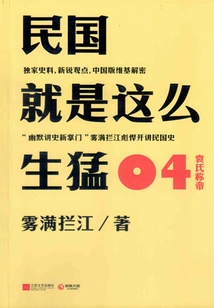
民国就是这么生猛4:袁氏称帝
Fog Blocks The River
Exclusive historical materials, cutting-edge perspectives, the Chinese version of WikiLeaks' "new master of humorous history telling" begins to talk about the history of the Republic of China. The train of the Republic of China was traveling at high speed on the track of history! The whistle blew, and the train of the Republic of China entered the "Yuan Shikai Era". Before becoming emperor, there were many visions. Is it destiny or the result of the operation of Beiyang Group? Did Yuan Shikai sign the "Twenty-One Measures" proposed by Japan? What happened to the "eleven rules" implemented by Sun Wen? Why did Yuan Shikai still proclaim himself emperor, knowing that proclaiming himself emperor went against the trend of history? Xiao Fengxian became famous because of Cai E. What was the real Xiao Fengxian in history? Yuan Shikai valued Duan Qirui the most, why did the two have a fierce conflict later? What was the reason that led to the collapse of the "Hongxian Empire"? All these questions, "the new master of humorous history telling" Wu Manlanjiang will tell you with his unique spicy, humorous and profound way.
Exclusive historical materials, cutting-edge perspectives, the Chinese version of WikiLeaks' "new master of humorous history telling" begins to talk about the history of the Republic of China. The train of the Republic of China was traveling at high speed on the track of history! The whistle blew, and the train of the Republic of China entered the "Yuan Shikai Era". Before becoming emperor, there were many visions. Is it destiny or the result of the operation of Beiyang Group? Did Yuan Shikai sign the "Twenty-One Measures" proposed by Japan? What happened to the "eleven rules" implemented by Sun Wen? Why did Yuan Shikai still proclaim himself emperor, knowing that proclaiming himself emperor went against the trend of history? Xiao Fengxian became famous because of Cai E. What was the real Xiao Fengxian in history? Yuan Shikai valued Duan Qirui the most, why did the two have a fierce conflict later? What was the reason that led to the collapse of the "Hongxian Empire"? All these questions, "the new master of humorous history telling" Wu Manlanjiang will tell you with his unique spicy, humorous and profound way.
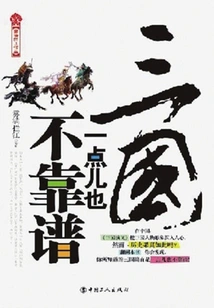
三国一点儿也不靠谱
Fog Blocks The River
Why did Liu Bei visit the thatched cottage three times? Why did Guan Yu travel thousands of miles alone? Why does Cao Cao only recognize him and Liu Bei as heroes? What does "Longzhong Dui" mean? Why doesn't Zhao Yun please Liu Bei? Why did Zhuge Liang keep using troops against Cao Wei? Why must the world be divided after a long time of unity? Why do we have to reunite after being separated for a long time? Why... In China, "The Romance of the Three Kingdoms" made the characters of the Three Kingdoms deeply rooted in the hearts of the people. However, is history really like this? Reading through the foggy "Three Kingdoms is Not Reliable at All", you will find that the Three Kingdoms you know is simply not reliable at all!
Why did Liu Bei visit the thatched cottage three times? Why did Guan Yu travel thousands of miles alone? Why does Cao Cao only recognize him and Liu Bei as heroes? What does "Longzhong Dui" mean? Why doesn't Zhao Yun please Liu Bei? Why did Zhuge Liang keep using troops against Cao Wei? Why must the world be divided after a long time of unity? Why do we have to reunite after being separated for a long time? Why... In China, "The Romance of the Three Kingdoms" made the characters of the Three Kingdoms deeply rooted in the hearts of the people. However, is history really like this? Reading through the foggy "Three Kingdoms is Not Reliable at All", you will find that the Three Kingdoms you know is simply not reliable at all!
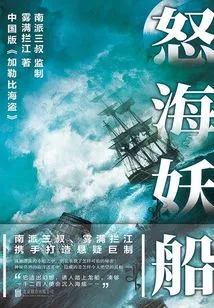
Angry Kraken Ship
General Fiction怒海妖船
Fog Blocks The River
"The Raging Sea Demon Ship" tells the story of China in the 29th year of the Republic of China. War was raging, Japanese invaders were rampant, and the people were in dire straits. Cheng Minsheng boarded the Fuchang and fled to Southeast Asia, but he stepped into a lot of fog and layers of conspiracies. The turbulent sea, passengers with their own ulterior motives, endless moans, mysterious and weird sacrifices, sudden sea snakes... What kind of shocking secrets are hidden in the cargo ship hanging alone on the sea? Is this journey with no retreat heading towards a desperate situation, or is it the ultimate escape? Behind the cruel game of human nature is a grand fable of the end of the world.
"The Raging Sea Demon Ship" tells the story of China in the 29th year of the Republic of China. War was raging, Japanese invaders were rampant, and the people were in dire straits. Cheng Minsheng boarded the Fuchang and fled to Southeast Asia, but he stepped into a lot of fog and layers of conspiracies. The turbulent sea, passengers with their own ulterior motives, endless moans, mysterious and weird sacrifices, sudden sea snakes... What kind of shocking secrets are hidden in the cargo ship hanging alone on the sea? Is this journey with no retreat heading towards a desperate situation, or is it the ultimate escape? Behind the cruel game of human nature is a grand fable of the end of the world.