Library
Browse and search books
7 novels found
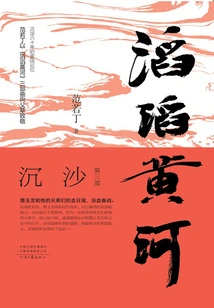
The Roaring Yellow River (part 3): Sinking Sand
General Fiction滔滔黄河(第三部):沉沙
Fan Ruoding
The third part of the novel "The Roaring Yellow River" trilogy, "The Sinking Sand", is a continuation of the first part "Asking the Mountain" and the second part "Striking the Waves" in content. It tells the history of Fan Yulong and his comrades who devoted themselves to the war against foreign enemies after the outbreak of the Anti-Japanese War and finally persevered tenaciously until victory. His childhood sweetheart cousin Shi Yiqiu and his childhood playmate Liu Ziqian also joined new positions. They reunited in the government counselor's office in Henan, his hometown in New China, and continued to contribute to the development of their hometown. They lamented that life is like the roaring Yellow River, all the way to the east. The Master said on the river, "The deceased is like this."
The third part of the novel "The Roaring Yellow River" trilogy, "The Sinking Sand", is a continuation of the first part "Asking the Mountain" and the second part "Striking the Waves" in content. It tells the history of Fan Yulong and his comrades who devoted themselves to the war against foreign enemies after the outbreak of the Anti-Japanese War and finally persevered tenaciously until victory. His childhood sweetheart cousin Shi Yiqiu and his childhood playmate Liu Ziqian also joined new positions. They reunited in the government counselor's office in Henan, his hometown in New China, and continued to contribute to the development of their hometown. They lamented that life is like the roaring Yellow River, all the way to the east. The Master said on the river, "The deceased is like this."
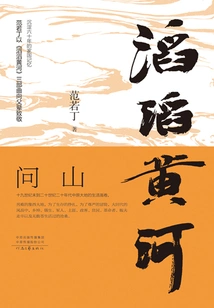
The Roaring Yellow River (part 1): Asking the Mountain
General Fiction滔滔黄河(第一部):问山
Fan Ruoding
"Asking the Mountain", the first part of the novel "The Roaring Yellow River", shows a period of Chinese history from the end of the 19th century to the beginning of the 20th century, and the hardships and twists and turns a man from the Central Plains endured in this context. The author uses delicate and dense literary language to describe the scenery of the four seasons, farming and harvest, weddings and funerals, and folk customs in western Henan. The values of those ancient life orders are still conveyed even in hunger and turmoil, which makes this novel have cognitive and aesthetic values about the lives of our ancestors. The combing of the large historical context enables readers to feel the regularity, rationality and trend of change in the fate of these characters. This is also the unique value of this novel.
"Asking the Mountain", the first part of the novel "The Roaring Yellow River", shows a period of Chinese history from the end of the 19th century to the beginning of the 20th century, and the hardships and twists and turns a man from the Central Plains endured in this context. The author uses delicate and dense literary language to describe the scenery of the four seasons, farming and harvest, weddings and funerals, and folk customs in western Henan. The values of those ancient life orders are still conveyed even in hunger and turmoil, which makes this novel have cognitive and aesthetic values about the lives of our ancestors. The combing of the large historical context enables readers to feel the regularity, rationality and trend of change in the fate of these characters. This is also the unique value of this novel.
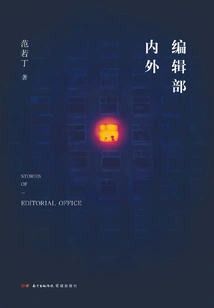
Inside and Outside the Editorial Office
Literature编辑部内外
Fan Ruoding
The veteran writer Fan Ruoding talks about his experience in the editorial office of "Flower City" magazine for decades. "Flower City" magazine is one of the "Four Famous Dans" of Chinese literary journals and plays a decisive role in the literary world. The story of the editorial office of "Flower City" reflects a period of history in the Chinese literary world. There is also reportage, which describes the stories of a group of people working at the grassroots level who are brave enough to innovate and constantly forge ahead.
The veteran writer Fan Ruoding talks about his experience in the editorial office of "Flower City" magazine for decades. "Flower City" magazine is one of the "Four Famous Dans" of Chinese literary journals and plays a decisive role in the literary world. The story of the editorial office of "Flower City" reflects a period of history in the Chinese literary world. There is also reportage, which describes the stories of a group of people working at the grassroots level who are brave enough to innovate and constantly forge ahead.
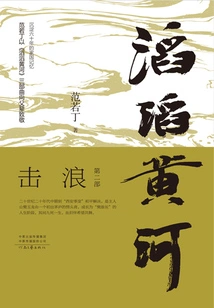
The Roaring Yellow River (part 2): Breaking the Waves
General Fiction滔滔黄河(第二部):击浪
Fan Ruoding
The second part of "The Roaring Yellow River", "Striking the Waves", is a continuation of the first part, "Asking the Mountain". The story takes place from the mid-1920s to the peaceful resolution of the "Xi'an Incident" in 1936. It describes the life story of the protagonist Fan Yulong, who was a fledgling young man who was bumped by fate in the tide of the times and gradually grew into "Brigadier Fan". The author Fan Ruoding uses his life's accumulation to sort out the military career of Fan Yulong, a man from the Central Plains during that historical period.
The second part of "The Roaring Yellow River", "Striking the Waves", is a continuation of the first part, "Asking the Mountain". The story takes place from the mid-1920s to the peaceful resolution of the "Xi'an Incident" in 1936. It describes the life story of the protagonist Fan Yulong, who was a fledgling young man who was bumped by fate in the tide of the times and gradually grew into "Brigadier Fan". The author Fan Ruoding uses his life's accumulation to sort out the military career of Fan Yulong, a man from the Central Plains during that historical period.
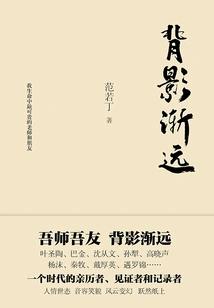
Back Fades Away
Literature背影渐远
Fan Ruoding
"The Fading Back" is a collection of essays with a distinctive personal style. There are 33 articles in the book, which are roughly divided into three categories: The first category includes senior writers such as Ye Shengtao, Ba Jin, Shen Congwen, Duanmu Hongliang, Sun Li, Yang Mo, etc. "I am fortunate to have met them and edited books and articles for them. Their influence on me can be called "As my literature teachers"; the second category includes Bai Hua, Wang Meng, Zhang Yigong, Li Shifei, Su Du, etc., "Who are both my friends and teachers, teachers and friends"; the third category are the author's confidants who have been friends throughout his life and "accompany me throughout my life through bumps and bumps."
"The Fading Back" is a collection of essays with a distinctive personal style. There are 33 articles in the book, which are roughly divided into three categories: The first category includes senior writers such as Ye Shengtao, Ba Jin, Shen Congwen, Duanmu Hongliang, Sun Li, Yang Mo, etc. "I am fortunate to have met them and edited books and articles for them. Their influence on me can be called "As my literature teachers"; the second category includes Bai Hua, Wang Meng, Zhang Yigong, Li Shifei, Su Du, etc., "Who are both my friends and teachers, teachers and friends"; the third category are the author's confidants who have been friends throughout his life and "accompany me throughout my life through bumps and bumps."
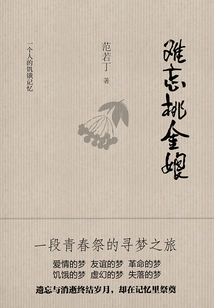
Unforgettable Myrtle
Literature难忘桃金娘
Fan Ruoding
"Unforgettable Myrtle" is a collection of essays with a distinctive personal style. The whole book is divided into three parts. The first part, headed by "Small Courtyard", writes about life, relatives and friends in Kaifeng and Wuhan; the second part, headed by "Xunmeng Street", is mostly set in Guangzhou, and some of them are related to Hainan, such as "Unforgettable Myrtle"; the third part, headed by "Bitter Lilac", are mostly travelogues, but many of them reflect aspects of the author's life as a "buyer and salesman". It records every aspect of the author's dream-seeking journey - the dream of revolution, the dream of love, the dream of friendship and the dream of returning to the world.
"Unforgettable Myrtle" is a collection of essays with a distinctive personal style. The whole book is divided into three parts. The first part, headed by "Small Courtyard", writes about life, relatives and friends in Kaifeng and Wuhan; the second part, headed by "Xunmeng Street", is mostly set in Guangzhou, and some of them are related to Hainan, such as "Unforgettable Myrtle"; the third part, headed by "Bitter Lilac", are mostly travelogues, but many of them reflect aspects of the author's life as a "buyer and salesman". It records every aspect of the author's dream-seeking journey - the dream of revolution, the dream of love, the dream of friendship and the dream of returning to the world.
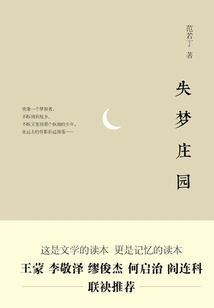
Lost Dreams Manor
Literature失梦庄园
Fan Ruoding
"The Manor of Lost Dreams" is a collection of essays with a distinctive personal style. With a unique writing style that is both prose and novel, the author writes about the original appearance of life in the rural Central Plains, the joys and sorrows of a large family in the great era, and the ups and downs of personal destiny, which are both true and imaginary. This book is divided into two parts: the initial part and the sequel. "Warm Snow" in the first edition won the first Lu Xun Literature Award of Guangdong Province, and "My Father and Me" and "Glycyrrhiza orientalis" in the sequel won the first and second Qin Mu Prose Awards respectively. The book includes 31 works including "Night Marriage", "Crossing the Yin", "The Divine Insect", "Committee with Foot", "Swordsman Zhang", "Cousin Xiu", "Chen Ganniang", "My Father and Me", and "Searching for a Grave". The first of them, "Night Marriage", depicts the scene of his cousin's remarriage, showing a sad and desolate folk painting in the Funiu Mountains. The images of the pitiful and helpless cousin and the down and out rogue cousin are all vivid on the page. In the description of his cousin's fate, the author's faint sadness is revealed. "Crossing the Yin" is also a description of the ancient and ugly customs in the Funiu Mountains. The ignorant custom of "donating one's life" is a self-deprecating bad habit. What it shows is how the feudal superstitious and backward consciousness that remains among the people and the cold utilitarianism between people can harm people's hearts. "The Divine Fetus" is both grim and a bit ridiculing. It is obviously a prank played by a few children, but it is worshiped as a "god", which makes people fearful. It profoundly exposed the backward group consciousness. "Chen Qanniang" is a retrospective full of love. "Chen Ganniang" who once brought up the three brothers of the author has a bold personality, but she does not deserve a better fate. As an "old woman", she lives under the shelter of others and lives a humiliating life. Although the author's reflection shows a "discovery of conscience", Chen Ganniang's own fate is still a tragedy.
"The Manor of Lost Dreams" is a collection of essays with a distinctive personal style. With a unique writing style that is both prose and novel, the author writes about the original appearance of life in the rural Central Plains, the joys and sorrows of a large family in the great era, and the ups and downs of personal destiny, which are both true and imaginary. This book is divided into two parts: the initial part and the sequel. "Warm Snow" in the first edition won the first Lu Xun Literature Award of Guangdong Province, and "My Father and Me" and "Glycyrrhiza orientalis" in the sequel won the first and second Qin Mu Prose Awards respectively. The book includes 31 works including "Night Marriage", "Crossing the Yin", "The Divine Insect", "Committee with Foot", "Swordsman Zhang", "Cousin Xiu", "Chen Ganniang", "My Father and Me", and "Searching for a Grave". The first of them, "Night Marriage", depicts the scene of his cousin's remarriage, showing a sad and desolate folk painting in the Funiu Mountains. The images of the pitiful and helpless cousin and the down and out rogue cousin are all vivid on the page. In the description of his cousin's fate, the author's faint sadness is revealed. "Crossing the Yin" is also a description of the ancient and ugly customs in the Funiu Mountains. The ignorant custom of "donating one's life" is a self-deprecating bad habit. What it shows is how the feudal superstitious and backward consciousness that remains among the people and the cold utilitarianism between people can harm people's hearts. "The Divine Fetus" is both grim and a bit ridiculing. It is obviously a prank played by a few children, but it is worshiped as a "god", which makes people fearful. It profoundly exposed the backward group consciousness. "Chen Qanniang" is a retrospective full of love. "Chen Ganniang" who once brought up the three brothers of the author has a bold personality, but she does not deserve a better fate. As an "old woman", she lives under the shelter of others and lives a humiliating life. Although the author's reflection shows a "discovery of conscience", Chen Ganniang's own fate is still a tragedy.