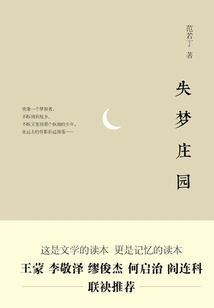
Lost Dreams Manor
by Fan Ruoding
About This Novel
"The Manor of Lost Dreams" is a collection of essays with a distinctive personal style. With a unique writing style that is both prose and novel, the author writes about the original appearance of life in the rural Central Plains, the joys and sorrows of a large family in the great era, and the ups and downs of personal destiny, which are both true and imaginary. This book is divided into two parts: the initial part and the sequel. "Warm Snow" in the first edition won the first Lu Xun Literature Award of Guangdong Province, and "My Father and Me" and "Glycyrrhiza orientalis" in the sequel won the first and second Qin Mu Prose Awards respectively. The book includes 31 works including "Night Marriage", "Crossing the Yin", "The Divine Insect", "Committee with Foot", "Swordsman Zhang", "Cousin Xiu", "Chen Ganniang", "My Father and Me", and "Searching for a Grave". The first of them, "Night Marriage", depicts the scene of his cousin's remarriage, showing a sad and desolate folk painting in the Funiu Mountains. The images of the pitiful and helpless cousin and the down and out rogue cousin are all vivid on the page. In the description of his cousin's fate, the author's faint sadness is revealed. "Crossing the Yin" is also a description of the ancient and ugly customs in the Funiu Mountains. The ignorant custom of "donating one's life" is a self-deprecating bad habit. What it shows is how the feudal superstitious and backward consciousness that remains among the people and the cold utilitarianism between people can harm people's hearts. "The Divine Fetus" is both grim and a bit ridiculing. It is obviously a prank played by a few children, but it is worshiped as a "god", which makes people fearful. It profoundly exposed the backward group consciousness. "Chen Qanniang" is a retrospective full of love. "Chen Ganniang" who once brought up the three brothers of the author has a bold personality, but she does not deserve a better fate. As an "old woman", she lives under the shelter of others and lives a humiliating life. Although the author's reflection shows a "discovery of conscience", Chen Ganniang's own fate is still a tragedy.
Official Sources
What Readers Think
Rating
Community(0)
Rating
Community(0)