Library
Browse and search books
2 novels found
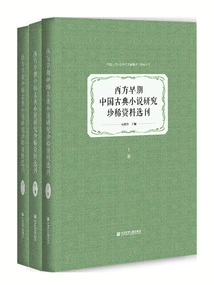
西方早期中国古典小说研究珍稀资料选刊(全3册)
Editor-in-chief Song Lihua
This book is a special collection of materials with the theme of the study of Chinese classical novels. It contains 79 rare materials on the study of Chinese classical novels by Western scholars from the 18th century to the mid-20th century. It takes into account documents of different themes, different periods and different languages, in order to fully reflect the early Western academic circles' study of Chinese classical novels. The book is organized into ten categories according to the themes of Western academic research on Chinese classical novels. The articles included in each theme are arranged in chronological order, and each article is preceded by a title explanation, introducing the author's life, selected version, origin, main academic viewpoints and academic influence, etc.
This book is a special collection of materials with the theme of the study of Chinese classical novels. It contains 79 rare materials on the study of Chinese classical novels by Western scholars from the 18th century to the mid-20th century. It takes into account documents of different themes, different periods and different languages, in order to fully reflect the early Western academic circles' study of Chinese classical novels. The book is organized into ten categories according to the themes of Western academic research on Chinese classical novels. The articles included in each theme are arranged in chronological order, and each article is preceded by a title explanation, introducing the author's life, selected version, origin, main academic viewpoints and academic influence, etc.
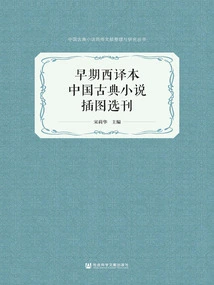
早期西译本中国古典小说插图选刊
Editor-in-chief Song Lihua
This book selects about 400 illustrations from early Western translations of Chinese classical novels from the 18th century to the early 20th century, compiles them into a volume, and photocopies them for publication. It is a special collection of documents focusing on the illustrations of Western translations of Chinese classical novels. Spanish translations of Chinese classical novels are an important medium for Western readers to understand Chinese novels and Chinese culture. The illustrations, like the annotations, play an important role in helping readers understand. From the quasi-woodcut-style illustrations in the 1761 English translation of Passy's "The Legend of Haoqiu" to the exquisite novel illustrations printed with lithography technology in the late 19th century, illustrations in Western translations of Chinese novels have experienced long-term development, promoting the spread of Chinese classical novels in the West, and they themselves also form a part of Western Sinology research.
This book selects about 400 illustrations from early Western translations of Chinese classical novels from the 18th century to the early 20th century, compiles them into a volume, and photocopies them for publication. It is a special collection of documents focusing on the illustrations of Western translations of Chinese classical novels. Spanish translations of Chinese classical novels are an important medium for Western readers to understand Chinese novels and Chinese culture. The illustrations, like the annotations, play an important role in helping readers understand. From the quasi-woodcut-style illustrations in the 1761 English translation of Passy's "The Legend of Haoqiu" to the exquisite novel illustrations printed with lithography technology in the late 19th century, illustrations in Western translations of Chinese novels have experienced long-term development, promoting the spread of Chinese classical novels in the West, and they themselves also form a part of Western Sinology research.