Library
Browse and search books
7 novels found
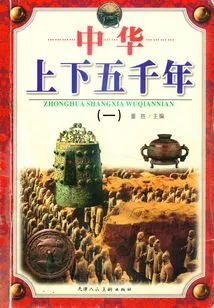
中华上下五千年(一)
Editor-in-chief Dong Sheng
The ancestors of our Chinese nation have been working, living and reproducing on the land of our motherland since ancient times.
The ancestors of our Chinese nation have been working, living and reproducing on the land of our motherland since ancient times.
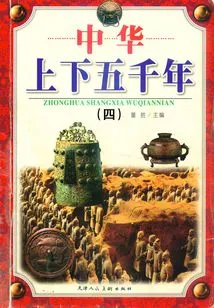
中华上下五千年(四)
Editor-in-chief Dong Sheng
The rulers of the Northern Wei Dynasty were members of the Tuoba tribe of the Xianbei ethnic group. People in the Tuoba tribe all wear long braids. Its history originates from the period of Ba Mao. In the early years of the Eastern Han Dynasty, Tuoba Tuiyin led everyone to move to the vicinity of Hulun Lake in present-day Inner Mongolia. In the early years of the Eastern Jin Dynasty, the Tuoba tribe was still a nomadic tribe in Northeast my country. Later, it absorbed the culture of the Central Plains and gradually established a feudal economic system.
The rulers of the Northern Wei Dynasty were members of the Tuoba tribe of the Xianbei ethnic group. People in the Tuoba tribe all wear long braids. Its history originates from the period of Ba Mao. In the early years of the Eastern Han Dynasty, Tuoba Tuiyin led everyone to move to the vicinity of Hulun Lake in present-day Inner Mongolia. In the early years of the Eastern Jin Dynasty, the Tuoba tribe was still a nomadic tribe in Northeast my country. Later, it absorbed the culture of the Central Plains and gradually established a feudal economic system.
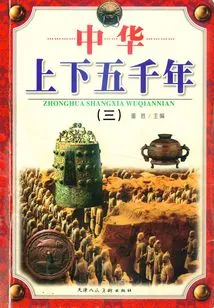
中华上下五千年(三)
Editor-in-chief Dong Sheng
When Wang Chong wrote "Lunheng", although there was already rough hemp paper made of hemp, ramie and other raw materials, the texture of the paper was relatively rough, the fiber tissue was unevenly distributed, and it was not suitable for writing. His book was written on bamboo slips and wooden slips. Shortly after Wang Chong's death, Cai Lun improved the papermaking technology and created paper suitable for writing.
When Wang Chong wrote "Lunheng", although there was already rough hemp paper made of hemp, ramie and other raw materials, the texture of the paper was relatively rough, the fiber tissue was unevenly distributed, and it was not suitable for writing. His book was written on bamboo slips and wooden slips. Shortly after Wang Chong's death, Cai Lun improved the papermaking technology and created paper suitable for writing.
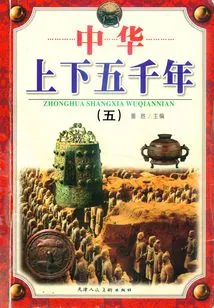
中华上下五千年(五)
Editor-in-chief Dong Sheng
In the middle of the Tang Dynasty, Huaixi Town was a stubborn fortress of the feudal separatist regime at that time. (814 AD) After the death of Wu Shaoyang, the Huaixi Jiedu envoy, his son Wu Yuanji became independent. Emperor Xianzong of the Tang Dynasty sent troops to conquer Huaixi in four directions, but the offensive continued for three or four years to no avail. The first coach Gao Xiayu was defeated by Wu Yuanji. The second coach Yuan Zi was as fearful of the enemy as a tiger and never dared to fight Wu Yuanji. In this situation, many officials in the court believed that the war could no longer continue, but Minister Pei Du believed that Huaixi was like a malignant sore on the body that had to be removed. Emperor Xianzong of the Tang Dynasty worshiped Pei Du as prime minister and determined to continue the conquest of Huaixi.
In the middle of the Tang Dynasty, Huaixi Town was a stubborn fortress of the feudal separatist regime at that time. (814 AD) After the death of Wu Shaoyang, the Huaixi Jiedu envoy, his son Wu Yuanji became independent. Emperor Xianzong of the Tang Dynasty sent troops to conquer Huaixi in four directions, but the offensive continued for three or four years to no avail. The first coach Gao Xiayu was defeated by Wu Yuanji. The second coach Yuan Zi was as fearful of the enemy as a tiger and never dared to fight Wu Yuanji. In this situation, many officials in the court believed that the war could no longer continue, but Minister Pei Du believed that Huaixi was like a malignant sore on the body that had to be removed. Emperor Xianzong of the Tang Dynasty worshiped Pei Du as prime minister and determined to continue the conquest of Huaixi.
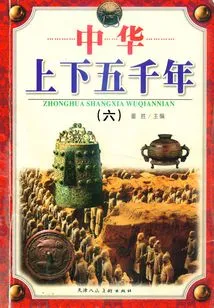
中华上下五千年(六)
Editor-in-chief Dong Sheng
The rulers of the Jin and Yuan dynasties first developed from nomadic peoples on the northern grasslands and then came to dominate the Central Plains. Their original political, economic and cultural levels lagged behind the Han people, so their governance methods were relatively backward. In order to consolidate and strengthen their rule and management of the Central Plains, they had to learn the Han people's governance methods and accept the Han people's politics, economy and culture. Therefore, both the Jin and Yuan dynasties supported religion in order to control the people, and people in war also needed religious beliefs to help them escape. Taoism during the Jin and Yuan Dynasties developed under such a background. Because Taoism was highly praised in the Song Dynasty, Emperor Huizong of the Song Dynasty even called himself "Emperor Taoism", which led to many drawbacks. The government and the public had a sense of distrust in Taoism. Therefore, the development of Southern Tianshi Taoism (Zhengyi Sect) tended to stagnate in the Southern Song Dynasty, Jin and Yuan Dynasties. In the north controlled by the Jin and Yuan Dynasties, three new Taoist sects developed and formed due to the above-mentioned reasons: Quanzhen Sect, Dao Sect, and Taiyi Sect, among which Quanzhen Sect was the most prosperous.
The rulers of the Jin and Yuan dynasties first developed from nomadic peoples on the northern grasslands and then came to dominate the Central Plains. Their original political, economic and cultural levels lagged behind the Han people, so their governance methods were relatively backward. In order to consolidate and strengthen their rule and management of the Central Plains, they had to learn the Han people's governance methods and accept the Han people's politics, economy and culture. Therefore, both the Jin and Yuan dynasties supported religion in order to control the people, and people in war also needed religious beliefs to help them escape. Taoism during the Jin and Yuan Dynasties developed under such a background. Because Taoism was highly praised in the Song Dynasty, Emperor Huizong of the Song Dynasty even called himself "Emperor Taoism", which led to many drawbacks. The government and the public had a sense of distrust in Taoism. Therefore, the development of Southern Tianshi Taoism (Zhengyi Sect) tended to stagnate in the Southern Song Dynasty, Jin and Yuan Dynasties. In the north controlled by the Jin and Yuan Dynasties, three new Taoist sects developed and formed due to the above-mentioned reasons: Quanzhen Sect, Dao Sect, and Taiyi Sect, among which Quanzhen Sect was the most prosperous.
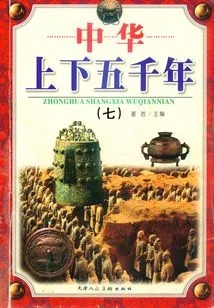
中华上下五千年(七)
Editor-in-chief Dong Sheng
In 1637, due to the fierce siege of the Ming army, Zhang Xianzhong accepted the Ming Dynasty's recruitment in Gucheng, Hubei. He did not sincerely surrender, but secretly accumulated troops to prepare for a comeback. The generals of the Ming Dynasty discovered Zhang Xianzhong's evil intentions and prepared to send troops to suppress it.
In 1637, due to the fierce siege of the Ming army, Zhang Xianzhong accepted the Ming Dynasty's recruitment in Gucheng, Hubei. He did not sincerely surrender, but secretly accumulated troops to prepare for a comeback. The generals of the Ming Dynasty discovered Zhang Xianzhong's evil intentions and prepared to send troops to suppress it.
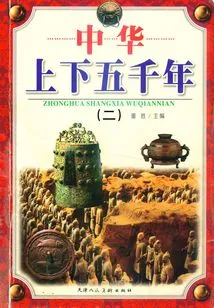
中华上下五千年(二)
Editor-in-chief Dong Sheng
Our country's medicine has unique methods of diagnosing and treating diseases, and it has reached a very high level of treatment during the Spring and Autumn Period and the Warring States Period. Bian Que, known as the "Founder", was the most famous doctor from the late Spring and Autumn Period to the early Warring States Period.
Our country's medicine has unique methods of diagnosing and treating diseases, and it has reached a very high level of treatment during the Spring and Autumn Period and the Warring States Period. Bian Que, known as the "Founder", was the most famous doctor from the late Spring and Autumn Period to the early Warring States Period.