Library
Browse and search books
11 novels found
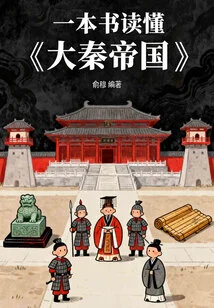
Read "the Qin Empire" in One Book
Literature一本书读懂《大秦帝国》
Compiled By Yu Mu
This book provides an in-depth interpretation of Sun Haohui's 5 million-word epic masterpiece "The Empire of Qin", and presents a panoramic view of the Qin Kingdom's magnificent journey from a weak state in the western frontier to a unified world. From the "black fission" of Duke Xiao of Qin's promulgation of the order to seek talents and Shang Yang's reform, to the diplomatic game of alliances and alliances during the period of King Qin Huiwen; from the iron-blooded expansion of distant relations and close attacks, and bloody battles in Changping during the period of King Zhaoxiang of Qin, to the change of power in which Lü Buwei had rare goods and Yingzheng took power personally, and then to the glory and quick demise of Qin Shihuang's sweeping of Liuhe and the establishment of the empire, we can clearly sort out the struggles of the six generations of Qin kings. The book analyzes the ups and downs of key figures such as Shang Yang, Bai Qi, and Li Si, and interprets the far-reaching impact of institutional reforms such as the system of counties and counties, and the system of books and texts. It not only displays the spiritual core of "the old Qin survived the national calamity together", but also explores the civilizational logic and historical enlightenment behind the rise and fall of the Qin Empire, leading readers to appreciate the iron-blooded character and civilized fission of that era of great strife.
This book provides an in-depth interpretation of Sun Haohui's 5 million-word epic masterpiece "The Empire of Qin", and presents a panoramic view of the Qin Kingdom's magnificent journey from a weak state in the western frontier to a unified world. From the "black fission" of Duke Xiao of Qin's promulgation of the order to seek talents and Shang Yang's reform, to the diplomatic game of alliances and alliances during the period of King Qin Huiwen; from the iron-blooded expansion of distant relations and close attacks, and bloody battles in Changping during the period of King Zhaoxiang of Qin, to the change of power in which Lü Buwei had rare goods and Yingzheng took power personally, and then to the glory and quick demise of Qin Shihuang's sweeping of Liuhe and the establishment of the empire, we can clearly sort out the struggles of the six generations of Qin kings. The book analyzes the ups and downs of key figures such as Shang Yang, Bai Qi, and Li Si, and interprets the far-reaching impact of institutional reforms such as the system of counties and counties, and the system of books and texts. It not only displays the spiritual core of "the old Qin survived the national calamity together", but also explores the civilizational logic and historical enlightenment behind the rise and fall of the Qin Empire, leading readers to appreciate the iron-blooded character and civilized fission of that era of great strife.
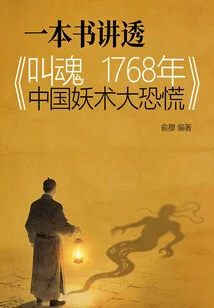
一本书讲透《叫魂:1768年中国妖术大恐慌》
Compiled By Yu Mu
This book systematically elaborates on "Soul Calling: The Great Panic on Chinese Witchcraft in 1768". Through detailed historical data, this book restores a nationwide panic caused by "soul calling" sorcery in the Qing Dynasty of China in 1768. The book provides an in-depth analysis of the social roots, political motivations and cultural psychology behind the panic, and reveals the deep-seated social contradictions in the prosperous era of Qianlong. It not only depicts the spread of panic, but also explores the reaction and strategies of the bureaucracy in dealing with the crisis, and believes that Professor Kong Feili's theory and analysis provide a unique perspective for understanding Qing Dynasty society.
This book systematically elaborates on "Soul Calling: The Great Panic on Chinese Witchcraft in 1768". Through detailed historical data, this book restores a nationwide panic caused by "soul calling" sorcery in the Qing Dynasty of China in 1768. The book provides an in-depth analysis of the social roots, political motivations and cultural psychology behind the panic, and reveals the deep-seated social contradictions in the prosperous era of Qianlong. It not only depicts the spread of panic, but also explores the reaction and strategies of the bureaucracy in dealing with the crisis, and believes that Professor Kong Feili's theory and analysis provide a unique perspective for understanding Qing Dynasty society.
唐朝的分肥游戏
Compiled By Yu Mu
This book analyzes the rise and fall of the Tang Empire from a unique economic perspective, deconstructing three hundred years of dynasty history into a cruel game surrounding power rent. The book vividly demonstrates the hereditary privileges of the Guanlong Group, the emerging bureaucracy spawned by the imperial examination system, the military power of the Jiedushi envoys, the fiscal changes triggered by the Two Taxes Law, the Shence Army controlled by the eunuchs, and the underground economy composed of private salt dealers, revealing how these interest groups carve up the empire's wealth through loopholes in the system. The author uses "rent-seeking theory" as a key to decipher the secret distribution mechanism of power and interests under the appearance of a prosperous age, and presents a unique interpretation of the history of the Tang Dynasty.
This book analyzes the rise and fall of the Tang Empire from a unique economic perspective, deconstructing three hundred years of dynasty history into a cruel game surrounding power rent. The book vividly demonstrates the hereditary privileges of the Guanlong Group, the emerging bureaucracy spawned by the imperial examination system, the military power of the Jiedushi envoys, the fiscal changes triggered by the Two Taxes Law, the Shence Army controlled by the eunuchs, and the underground economy composed of private salt dealers, revealing how these interest groups carve up the empire's wealth through loopholes in the system. The author uses "rent-seeking theory" as a key to decipher the secret distribution mechanism of power and interests under the appearance of a prosperous age, and presents a unique interpretation of the history of the Tang Dynasty.
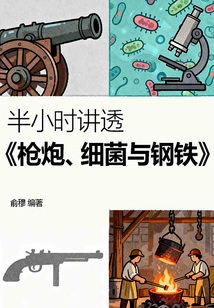
半小时讲透《枪炮、细菌与钢铁》
Compiled By Yu Mu
This book takes "Yale's Question" as the entry point, jumps out of traditional historical narratives, and systematically dismantles the core logic of "Guns, Germs, and Steel" - the root of the differences in the development of global civilizations is not the intelligence or moral superiority of ethnic groups, but the innate differences in geography and biological environment. The interpretation follows the causal chain of "environment → agriculture → civilization" and analyzes key variables such as the distribution of domesticated animals and plants, the direction of the continental axis, and the evolution of pathogens: Eurasia has become a fertile ground for agricultural revolution and technological dissemination due to its rich animal and plant resources and east-west axis; while America, Africa, and Australia have limited development trajectories due to lack of resources or geographical barriers. By comparing cases from different continents, it presents the underlying logic of the collision of civilizations, while exploring the controversy between geographical determinism and institutional determinism, taking into account historical inertia and human agency. Ultimately, the interpretation of this book is based on realistic revelations, emphasizing its value in breaking racial prejudice and building empathy, and provides a profound historical perspective for understanding the challenges of globalization and shaping an inclusive future.
This book takes "Yale's Question" as the entry point, jumps out of traditional historical narratives, and systematically dismantles the core logic of "Guns, Germs, and Steel" - the root of the differences in the development of global civilizations is not the intelligence or moral superiority of ethnic groups, but the innate differences in geography and biological environment. The interpretation follows the causal chain of "environment → agriculture → civilization" and analyzes key variables such as the distribution of domesticated animals and plants, the direction of the continental axis, and the evolution of pathogens: Eurasia has become a fertile ground for agricultural revolution and technological dissemination due to its rich animal and plant resources and east-west axis; while America, Africa, and Australia have limited development trajectories due to lack of resources or geographical barriers. By comparing cases from different continents, it presents the underlying logic of the collision of civilizations, while exploring the controversy between geographical determinism and institutional determinism, taking into account historical inertia and human agency. Ultimately, the interpretation of this book is based on realistic revelations, emphasizing its value in breaking racial prejudice and building empathy, and provides a profound historical perspective for understanding the challenges of globalization and shaping an inclusive future.
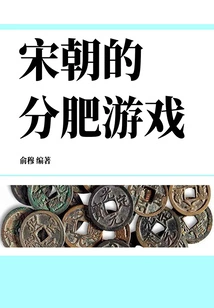
宋朝的分肥游戏
Compiled By Yu Mu
This book is an in-depth analysis of the political power distribution mechanism in ancient China, focusing on the fundamental differences in the institutional design of the Han and Song dynasties. The work uses the "fat sharing game" as a metaphor to reveal the pros and cons of the two models of military enfeoffment in the Han Dynasty and civilian governance in the Song Dynasty: the former gave rise to feudal feudalism but maintained military vitality, while the latter used imperial examinations to centralize power in exchange for internal stability but led to the decline of military force. Through multi-dimensional comparisons such as power distribution, official selection, court struggles, and military systems, the book shows how the two governance logics shaped the destiny of the empire. It especially provides an in-depth analysis of the three-redundancy dilemma caused by the "strong branches and weak branches" design in the Song Dynasty and the institutional contradictions faced by Wang Anshi's reform. It ultimately points to a core proposition - when the dynasty puts the prevention of internal strife above the defense of foreign aggression, the foreshadowing of its decline has been laid under the appearance of prosperity.
This book is an in-depth analysis of the political power distribution mechanism in ancient China, focusing on the fundamental differences in the institutional design of the Han and Song dynasties. The work uses the "fat sharing game" as a metaphor to reveal the pros and cons of the two models of military enfeoffment in the Han Dynasty and civilian governance in the Song Dynasty: the former gave rise to feudal feudalism but maintained military vitality, while the latter used imperial examinations to centralize power in exchange for internal stability but led to the decline of military force. Through multi-dimensional comparisons such as power distribution, official selection, court struggles, and military systems, the book shows how the two governance logics shaped the destiny of the empire. It especially provides an in-depth analysis of the three-redundancy dilemma caused by the "strong branches and weak branches" design in the Song Dynasty and the institutional contradictions faced by Wang Anshi's reform. It ultimately points to a core proposition - when the dynasty puts the prevention of internal strife above the defense of foreign aggression, the foreshadowing of its decline has been laid under the appearance of prosperity.
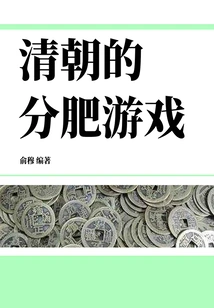
清朝的分肥游戏
Compiled By Yu Mu
This book analyzes the distribution mechanism of power and interests in the Qing Dynasty through eight dimensions: the privileges of the Eight Banners, the land enclosure movement, the San Francisco Rebellion, the centralization of military power, the Manchu-Han dual-track system, the control of subordinate officials, bad financial regulations and the monopoly of salt merchants. The book reveals: From the children of the Eight Banners parasitizing the country to local petty officials evading officials, from Yongzheng's reform of Huohuo Guigong to Yangzhou salt merchants relying on privileges, the Qing Dynasty has always oscillated between "dividing fat" and losing control. In the end, this system, which centered on imperial power and relied on informal rules, was completely out of balance due to the expansion of local financial power after the Taiping Rebellion, and became the internal cause of the empire's collapse.
This book analyzes the distribution mechanism of power and interests in the Qing Dynasty through eight dimensions: the privileges of the Eight Banners, the land enclosure movement, the San Francisco Rebellion, the centralization of military power, the Manchu-Han dual-track system, the control of subordinate officials, bad financial regulations and the monopoly of salt merchants. The book reveals: From the children of the Eight Banners parasitizing the country to local petty officials evading officials, from Yongzheng's reform of Huohuo Guigong to Yangzhou salt merchants relying on privileges, the Qing Dynasty has always oscillated between "dividing fat" and losing control. In the end, this system, which centered on imperial power and relied on informal rules, was completely out of balance due to the expansion of local financial power after the Taiping Rebellion, and became the internal cause of the empire's collapse.
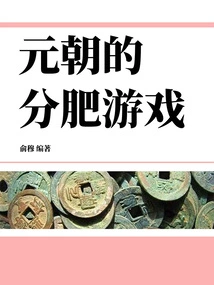
元朝的分肥游戏
Compiled By Yu Mu
This book analyzes the core mechanism of power operation in the Yuan Dynasty from a unique perspective. Through the key concept of the "fat sharing game", this book systematically reveals how the Mongolian rulers sublimated the tradition of spoil distribution of steppe tribes into the ruling logic of the empire. From the "drop" system founded by Genghis Khan, the implicit rules of the four-class system, to the cruel game of fighting for the throne, it shows layer by layer how this conquering dynasty maintained governance through the bundling of interests, and then collapsed due to imbalanced distribution. The book focuses particularly on institutional designs such as excessive currency issuance, salt monopoly, and the abolition of imperial examinations. It profoundly presents the complex network of power and wealth distribution, analyzes the catastrophic consequences of the Yuan Dynasty and the underlying reasons for its disintegration, and deconstructs the inherent code of power operation of this special regime that has both nomadic characteristics and the form of the Chinese empire.
This book analyzes the core mechanism of power operation in the Yuan Dynasty from a unique perspective. Through the key concept of the "fat sharing game", this book systematically reveals how the Mongolian rulers sublimated the tradition of spoil distribution of steppe tribes into the ruling logic of the empire. From the "drop" system founded by Genghis Khan, the implicit rules of the four-class system, to the cruel game of fighting for the throne, it shows layer by layer how this conquering dynasty maintained governance through the bundling of interests, and then collapsed due to imbalanced distribution. The book focuses particularly on institutional designs such as excessive currency issuance, salt monopoly, and the abolition of imperial examinations. It profoundly presents the complex network of power and wealth distribution, analyzes the catastrophic consequences of the Yuan Dynasty and the underlying reasons for its disintegration, and deconstructs the inherent code of power operation of this special regime that has both nomadic characteristics and the form of the Chinese empire.
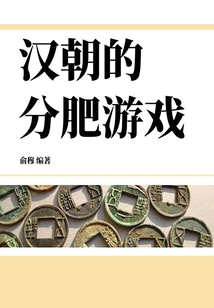
汉朝的分肥游戏
Compiled By Yu Mu
This book analyzes the 400-year history of power distribution in the Han Dynasty from a unique political game perspective. It compares the politics of the early Han Dynasty to a grand card game, vividly demonstrates how Liu Bang, as a "banker", dealt with "players" such as the hero group, princes and kings, and reveals the profound contradiction between the central and local governments under the "parallel system of prefectures and states". As the chapters progress, the work goes deeper into the centralization plot of Emperor Wu of the Han Dynasty, the rise of the Confucian scholar group, the out-of-control land annexation, to the disputes between relatives and eunuchs in the Eastern Han Dynasty and the disasters of the party, and finally ends with the warlord separatism triggered by the Yellow Turban Uprising. It completely presents the entire process of the power structure of the Han Dynasty from establishment to disintegration, and profoundly explains the power of institutional design and benefit distribution to shape the fate of the dynasty.
This book analyzes the 400-year history of power distribution in the Han Dynasty from a unique political game perspective. It compares the politics of the early Han Dynasty to a grand card game, vividly demonstrates how Liu Bang, as a "banker", dealt with "players" such as the hero group, princes and kings, and reveals the profound contradiction between the central and local governments under the "parallel system of prefectures and states". As the chapters progress, the work goes deeper into the centralization plot of Emperor Wu of the Han Dynasty, the rise of the Confucian scholar group, the out-of-control land annexation, to the disputes between relatives and eunuchs in the Eastern Han Dynasty and the disasters of the party, and finally ends with the warlord separatism triggered by the Yellow Turban Uprising. It completely presents the entire process of the power structure of the Han Dynasty from establishment to disintegration, and profoundly explains the power of institutional design and benefit distribution to shape the fate of the dynasty.
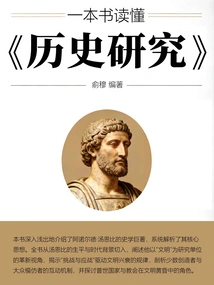
一本书读懂《历史研究》
Compiled By Yu Mu
This book introduces Arnold Toynbee's historical masterpiece in an in-depth and simple way, and systematically analyzes its core ideas. The book starts from Toynbee's life and historical background, expounds his innovative perspective with "civilization" as the research unit, reveals the law of "challenge and response" that drives the rise and fall of civilization, analyzes the interactive mechanism between a few creators and mass imitators, and explores the role of the universal state and church in the twilight of civilization. The author uses smooth writing to transform Toynbee's grand theory of civilization life cycle into an easy-to-understand narrative. It not only presents the essence of his thoughts, but also does not avoid academic controversies, providing readers with a clear guide to understand this historical classic.
This book introduces Arnold Toynbee's historical masterpiece in an in-depth and simple way, and systematically analyzes its core ideas. The book starts from Toynbee's life and historical background, expounds his innovative perspective with "civilization" as the research unit, reveals the law of "challenge and response" that drives the rise and fall of civilization, analyzes the interactive mechanism between a few creators and mass imitators, and explores the role of the universal state and church in the twilight of civilization. The author uses smooth writing to transform Toynbee's grand theory of civilization life cycle into an easy-to-understand narrative. It not only presents the essence of his thoughts, but also does not avoid academic controversies, providing readers with a clear guide to understand this historical classic.
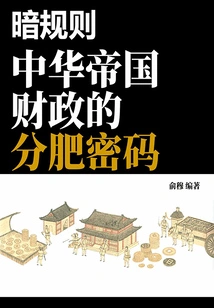
暗规则:中华帝国财政的分肥密码
Compiled By Yu Mu
This book analyzes the evolution of China's fiscal system over two thousand years from the Qin and Han dynasties to the late Qing Dynasty from the perspective of modern economics. Taking the three dimensions of "land tax, currency, and official economy" as the axis, it reveals the deep connection between the rise and fall of past dynasties and the fiscal mechanism: Emperor Wu of the Han Dynasty used salt, iron, official management, and currency monopoly to cope with war expenditures, but it hid hidden dangers of economic rigidity; the state ownership of land in the Tang Dynasty caused social chaos, and the financial reform in the Song Dynasty spawned hyperinflation; the Ming and Qing Dynasties focused on land tax, but missed the opportunity of the industrial revolution because of the isolation of the country. This book connects fiscal history with story-based narratives, pointing out that "state-owned enterprises, land control, and currency monopoly" constitute the core logic of traditional finance, and that the expansion of bureaucratic groups and institutional inertia will eventually bring down finance. This book is not only a history of China's fiscal system, but also a key to understanding the logic of national governance.
This book analyzes the evolution of China's fiscal system over two thousand years from the Qin and Han dynasties to the late Qing Dynasty from the perspective of modern economics. Taking the three dimensions of "land tax, currency, and official economy" as the axis, it reveals the deep connection between the rise and fall of past dynasties and the fiscal mechanism: Emperor Wu of the Han Dynasty used salt, iron, official management, and currency monopoly to cope with war expenditures, but it hid hidden dangers of economic rigidity; the state ownership of land in the Tang Dynasty caused social chaos, and the financial reform in the Song Dynasty spawned hyperinflation; the Ming and Qing Dynasties focused on land tax, but missed the opportunity of the industrial revolution because of the isolation of the country. This book connects fiscal history with story-based narratives, pointing out that "state-owned enterprises, land control, and currency monopoly" constitute the core logic of traditional finance, and that the expansion of bureaucratic groups and institutional inertia will eventually bring down finance. This book is not only a history of China's fiscal system, but also a key to understanding the logic of national governance.
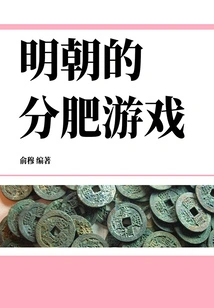
明朝的分肥游戏
Compiled By Yu Mu
This book provides an in-depth analysis of the evolution of the power structure of the Ming Dynasty and the roots of institutional corruption. Taking Zhu Yuanzhang's dethronement of the prime minister as the starting point, this book reveals the struggle for agency between the cabinet and the Supervisor of Ceremonies under the monopoly of imperial power, the alienation of the vassal king from a military barrier to a financial burden, the tear between the ideals and reality of the civil service group, and the collapse of the financial system under the encroachment of the privileged class. Through nine chapters, it vividly shows how the Ming Dynasty gradually evolved into an arena where various forces competed for a share of the spoils in the "absolute security" system designed by Zhu Yuanzhang, and eventually led to a tragic journey of systemic corruption.
This book provides an in-depth analysis of the evolution of the power structure of the Ming Dynasty and the roots of institutional corruption. Taking Zhu Yuanzhang's dethronement of the prime minister as the starting point, this book reveals the struggle for agency between the cabinet and the Supervisor of Ceremonies under the monopoly of imperial power, the alienation of the vassal king from a military barrier to a financial burden, the tear between the ideals and reality of the civil service group, and the collapse of the financial system under the encroachment of the privileged class. Through nine chapters, it vividly shows how the Ming Dynasty gradually evolved into an arena where various forces competed for a share of the spoils in the "absolute security" system designed by Zhu Yuanzhang, and eventually led to a tragic journey of systemic corruption.