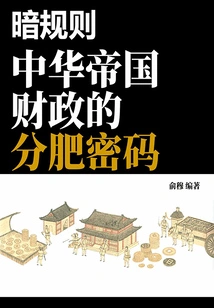
Dark Rules: the Secret Code of the Chinese Empire's Finances
About This Novel
This book analyzes the evolution of China's fiscal system over two thousand years from the Qin and Han dynasties to the late Qing Dynasty from the perspective of modern economics. Taking the three dimensions of "land tax, currency, and official economy" as the axis, it reveals the deep connection between the rise and fall of past dynasties and the fiscal mechanism: Emperor Wu of the Han Dynasty used salt, iron, official management, and currency monopoly to cope with war expenditures, but it hid hidden dangers of economic rigidity; the state ownership of land in the Tang Dynasty caused social chaos, and the financial reform in the Song Dynasty spawned hyperinflation; the Ming and Qing Dynasties focused on land tax, but missed the opportunity of the industrial revolution because of the isolation of the country. This book connects fiscal history with story-based narratives, pointing out that "state-owned enterprises, land control, and currency monopoly" constitute the core logic of traditional finance, and that the expansion of bureaucratic groups and institutional inertia will eventually bring down finance. This book is not only a history of China's fiscal system, but also a key to understanding the logic of national governance.
Official Sources
What Readers Think
Rating
Community(0)
Rating
Community(0)