Library
Browse and search books
5 novels found
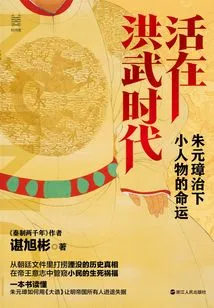
活在洪武时代:朱元璋治下小人物的命运
Chen Xubin
This book peels off the thirteen cases written by Hongwu Emperor Zhu Yuanzhang in the "Da Gao", and elaborates on the ins and outs behind these cases that have no legal basis, common sense and logic. Starting from the military, land, political, legal and other policy systems of the early Ming Dynasty, we sort out the behavioral motivations of the people involved in the case, and interpret the basis and purpose of Emperor Hongwu's trial and judgment, thereby outlining the absurd fate and horrific living conditions of various characters in the Hongwu era, and reproducing the true face of Emperor Hongwu's "rule of law". In these cases, we can see the slaves of the guards who had no personal freedom, the farmers who were tied to the land and were not allowed to leave their hometowns, the old women who said wrong things and injured their neighbors and had their property confiscated, the scholars who did not want to be officials and had to cut off their fingers, the officials who followed reasonable case filing procedures but failed to guess the "holy will"... Through the careless fate of these little people, we see how a founding emperor with a brilliant mind deceived the controlling officials and spied on the people. These cases allow us to see another side of the "Hongwu rule".
This book peels off the thirteen cases written by Hongwu Emperor Zhu Yuanzhang in the "Da Gao", and elaborates on the ins and outs behind these cases that have no legal basis, common sense and logic. Starting from the military, land, political, legal and other policy systems of the early Ming Dynasty, we sort out the behavioral motivations of the people involved in the case, and interpret the basis and purpose of Emperor Hongwu's trial and judgment, thereby outlining the absurd fate and horrific living conditions of various characters in the Hongwu era, and reproducing the true face of Emperor Hongwu's "rule of law". In these cases, we can see the slaves of the guards who had no personal freedom, the farmers who were tied to the land and were not allowed to leave their hometowns, the old women who said wrong things and injured their neighbors and had their property confiscated, the scholars who did not want to be officials and had to cut off their fingers, the officials who followed reasonable case filing procedures but failed to guess the "holy will"... Through the careless fate of these little people, we see how a founding emperor with a brilliant mind deceived the controlling officials and spied on the people. These cases allow us to see another side of the "Hongwu rule".
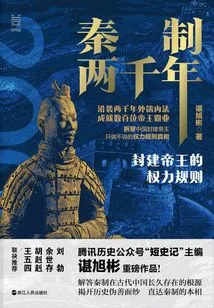
Longitude and Latitude Series·two Thousand Years of Qin System: the Power Rules of Feudal Emperors
History经纬度丛书·秦制两千年:封建帝王的权力规则
Chen Xubin
This book is a masterpiece about the history of ancient Chinese political systems. It selects 16 historical cross-sections and focuses on exploring the historical truth of people's lives behind the prosperity of each feudal dynasty. The author directly points to the core concept of the feudal dynasty "Confucianism on the outside and law on the inside", normalizes and regularizes the complex history of the Qin Empire, explores the inner logic of the empire's operation, and reveals the secrets that lasted for more than two thousand years. He goes deep into every intersection, interprets historical documents, and uses strict logic to lift the veil of dynasty governance, which also subverts many of the world's taken-for-granted perceptions. These historical cross-sections are correlated to reproduce the entire process of the Qin system from its inception to maturity to evolution over the past two thousand years, providing readers with another perspective on the rise and fall of the dynasty.
This book is a masterpiece about the history of ancient Chinese political systems. It selects 16 historical cross-sections and focuses on exploring the historical truth of people's lives behind the prosperity of each feudal dynasty. The author directly points to the core concept of the feudal dynasty "Confucianism on the outside and law on the inside", normalizes and regularizes the complex history of the Qin Empire, explores the inner logic of the empire's operation, and reveals the secrets that lasted for more than two thousand years. He goes deep into every intersection, interprets historical documents, and uses strict logic to lift the veil of dynasty governance, which also subverts many of the world's taken-for-granted perceptions. These historical cross-sections are correlated to reproduce the entire process of the Qin system from its inception to maturity to evolution over the past two thousand years, providing readers with another perspective on the rise and fall of the dynasty.
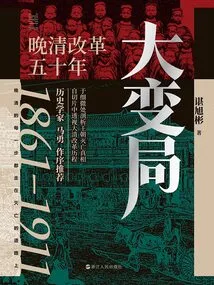
大变局: 晚清改革五十年(俞敏洪、罗振宇推荐)
Chen Xubin
In 1861, Emperor Xianfeng fled to Chengde and died in his summer resort. In order to strengthen its national power and get rid of its weak situation facing the West, under the leadership of Cixi and Yi?, The Qing Dynasty embarked on a path of top-down reform. The road to reform was not smooth sailing. Through events such as the establishment of the Prime Minister's Office, the establishment of the Tongwen Hall, the introduction of the modern customs system, the establishment of the Westernization Military Industry Enterprise, the westward journey of the diplomatic mission, the establishment of the Guangxi Society, the abolition of military examinations, and military training in Kunming Lake, the Qing Dynasty did not become as strong as it desired, but instead moved towards the demise of the empire step by step. In the fifty years from 1861 to 1911, there are many historical figures worthy of attention and study, such as the Queen Mother who lacked political knowledge, Guangxu who was even inferior to Emperor Xian of the Han Dynasty, Prince Gong who was expelled from the political arena and other senior officials of the Qing court who were constantly plotting and fighting; Feng Guifen who deeply believed in reform, Bin Chun who selectively "opened his eyes to see the world", Xu Jishe who was out of the era, and who was involved in teaching cases There are struggling but cowardly bureaucrats such as Zeng Guofan; at the same time, there are Yan Fu who challenges the sanctity of monarchy and Tan Siping, the second-generation official who wants to be Chen She, who are seeking change and improvement; there are also gentry who are the mainstay of the bleak era when the world view and the state view collide, but are trapped in traditional ethics and cannot extricate themselves; and the people at the bottom whose lives are already fragmented and on the verge of collapse.
In 1861, Emperor Xianfeng fled to Chengde and died in his summer resort. In order to strengthen its national power and get rid of its weak situation facing the West, under the leadership of Cixi and Yi?, The Qing Dynasty embarked on a path of top-down reform. The road to reform was not smooth sailing. Through events such as the establishment of the Prime Minister's Office, the establishment of the Tongwen Hall, the introduction of the modern customs system, the establishment of the Westernization Military Industry Enterprise, the westward journey of the diplomatic mission, the establishment of the Guangxi Society, the abolition of military examinations, and military training in Kunming Lake, the Qing Dynasty did not become as strong as it desired, but instead moved towards the demise of the empire step by step. In the fifty years from 1861 to 1911, there are many historical figures worthy of attention and study, such as the Queen Mother who lacked political knowledge, Guangxu who was even inferior to Emperor Xian of the Han Dynasty, Prince Gong who was expelled from the political arena and other senior officials of the Qing court who were constantly plotting and fighting; Feng Guifen who deeply believed in reform, Bin Chun who selectively "opened his eyes to see the world", Xu Jishe who was out of the era, and who was involved in teaching cases There are struggling but cowardly bureaucrats such as Zeng Guofan; at the same time, there are Yan Fu who challenges the sanctity of monarchy and Tan Siping, the second-generation official who wants to be Chen She, who are seeking change and improvement; there are also gentry who are the mainstay of the bleak era when the world view and the state view collide, but are trapped in traditional ethics and cannot extricate themselves; and the people at the bottom whose lives are already fragmented and on the verge of collapse.

壮士断腕 英雄暮年
Chen Xubin
Sun Quan, the successor and pioneer of Soochow's foundation, defeated Cao Cao in the Battle of Chibi, captured Guan Yu alive in the Battle of Crossing the River in White Clothes, and defeated Liu Bei in the Battle of Yiling. Such outstanding achievements are enough to support his title of "hero". However, he seemed to show unusual mediocrity in his later years. Chen Shou, the author of "Three Kingdoms", also unceremoniously traced the responsibility for Soochow's future collapse of the family and country to Sun Quan, the founder of the country. So, were Sun Quan's actions in his later years considered wise or foolish? What did he do? How did these things affect the course of the Soochow ship? Xin Qiji's poem goes: "Who is the rival of the heroes in the world, Cao Liu. I should give birth to a son like Sun Zhongmou." As the inheritor, determiner and pioneer of Soochow's foundation, Sun Quan was truly worthy of the name of a hero in his life. Chen Shou praised him in "The Chronicles of the Three Kingdoms·Wu Shu·Biography of Lord Wu" for "suffering humiliation, relying on talents and planning, having the miraculousness of Gou Jian, and being an outstanding hero." Such praise is not excessive.
Sun Quan, the successor and pioneer of Soochow's foundation, defeated Cao Cao in the Battle of Chibi, captured Guan Yu alive in the Battle of Crossing the River in White Clothes, and defeated Liu Bei in the Battle of Yiling. Such outstanding achievements are enough to support his title of "hero". However, he seemed to show unusual mediocrity in his later years. Chen Shou, the author of "Three Kingdoms", also unceremoniously traced the responsibility for Soochow's future collapse of the family and country to Sun Quan, the founder of the country. So, were Sun Quan's actions in his later years considered wise or foolish? What did he do? How did these things affect the course of the Soochow ship? Xin Qiji's poem goes: "Who is the rival of the heroes in the world, Cao Liu. I should give birth to a son like Sun Zhongmou." As the inheritor, determiner and pioneer of Soochow's foundation, Sun Quan was truly worthy of the name of a hero in his life. Chen Shou praised him in "The Chronicles of the Three Kingdoms·Wu Shu·Biography of Lord Wu" for "suffering humiliation, relying on talents and planning, having the miraculousness of Gou Jian, and being an outstanding hero." Such praise is not excessive.
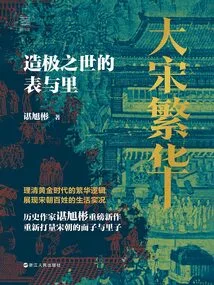
大宋繁华:造极之世的表与里(经纬度丛书)
Chen Xubin
Where did the population boom of the Song Dynasty come from? Where did the huge wealth of the imperial court go? Clarify the prosperous logic of the golden age and show the real life of people in the Song Dynasty. Historical writer Chen Xubin's new work re-examines the face and dignity of the Song Dynasty. This book is divided into three parts. The first part analyzes the reasons for the increase in the total amount of social wealth in the Song Dynasty; the second part describes the methods used by the Song Dynasty government in different periods and how the people moved around to survive; the third part explains the reasons why the increased wealth in the two Song Dynasties failed to be converted into reproductive capital. Chen Xubin's writing breaks the top-down orthodox historical view of most current Song history books, focusing on the lower-class groups who have no voice in history, presenting their real and cruel living conditions, revealing the "prosperous" nature of the two Song Dynasties, which "90 million poor and weak people supported 10 million food tax groups", subverting the image of the so-called golden age of classical China, and it is of great enlightenment for a comprehensive understanding of the dynastic system of the two Song Dynasties.
Where did the population boom of the Song Dynasty come from? Where did the huge wealth of the imperial court go? Clarify the prosperous logic of the golden age and show the real life of people in the Song Dynasty. Historical writer Chen Xubin's new work re-examines the face and dignity of the Song Dynasty. This book is divided into three parts. The first part analyzes the reasons for the increase in the total amount of social wealth in the Song Dynasty; the second part describes the methods used by the Song Dynasty government in different periods and how the people moved around to survive; the third part explains the reasons why the increased wealth in the two Song Dynasties failed to be converted into reproductive capital. Chen Xubin's writing breaks the top-down orthodox historical view of most current Song history books, focusing on the lower-class groups who have no voice in history, presenting their real and cruel living conditions, revealing the "prosperous" nature of the two Song Dynasties, which "90 million poor and weak people supported 10 million food tax groups", subverting the image of the so-called golden age of classical China, and it is of great enlightenment for a comprehensive understanding of the dynastic system of the two Song Dynasties.