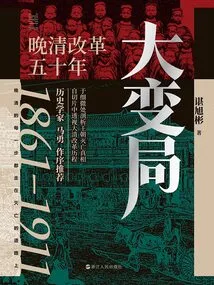
Great Changes: Fifty Years of Reform in the Late Qing Dynasty (recommended by Yu Minhong and Luo Zhenyu)
by Chen Xubin
About This Novel
In 1861, Emperor Xianfeng fled to Chengde and died in his summer resort. In order to strengthen its national power and get rid of its weak situation facing the West, under the leadership of Cixi and Yi?, The Qing Dynasty embarked on a path of top-down reform. The road to reform was not smooth sailing. Through events such as the establishment of the Prime Minister's Office, the establishment of the Tongwen Hall, the introduction of the modern customs system, the establishment of the Westernization Military Industry Enterprise, the westward journey of the diplomatic mission, the establishment of the Guangxi Society, the abolition of military examinations, and military training in Kunming Lake, the Qing Dynasty did not become as strong as it desired, but instead moved towards the demise of the empire step by step. In the fifty years from 1861 to 1911, there are many historical figures worthy of attention and study, such as the Queen Mother who lacked political knowledge, Guangxu who was even inferior to Emperor Xian of the Han Dynasty, Prince Gong who was expelled from the political arena and other senior officials of the Qing court who were constantly plotting and fighting; Feng Guifen who deeply believed in reform, Bin Chun who selectively "opened his eyes to see the world", Xu Jishe who was out of the era, and who was involved in teaching cases There are struggling but cowardly bureaucrats such as Zeng Guofan; at the same time, there are Yan Fu who challenges the sanctity of monarchy and Tan Siping, the second-generation official who wants to be Chen She, who are seeking change and improvement; there are also gentry who are the mainstay of the bleak era when the world view and the state view collide, but are trapped in traditional ethics and cannot extricate themselves; and the people at the bottom whose lives are already fragmented and on the verge of collapse.
Official Sources
What Readers Think
Rating
Community(0)
Official(1)Scraped 1mo ago
Study hard and work hard every day!
Rating
Community(0)
Official(1)Scraped 1mo ago
Study hard and work hard every day!