Library
Browse and search books
3 novels found
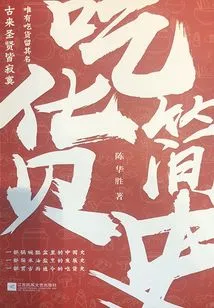
A Brief History of Foodies
History吃货简史
Chen Huasheng
This book easily tells the history of China with 52 delicacies as clues. The book takes the two protagonists "Zhuge Buliang and Yu'er" as the perspective, with 52 cards, introducing the historical evolution of 52 classic dishes from the pre-Qin Dynasty to the Ming and Qing Dynasties. Tracing back to the origin of Chinese food, we also explore the food culture across the country, explore the development history of Chinese people in food, and count the food-loving gourmets in the past dynasties.
This book easily tells the history of China with 52 delicacies as clues. The book takes the two protagonists "Zhuge Buliang and Yu'er" as the perspective, with 52 cards, introducing the historical evolution of 52 classic dishes from the pre-Qin Dynasty to the Ming and Qing Dynasties. Tracing back to the origin of Chinese food, we also explore the food culture across the country, explore the development history of Chinese people in food, and count the food-loving gourmets in the past dynasties.
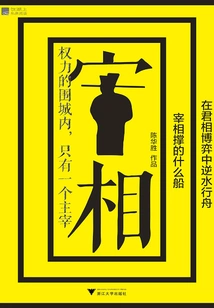
宰相撑的什么船:在君相博弈中逆水行舟
Chen Huasheng
China's prime minister system began in the Qin Dynasty. It was originally a supporting system for the autocratic imperial power. After the rise of the Han Dynasty, the lessons learned from the fall of Qin were learned. There was a time when the status of the prime minister could check and balance the imperial power. History even showed the dawn of parliamentary politics such as collective deliberation. However, this dawn finally Yu was eventually obliterated in the struggle for imperial power and prime ministerial power. Until the end of the Qing Dynasty, when the prime minister was abolished and the parliament was established, China's prime minister system went from the starting point to the end, and the end to the starting point again, making a circle, and modern parliamentary democracy finally passed outside this circle. This book reveals such a process.
China's prime minister system began in the Qin Dynasty. It was originally a supporting system for the autocratic imperial power. After the rise of the Han Dynasty, the lessons learned from the fall of Qin were learned. There was a time when the status of the prime minister could check and balance the imperial power. History even showed the dawn of parliamentary politics such as collective deliberation. However, this dawn finally Yu was eventually obliterated in the struggle for imperial power and prime ministerial power. Until the end of the Qing Dynasty, when the prime minister was abolished and the parliament was established, China's prime minister system went from the starting point to the end, and the end to the starting point again, making a circle, and modern parliamentary democracy finally passed outside this circle. This book reveals such a process.
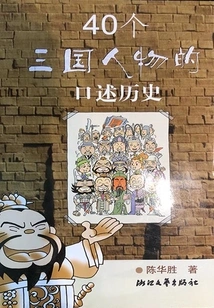
40个三国人物的口述历史
Chen Huasheng
This is a humorous read, but it is not unreasonably funny. The author resurrects the characters of the Three Kingdoms and allows those involved to speak about historical events, hoping to use this virtual situation to restore the historical truth. The humor of this book is based on the author's profound knowledge of Three Kingdoms research, allowing you to get rid of the historical misunderstandings brought to you by "The Romance of the Three Kingdoms" through easy reading. The current online version of the Three Kingdoms has become like "the rolling water of the Yangtze River flowing eastward", which is far beyond the ability of traditional defenders to stop it. These Internet Three Kingdoms break tradition, laugh about history, deconstruct classics, and pay attention to understanding. With their own understanding, they provide today's people with a reading model that is more in line with today's situation. While everyone is "entertaining themselves", the author wants to let the historical figures of the Three Kingdoms "talk to themselves", reviewing and commenting on his own period of history. All chapters in this book restore and clarify history through the characters' autobiography. In a nutshell: this book attempts to borrow modern people's way of thinking and language from the ancients, and then reverses the "three-point fiction" of "The Romance of the Three Kingdoms"; on the other hand, it also attempts to reflect on real life through the various phenomena of the Three Kingdoms era. The style of this book is a weird "oral style". Maybe it is an anomaly, but respecting history is the author's basic point. To deconstruct it based on this basic point is also funny, but this book does not want to "spoof", but to create a "good way to do it".
This is a humorous read, but it is not unreasonably funny. The author resurrects the characters of the Three Kingdoms and allows those involved to speak about historical events, hoping to use this virtual situation to restore the historical truth. The humor of this book is based on the author's profound knowledge of Three Kingdoms research, allowing you to get rid of the historical misunderstandings brought to you by "The Romance of the Three Kingdoms" through easy reading. The current online version of the Three Kingdoms has become like "the rolling water of the Yangtze River flowing eastward", which is far beyond the ability of traditional defenders to stop it. These Internet Three Kingdoms break tradition, laugh about history, deconstruct classics, and pay attention to understanding. With their own understanding, they provide today's people with a reading model that is more in line with today's situation. While everyone is "entertaining themselves", the author wants to let the historical figures of the Three Kingdoms "talk to themselves", reviewing and commenting on his own period of history. All chapters in this book restore and clarify history through the characters' autobiography. In a nutshell: this book attempts to borrow modern people's way of thinking and language from the ancients, and then reverses the "three-point fiction" of "The Romance of the Three Kingdoms"; on the other hand, it also attempts to reflect on real life through the various phenomena of the Three Kingdoms era. The style of this book is a weird "oral style". Maybe it is an anomaly, but respecting history is the author's basic point. To deconstruct it based on this basic point is also funny, but this book does not want to "spoof", but to create a "good way to do it".